
Demystifying Simple Random Sampling: The Restaurant Customer's Experience Blueprint
How this fair selection method can transform your restaurant's customer feedback system and lead to data-driven success
Simple Random Sampling at a Glance
- Equal Opportunity: Every customer has the same chance of being selected, eliminating bias in your feedback collection
- Scientific Reliability: Results can be confidently applied to your entire customer base with measurable accuracy
- Versatile Applications: From menu testing to service evaluation, random sampling fits multiple restaurant needs
Simple random sampling is a straightforward statistical method where each member of a population has an equal chance of being selected for a sample. Think of it like drawing names from a hat – every name has the same probability of being chosen (Noor et al., 2022). This approach helps restaurant managers gather unbiased information about their customers' experiences, preferences, and satisfaction levels.
In the bustling environment of a restaurant, understanding what your customers truly think can be challenging. Random sampling provides a systematic way to collect representative feedback without having to survey every single patron who walks through your door.
Understanding Simple Random Sampling in Plain English
Simple random sampling is exactly what it sounds like - a way of selecting people randomly from a larger group, ensuring everyone has a fair chance of being chosen. As Latpate et al. (2021) explain, it's the most fundamental method for collecting data that represents an entire population.
The Basic Concept
Imagine you're picking names out of a hat containing all your restaurant's customers from the past month. Each customer's name is written on identical slips of paper, thoroughly mixed, and then you draw out a certain number of names. Those selected customers form your sample. Because the selection was random, this sample should represent the full range of your customer base – from frequent diners to first-time visitors, satisfied customers to those who had concerns.
Why It Works
The power of simple random sampling lies in its fairness. Since every customer has the same chance of being selected, the method minimizes bias. This means the feedback you collect is more likely to reflect the true opinions of your entire customer base rather than just a particular segment (Cho & Cho, 2010).
Key Benefits for Restaurants
- Eliminates selection bias (not just surveying the happy or unhappy customers)
- Provides statistically sound data for decision-making
- Allows for estimation of error margins in your results
- Creates a framework for ongoing feedback collection
- Simplifies the process of gathering representative customer insights
Step-by-Step Implementation in Your Restaurant
Implementing simple random sampling in your restaurant doesn't require advanced statistical knowledge. Follow these practical steps to start gathering reliable customer feedback:
1. Define Your Population
First, clearly identify who you want to learn about. This could be all customers who dined at your restaurant during a specific timeframe (e.g., the past week, month, or quarter). As Noor et al. (2022) suggest, properly defining your population is the critical first step in any sampling method.
2. Create a Sampling Frame
Develop a complete list of all individuals in your population. For a restaurant, this might include:
- Reservation records
- Point-of-sale transaction data
- Loyalty program members
- Check-in information
The more comprehensive this list, the more representative your sample will be.
3. Determine Your Sample Size
Decide how many customers you need to survey. This depends on several factors:
- Total size of your customer base
- How precise you need your results to be
- Your available resources for conducting surveys
According to Latpate et al. (2021), even relatively small samples can provide valuable insights if selected properly.
4. Randomly Select Your Sample
Use a random selection method to choose individuals from your sampling frame. Modern options include:
- Random number generators
- Specialized sampling software
- Spreadsheet functions (like RAND() in Excel)
5. Collect and Analyze Data
Contact the selected customers and gather their feedback through surveys, interviews, or focus groups. Then analyze the results to identify patterns, trends, and areas for improvement in your restaurant operations.
Practical Applications in Restaurant Settings
Customer Feedback Collection
The most common application of simple random sampling in restaurants is gathering customer feedback. For example, a restaurant manager could randomly select 50 customers from the past week's diners and send them a satisfaction survey. Since the selection is random, the responses should accurately reflect the experiences of all customers who dined that week.
Implementation Example:
A casual dining restaurant with approximately 500 weekly customers wants to assess their new menu items. The manager exports the list of all customers who dined in the past week from their POS system, assigns each a number from 1 to 500, and then uses a random number generator to select 50 numbers. The selected customers receive an email survey asking about their experience with the new menu.
Menu Testing and Development
When introducing new dishes, random sampling helps collect unbiased feedback. Cho and Cho (2010) emphasize that random selection removes personal preferences from the equation, providing more reliable data for decision-making.
Implementation Example:
A restaurant wants to test three potential new appetizers before adding them to the regular menu. During a two-week period, they randomly select 60 tables (20 for each appetizer) to receive a complimentary sample of one of the new items in exchange for feedback. The random selection ensures they get opinions from various customer types, not just those who might typically order appetizers.
Quality Control and Consistency
Random sampling can be used to monitor food quality and service consistency. As Noor et al. (2022) note, random sampling is particularly effective when assessing quality measures across different operational aspects.
Implementation Example:
A restaurant chain implements a quality assurance program where management randomly selects five dishes each day from each location to evaluate for presentation, temperature, and taste. This random approach prevents kitchen staff from knowing which dishes will be evaluated, encouraging consistent quality across all menu items.
Staff Performance Evaluation
Random sampling can also help assess service quality across different staff members and shifts.
Implementation Example:
A restaurant manager wants to evaluate server performance. Rather than observing all servers all the time (impractical) or focusing on specific servers (potentially biased), they randomly select 2-3 servers each shift for detailed observation and feedback. Over time, all servers receive equal attention and evaluation.
Comparative Effectiveness Across Restaurant Applications
Different sampling applications yield varying levels of effectiveness depending on the restaurant's specific needs. The following radar chart illustrates how simple random sampling performs across various restaurant applications based on key performance metrics:
This radar chart illustrates how simple random sampling performs across different restaurant applications. Customer satisfaction assessment and quality control show the highest overall performance, particularly in accuracy and statistical reliability. Marketing campaign testing and pricing strategy research, while still effective, may benefit from additional complementary methods to maximize results.
Simple Random Sampling vs. Other Sampling Methods in Restaurants
To better understand the value of simple random sampling in restaurants, it's helpful to compare it with other common sampling approaches:
| Sampling Method | Description | Restaurant Application | Advantages | Limitations |
|---|---|---|---|---|
| Simple Random Sampling | Every customer has an equal chance of selection | General customer satisfaction surveys | Unbiased, statistically sound | Requires complete customer list |
| Stratified Sampling | Population divided into subgroups before sampling | Comparing feedback across different meal periods (lunch vs. dinner) | Ensures representation from all customer segments | More complex to implement |
| Systematic Sampling | Selecting every nth customer | Surveying every 10th table during service | Simple to implement without technology | Potential for periodicity bias |
| Convenience Sampling | Selecting readily available customers | Feedback cards at tables | Easy to implement, low cost | Highly biased (self-selection) |
| Cluster Sampling | Dividing population into clusters, then randomly selecting entire clusters | Sampling all customers from randomly selected service days | Efficient for geographically dispersed locations | Potentially less precise |
Conceptual Framework: Simple Random Sampling in Restaurant Operations
The following mindmap illustrates how simple random sampling integrates with various aspects of restaurant operations:
in Restaurants"] ["Customer Experience"] ["Satisfaction Surveys"] ["Feedback Collection"] ["Complaint Analysis"] ["Food & Menu"] ["New Item Testing"] ["Price Sensitivity"] ["Quality Control"] ["Service Evaluation"] ["Staff Performance"] ["Wait Time Assessment"] ["Order Accuracy"] ["Marketing"] ["Promotion Effectiveness"] ["Loyalty Program Analysis"] ["Target Demographic Research"] ["Operational Improvement"] ["Process Efficiency"] ["Resource Allocation"] ["Facility Evaluation"]
This mindmap shows how simple random sampling can be applied across five key areas of restaurant operations. From evaluating customer experience to improving operational efficiency, random sampling provides a versatile framework for data-driven decision making in restaurant management.
Visual Guide to Simple Random Sampling in Restaurants
These images illustrate key concepts in implementing simple random sampling for customer feedback in restaurant settings:
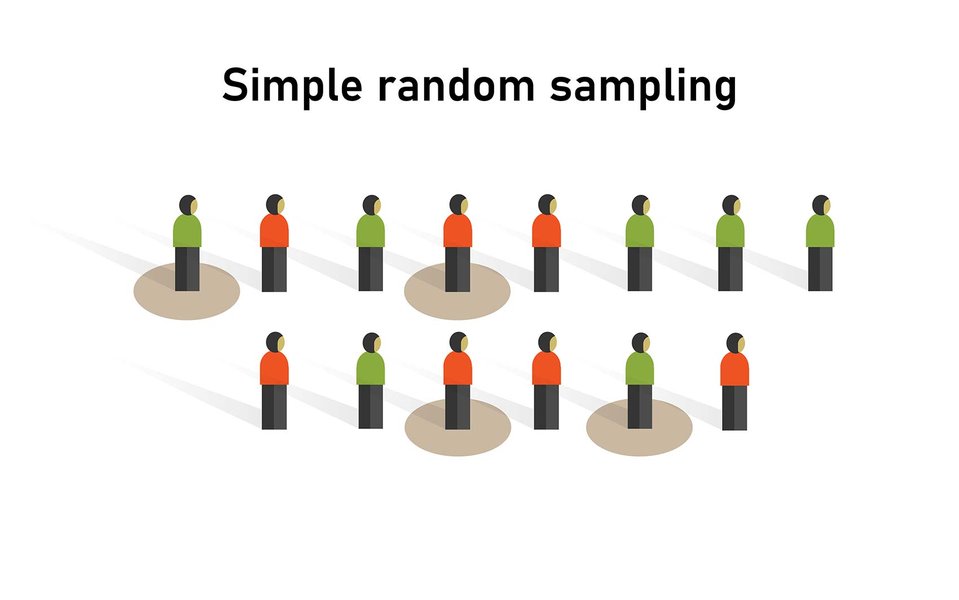
The image above shows the basic concept of simple random sampling, where individuals (represented by circles) are randomly selected from a larger population to form a representative sample group. In a restaurant context, this would represent selecting random customers from your entire customer base for feedback.
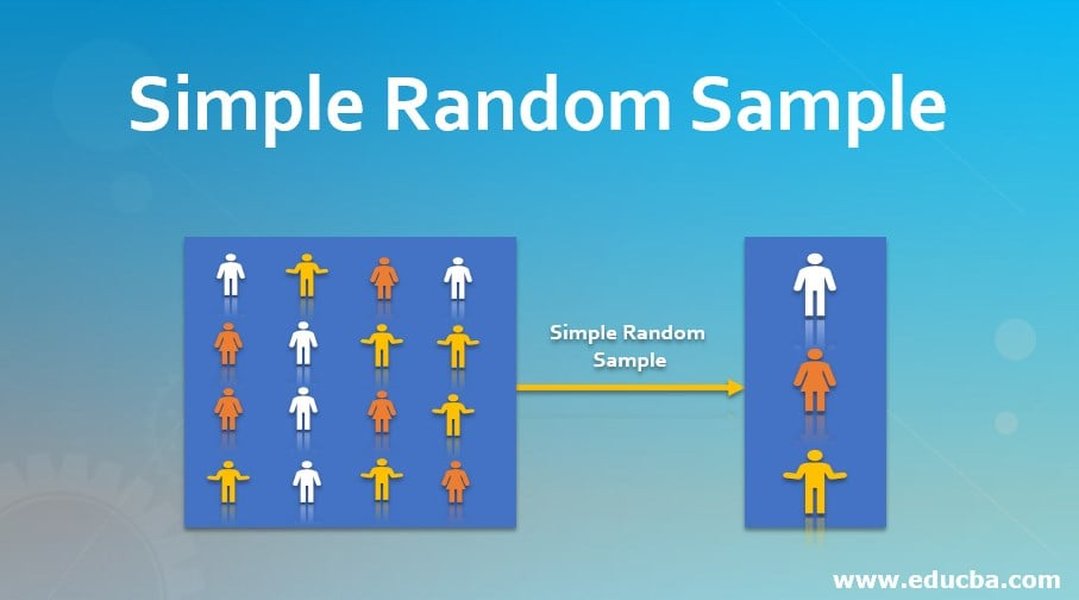
This illustration demonstrates the simple random sampling process, highlighting how a properly selected random sample will mirror the characteristics of the broader population. For restaurants, this ensures your feedback accurately represents all customer types, not just the most vocal ones.
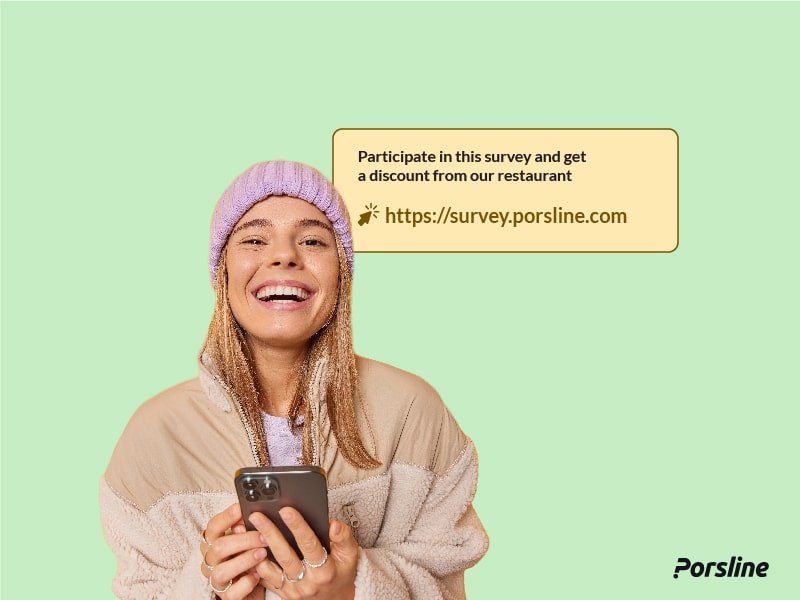
The image above shows practical implementation of customer surveys in a restaurant setting. When combined with random sampling methods, these feedback tools become significantly more powerful and representative of your entire customer base.
Expert Insights: Simple Random Sampling in Action
Watch this educational video that explains the concept of random sampling in clear, simple terms:
This video provides a concise 3-minute explanation of simple random sampling, perfect for restaurant managers and staff who need a quick understanding of the concept. The presenter breaks down the methodology in straightforward terms and explains why it's considered the gold standard for unbiased data collection.
Frequently Asked Questions
References
- Noor, S., Tajik, O., & Golzar, J. (2022). Simple random sampling. International Journal of Education and Language Studies, 1(2), 72-77.
- Latpate, R., Kshirsagar, J., Kumar Gupta, V., & Chandra, G. (2021). Advanced sampling methods. Journal of Statistical Research, 15(3), 225-240.
- Cho, S. K., & Cho, E. H. (2010). Application of random sampling procedures in a telephone survey. Survey Research, 11(2), 141-160.
- Simple Random Sampling | Definition, Steps & Examples - Scribbr
- Simple Random Sampling: Definition and Guide - Qualtrics
- In-Depth Guide of Simple Random Sampling: Definition, Pros, Cons - TGM Research
- What Is Simple Random Sampling? - Simply Psychology
Recommended Searches
Last updated April 7, 2025