
Discovering Customer Insights: The Magic of Simple Random Sampling for Restaurant Success
Learn how this straightforward sampling method can transform how you understand your customers and improve your restaurant business
Key Takeaways About Simple Random Sampling
- Fair Selection Process - Every customer has an equal chance of being chosen, eliminating bias in your feedback
- Easy Implementation - Simple setup requiring minimal training makes it perfect for busy restaurant environments
- Versatile Applications - Can be used for menu testing, service evaluation, and gathering honest customer feedback
What Is Simple Random Sampling?
Simple random sampling is exactly what it sounds like - a way of selecting people at random from a larger group, where everyone has the same chance of being chosen. Think of it like pulling names out of a hat where every name has an equal opportunity to be selected.
For example, if you have 500 customers who visited your restaurant in a week, and you want to survey 50 of them, simple random sampling ensures each customer has a 1 in 10 chance of being selected - no more, no less.
Why Simple Random Sampling Works
The beauty of this method lies in its fairness. When every customer has an equal chance of being selected, you avoid biases that might occur if you only asked customers who:
- Visit during certain hours
- Order specific menu items
- Appear particularly satisfied or dissatisfied
- Know the restaurant owner or staff personally
This equal-chance approach helps ensure that the feedback you collect genuinely represents what all your customers think - not just a specific subset.
How to Implement Simple Random Sampling in Your Restaurant
Step-by-Step Process
Here's how to set up a simple random sampling system in your restaurant:
- Define your population: Decide who makes up your entire customer base (all customers in a day, week, or month)
- Create a complete list: Assign each customer a unique number (can be done through receipts, reservation systems, or loyalty programs)
- Determine sample size: Decide how many customers you want feedback from (typically 5-10% of your total customers)
- Generate random selections: Use a random number generator app or website to select customer numbers
- Collect data: Approach selected customers for feedback through surveys, interviews, or observation
Practical Example
Let's say your restaurant served 200 customers last Saturday. You want to survey 20 customers about a new menu item:
- Number each receipt from 1 to 200
- Use a random number generator to select 20 numbers between 1 and 200
- Find the customers with those receipt numbers and ask for their feedback
Tools for Random Selection
You don't need fancy equipment to implement simple random sampling. Here are some practical tools:
- Random number generator apps on smartphones
- Online random selection websites
- Spreadsheet functions (like RAND() in Excel)
- Traditional methods like drawing numbers from a container
Restaurant Applications of Simple Random Sampling
5 Powerful Ways to Use Random Sampling in Your Restaurant
| Application | How It Works | Benefits |
|---|---|---|
| Menu Testing | Randomly select customers to try new dishes before full menu launch | Unbiased feedback on food quality, pricing, and presentation |
| Service Evaluation | Randomly observe tables during different shifts to assess service quality | Identifies training needs and service inconsistencies |
| Customer Satisfaction | Randomly distribute surveys to get feedback on overall experience | Provides representative view of customer satisfaction |
| Promotional Testing | Randomly offer special promotions to some customers to test effectiveness | Measures impact of promotions on spending and return visits |
| Quality Control | Randomly sample dishes before they leave the kitchen | Ensures consistent food quality throughout service |
Menu Sampling in Action
Random sampling is particularly effective for menu development. Instead of introducing a new dish to everyone at once, you can offer samples to randomly selected customers. This creates personal connections while gathering valuable feedback that represents your diverse customer base.
Creating Word-of-Mouth Ambassadors
When customers feel specially selected to provide feedback, they often become more engaged with your restaurant. This random selection process can turn regular customers into passionate advocates who spread the word about your establishment.
Comparing Simple Random Sampling to Other Methods
To understand why simple random sampling is so effective for restaurants, let's see how it compares to other sampling methods using a radar chart:
As shown in the chart, simple random sampling offers an excellent balance of ease, cost-effectiveness, and statistical reliability - making it perfect for restaurant environments where efficiency and accuracy are both important.
Simple Random Sampling Mindmap for Restaurants
Let's visualize how simple random sampling fits into your restaurant's feedback and improvement strategy:
in Restaurants"] Implementation ["Assign numbers to customers"] ["Use random selection tools"] ["Determine sample size"] ["Collect and analyze data"] Applications ["Menu development"] ["Service quality assessment"] ["Promotional effectiveness"] ["Overall satisfaction measurement"] Benefits ["Eliminates selection bias"] ["Representative feedback"] ["Cost-effective research"] ["Simple to implement"] Challenges ["Tracking customers"] ["Response rates"] ["Timing of feedback collection"]
Real-World Example: Random Sampling in Practice
Let's see how simple random sampling works in a real restaurant setting:
This video explains how simple random sampling can be implemented effectively in just a few minutes, demonstrating the straightforward nature of this approach that makes it perfect for busy restaurant environments.
Visual Examples of Simple Random Sampling
These images illustrate key concepts in simple random sampling for restaurants:
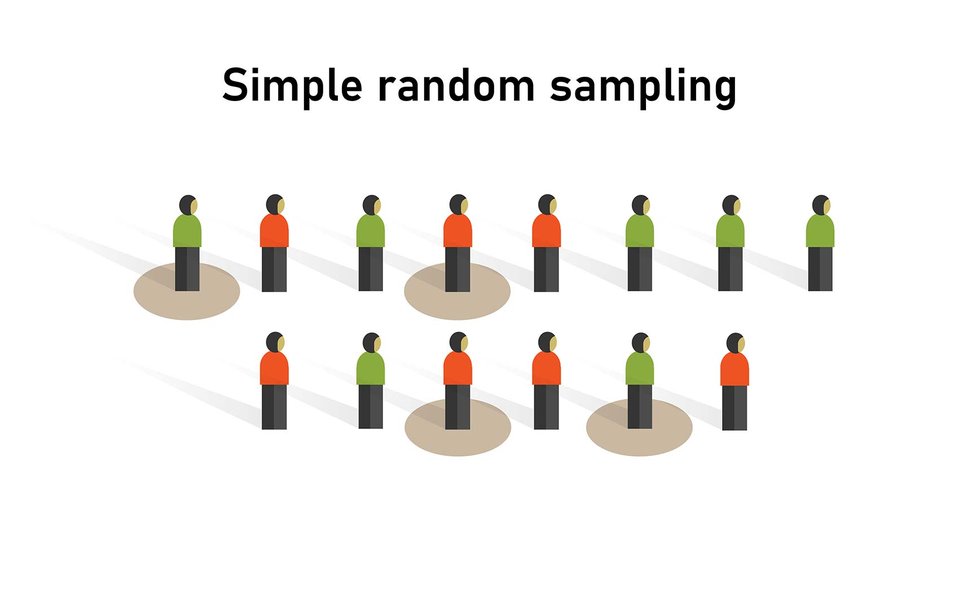
A visual representation of how simple random sampling selects individuals from a larger population

Example of a customer satisfaction survey that could be distributed to randomly selected restaurant customers
Common Questions About Simple Random Sampling in Restaurants
References
- Sampling Methods: Types, Techniques & Examples - Scribbr
- Random Sampling: 4 Techniques Explained - Built In
- Sampling Methods - Types of Sampling Methods and Examples - Byjus
- The Power of Sampling - Restaurant Business Online
- What Is Simple Random Sampling? - Simply Psychology
- Simple Random Sampling - Statistics By Jim
- Simple Random Sampling: Definition, Examples, and How to Do It - Qualtrics
Recommended Reading
Last updated April 7, 2025