
Unveiling the Code: What Happens if We Hack the Simulated Universe?
Exploring the potential reactions of a simulation and its creators if an inhabitant discovers and manipulates their artificial reality.
The notion that our reality might be an incredibly advanced simulation is a captivating hypothesis, bridging philosophy, theoretical physics, and popular culture. If this were true, and an individual within this simulation began to not only perceive undeniable evidence of its artificial nature but also learn to manipulate its foundational rules, how might the simulation itself, or its architects (the "simulators"), respond? This question delves into the unknown, but by synthesizing current thought, we can explore a spectrum of plausible reactions.
Key Insights: Navigating a Manipulable Matrix
- Varied Reactions: Responses could span a wide range, from automated system self-corrections and subtle containment measures to direct interventions by the simulators, such as resetting the simulation, restricting the individual's abilities, or simply observing the phenomenon with keen interest.
- Purpose Dictates Response: The fundamental purpose behind the simulation—whether it's for research, entertainment, education, ancestral study, or ensuring its own stability—would heavily influence how its creators or automated systems react to an aware and manipulative inhabitant.
- Uncertainty Prevails: In the absence of empirical evidence, discussions about such scenarios remain speculative. Our understanding is shaped by analogies from computer science (like anti-cheat systems in games), virtual reality, philosophical arguments, and the rich tapestry of science fiction narratives.
Spotting the Seams: What Evidence Might Emerge?
For an individual to suspect they inhabit a simulation, they would likely need to encounter persistent, verifiable anomalies that defy conventional scientific explanation. Such "evidence" might manifest in several ways:
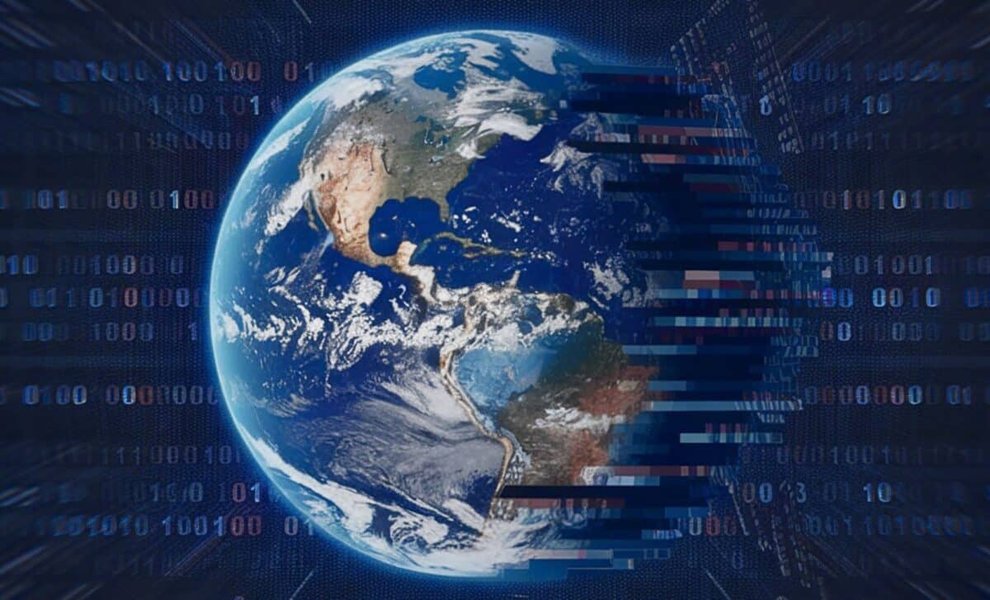
An artistic representation of "glitches" in reality, potentially hinting at a simulated universe.
Anomalies and Glitches:
Repetitive, inexplicable events or behaviors in the physical world that seem like errors or artifacts in a computational system. This could include objects behaving erratically, temporary distortions in perception, or "déjà vu" experiences that feel systemic.Patterns in Physical Laws:
The discovery of underlying discreteness in space-time (like a universal "pixelation") or unexpected limitations in the precision of physical constants could suggest a finite computational substrate. Some theories point to quantum mechanics' inherent fuzziness or observer effect as potential hints.Computational Boundaries:
If the universe operates on computational principles, there might be observable limits to complexity, processing speed, or information density that an advanced inhabitant could detect.Inconsistencies in Fundamental Constants:
Slight, inexplicable variations in what are believed to be universal constants could be interpreted as adjustments or errors within the simulation's parameters.
Systematically gathering and analyzing multiple, independent lines of such evidence would be crucial for an individual to move beyond mere suspicion to a stronger conviction of living within a simulated construct.
Gaining Control: How Could Manipulation Occur?
Learning to manipulate the simulation would imply a profound understanding of its underlying mechanics, akin to a programmer gaining root access to an operating system. This "simulation manipulation" could take various forms:
Altering Physical Parameters:
Modifying local physical laws, constants (like gravity or the speed of light in a limited area), or the properties of matter and energy.Exploiting Glitches and Loopholes:
Using identified systemic errors or unintended features to bypass normal rules, similar to how gamers might exploit bugs in a video game."Hacking" the Simulation's Code:
If the simulation operates on a form of code, an individual might find ways to interface with and alter this code, thereby changing aspects of the simulated reality directly. This is a common trope in fiction, often depicted as gaining "supernatural" powers.Manipulating Information Flows:
Intercepting, altering, or creating information within the simulation to influence events or perceptions.Modifying Spacetime:
Potentially altering the flow of time locally, or bending spatial dimensions in ways not normally possible.
Such abilities would likely stem from a deep synthesis of the simulation's logic, allowing the individual to interact with the system at a more fundamental level than other inhabitants.
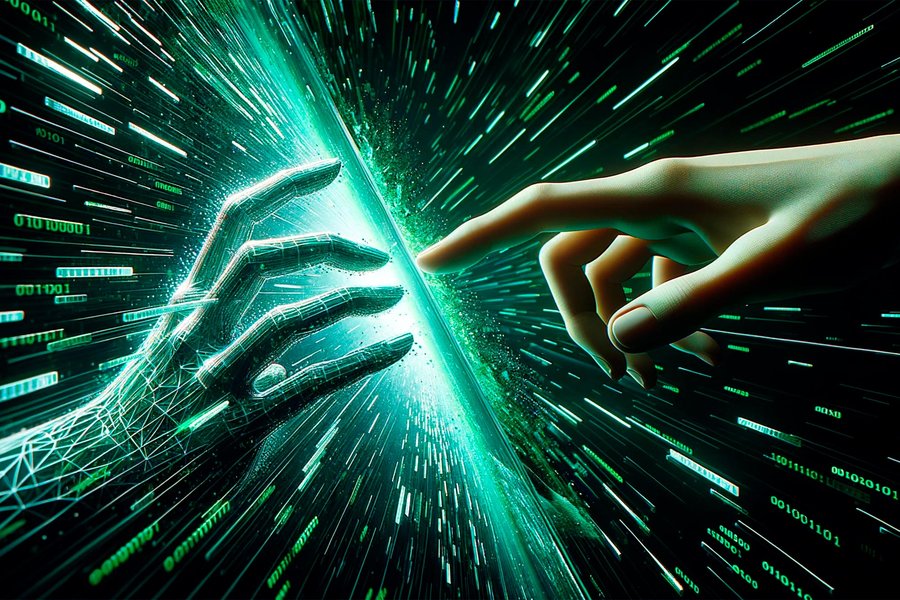
Conceptual art illustrating the idea of interacting with the underlying code of a simulated reality.
The Simulation's Response: A Spectrum of Possibilities
The reaction of the simulation or its simulators would likely be multifaceted, depending on the simulation's purpose, its design complexity, and the simulators' ethics and goals. Here are several plausible scenarios:
Automated Safeguards and Self-Correction
Many complex systems, especially simulations, would likely have built-in mechanisms to maintain stability and integrity.
Integrity Maintenance:
The simulation might automatically attempt to "patch" glitches, correct anomalies, or neutralize unauthorized manipulations, much like anti-cheat software in video games or error-correction protocols in data transmission.Obscuring Evidence:
The system could actively work to hide evidence of its simulated nature, perhaps by introducing distractions, causing memory lapses related to the discoveries, or generating plausible (within the simulation's rules) explanations for anomalies.Resource Limitation:
The inherent computational limits of the simulation might naturally constrain the extent of manipulation possible, preventing any single inhabitant from overwhelming the system.
Direct Intervention by the Simulators
If sentient entities (the "simulators") are overseeing the simulation, their responses could be more direct and varied:
Observation and Study:
The simulators might view the aware individual as a fascinating, unexpected development—an emergent property of their complex system. They could choose to covertly observe, gather data, and analyze the individual's actions and the simulation's response.Restriction or Containment:
To prevent wider disruption or to protect the simulation's objectives, simulators might subtly or overtly limit the individual's abilities, restrict their access to manipulate core parameters, or isolate them from other inhabitants.Termination or Reset:
In more extreme cases, particularly if the individual's actions threaten the stability or purpose of the entire simulation, the simulators might opt to terminate the individual, a segment of the simulation, or even perform a full reset. Philosopher Preston Greene has suggested that discovering we are in a simulation could be dangerous, potentially leading to its shutdown.Communication or Guidance:
Simulators might attempt to communicate with the individual, perhaps to understand their intentions, to offer warnings, or even to provide veiled guidance if such interaction aligns with their experimental parameters.Ethical Considerations:
The simulators might face their own ethical dilemmas regarding intervention, weighing the "rights" or well-being of their simulated inhabitants against the goals of the simulation.
Adaptive and Evolving Simulation
Another possibility is that the simulation is designed to be adaptive or is itself a learning system:
Integration of Manipulations:
The simulation might incorporate the individual's manipulations, allowing its rules or environment to evolve in response. This could be an intended feature, testing the system's robustness or exploring novel outcomes.Parameter Expansion:
The system could expand its own parameters to accommodate the new level of awareness and interaction, potentially unlocking new aspects of the simulated reality.
Indifference or Acceptance
It's also conceivable that the simulators might not react overtly, or might even accept the manipulation:
Sandbox Environment:
If the simulation is a "sandbox" designed for maximum freedom and emergent behavior, the simulators might simply allow the manipulation to proceed as part of the experiment.Intended Feature:
The ability to discover and manipulate the simulation could be an intended late-game feature or a test for its inhabitants.Entertainment Value:
Economist Robin Hanson posited that if simulations are run by future beings, our actions might be judged on their "entertainment" or "praiseworthiness," influencing our fate within the simulation. Manipulating the system could be seen as highly engaging.
Visualizing Potential Reactions and Their Drivers
To better understand the complex interplay of factors, we can visualize potential reactions. The mindmap below outlines the progression from detection to manipulation and the branching paths of possible simulator responses. This helps conceptualize the different layers of interaction and consequence within a hypothetical simulated reality.
Awareness & Manipulation"] id1["Detecting the Simulation"] id1a["Anomalies & Glitches"] id1b["Physics Discrepancies"] id1c["Computational Limits"] id2["Learning to Manipulate"] id2a["Exploiting Loopholes"] id2b["Altering Parameters"] id2c["'Hacking' System Code"] id2d["Influencing Information"] id3["Potential Simulator/Simulation Reactions"] id3a["Automated System Responses"] id3aa["Self-Correction / Patching"] id3ab["Obscuring Evidence"] id3ac["Resource Limitation"] id3b["Direct Simulator Intervention"] id3ba["Observation & Study"] id3bb["Restriction & Containment"] id3bc["Termination / Reset"] id3bd["Isolation of Individual"] id3be["Communication / Guidance"] id3c["Adaptive Simulation Evolution"] id3ca["Integrating Manipulations"] id3cb["Expanding Parameters"] id3d["Passive Acceptance / Indifference"] id3da["Allowing Manipulation (Sandbox)"] id3db["Manipulation as Intended Feature"]
The specific reaction of the simulation or its creators would heavily depend on the primary purpose for which the simulation was designed. The following chart offers a speculative comparison of how likely or impactful certain reactions might be, based on different hypothetical motivations behind running a simulation.
This chart speculatively rates the likelihood or impact (on a scale of 1 to 10, where 1 is very low and 10 is very high) of various simulator reactions depending on the core purpose of their simulation. For example, a "Research Simulation" might be highly inclined to observe and study anomalies, whereas a "Control-Oriented Simulation" might prioritize restriction or even termination to maintain order.
Summary Table: Potential Simulator Reactions
The table below summarizes potential reactions, categorizing them and providing speculative rationales. This offers a structured overview of the diverse ways a simulation or its creators might respond to an inhabitant who uncovers and learns to manipulate its nature.
| Reaction Category | Specific Action Example | Potential Simulators' Rationale/Goal | Speculative Likelihood Context |
|---|---|---|---|
| Automated System Response | Glitch Patching / Self-Correction | Maintain simulation stability, prevent widespread awareness, ensure intended functionality. | High in well-designed simulations. |
| Anomaly Obscuration / Misdirection | Preserve the illusion of reality for other inhabitants, prevent exploitation of system weaknesses. | High, especially if immersion is key. | |
| Computational Resource Limitation | Inherent design constraints naturally limit the scope or power of manipulation attempts. | Medium, depends on simulation architecture. | |
| Direct Simulator Intervention (Subtle) | Enhanced Monitoring & Data Collection | Study the anomaly, gather data on awareness mechanisms and manipulation techniques. | High if simulation is for research/observation. |
| Subtle Redirection / Containment | Guide the individual away from critical systems, limit impact without overt confrontation. | Medium, balancing observation with risk. | |
| Selective Access Restriction | Block specific manipulation capabilities or access to sensitive system layers. | Medium, a targeted control measure. | |
| Direct Simulator Intervention (Overt) | Communication or Warning | Engage with the individual to understand intent, set boundaries, or offer choices. | Low to Medium, depends on simulator ethics/protocol. |
| Individual Isolation / Quarantine | Prevent the individual from influencing other inhabitants or the broader simulation state. | Medium, if individual poses a significant risk. | |
| Targeted Reality Alteration for the Individual | Change the individual's immediate environment or perception to neutralize abilities. | Low, complex and potentially resource-intensive. | |
| Selective Memory Modification | Erase knowledge of the simulation's nature or manipulation techniques from the individual. | Low, ethically complex and technically challenging. | |
| Simulation Segment Reset / Localized Reboot | Reset a portion of the simulation significantly affected by manipulation. | Low, disruptive but less than full reset. | |
| Full Simulation Termination / Reboot | Drastic measure if stability is critically threatened, objectives are compromised, or the experiment concludes. | Very Low, implies critical failure or end-point. | |
| Adaptive/Integrative Response | Incorporation as a New Feature/Rule | If manipulation aligns with experimental goals or adds desired complexity/entertainment. | Low to Medium, if simulation is designed for evolution. |
| Evolving Simulation Parameters | Allow the simulation to dynamically adapt its rules or boundaries in response to new interactions. | Low, requires highly sophisticated adaptive system. | |
| Passive/No Explicit Response | Observation without Interference | If the simulation is a pure observational study, a sandbox, or if interference is against protocol. | Medium, particularly in non-interventionist scenarios. |
| Discovery as an Intended Outcome | If awareness and manipulation are part of a test or a planned evolutionary stage for inhabitants. | Low, a specific and advanced simulation design. |
Philosophical and Existential Quandaries
The scenario also touches upon profound philosophical questions about free will, the nature of consciousness, and the ethical responsibilities of creators towards their creations. If our actions are within a simulated framework, is free will an illusion, or is it an emergent property the simulators themselves are studying? If a simulator intervenes, what moral principles guide their actions? These questions remain central to the simulation hypothesis and highlight the deep implications of such a reality.
This video, "What If Reality Is a Simulation? 10 Bold Insights," explores various perspectives and potential evidence related to the simulation hypothesis, providing a broader context for the implications of living in such a reality.
Frequently Asked Questions (FAQ)
What kind of "evidence" might suggest we are in a simulation?
Evidence could include persistent and inexplicable glitches or anomalies in physical laws, patterns suggesting computational limits (like a "pixelated" reality at the smallest scales), unexpected constraints on physical constants, or even highly improbable coincidences that seem statistically unlikely in a purely random universe. Some philosophers and scientists also point to the rapid advancement of our own simulation capabilities as a statistical argument: if civilizations routinely create ancestor simulations, we are more likely to be in one than in base reality.
How could someone theoretically "manipulate" a simulated reality?
Theoretical manipulation could involve understanding and altering the "source code" or underlying rules of the simulation. This might mean changing physical constants locally, exploiting systemic glitches to bypass normal constraints, altering information flows, or even creating or deleting objects/events. In fictional portrayals, this often equates to gaining abilities that appear "supernatural" within the context of the simulation's normal rules, similar to having administrative privileges in a computer system.
Is it possible the simulation or simulators wouldn't react at all?
Yes, this is a plausible scenario. The simulators might choose passive observation if the individual's actions don't threaten the overall simulation or if such emergent behavior is part of what they are studying. The simulation could be a "sandbox" environment designed for maximum inhabitant freedom. Alternatively, manipulation might be an intended, albeit rare, feature or test within the simulation. If the simulators are vastly advanced, our attempts at manipulation might be too insignificant to warrant a direct response.
Could discovering and manipulating the simulation be dangerous?
Potentially, yes. Philosopher Preston Greene argues that actively trying to find out if we're in a simulation could be risky, as discovering it might lead the simulators to terminate it. If an individual's manipulations become too disruptive or threaten the purpose or integrity of the simulation, the simulators might intervene negatively by resetting the simulation, erasing the individual, or imposing severe restrictions. It could also attract unwanted attention from whatever entities control or monitor the simulation, with unknown consequences.
Recommended Further Exploration
- What are the most compelling arguments for the simulation hypothesis?
- How could scientists empirically test for evidence of a simulated universe?
- What are the ethical implications if our reality is a simulation created by others?
- Are there any philosophical theories that counter the simulation argument?
References
Last updated May 20, 2025