
Skeletal System Interactive Adventure
Engage, Create, and Explore the Human Skeleton through Dynamic Activities
Key Takeaways
- Interactive Learning: Combines movement, crafting, and problem-solving to enhance understanding of the skeletal system.
- Comprehensive Coverage: Addresses bone structure, types, functions, and their role in movement and protection.
- Collaborative Engagement: Encourages teamwork, creativity, and critical thinking among participants.
Introduction to the Skeletal System
The skeletal system is the framework of the human body, providing structure, protecting vital organs, and enabling movement. It consists of bones, joints, and connective tissues that work in harmony to support various bodily functions. Understanding the skeletal system is essential for comprehending how our bodies operate and maintain overall health.
Activity Overview
This comprehensive activity combines elements of movement, crafting, detective work, and city-building to create an engaging and multifaceted learning experience. Participants will explore the structure and functions of bones, understand how they connect and support the body, and apply their knowledge creatively through various interactive tasks.
Materials Needed
- Music player and upbeat music
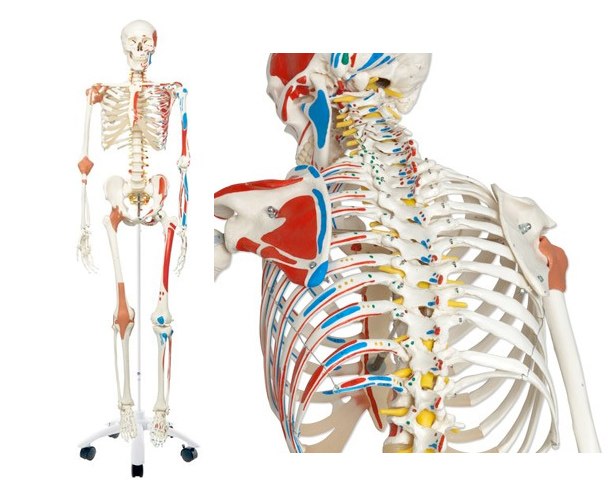
- Skeleton diagrams or models
- Construction paper or cardstock in various colors
- Scissors, glue, and tape
- Markers or colored pencils
- Popsicle sticks, pipe cleaners, or straws
- Rubber bands and paperclips
- Play-Doh or modeling clay
- Cotton balls
- Large poster board and foam board
- Printable bone templates (optional)
- String or yarn (optional)
- Educational cards with bone facts
Activity Steps
1. Introduction to the Skeletal System
Begin with a brief overview of the skeletal system. Discuss its primary functions: providing structure, protecting organs, enabling movement, and producing blood cells. Use diagrams or models to highlight key bones and joints, emphasizing their roles in the body.
2. Skeletal System Dance Party
Integrate movement with learning by organizing a dance activity. Play upbeat music and have participants stand in a circle. Call out different bone names (e.g., femur, tibia, skull, ribs) and instruct participants to move the corresponding body parts rhythmically. Incorporate freeze moments where participants must pose to represent specific bones when the music stops. This activity reinforces bone names and their locations through kinesthetic learning.
3. Build Your Own Moving Skeleton
Transition to a hands-on crafting session where participants build their own moving skeleton models.
Materials:
- Construction paper or cardstock
- Scissors, glue, tape
- Popsicle sticks, pipe cleaners, rubber bands, paperclips
- Markers or colored pencils
Instructions:
- Provide each participant or group with printed bone templates or allow them to draw their own.
- Cut out bone shapes and decorate them with markers, labeling each bone accordingly.
- Assemble the bones using popsicle sticks, pipe cleaners, and rubber bands to simulate joints and movement.
- Encourage creativity by allowing the addition of string or yarn to represent tendons and ligaments.
- Once assembled, participants can test the mobility of their skeletons, observing how different joints facilitate movement.
4. Build-A-Bone Detective Challenge
Engage participants in a detective-themed challenge to deepen their understanding of bone types and functions.
Materials:
- Play-Doh or modeling clay
- Straws or pipe cleaners
- Cotton balls
- Red and white paint or markers
- Large poster board
Instructions:
- Divide participants into small teams and provide each team with materials to create unique bone models.
- Instruct teams to craft a bone, incorporating elements that represent its type and function (e.g., long bones, flat bones).
- Once completed, have teams swap models and identify the bone types, describing their structures and roles in the body.
- Facilitate a discussion on how bone structures relate to their specific functions and support the skeletal framework.
5. Build Your Own Skeleton City
Conclude the activity by merging creativity with scientific knowledge through building a Skeleton City.
Materials:
-
Bone-shaped building blocks (wood or dense foam)
-
Cardboard or foam board for the city base
-
Glue and scissors
-
Markers or paint
-
Educational cards with bone facts
Instructions:
- Provide bone-shaped blocks and a base for participants to construct their Skeleton City.
- Encourage participants to identify and label each bone type as they build structures within the city.
- Add details like roads, parks, and buildings using markers or paint, integrating educational signs that highlight fun facts about each bone.
- Allow participants to present their Skeleton City, explaining the role of each bone and how they support the overall structure and function of the human body.
Educational Table: Bone Types and Functions
| Bone Type | Examples | Functions |
|---|---|---|
| Long Bones | Femur, Tibia, Humerus | Support weight, facilitate movement |
| Short Bones | Carpals, Tarsals | Provide stability and support with little movement |
| Flat Bones | Skull, Ribs, Sternum | Protect internal organs, provide broad surfaces for muscle attachment |
| Irregular Bones | Vertebrae, Mandible | Support complex structures and protect nervous tissue |
| Sesamoid Bones | Patella | Protect tendons, increase mechanical efficiency of muscles |
Reflection and Discussion
After completing all activities, facilitate a group discussion to reflect on the learning experience. Encourage participants to share insights about the skeletal system, discuss challenges faced during the activities, and explore how different bones contribute to overall bodily functions. Highlight the importance of bones working together with muscles and other systems to maintain health and facilitate movement.
Conclusion
The Skeletal System Interactive Adventure offers a dynamic and engaging approach to learning about the human skeleton. By combining movement, crafting, detective work, and creative building, participants gain a comprehensive understanding of bone structure, types, functions, and their critical role in the body. This multifaceted activity not only reinforces scientific knowledge but also fosters creativity, teamwork, and critical thinking skills, making the learning process both educational and enjoyable.
References
Last updated February 16, 2025