
Understanding the Skivyxa
A Detailed Exploration into the Stone Age Flake Axe
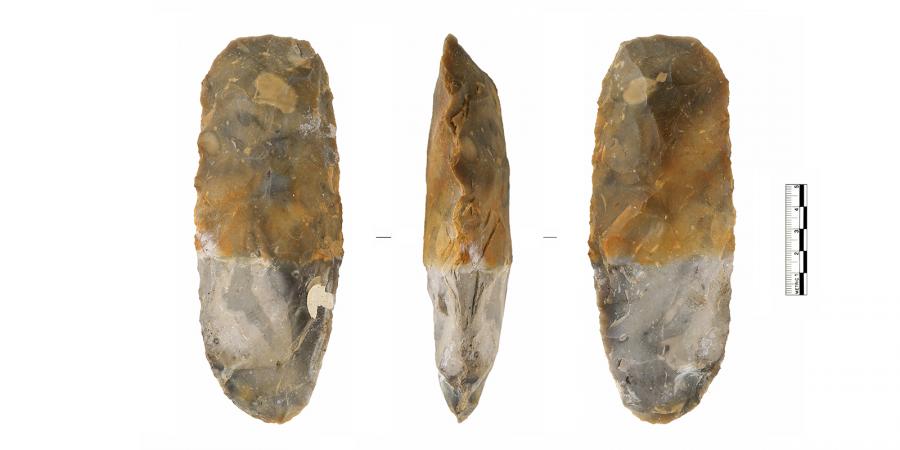
Highlights
- Material and Construction: Skivyxa are made from a sizable flint flake, providing a naturally sharp edge.
- Cultural Context: Dating predominantly to the Mesolithic period, these tools offer insight into early human technological capabilities.
- Functional Use: Wear pattern analyses suggest a primary role in hide processing rather than conventional woodworking or other tasks.
Introduction to Skivyxa
The skivyxa, a type of stone tool from the Stone Age, is a distinctive flake axe that has fascinated archaeologists and historians alike. Serving as an example of early human ingenuity, the skivyxa emerged during the period that spans from roughly 10,000 BCE to 4000 BCE, primarily during the Mesolithic era. Unlike later, more refined tools, the skivyxa was fashioned from a thick flake of stone, most commonly flint, which provided a naturally sharp edge ideal for various everyday tasks.
Historical and Cultural Context
The Stone Age presents a rich tapestry of technological experimentation and resourcefulness, with the skivyxa being one of the more intriguing innovations. Its primary time frame is associated with the Mesolithic period, succeeding the Paleolithic and preceding the Neolithic eras. This was a time marked by gradual transitions in societal organization, subsistence strategies, and technological advances.
Archaeological discoveries of skivyxa have been predominantly located across various parts of Scandinavia, notably in regions such as Sweden and Denmark. Several examples have been found in areas with significant Mesolithic kitchen middens—commonly known as "kökkenmödding" or shell heaps—which provide additional context about the lifestyles and food habits of early communities. These assemblages have been instrumental in understanding the transition from hunter-gatherer societies to more complex forms of settlement.
Cultural cross-connections also play a significant role in the study of the skivyxa. Although differing in style and craftsmanship with regional variations, many of these stone tools share a similar method of production, indicating widespread exchange or parallel technological evolution. This broader category of stone axes, known in Scandinavian contexts as "stenyxor," includes not just the skivyxa but also various other forms that were adapted to the demands of the environment and daily life.
Technical Characteristics and Construction
Material Selection and Formation
Flint remains the preferred material for crafting a skivyxa due to its inherent properties—durability, natural fracture characteristics, and the ability to hold a sharp edge. During the Stone Age, flint was readily available in many regions and was ideal for meeting the basic tool-making needs of early humans. In some instances, diabase was also used, although flint was primarily favored because of its abundance and superior edge-retention properties.
The construction of a skivyxa involves selecting a sizable flake of stone, ensuring that one side naturally forms a broad, trapezoidal blade. This method of tool creation bypasses the extensive labor required for chiseling or grinding, instead relying on the inherent geometry of the flake. The resulting tool exhibits one edge that is significantly sharp and well-suited for cutting or scraping, while another edge may remain less refined. Additionally, many skivyxor retain part of the flint’s cortex at one edge, which not only serves as a natural handle but also provides a degree of textural contrast.
Shape and Design
The typical design of a skivyxa is marked by its trapezoid shape. The substantial mass of the flake ensures that the axe has enough heft for practical use, and the unique configuration of the cutting edge is a testament to the natural geometry of flint. Archaeologists have noted that specimens sometimes feature one narrowly shaped side paired with a broad, striking edge. This design can be interpreted as an adaptation to the specific tasks for which the tool was employed.
Manufacturing Process and Lack of Hafting
Unlike later stone axes that were often mounted on a handle or haft to provide additional leverage and safety, there is little evidence to suggest that skivyxor were hafted. This detail remains contentious among researchers as there have been no definitive archaeological finds of hafted skivyxa. The absence of a handle raises important questions about how these tools were utilized, prompting scholars to consider alternative usage or the possibility of a yet-to-be-discovered hafting technique.
Functionality and Use
Primary Use in Hide Processing
One of the most intriguing aspects of the skivyxa is its proposed use in processing animal hides. Detailed wear pattern analyses have consistently indicated that these tools were largely employed for leather preparation. The sharp, broad edge provided an efficient scraping surface for removing hair or residual tissue from hides, an essential step in the preparation of materials for clothing, shelter, or other utilitarian uses. This utilitarian role underscores the importance of such tools in early human societies and their adaptation to the demands of daily survival.
The use in hide processing is further supported by the context in which many skivyxor are found. In some instances, clear traces of wear on the blade match the motions typically associated with hide scraping and tanning. This function, while more specialized than general-purpose axe work, reflects a sophisticated understanding of material processing in early human cultures. The adaptation of a naturally occurring object, such as a flint flake, into a functional tool highlights resourcefulness in an era when efficiency in tool use could make a significant difference in survival.
Secondary Functions and Broader Implications
While the predominant consensus points to hide processing, some researchers have also posited that the skivyxa might have had secondary uses. Potential roles include woodworking or even bone processing. However, no definitive evidence suggests that the tool was used extensively in these areas. The wear marks and the specific delicacy of the tool’s edge more consistently support a role in tasks requiring a nuanced, controlled scraping motion.
This specialization in function is significant in that it provides insights not only into the technology but also into the daily activities and priorities of Mesolithic societies. By examining the wear patterns and the design of the tool, archaeologists can gain a clearer picture of the types of tasks that were critical for survival and social organization. The skivyxa, therefore, stands as a tangible representation of early human adaptation to their environment, reflecting both necessity and ingenuity.
Archaeological Discoveries and Site Distribution
Notable Discoveries in Scandinavia
Numerous skivyxor have been identified across Scandinavia. In Sweden, several examples have been excavated from archaeological sites in regions such as Bohuslän and Östergötland. Likewise, Danish finds further illustrate the geographical spread and the cultural importance of these tools. Museums in both Sweden and Denmark house notable specimens that are essential to the study of Mesolithic technological development. These collections have allowed for in-depth wear analysis and typological studies, shedding light on the production techniques and functional use of the skivyxa.
In addition to Sweden and Denmark, other parts of Northern Europe have yielded similar flake axes, indicating that the use of skivyxa was not entirely localized but part of a broader technological tradition. The contextual information derived from these finds—in conjunction with other contemporaneous artifacts—contributes valuable perspectives on the trade networks and cultural exchanges that existed during the Mesolithic period.
Sample Table: Key Findings on Skivyxa
| Aspect | Details |
|---|---|
| Material | Primarily flint; occasional use of diabase |
| Period | Mesolithic (approx. 10,000 - 4000 BCE) |
| Primary Function | Hide processing and leather preparation |
| Construction | Single heavy flake with a trapezoid shape and a sharp edge |
| Hafting | No archaeological evidence of hafted versions |
| Geographic Distribution | Scandinavia: Sweden, Denmark, and surrounding areas |
Detailed Functional Analysis
Wear Pattern and Use-Wear Analysis
A significant body of research on the skivyxa centers on its use-wear patterns. Microscopic and macroscopic analyses of the edges provide clues regarding how these tools were employed in daily activities. The distinctive wear seen on the broad flint edge aligns closely with the motions involved in hide processing. The scraping and honing actions necessary for skinning animals leave characteristic marks that differ from wear produced by solely cutting wood or processing bone.
Moreover, the absence of evidence for hafting suggests that the tool was likely used in a hand-held manner. The ergonomic design, albeit rudimentary, would permit a firm grip even in the absence of a handle. It is posited that early users might have wrapped portions of the tool in leather or plant fibers to increase comfort and grip stability, although direct archaeological evidence for such wrappings is yet to be substantiated.
Interpretations of Secondary Usages
Although the wear evidence strongly supports hide processing, some experiments and comparative studies suggest that the skivyxa might have been versatile enough to serve secondary functions. The unique edge configuration could facilitate limited woodworking tasks or bone scraping, yet these functions are less consistent with the observed wear. Instead, any secondary usage would have been opportunistic rather than indicative of specialized dual functions. This interpretation reflects broader trends in Mesolithic tool usage, where multifunctionality was sometimes necessary due to the limited range of available tools.
Comparative Analysis with Other Stone Tools
Relation to Other Flake Axes
The skivyxa belongs to a broader variety of stone tools that were fabricated using flaking techniques. Its design and function are closely related to other flake axes discovered throughout the Stone Age. Comparisons show that while many flake axes share similar morphological traits—such as a heavy, robust structure and naturally sharp edges—the skivyxa’s distinctive trapezoidal shape and specific wear patterns set it apart.
In contrast to more standardized axes that appear in later periods, the skivyxa exhibits a level of tool-making that relied heavily on the natural properties of the raw materials. This contrasts with later methods where greater effort was invested in crafting handles, refining edges, and producing more uniform tools optimized for a broader range of activities.
Implications for Understanding Early Human Behavior
The study of the skivyxa not only illuminates early tool-making techniques but also offers a window into the daily lives and survival strategies of Mesolithic peoples. Through an understanding of the tool’s design, functional use, and the wear patterns observed, researchers can infer aspects of early human behavior, such as resource allocation, technological innovation, and adaptation strategies. The emphasis on maximizing the utility of natural materials reflects a broader cultural trend in early human societies, where environmental constraints demanded innovative and efficient solutions.
Conclusion
In summary, the skivyxa stands out as a remarkable testament to the ingenuity and adaptability of Stone Age communities. Constructed from flint or diabase, these flake axes were crafted in a manner that capitalized on the inherent properties of the raw materials available at the time. Their predominant function as tools for processing hides underscores a nuanced understanding of material culture, reflecting the complex interplay between technological innovation and survival in the Mesolithic period.
While common narratives of stone axes often focus on woodworking or general cutting, the evidence surrounding the skivyxa emphasizes its specialized utility in hide processing. This specialization, evident through detailed wear pattern analyses and the absence of hafting modifications, not only distinguishes the skivyxa from other contemporary tools but also highlights the creativity of early humans in addressing their specific daily needs.
Furthermore, the distribution of skivyxa finds across Scandinavia illustrates a shared technological heritage among Mesolithic societies. The similarities in design and function across various sites suggest that early human groups possibly exchanged ideas or developed parallel methods to address common challenges. As such, the study of skivyxor contributes valuable insights into the evolution of early human technology, the dynamics of cultural transmission, and the adaptive strategies necessary for thriving in varied environments.
The skivyxa, therefore, is much more than a simple stone tool; it is a symbol of early technological prowess and a reminder of how seemingly rudimentary objects played pivotal roles in shaping human society. The continuous study and interpretation of such tools enrich our understanding of prehistoric life and underscore the importance of even the smallest technological innovations in the broader context of human development.
References
- The History of the Axe - Gränsfors Bruk
- Skivyxa Image - Wikimedia Commons
- Skivyxa Example - SHM Collections
- Skivyxa Artifact - Digitalt Museum Sweden
- Historical Stone Axe - Europeana
- Stenyxa - Swedish Wikipedia
Recommended Queries for Further Exploration
Last updated February 25, 2025