
Divorce After a SLAT: Navigating the Unexpected Financial Fallout
Understanding the complex consequences when marriage ends after setting up a Spousal Lifetime Access Trust.
Key Insights: What Happens to a SLAT in Divorce?
- Loss of Grantor Access: The spouse who created the SLAT (grantor) typically loses all indirect access to the trust funds permanently upon divorce.
- Ex-Spouse Often Remains Beneficiary: Unless specifically drafted otherwise, the former spouse continues to be the beneficiary and receive benefits from the SLAT assets.
- Ongoing Tax Liability for Grantor: Despite losing access, the grantor usually remains responsible for paying income taxes on the SLAT's earnings due to grantor trust rules.
Decoding the SLAT: An Estate Planning Tool Under Scrutiny
What is a Spousal Lifetime Access Trust?
A Spousal Lifetime Access Trust (SLAT) is a sophisticated estate planning technique used by married couples. It's an irrevocable trust created by one spouse (the "grantor" or "donor" spouse) for the primary benefit of the other spouse (the "beneficiary" spouse). Often, other family members like children or grandchildren are named as remainder beneficiaries.
The main goals of establishing a SLAT typically include:
- Removing assets (and their future appreciation) from the grantor's taxable estate to minimize potential federal estate taxes.
- Utilizing the grantor's lifetime gift tax exemption (especially relevant given the potential decrease in the federal exemption amount expected after 2025).
- Providing the beneficiary spouse with access to the trust funds for needs like health, education, maintenance, and support (HEMS), thereby giving the grantor spouse *indirect* access during the marriage.

Visual overview of a Spousal Lifetime Access Trust structure.
While powerful during a stable marriage, the irrevocable nature of a SLAT means that its terms cannot easily be changed. This rigidity becomes a significant point of contention and potential financial hardship if the marriage ends in divorce.
The Immediate Impact: Losing Access and Control
When Indirect Access Vanishes
One of the most immediate and often harsh consequences of divorce after establishing a SLAT is the grantor spouse's complete loss of indirect access to the trust assets. During the marriage, the grantor could theoretically benefit from distributions made to the beneficiary spouse. However, once the couple divorces, this link is severed.
Because the SLAT is irrevocable, the grantor cannot simply reclaim the assets transferred into the trust. They have relinquished ownership and control. The assets remain locked within the trust structure, governed by its terms. For the grantor, this means funds potentially needed post-divorce are permanently out of reach, managed by a trustee for the benefit of their now ex-spouse and potentially other beneficiaries.
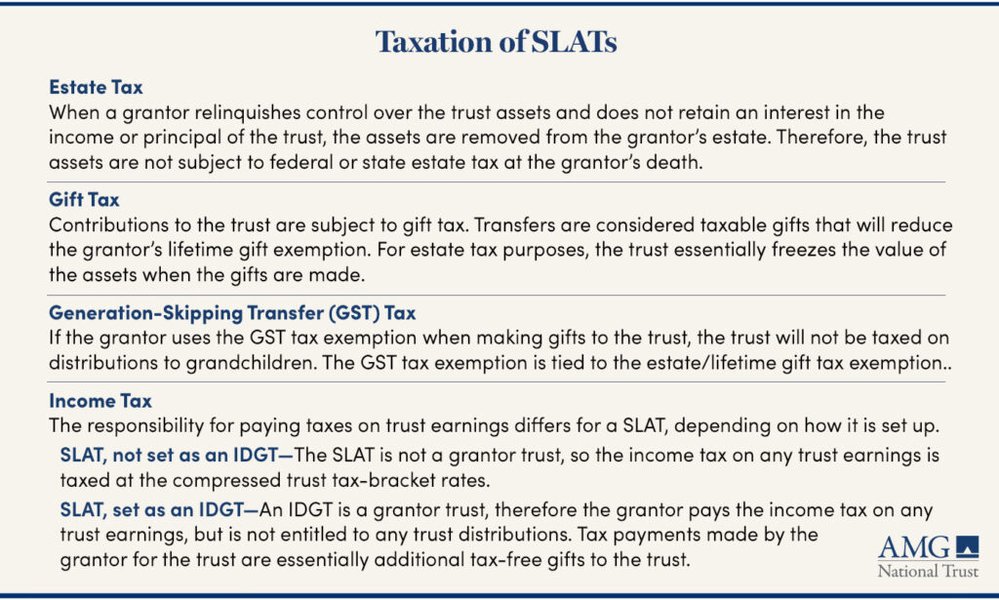
Illustration depicting how assets move into and are managed within a SLAT, separate from the grantor's estate.
The Beneficiary Question: Does the Ex-Spouse Still Benefit?
Default Rules vs. Strategic Drafting
A crucial point of contention is whether the former spouse continues to benefit from the SLAT after the divorce. The default outcome, unless the trust document explicitly states otherwise, is yes. The beneficiary spouse, now the ex-spouse, typically retains their status as a beneficiary and continues to be eligible for distributions according to the trust's terms.
This can lead to the uncomfortable situation where the grantor has irrevocably transferred significant wealth into a trust that primarily benefits someone they are no longer married to, while the grantor themselves has no access and may even be paying the trust's taxes.

Divorce finalizes the separation, impacting pre-existing financial arrangements like SLATs.
The Power of Divorce Clauses
To prevent this scenario, estate planning attorneys often recommend including specific provisions in the SLAT document that address the possibility of divorce. Common approaches include:
- Termination Clause: A provision stating that the beneficiary spouse's interest in the trust automatically terminates upon divorce.
- Floating Spouse Clause: Defines the "spouse" beneficiary as the person the grantor is married to from time to time, effectively removing an ex-spouse upon divorce.
- Trust Protector Powers: Granting a neutral third party (a trust protector) the power to modify the trust, potentially removing the ex-spouse as a beneficiary under specific circumstances like divorce.
Without such proactive drafting, the ex-spouse's continued benefit remains the likely outcome.
The Financial Sting: Ongoing Tax Burdens for the Grantor
The "Grantor Trust" Tax Trap
Perhaps one of the most counterintuitive and financially painful aspects of a SLAT post-divorce is the tax situation. SLATs are typically structured as "grantor trusts" for income tax purposes. Under the Internal Revenue Code (specifically referencing rules like those under Section 672(e) regarding spousal attribution), the grantor is treated as the owner of the trust assets for income tax calculations.
This means the grantor remains responsible for paying income taxes on all income generated by the SLAT assets (e.g., interest, dividends, capital gains), even after divorce and even though they cannot access those assets or the income themselves. The divorce does not automatically terminate the grantor trust status.
This creates a "tax trap" where the grantor is legally obligated to pay taxes on wealth that benefits their ex-spouse, potentially leading to significant financial strain without any corresponding personal benefit.
SLATs in the Divorce Court: Asset Division Complexities
Are SLAT Assets Marital Property?
The treatment of SLAT assets during divorce proceedings can be complex and varies by jurisdiction. Since the assets were irrevocably transferred *before* the divorce (assuming no fraudulent transfer), they are generally considered separate property belonging to the trust, not marital property subject to division between the spouses.
However, this doesn't mean the SLAT is irrelevant in the divorce settlement. Courts might consider:
- The existence of the SLAT and the beneficiary spouse's interest as a financial resource available to that spouse when determining alimony or the division of *other* marital assets.
- Whether the initial funding of the SLAT constituted a fraudulent transfer intended to shield assets from the other spouse in anticipation of divorce (though this can be hard to prove).
- The specific language of the trust document and any applicable state laws regarding trusts in divorce.

The legal system navigates complex asset structures like trusts during divorce.
While the SLAT assets themselves are often protected from direct division, their existence can influence the overall financial outcome of the divorce.
Mitigating the Risks: Proactive Planning Strategies
The potential negative consequences of divorce on a SLAT underscore the critical importance of careful planning and drafting *before* the trust is established and funded.
Drafting Divorce Provisions
As mentioned earlier, incorporating specific language addressing divorce is paramount. Clauses that terminate the beneficiary spouse's interest upon divorce or define the spouse based on current marital status can prevent the ex-spouse from continuing to benefit. Consulting with an experienced estate planning attorney is essential to draft these provisions effectively and ensure they comply with state law and don't create unintended tax consequences.
Prenuptial and Postnuptial Agreements
These legal agreements between spouses can explicitly address how assets held in a SLAT (or the SLAT itself) will be treated in the event of a divorce. A well-drafted prenuptial or postnuptial agreement can provide clarity and potentially override default state laws or ambiguities in the trust document, guiding the court and reducing potential litigation.
Considering Reciprocal SLATs Cautiously
Sometimes, couples create "reciprocal" or "mirror" SLATs, where each spouse sets up a SLAT for the other. This strategy requires extreme caution to avoid the IRS's "reciprocal trust doctrine," which could un-do the estate tax benefits. The trusts must have meaningful differences. In a divorce, both grantors lose indirect access to the funds held in the SLAT created for their benefit by their now ex-spouse, compounding the access issue.
Visualizing SLAT Divorce Issues and Solutions
The following mindmap illustrates the core problems arising from a SLAT in divorce and the potential planning strategies to mitigate these risks.
Comparative Analysis: Factors Influencing SLAT Divorce Outcomes
The severity of the negative consequences stemming from a SLAT during divorce isn't uniform; it depends on several interacting factors. This radar chart provides a conceptual overview of how different elements might influence the overall impact on the grantor and the complexity of the situation. Higher values suggest a greater potential for negative outcomes or complexity for the grantor.
As the chart suggests, the absence of specific divorce-related clauses in the trust document and the continuation of the ex-spouse as beneficiary, coupled with the grantor's tax liability, represent significant potential downsides. The value of assets locked away and the lack of mitigating legal agreements (like prenups/postnups) also contribute heavily to the potential negative impact.
Understanding the Nuances: A Closer Look
To consolidate the key challenges and potential solutions when facing divorce with a SLAT in place, the following table provides a summary:
| Issue Arising from Divorce | Typical Consequence | Potential Mitigation Strategy |
|---|---|---|
| Grantor's Access to Assets | Indirect access is permanently lost. Assets remain in the irrevocable trust. | No direct mitigation post-funding. Relies on pre-planning; consider impact before creating the SLAT. |
| Beneficiary Status of Spouse | Ex-spouse typically remains the beneficiary and receives distributions. | Include a specific clause in the trust to terminate the spouse's interest upon divorce (e.g., termination clause, floating spouse definition). |
| Grantor's Tax Liability | Grantor continues to pay income/capital gains tax on trust earnings (grantor trust rules). | Careful trust drafting might explore options, but often hard to avoid post-creation. Potential for trust modification/decanting if state law allows, or seeking trustee action to reimburse taxes if permitted by trust. |
| Treatment in Divorce Proceedings | Assets usually not directly divisible marital property, but can influence alimony/division of other assets. | Address SLAT treatment explicitly in a Prenuptial or Postnuptial Agreement. Ensure trust was not funded fraudulently. |
| Reciprocal SLATs | Both grantors lose access. Potential IRS scrutiny under reciprocal trust doctrine if not distinct. | Ensure significant differences between trusts if using this strategy. Understand dual loss of access upon divorce. |
This table highlights that while some issues can be addressed through careful drafting and agreements, the fundamental loss of access for the grantor is often an unavoidable consequence due to the irrevocable nature of the SLAT.
Expert Insights on SLATs and Divorce Risks
Understanding the potential pitfalls of SLATs, especially concerning divorce, is crucial for effective estate planning. The following video discusses the pros and cons of SLATs, touching upon the implications of divorce.
This video offers perspectives on why SLATs are used and highlights key considerations, including the risks associated with changes in marital status. It reinforces the need for thorough discussion and planning with legal and financial advisors before implementing such a strategy.
Frequently Asked Questions (FAQ)
Can the SLAT be changed or revoked after divorce?
Generally, no. SLATs are irrevocable trusts, meaning the grantor gives up the right to amend or revoke the trust after its creation. While some limited modifications might be possible through mechanisms like decanting (pouring assets into a new trust with different terms) or actions by a trust protector (if one was appointed and given relevant powers), these options depend heavily on the specific trust language and state law, and cannot be guaranteed. The grantor typically cannot simply undo the trust because of a divorce.
What happens if the ex-spouse beneficiary remarries?
Unless the trust document specifies otherwise (e.g., terminating benefits upon the beneficiary's remarriage, which is less common), the ex-spouse's remarriage generally does not affect their status as a beneficiary of the SLAT. They would likely continue to receive distributions according to the trust's terms, benefiting them and potentially their new spouse indirectly.
Are the assets in the SLAT protected from the ex-spouse's creditors?
Typically, yes, especially if the trust includes a "spendthrift" clause. This clause generally prevents beneficiaries from assigning their interest in the trust and protects trust assets from the claims of their creditors. However, the level of protection can vary by state law, and certain types of creditors (like those for child support or alimony, sometimes called "exception creditors") might still be able to reach trust distributions or, in rare cases, assets.
If my spouse created a SLAT for me, do I lose access if we divorce?
It depends entirely on the terms of the SLAT your spouse created. If you are the named beneficiary spouse and the trust document does *not* contain a clause terminating your interest upon divorce, you would likely continue to be a beneficiary and have access to distributions as specified in the trust. However, if the trust includes a divorce termination clause or defines the beneficiary as the grantor's spouse "from time to time," your interest would likely end upon divorce.
Recommended Reading
- How can I protect a SLAT from divorce before creating one?
- What are the tax implications of a grantor trust after divorce?
- Can a postnuptial agreement change how a SLAT is treated in divorce?
- What are alternatives to SLATs for estate planning that are less risky in divorce?
References
Last updated May 6, 2025