
Capturing the World Through Glass and Mirrors: The SLR Camera Experience
Master the fascinating mechanics and step-by-step process of using a Single-Lens Reflex camera for stunning photography
Key Aspects of SLR Photography
- Unique Mirror System - SLR cameras use a precision mirror and prism mechanism that allows you to see exactly what the lens sees, unlike point-and-shoot cameras
- Complete Creative Control - Master the exposure triangle (aperture, shutter speed, ISO) for perfect images in any lighting condition
- Interchangeable Lenses - Expand your creative possibilities with different lenses for various photography styles and subjects
Understanding How an SLR Camera Works
Single-Lens Reflex (SLR) cameras represent a sophisticated blend of optical and mechanical engineering that revolutionized photography. Before diving into the step-by-step process of using one, it's crucial to understand the mechanics behind how these cameras capture images.
The Optical Pathway: How SLRs Function
The magic of an SLR camera lies in its unique design that allows photographers to see exactly what the lens sees before taking a photo:
- Light Entry: Light enters through the lens
- Mirror Reflection: A mirror positioned at a 45-degree angle reflects this light upward
- Pentaprism/Pentamirror: Light bounces through this five-sided prism or mirror arrangement
- Viewfinder: The light exits through the viewfinder, showing you precisely what will be captured
- Mirror Action: When you press the shutter, the mirror flips up temporarily
- Exposure: With the mirror up, light travels directly to the film or digital sensor
- Reset: After exposure, the mirror returns to its position, allowing you to see through the viewfinder again
Digital vs. Film SLRs
While the fundamental mirror mechanism remains the same, Digital SLRs (DSLRs) replace film with digital sensors. DSLRs also offer immediate image review, electronic settings adjustments, and digital storage of images instead of film development.
Step-by-Step Process of Using an SLR Camera
Essential Preparation Steps
1. Setting Up Your Camera
Before taking your first photo, properly set up your SLR camera:
- Attach your chosen lens securely
- Insert a memory card (digital) or load film (analog)
- Install and check the battery
- Set your camera to an appropriate starting mode (Auto for beginners or Manual if you're more experienced)
- Remove the lens cap
2. Understanding Basic Controls
Familiarize yourself with essential camera controls:
- Shutter release button (to take photos)
- Mode dial (selects shooting modes)
- Command dials (adjust settings quickly)
- Menu button (access additional settings)
- Playback button (review images on digital SLRs)
- AF/MF switch (toggle between autofocus and manual focus)
The Photography Process
3. Composing Your Shot
Look through the viewfinder to see exactly what your camera will capture:
- Frame your subject using composition techniques like the rule of thirds
- Pay attention to the viewfinder information (focus points, exposure meter, etc.)
- Hold the camera steady, typically with your right hand on the grip and left hand supporting the lens
4. Setting the Exposure
Determine the proper exposure settings for your scene:
- Aperture (f-stop): Controls depth of field and light intake (lower numbers create shallow depth of field)
- Shutter Speed: Controls motion blur and exposure time (faster speeds freeze action)
- ISO: Adjusts sensor/film sensitivity (higher numbers increase sensitivity but add noise/grain)
5. Focusing Your Shot
Ensure your subject is sharp and in focus:
- Choose between manual focus or autofocus
- If using autofocus, select an appropriate focus mode (single, continuous, etc.)
- Choose focus points that align with your subject
- Half-press the shutter button to activate autofocus
6. Taking the Photograph
Capture your image with these final steps:
- Review your settings one last time
- Hold the camera steady to avoid camera shake
- Press the shutter button fully to take the photo
- Listen for the characteristic "click" as the mirror flips up and the shutter opens and closes
- For film cameras, advance to the next frame (automatic in most modern SLRs)
7. Review and Repeat
- For digital SLRs: Review the image on the LCD screen, checking exposure, composition, and focus
- For film SLRs: Make notes of your settings for future reference when you see the developed photos
- Adjust settings as needed and take additional photos
SLR Camera Performance Comparison
Different types of SLR cameras offer varying capabilities across key performance metrics. The following radar chart compares the relative strengths of entry-level, mid-range, and professional SLR cameras:
The Exposure Triangle Explained
Mastering the exposure triangle is crucial for taking control of your SLR camera. The table below outlines how these three elements work together to create properly exposed photographs:
| Parameter | Function | Effect When Increased | Effect When Decreased | Creative Uses |
|---|---|---|---|---|
| Aperture (f-stop) | Controls the size of the lens opening | More light, shallower depth of field (lower f-number) | Less light, greater depth of field (higher f-number) | Portrait isolation (f/1.8), landscape sharpness (f/11) |
| Shutter Speed | Controls how long the sensor/film is exposed | Less light, freezes motion (1/1000s) | More light, shows motion blur (1/30s or slower) | Sports photography (fast), light trails (slow) |
| ISO | Controls sensor/film sensitivity to light | More light sensitivity, more noise/grain (ISO 1600+) | Less sensitivity, cleaner image (ISO 100-400) | Low light situations (high), bright conditions (low) |
SLR Photography Concept Map
The following mind map illustrates the interconnected concepts in SLR photography, showing how various elements relate to each other and contribute to successful image-making:
Inside the SLR Camera: Video Demonstration
This comprehensive video explains exactly how a film SLR camera works, showing the internal mechanisms that make these cameras unique. It offers a clear visualization of the mirror system, shutter mechanism, and overall operation that's difficult to understand from text descriptions alone:
SLR Camera Components and Mechanisms
Understanding the internal components of an SLR camera helps photographers appreciate how these precision instruments capture images. Here are some visual references to the internal workings of SLR cameras:
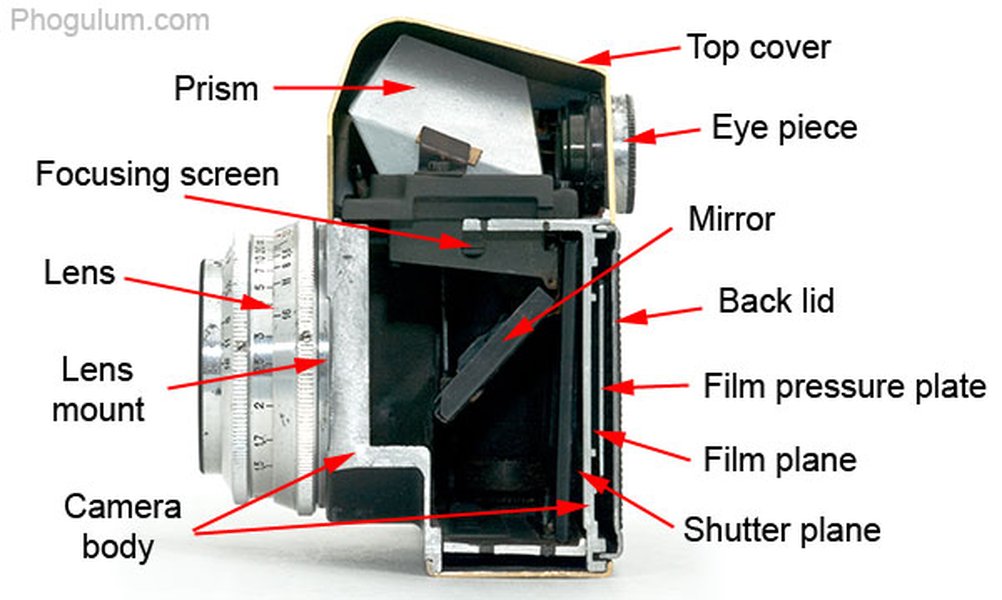
Detailed diagram showing the internal components of an SLR camera
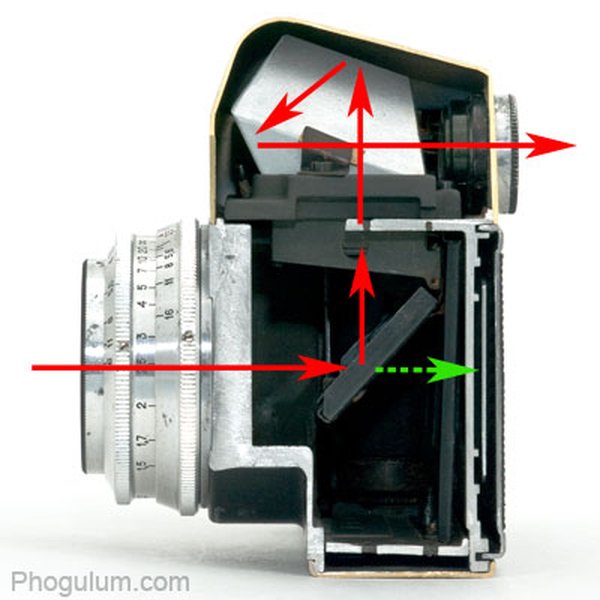
Illustration of the light path through an SLR camera system
Frequently Asked Questions
References
- How Does Single-Lens Reflex (SLR) Camera Work - Phogulum
- Photography Basics Guide - SLR Lounge
- How an SLR Camera Works - PictureCorrect
- DSLR Camera Beginner's Guide - Finding The Universe
- SLR Photography Guide - Tips and Techniques
- Single-lens reflex camera - Wikipedia
Recommended Topics

Last updated April 8, 2025