
Unlocking the Future: Resilient Mining Infrastructure in Australia's Extreme Environments
Pioneering intelligent design and robust engineering for unparalleled durability and safety in the Australian mining sector.
Key Insights into Advanced Mining Infrastructure
- Smart structures integrate cutting-edge sensors and adaptive materials to provide real-time monitoring and proactive responses, significantly enhancing safety and operational efficiency in harsh mining environments.
- Engineering for extreme conditions employs advanced materials, specialized designs, and innovative construction techniques to ensure mining infrastructure can withstand Australia's unique challenges, from searing heat to seismic activity.
- The synergy between smart technologies and robust engineering principles leads to long-term durability, reduced maintenance costs, and improved sustainability, creating a safer and more productive mining future.
Revolutionizing Resilience: Smart Structures for Australia's Toughest Mines
Enhancing safety and efficiency with intelligent infrastructure in Australia's harsh mining environments.
Australia's mining sector operates in some of the world's most demanding conditions, from scorching deserts and remote locations to areas with significant seismic activity. Ensuring the integrity and safety of critical infrastructure in these harsh environments is a perpetual challenge. However, a revolutionary approach is emerging: the application of smart structures. These intelligent systems, equipped with advanced sensors and adaptive capabilities, are set to redefine how we design, build, and maintain mining assets, offering unprecedented levels of monitoring, performance, and resilience.
Defining Smart Structures in Mining
At its core, a "smart structure" (also known as an adaptive or intelligent structure) is an engineering system designed to sense its environment, interpret information, and react appropriately. Drawing an analogy with living organisms, these structures can continuously monitor their health, identify early-stage damage or defects, and even forecast potential issues. This goes beyond traditional static design; smart structures integrate sensors, actuators, and control systems into a single, cohesive system. In the context of mining, this means structures that can respond to changes in temperature, pressure, humidity, and mechanical loads, adjusting their properties or sending critical alerts.
The Imperative of Smart Structures in Harsh Mining Environments
The unique challenges of Australian mining environments necessitate such advanced solutions. Extreme temperatures, high pressures, corrosive agents, and significant seismic activity can rapidly degrade conventional structures. Traditional maintenance often relies on periodic manual inspections, which can be costly, time-consuming, and insufficient for detecting subtle, early-stage damage.
Smart structures offer a proactive approach. By embedding sensors directly within construction materials like concrete and steel, they provide real-time data on load-bearing performance, strain levels, crack displacements, and dynamic movements. This continuous monitoring is crucial for components operating in harsh environments, allowing for timely intervention and ensuring safety and sustainability. For instance, smart cement skin sensors can protect and wirelessly monitor concrete and steel structures even in harsh marine and radioactive environments.
Key Benefits for the Australian Mining Sector
The adoption of smart structures brings a multitude of benefits to the Australian mining industry:
- Enhanced Safety: Real-time structural health monitoring (SHM) allows for immediate detection of anomalies, significantly reducing the risk of catastrophic failures. This is particularly vital in underground mining, where structural integrity is paramount for worker safety.
- Increased Durability and Longevity: By continuously monitoring conditions and allowing for proactive maintenance, smart structures can significantly extend the lifespan of assets. They can identify minor issues before they escalate into major problems, leading to more cost-effective repair solutions.
- Optimized Performance and Efficiency: Understanding how structures react to operational loads and environmental factors in real-time allows for performance optimization. This data can inform future designs and operational practices, leading to more efficient resource extraction and reduced downtime.
- Cost Savings: While the initial investment in smart technology may seem higher, the long-term savings from predictive maintenance, reduced repair costs, avoided unplanned shutdowns, and extended asset life are substantial. This includes minimizing time spent in hazardous environments, reducing damage or injury risk to personnel.
- Sustainability: Smart structures can contribute to more sustainable mining practices by optimizing material use and ensuring the longevity of infrastructure, aligning with growing industry demands for environmental responsibility.
- Remote Monitoring: For geographically isolated mine sites, the ability to wirelessly monitor structures in real-time offers immense advantages, reducing the need for frequent on-site inspections in difficult-to-access areas.
Materials and Technologies Powering Smart Structures
The development of smart structures relies on advancements in smart materials and sensor technologies. These materials can sense and respond to external stimuli like temperature, pressure, and humidity, changing their properties accordingly. Examples include:
- Piezoelectric materials: Generate an electric charge in response to mechanical stress, ideal for sensing vibrations.
- Shape memory alloys: Can return to a pre-set shape after being deformed, useful for actuators.
- Fiber optic sensors: Embedded within materials, they can detect minute changes in strain, temperature, and chemical exposure, offering high accuracy and resistance to electromagnetic interference. These are critical for structural health monitoring in harsh environments.
- Wireless sensors: Facilitate data transmission from remote or difficult-to-access locations.
These materials are integrated with advanced control logic and electronics for data processing and response generation. The overall aim is to develop sustainable construction technology that allows real-time control and monitoring of civil infrastructure.

Smart mining technology on display, highlighting advanced machinery for efficient operations.
The Future of Mining Infrastructure
The integration of smart structures is not just an incremental improvement; it represents a paradigm shift in structural engineering for the mining sector. From processing plants and conveyor systems to deep underground shafts and surface facilities, smart technology will enable assets to "communicate" their condition, ensuring continuous operation and safety. As an experienced structural engineer in the Australian mining sector, I foresee a future where intelligent, self-monitoring infrastructure is the standard, minimizing risks, maximizing productivity, and safeguarding personnel in even the most extreme conditions.
Forged in Fire & Ice: Engineering Mining Structures for Extreme Australian Conditions
Designing resilient mining infrastructure to withstand Australia's most challenging environments.
The Australian mining landscape is defined by its extremes: from the brutal heat and dust of the Pilbara to the remote, cold reaches of new resource frontiers. As a seasoned structural engineer specializing in this sector, I can attest that designing and constructing infrastructure that can reliably operate in such extreme conditions is not merely a task but an art and a science. It demands extraordinary engineering solutions that go far beyond standard requirements, focusing on resilience, durability, and a deep understanding of environmental dynamics. This post delves into the critical considerations and innovative approaches that ensure mining structures are truly "Built to Endure."
Defining "Extreme Conditions" in Mining
For structural engineers, extreme environments encompass a range of challenging factors:
- Temperature Extremes: From searing desert heat exceeding 50°C to sub-zero temperatures in cold-climate regions like those experienced in some remote parts of Australia. These fluctuations induce significant thermal stresses.
- Corrosive Substances: Exposure to chemicals, high salinity in coastal operations, or acidic mine drainage can accelerate material degradation.
- Abrasive Conditions: Dust, sand, and rock particles can cause significant wear and tear on components and surfaces.
- High-Impact Forces and Vibrations: From blasting operations to heavy machinery and seismic activity, structures must withstand immense dynamic loads.
- Remote and Challenging Logistics: The sheer remoteness of many Australian mine sites complicates transportation, construction, and ongoing maintenance.
- Visibility Issues: Dust storms, fog, or low light conditions can impact operational safety and maintenance.
Core Engineering Considerations for Resilience
To counteract these formidable challenges, structural engineers in the mining sector employ a multi-faceted approach:

An illustrative image of the challenging Australian mining environment, emphasizing the need for robust engineering.
Material Selection is Paramount
- High-Performance Steel: Steel structures are crucial due to their superior durability and load-bearing capacity. They possess high tensile, compressive, bending, and torsional strength, enabling them to withstand significant static and dynamic loads, including those from storms and earthquakes. Designing steel structures for harsh environments requires an in-depth understanding of both the material and environmental factors.
- Advanced Composites: Materials like carbon fiber or glass fiber-reinforced polymers offer excellent strength-to-weight ratios and superior resistance to environmental degradation, including corrosion and temperature extremes.
- Specialized Alloys: For critical components, high-strength alloys like Inconel and titanium are utilized to endure extreme temperatures, pressures, and corrosive drilling fluids.
- Concrete with Enhanced Properties: For foundations and heavy-duty applications, concrete formulations are adapted to resist freeze-thaw cycles, chemical attack, and high compressive loads.
Robust Structural Design
- Load Analysis: Comprehensive analysis of static and dynamic loads, including wind, seismic, and operational forces, is critical. Designs must accommodate thermal expansion and contraction.
- Foundations for Permafrost and Unstable Ground: In cold climates, advanced construction techniques such as pile foundations and reinforced concrete are employed to ensure stability on permafrost. Similarly, in areas with unstable ground, deep foundations or ground improvement techniques are essential.
- Modularity and Adaptability: For remote or hostile locations, modular designs enable easy transportation, assembly, and disassembly, minimizing time spent in harsh environments and reducing risk. Adaptable structures can also respond to changing operational requirements or environmental challenges.
- Fatigue and Corrosion Resistance: Designs must incorporate features that mitigate fatigue cracking from continuous vibration and ensure long-term resistance to corrosive elements through appropriate coatings, cathodic protection, or material choices.
Innovative Construction Techniques
- Prefabrication: Assembling larger components off-site in controlled environments reduces on-site exposure to harsh conditions and improves construction quality and speed.
- Automation and Robotics: For hazardous or difficult-to-access areas, robots can be utilized for tasks like inspection, repair, or even initial construction, minimizing human exposure to risk. The goal is to make robots smart enough to design and create structures without specific instructions, especially in environments difficult or hazardous for humans.
- Advanced Welding and Fabrication: Specialized welding procedures and quality control are essential to ensure the integrity of steel structures in extreme conditions.
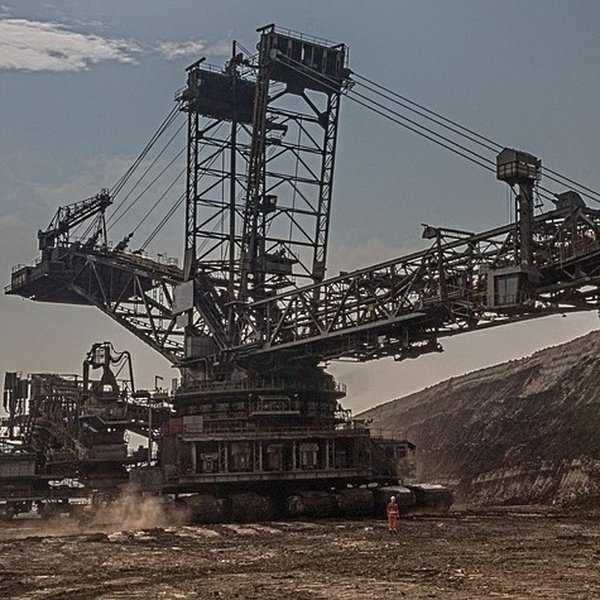
Advanced applications in the mining industry, showcasing robust solutions for heavy-duty operations.
Integration of Monitoring and Smart Technologies
The integration of smart structures with embedded sensors is a game-changer. Real-time data on structural integrity, temperature, and environmental conditions allows for proactive maintenance and ensures the longevity of structures. This "embedded intelligence" is crucial for early detection of potential issues.
Case Studies and Australian Context
Australia’s mining sector, particularly in regions like the Bowen Basin for coal or the Pilbara for iron ore, consistently pushes the boundaries of extreme environment engineering. Our structural engineering consultants frequently work on projects where the designs must meet stringent Australian Standards (and often international standards like ISO) while enduring immense operational stress and environmental assault. Companies like Yenem Engineering Services specialize in designing reliable assets for mining and industrial sites, from processing plants to large crane runways, offering structural design, inspection, and remedial work. Our team works to identify issues with plant structures before inspectors do, proposing practical recommendations for ongoing safety and reliability.
This video offers a fascinating glimpse into the preparatory work involved in constructing Australia's newest mine. It's highly relevant as it showcases the real-world scale and initial challenges faced by engineers when developing infrastructure in remote and demanding Australian environments. Understanding these foundational steps provides crucial context to the discussions on smart structures and engineering for extreme conditions.
Engineering Innovation in Australian Mining: A Comparative Analysis
The Australian mining sector faces unique challenges that demand innovative structural engineering solutions. The following table provides a comparative overview of key engineering aspects for smart structures and those built to endure extreme conditions, highlighting their primary characteristics and benefits.
| Aspect | Smart Structures for Harsh Environments | Engineering for Extreme Conditions |
|---|---|---|
| Core Philosophy | Proactive, adaptive, intelligent systems that monitor and respond to environmental/operational changes. | Resilient, robust, durable designs built to withstand defined severe environmental and operational stressors. |
| Key Technologies | Embedded sensors (fiber optic, piezoelectric, wireless IoT), actuators, adaptive materials (shape memory alloys). | High-performance materials (specialized steel, advanced composites, enhanced concrete), modular construction, prefabrication. |
| Primary Goal | Real-time structural health monitoring, predictive maintenance, automated response, continuous optimization. | Long-term durability, structural integrity under peak loads, resistance to degradation (corrosion, fatigue, thermal stress). |
| Main Benefits | Enhanced safety, increased asset lifespan through early detection, optimized performance, reduced downtime, cost savings from predictive maintenance. | Guaranteed operational continuity, reduced catastrophic failure risk, lower long-term maintenance costs due to inherent strength, enhanced worker safety. |
| Challenges | Sensor longevity in harsh environments, data transmission reliability, cybersecurity for integrated systems, initial investment cost. | Complex load analysis, material selection for multi-faceted threats, logistical challenges in remote areas, thermal expansion/contraction management. |
| Australian Context | Critical for remote monitoring of assets in inaccessible sites, early warning for seismic activity, and managing thermal fluctuations. | Essential for enduring Pilbara heat, cold climates, corrosive coastal environments, and dynamic loads from heavy machinery. |
Performance Benchmarks in Australian Mining Infrastructure
Assessing the performance of advanced structural engineering in Australian mining environments involves evaluating several critical benchmarks. This radar chart illustrates the perceived effectiveness across different performance indicators for traditional vs. smart/durable structures.
This radar chart visually compares the capabilities of traditional structures against modern smart and durable structures in Australian mining. It highlights significant advancements in areas such as safety enhancement, operational efficiency, longevity, cost savings, environmental adaptation, and remote monitoring. The chart indicates that smart and durable structures consistently outperform traditional approaches across all these critical metrics, underlining the transformative impact of advanced engineering on mining infrastructure.
The Interconnectedness of Modern Mining Infrastructure
The development of resilient mining infrastructure in Australia is a multifaceted endeavor, integrating various engineering disciplines and technological innovations. This mindmap illustrates the key components and their relationships within the modern mining infrastructure ecosystem.
This mindmap illustrates the comprehensive ecosystem of modern mining infrastructure resilience in Australia. It highlights the synergistic relationship between "Smart Structures" and "Engineering for Extreme Conditions," showcasing how advanced materials, sensor technologies, and robust design principles coalesce to overcome formidable environmental challenges. The diagram also points towards future trends that will further enhance the safety, efficiency, and sustainability of mining operations.
Frequently Asked Questions (FAQs)
What makes a structure ‘smart’ in the mining industry?
Are smart structures cost-effective for mining operations?
How do engineers ensure structures endure in harsh environments?
What are the primary challenges of deploying smart structures in remote Australian mine sites?
What specific types of sensors are most commonly used in smart structures for mining?
What role does modular construction play in building for extreme mining environments?
How do structural engineers ensure the long-term integrity of structures against corrosion in mining operations?
Conclusion
The Australian mining sector stands at the forefront of structural engineering innovation, constantly pushing the boundaries of what is possible in extreme environments. The integration of smart structures and advanced engineering principles for resilience is not merely an incremental improvement but a fundamental shift towards a safer, more efficient, and sustainable future. By leveraging real-time data, adaptive materials, and robust design methodologies, engineers are ensuring that critical mining infrastructure is not just built to endure, but also intelligently equipped to thrive, safeguarding operations, personnel, and the environment for decades to come.
Recommended Searches
- How intelligent infrastructure boosts mining safety in Australia
- Advanced materials for resilient mining structures in extreme heat
- Impact of AI and IoT on structural health monitoring in remote mines
- Future trends in sustainable mining infrastructure development Australia