
Smart Storage Software vs. Easy Storage Solutions: Unpacking Your Ideal Management Platform
A deep dive into two distinct approaches to self-storage management, helping you choose the right fit for your facility's needs and ambitions.
Highlights of the Comparison
- Scope and Focus: Smart storage software often represents a broader category of advanced, automation-driven solutions applicable across industries or for tech-forward self-storage, while Easy Storage Solutions is a specialized, user-friendly platform designed specifically for small to medium self-storage businesses.
- Technological Sophistication: Smart storage software typically emphasizes cutting-edge technologies like AI, IoT integration for smart locks and unit monitoring, and predictive analytics. Easy Storage Solutions prioritizes core functionalities, ease of use, and reliability for essential self-storage operations.
- Target User and Scalability: Smart solutions may cater to larger, multi-facility operations requiring robust scalability and complex integrations. Easy Storage Solutions excels for smaller operators or those new to the industry, valuing affordability and simplicity, though it can support growth to a certain extent.
Understanding the Contenders
Choosing the right management software is pivotal for the efficiency and profitability of a self-storage facility. Today, we compare two distinct categories: "smart storage software," representing a class of technologically advanced systems, and "Easy Storage Solutions," a specific, well-regarded software product tailored for the self-storage industry.
What is "Smart Storage Software"?
The term "smart storage software" generally refers to a category of management systems that leverage modern technologies to automate and optimize storage operations. These solutions often incorporate features like:
- Artificial Intelligence (AI) for predictive analytics and dynamic pricing.
- Internet of Things (IoT) integration for smart locks, remote unit monitoring (e.g., temperature, humidity, access), and intelligent access control systems.
- Advanced automation for tasks ranging from billing and collections to facility maintenance alerts.
- Robust reporting dashboards with real-time data visualization.
- Scalability for multi-facility management from a centralized platform.
While some specific products might brand themselves as "Smart Storage Software," the term more broadly describes a technologically advanced approach to storage management, potentially applicable in various sectors including sophisticated self-storage operations that prioritize automation and enhanced security.
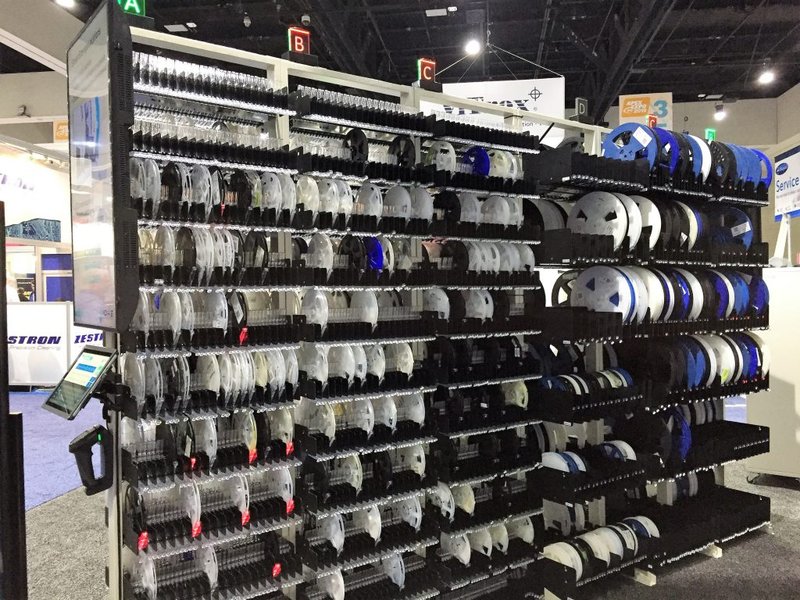
An example of smart storage system components, showcasing advanced hardware integration.
Introducing Easy Storage Solutions
Easy Storage Solutions (ESS) is a specific, cloud-based self-storage management software designed primarily for small to medium-sized facilities. It is known for its user-friendly interface, affordability, and comprehensive set of core features essential for day-to-day operations. Key aspects of Easy Storage Solutions include:
- Web-based accessibility, allowing management from any device, anywhere.
- Integrated website for online rentals, reservations, and payments.
- Automated billing, invoicing, and payment reminders.
- Tenant management portal and communication tools.
- Reporting features for occupancy, financials, and more.
ESS focuses on simplifying the management process for facility owners and operators, often praised for its customer support and ease of onboarding.

The official logo for Easy Storage Solutions.
Head-to-Head: Feature and Capability Comparison
Let's delve into a more detailed comparison across several key operational aspects.
Core Focus and Target Audience
Smart Storage Software (General Category)
Generally aims to serve a broader range of storage needs, potentially including logistics, warehousing, and large or tech-savvy self-storage enterprises. The focus is on high automation, data-driven insights, and integration with smart physical infrastructure (like IoT devices). The target user is often more technically inclined or part of a larger organization with dedicated IT resources.
Easy Storage Solutions
Specifically targets the self-storage industry, with a particular emphasis on small to medium-sized businesses (SMBs). The primary goal is to provide an accessible, affordable, and easy-to-use platform that covers all essential management tasks for self-storage operators. The user base typically includes facility managers and owners who may not be IT experts but need efficient operational tools.
Automation Capabilities
Smart Storage Software (General Category)
Tends to offer a high degree of automation, extending beyond basic administrative tasks. This can include dynamic adjustments to storage layouts, predictive maintenance scheduling, AI-powered customer service chatbots, and fully automated late-to-auction processes. Automation is often geared towards minimizing human intervention and maximizing operational efficiency through smart technology.
Easy Storage Solutions
Provides robust automation for routine self-storage tasks such as invoicing, payment processing (including recurring payments and reminders), and sending communications. While comprehensive for standard operations, its automation depth might not extend to the AI-driven predictive analytics or IoT-based dynamic environmental controls sometimes found in the broader "smart storage" category.
Key Feature Sets
The table below summarizes common features and how each type of software typically addresses them:
| Feature | Smart Storage Software (General Category) | Easy Storage Solutions |
|---|---|---|
| Online Rentals & Reservations | Yes, often highly customizable and integrated with dynamic pricing. May include virtual tours or AI-assisted unit selection. | Yes, fully integrated with a tenant portal and a mobile-friendly website provided by ESS. Streamlined and user-friendly. |
| Automated Billing & Payments | Yes, comprehensive with multiple payment gateway options, advanced recurring billing logic, and automated collections processes. | Yes, robust automated invoicing, payment reminders, support for credit card and ACH payments, and auto-pay options. |
| Access Control & Security | Typically supports or integrates with smart locks, electronic gates, individual unit alarms, and CCTV systems. Real-time monitoring and alerts are common. | Provides software-based user access controls. While it can work alongside separate security systems, it doesn't typically offer direct integrated smart hardware control (e.g., smart locks) as a core built-in feature. |
| Tenant Management | Detailed tenant profiles, communication logs, often with CRM-like functionalities and automated lifecycle management. | Comprehensive tenant data management, communication tools (email, SMS), lease tracking, and history. |
| Unit Monitoring | Often includes options for real-time unit status (occupancy, door status), environmental monitoring (temperature, humidity via IoT sensors), and alerts. | Primarily software-based occupancy tracking. Advanced physical unit monitoring is not a standard feature. |
| Multi-Facility Management | Many platforms are designed for managing multiple locations from a single, centralized dashboard, offering aggregated reporting and control. | Can manage multiple units effectively. Historically, managing distinctly separate facilities under a single login might have been less seamless than some enterprise-level "smart" systems, though it supports growing businesses. Users should verify current multi-site capabilities for their specific needs. |
| Website Integration | Often provides tools for creating highly customizable, SEO-optimized branded websites, or APIs for deep integration with existing enterprise sites. | Includes a mobile-friendly website for online rentals and payments, which is a significant value proposition for smaller operators. |
| Reporting & Analytics | Advanced dashboards with predictive analytics, resource utilization reports, financial forecasting, and customizable reporting tools. | Provides standard and essential reporting tools for occupancy, revenue, payments, delinquencies, and other key operational metrics. |
Integration and Scalability
Smart Storage Software (General Category)
Highly scalable, designed to adapt to growing business needs, including expanding to multiple locations or integrating a wider array of IoT devices and enterprise systems (e.g., ERP, advanced accounting software). APIs are common for custom integrations.
Easy Storage Solutions
Offers good scalability for growing self-storage businesses, particularly those starting small and expanding. It integrates well with common payment gateways and accounting software like QuickBooks. While it can handle facilities with several hundred units, extremely large or complex multi-site operations might explore solutions designed with enterprise-level scalability as a primary focus if advanced, centralized multi-site features are paramount.
User Experience (UX) and Customer Support
Smart Storage Software (General Category)
User interfaces can range from sleek and modern to more complex, data-dense dashboards geared towards technical staff or managers needing deep analytical capabilities. Support may be specialized, especially for enterprise clients with complex integrations.
Easy Storage Solutions
Frequently praised for its intuitive, user-friendly interface that requires minimal training. The UX is designed for ease of navigation and quick task completion. Customer support is often highlighted as responsive and helpful, with direct human assistance available, which is a significant plus for smaller operators.
Pricing and Affordability
Smart Storage Software (General Category)
Pricing can vary widely. Systems with extensive hardware integration (smart locks, sensors) and advanced AI features typically come with higher upfront and ongoing costs. The ROI is often justified for larger operations or those where enhanced security and automation provide significant value.
Easy Storage Solutions
Known for its competitive and transparent pricing, making it highly accessible for small to medium-sized facilities and new entrants to the market. It offers a strong value proposition by bundling essential features without the premium cost associated with some more complex systems.
Visualizing the Differences: A Comparative Analysis
To better illustrate the typical positioning of "Smart Storage Software" (as a general category of advanced systems) versus "Easy Storage Solutions," the following radar chart compares them across key attributes. Note that "Smart Storage Software" values represent an idealized advanced system, and specific products will vary.
This chart visualizes how Easy Storage Solutions typically excels in ease of use for non-technical users and cost-effectiveness for SMBs, while the general category of advanced "Smart Storage Software" scores higher on automation depth, scalability for large enterprises, advanced AI/IoT features, hardware integration complexity (implying capability), and multi-facility centralization.
Conceptual Overview: Storage Software Landscape
The mindmap below provides a conceptual overview of the self-storage software landscape, highlighting the positioning of Smart Storage Software (as a category) and Easy Storage Solutions (as a specific product) within it.
AI & Machine Learning
IoT Device Integration (Smart Locks, Sensors)
Predictive Analytics
Advanced Automation
High Scalability
Often for Larger/Tech-Forward Ops"] id1a2["Focus:
Operational Optimization
Enhanced Security
Data-Driven Decisions"] id1b["Traditional / SMB-Focused Software"] id1b1["Key Traits:
Core Operational Features
User-Friendliness
Affordability
Reliable Billing & Tenant Management"] id1b2["Focus:
Streamlining Daily Tasks
Accessibility for Smaller Businesses"] id2["Specific Products Examples"] id2a["Easy Storage Solutions"] id2a1["Niche: Small to Medium Self-Storage"] id2a2["Strengths:
Ease of Use
Affordable Pricing
Integrated Website & Online Rentals
Good Customer Support
Core Self-Storage Functionality"] id2b["Other Enterprise/Smart Platforms (Examples)"] id2b1["(e.g., StorEdge, SiteLink - often incorporate 'smart' features or cater to larger ops)"]
This mindmap illustrates that "Smart Storage Software" represents a technologically advanced segment, often characterized by AI and IoT, while "Easy Storage Solutions" is a distinct product catering effectively to the needs of small to medium-sized self-storage businesses with a focus on core functionalities and usability.
A Closer Look: Easy Storage Solutions in Action
For those interested in seeing what a user-friendly self-storage software looks like, the following video provides a review of Easy Storage Solutions, highlighting its ease of use and reliability, which are common themes in user feedback for this platform.
User review discussing the features and benefits of Easy Storage Solutions.
This video offers insights into the practical application and user experience of Easy Storage Solutions, which aligns with its reputation for being accessible and efficient for managing self-storage facilities.
Ideal Use Cases
When to Consider Smart Storage Software (General Advanced Category):
- You operate a large self-storage facility, a chain of facilities, or plan significant expansion requiring robust multi-site management.
- You want to leverage cutting-edge technology like AI for dynamic pricing or predictive analytics.
- Enhanced security and automation through smart locks, individual unit alarms, and IoT sensors are a high priority.
- Your operational model benefits from deep integration with other enterprise systems.
- You have the budget for potentially higher upfront and ongoing costs in exchange for advanced capabilities and potential long-term ROI through efficiency gains.
When to Consider Easy Storage Solutions:
- You are a small to medium-sized self-storage facility owner/operator.
- Ease of use, a simple interface, and quick onboarding are critical.
- Affordability and transparent pricing are key considerations.
- You need reliable core features: online rentals, automated billing, tenant management, and essential reporting.
- Excellent customer support with direct human interaction is important to you.
- You want an integrated, mobile-friendly website for your tenants to rent and pay online 24/7 without complex setup.
Frequently Asked Questions (FAQ)
Which software is better for a brand new, small storage facility?
For a brand new, small storage facility, Easy Storage Solutions is often an excellent choice. Its affordability, user-friendly interface, quick setup, inclusive website, and essential features are well-suited for operators who need to get up and running efficiently without a steep learning curve or significant upfront investment. It covers all the fundamental needs of a new, smaller operation effectively.
Can Easy Storage Solutions integrate with smart locks or advanced IoT devices?
Easy Storage Solutions primarily focuses on software-based management. While it can operate alongside separate smart lock or security systems, it generally does not offer deep, built-in integration for controlling smart hardware (like smart locks or IoT sensors) directly from its platform in the same way that some specialized "smart storage software" systems do. If direct smart hardware integration is a critical requirement, you would need to investigate specific "smart storage software" platforms that list these capabilities.
Is "Smart Storage Software" (as a category) always more expensive?
Generally, software solutions that fall under the "smart storage software" umbrella, especially those offering advanced features like AI, extensive IoT integration, and sophisticated analytics, tend to have higher subscription costs and potentially hardware costs (for smart locks, sensors, etc.). However, pricing varies greatly between specific vendors. The increased cost is often justified by the advanced capabilities, potential for greater automation, enhanced security, and operational insights, which can lead to higher ROI in larger or more complex operations.
How important is multi-facility management when choosing software?
The importance of multi-facility management depends entirely on your business structure and growth plans. If you currently operate or plan to operate multiple storage locations, a software solution with robust, centralized multi-facility management capabilities is crucial for efficiency. This allows you to oversee all locations from a single dashboard, consolidate reporting, and standardize processes. For single-facility operators, this feature is less critical, though it's wise to consider future scalability if expansion is anticipated.
Recommended Further Exploration
- What are the latest AI advancements in storage management software?
- How to choose the best self-storage software for a small business budget?
- Benefits of integrating smart locks with self-storage management systems.
- Top-rated features for self-storage tenant management portals.
References
 amazon.com
Last updated May 15, 2025