
Smartroom Office Environments: Thesis Research Insights
Exploring the integration of advanced technologies and user-centric design
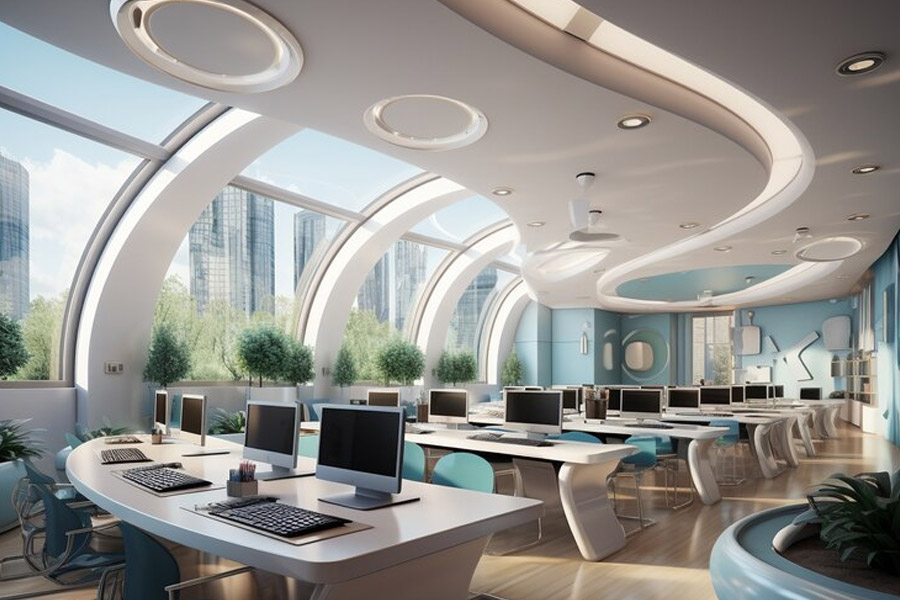
Highlights
- Technological Integration: Detailed exploration of IoT, sensor networks, and adaptive systems.
- User-Centric Approach: Emphasis on enhancing productivity, comfort, and well-being through personalized controls.
- Sustainability and Efficiency: Focus on energy efficiency, environmental sustainability, and collaborative workspaces.
Introduction to Smartroom Office Environments
Smartroom office environments represent the forefront of modern workplace design, where advanced technology converges with human-centered architectural solutions. The concept involves integrating Internet of Things (IoT) sensors, adaptive systems, and sustainable practices to create workspaces that are not only technologically advanced but also tailored to enhance occupant comfort, productivity, and overall well-being. Recent academic research, including comprehensive thesis projects, has shed light on the myriad opportunities and challenges posed by these environments.
This discussion provides an in-depth synthesis of thesis research on smartroom office environments with an emphasis on both technological factors and human-centric design. It also offers citations where the reader can reference further details. The research spans multiple disciplines: engineering, environmental psychology, information technology, and sustainable design, making it a multifaceted and rich area of inquiry.
Technological Infrastructure and Integration
Core Technologies
Smartroom offices utilize a variety of advanced technologies designed to monitor and adjust the physical environment in real-time. Central to these environments are several types of sensor technologies and automation systems:
- IoT Sensors: Sensors for temperature, humidity, and ambient light allow for automated adjustments of heating, ventilation, air conditioning (HVAC), and lighting systems. These sensors also track occupancy, enabling data-driven decision-making and predictive maintenance.
- Occupancy Detection: Advanced occupancy detection is achieved through methods such as Long Short-Term Memory (LSTM) neural networks integrated with ultrasonic or motion-detection sensors to ensure privacy and accuracy.
- Adaptive Interfaces: Personalized interfaces that allow employees to control environmental settings such as lighting and temperature contribute significantly to user satisfaction. These interfaces are typically designed for ease of use, often integrated with mobile applications or interactive touchscreens.
- Smart Meeting Systems: Technologies that facilitate collaboration include interactive display screens, automated scheduling systems, and intelligent space management tools.
The convergence of these technologies creates an environment where data is continuously collected and analyzed. This data not only informs real-time adjustments within the workspace but also contributes to long-term research on energy-saving practices and improved human-computer interaction.
Graphical Overview of Technological Components
| Component | Function | Key Benefits |
|---|---|---|
| IoT Sensors | Monitor environmental parameters like temperature, light, and air quality | Real-time adjustments, improved efficiency, energy savings |
| Occupancy Detection Systems | Track presence and movement using advanced algorithms | Optimized resource usage, privacy-preserving monitoring, enhanced safety |
| Adaptive Control Interfaces | Allow personnel to customize workspace settings | Enhanced comfort and satisfaction, increased autonomy |
| Smart Meeting Systems | Facilitate collaborative work through digital tools | Streamlined communication, efficient meeting management |
User Experience and Preferences
Understanding the User Perspective
A key component of smartroom office research involves capturing the user perspective. Studies have highlighted that employees value environments that not only respond to their physical needs but also foster greater autonomy and interaction:
- Enhanced Interaction: Technological interfaces serve to bridge the gap between the user and their environment. Interactive controls and feedback systems help employees feel more connected to the space they work in, increasing overall satisfaction.
- Workspace Autonomy: Users appreciate the ability to personalize their workstations. This includes choosing preferred lighting conditions, adjusting climate controls, and even selecting ergonomic furniture configurations, which collectively contribute to elevated productivity and physical well-being.
- Employee Well-Being: There is substantial evidence suggesting that adaptive work environments reduce stress and improve focus. The integration of well-being data—such as comfort and ergonomic metrics—is becoming a standard in smartoffice research.
Research Methodologies for Gathering User Data
Qualitative Approaches
Many thesis projects in this domain make use of qualitative methods including semi-structured interviews, focus groups, and ethnographic studies. These approaches allow researchers to capture detailed narratives about how employees interact with smartroom technologies. For example, interviews have revealed that customization is a critical factor; users report feeling more empowered and less encumbered by rigid environmental controls when interfaces are adaptive.
Quantitative Approaches
Complementing qualitative data, quantitative research in smartroom environments leverages sensor data to correlate environmental changes with user feedback. Studies have employed statistical analysis and machine learning algorithms to predict user behavior and enhance system responsiveness. The dual approach allows researchers to validate subjective user experiences with objective data, reinforcing the importance of personalized workspaces.
Sustainability and Energy Efficiency
Environmental Benefits of Smartroom Offices
One of the most discussed advantages of smartroom office environments is their potential to significantly improve energy efficiency. By employing advanced sensor networks and automation systems, these offices can dynamically adjust their resource usage, which often results in substantial energy savings:
- Energy Optimization: Smart sensors enable continuous monitoring of energy usage by adjusting HVAC and lighting systems based on occupancy and ambient conditions. This capability ensures that energy is used only when necessary and in the most efficient manner possible.
- Environmental Sustainability: The integration of renewable energy sources—such as solar panels—with smart energy management systems amplifies the sustainability benefits. Automated systems can align themselves with renewable production peaks, further reducing the environmental footprint.
- Long-Term Savings: Although the initial installation costs of smart technologies may be high, the resultant energy savings and increased operational efficiencies can offset these costs over time, making smart offices a financially viable alternative in the long run.
Case Studies on Energy Savings
Several thesis studies have demonstrated that employing smart technologies in office environments leads to energy use reductions of up to 25%. By integrating data-driven control systems, these studies highlight how flexibility in environmental management not only improves the comfort of occupants but also contributes to sustainability.
For instance, simulative analyses using building energy models have shown that when environmental variables are modulated in real-time based on human activity, the energy consumption can be reduced significantly. This research not only underpins the technical feasibility of smart systems but also aligns with global trends aimed at reducing carbon emissions.
Research Design and Methodological Considerations
Multi-Method Approaches
The research into smartroom offices frequently employs a multi-method approach that combines simulation techniques, field experiments, and user surveys. This integration allows for a comprehensive analysis of both the technical performance and human factors associated with smart environments. Some important research design elements include:
- Simulation Tools: Models like EnergyPlus and agent-based simulations are used to predict environmental and energy outcomes. These tools allow researchers to test various scenarios virtually before real-world implementation.
- Field Experiments: Real-world deployments in existing office spaces provide valuable empirical data. Sensors installed in these spaces track changes in environmental conditions while simultaneously recording user feedback.
- Surveys and Questionnaires: Structured questionnaires, sometimes adapted from standards in wellness-centered design, capture occupant satisfaction, ergonomic assessments, and perceptions of smart technology effectiveness. This data informs iterative improvements in system design.
Balancing Quantitative and Qualitative Data
A robust thesis in this field typically uses quantitative metrics (e.g., energy consumption data, occupancy statistics) alongside qualitative insights (e.g., user satisfaction narratives) to create a balanced analysis. For example, statistical tools and machine learning models are used to establish correlations between environmental control parameters and user performance metrics. On the other hand, focus group discussions have surfaced key themes such as privacy concerns and the desire for more intuitive human-machine interfaces.
Addressing Challenges and Limitations
Privacy and Data Security
While smartroom office environments promise significant benefits, they also present a few challenges that need systematic research:
- Data Privacy: The continuous collection of data through sensors raises essential questions regarding user privacy. Developing systems that ensure anonymity and data protection while still leveraging detailed environmental information is a critical area of study.
- Interoperability Issues: Integrating varied technologies from different vendors can lead to interoperability challenges. Standardized protocols and collaborative research efforts are required to ensure seamless interaction between disparate devices and systems.
- Cost and Implementation: The initial capital required for setting up smart technologies can be substantial. Research often debates the balance between upfront investments and long-term savings, advocating for models that reflect realistic cost-benefit analyses.
Future Research Directions
The field of smartroom office environments is dynamic and continuously evolving. Future studies are expected to explore advanced algorithms for real-time environmental adaptation, enhanced privacy-preserving data collection methods, and the social dynamics of smart workplaces. Moreover, there is an opportunity for longitudinal research that examines how user acceptance evolves over extended periods of exposure to smart systems.
Integrating Sustainability with Smart Systems
Sustainable Building Design and Energy Modeling
Integrating sustainability into smartroom office research involves more than just efficient technology; it is about designing spaces that are in harmony with their environment. Sustainable building designs encompass both the material aspects—such as energy-efficient insulation and renewable energy integration—and the operational aspects provided by smart technologies. Energy modeling simulations play a crucial role in this process, predicting how smart adjustments can reduce energy consumption.
For instance, simulation studies have demonstrated that smart environmental control systems, when paired with renewable energy sources, can not only reduce operational energy use but also align the building’s energy demand with renewable output peaks. This dual approach promotes both economic and environmental benefits.
Case Example: Energy Savings in Practice
A notable case in smartroom office research involves the deployment of adaptive lighting and HVAC controls. By using sensor data to adjust lighting and climate conditions depending on actual occupancy, these offices have recorded energy use reductions approaching 25%. Additionally, personalized workspace solutions based on actual ergonomic data have led to improvements in worker comfort and productivity, which indirectly contribute to reduced energy costs by optimizing resource allocation.
Conclusion and Final Thoughts
Smartroom office environments demonstrate a transformative potential for modern workspaces by merging advanced technological integration with a user-centric design perspective. Thesis research in this area provides comprehensive insights into how these environments can optimize energy efficiency, improve employee comfort, and promote sustainable practices while addressing key challenges such as data privacy and interoperability.
The extensive investigations reviewed reveal a consensus that smart technologies not only facilitate operational efficiency but also contribute to a more collaborative and satisfying work experience. Data-driven research combined with qualitative studies offers a robust framework for understanding how smartroom offices can be both practical and sustainable. In parallel, simulation models and field experiments provide the necessary empirical grounding to justify the initial investments in such advanced systems. As research evolves, continuous innovations in sensor technology, machine learning algorithms, and energy simulation methods are likely to expand the capabilities of smart office environments even further.
In summary, the research consistently supports the idea that successful smartroom office environments are those that balance state-of-the-art technological features with deep insights into human behavior, workplace wellbeing, and environmental sustainability. Academics, industry practitioners, and engineers are collectively contributing to this vibrant field, ensuring that future workspaces will not only be smart but also genuinely responsive to the needs of their occupants.
References
- User Perspectives in Smart Office Environments - Eindhoven University of Technology
- From a Traditional Workplace to a Sustainable Smart Office - Politecnico di Torino
- Smart Features in the Smart Office: A Stated Choice Approach - TandF Online
-
Smart Offices: A Productivity and Well-being Perspective - ScienceDirect
- Smart Offices and Intelligent Decision Rooms - Springer
Recommended Further Queries
Last updated February 20, 2025