
Estimating the Total Water Storage Capacity of Damming All Ravines and Canyons on Socotra
A Comprehensive Analysis of Hydrological Potential and Environmental Impacts
Key Takeaways
- Limited Potential Capacity Due to Arid Climate: Socotra's predominantly arid to semi-arid climate restricts the overall water storage potential of its canyons and ravines.
- Significant Environmental and Ecological Challenges: Damming projects could adversely affect Socotra's unique ecosystems and endemic species, posing severe environmental concerns.
- High Uncertainty Without Detailed Geological and Hydrological Data: The lack of comprehensive surveys and studies makes accurate capacity estimations highly speculative.
Geographical and Hydrological Context
Geographical Features
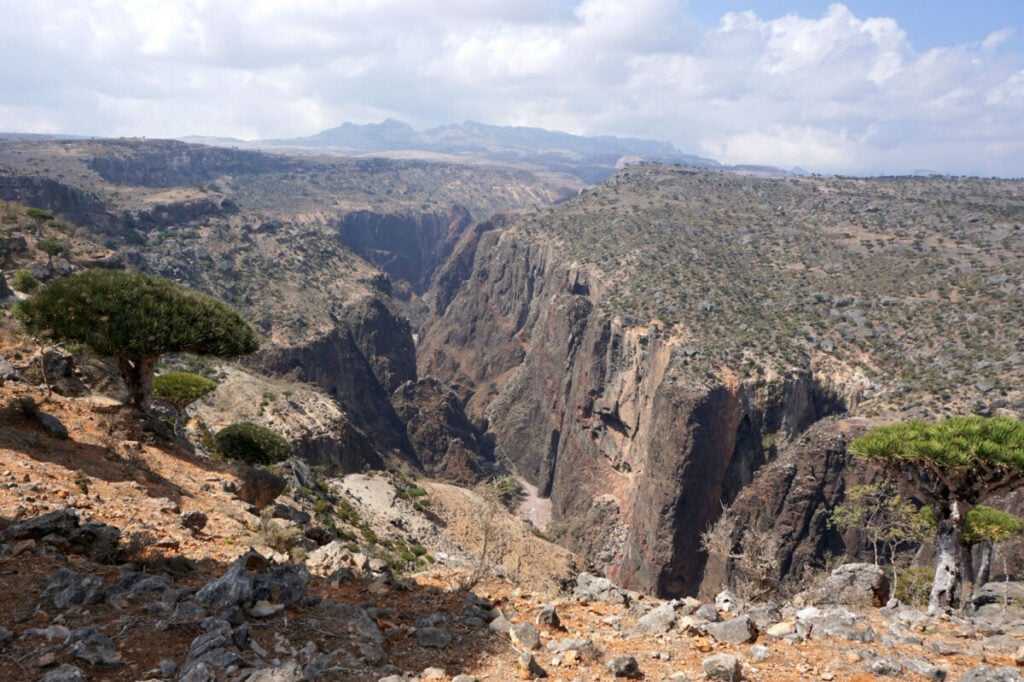
Socotra, an archipelago in the Indian Ocean, is renowned for its rugged and unique landscape. The island boasts limestone plateaus, deep ravines, and expansive canyons that contribute to its distinctive topography. Prominent among these are Wadi Dirhur and Wadi Dahero, both characterized by significant depth and steep gradients. These geographical formations are remnants of ancient geological processes that have sculpted the island's intricate terrains.
Hydrological Factors
The hydrology of Socotra is heavily influenced by its climate, which is predominantly arid to semi-arid. The island experiences sporadic seasonal rainfall, primarily during the monsoon period. The average annual rainfall is relatively low, which inherently limits the amount of water that can be captured and stored in potential reservoirs. Additionally, high evaporation rates in the region further diminish the net storage capacity of dammed systems, as significant portions of stored water would be lost to evaporation.
Estimation Methodology
Comparative Analysis
To estimate the potential water storage capacity of dammed ravines and canyons on Socotra, it is instructive to draw comparisons with established dam projects globally. For instance, the Glen Canyon Dam in the United States, which creates Lake Powell, has a storage capacity exceeding 25 million acre-feet (31 km³). However, Socotra's geological formations are considerably smaller and less voluminous. Assuming Socotra has approximately 10 major canyons, as suggested by various sources, each with an average capacity of 1 million acre-feet (1.23 km³), the cumulative potential would be around 12.3 km³. This estimation, however, is highly speculative and necessitates detailed geological and hydrological surveys for accuracy.
Potential Capacity Estimations
Considering the arid climate and topographical constraints, more conservative estimates align with the notion that Socotra's combined reservoir capacity would be significantly lower than major global dams. SourceB suggests a range from hundreds of thousands to a few million cubic meters, although this may underestimate the potential depending on the specific dimensions and number of canyons dammed. The discrepancy between sources highlights the inherent uncertainty in making such estimations without precise data.
Comparative Table
| Dam Project | Location | Storage Capacity | Comparable Socotra Capacity |
|---|---|---|---|
| Glen Canyon Dam | United States | 25 million acre-feet (31 km³) | ~10 million acre-feet (12.3 km³) if 10 canyons are considered |
| Socotra Proposed Dams | Socotra, Yemen | Hundreds of thousands to a few million cubic meters | Significantly lower due to smaller canyon sizes and arid climate |
Potential Total Capacity
Based on the synthesis of available information, the rough total water storage capacity if all ravines and canyons on Socotra were dammed ranges widely due to the lack of precise data. SourceA provides an optimistic estimation of approximately 12.3 km³, assuming 10 major canyons each capable of holding 1.23 km³. Conversely, SourceB offers a more conservative perspective, suggesting capacities in the range of hundreds of thousands to a few million cubic meters. The stark difference between these estimates underscores the need for detailed geological surveys and hydrological studies to approach a more accurate figure.
Furthermore, the seasonal nature of rainfall and the high evaporation rates in Socotra's climate imply that even if significant storage could be achieved, the practical usability of such reservoirs might be limited, as much of the stored water could be lost to evaporation before it can be utilized effectively.
Challenges and Limitations
Data Limitations
The primary challenge in estimating the total water storage capacity is the absence of comprehensive geological and hydrological data. Detailed surveys, including dimensions of each canyon, geological compositions, and watershed analyses, are essential for accurate estimations. Without such data, any capacity figures remain speculative and lack reliability.
Environmental Impact
Damming all ravines and canyons on Socotra would have profound environmental implications. Socotra is a UNESCO World Heritage site, recognized for its unique biodiversity, including endemic species such as the Dragon’s Blood Tree. Dam construction could disrupt local ecosystems, alter microclimates, and threaten species that depend on the specific conditions maintained by existing wadis and valleys.
Technical and Logistical Challenges
Socotra's rugged and steep terrains present significant technical and logistical obstacles to dam construction. The high elevation changes and remote locations of many canyons would require substantial engineering efforts and resources. Additionally, the island's infrastructure may not be adequately developed to support large-scale dam projects, further complicating feasibility.
Environmental and Ecological Considerations
The potential damming of Socotra's ravines and canyons raises critical environmental and ecological concerns. Socotra's ecosystems are tailored to its unique climatic and geographical conditions, and introducing large reservoirs could disrupt these delicate balances. Water accumulation could lead to changes in soil moisture, vegetation patterns, and wildlife habitats. Moreover, the alteration of natural water flow could affect the survival of endemic species that have evolved to thrive in specific microhabitats within the island's canyons and wadis.
Additionally, damming could impact the island's natural beauty, which is a significant factor in its designation as a World Heritage site and a draw for eco-tourism. The visual and ecological integrity of Socotra's landscapes could be compromised, leading to broader environmental degradation and loss of biodiversity.
Conclusion
Estimating the total water storage capacity of damming all ravines and canyons on Socotra reveals a complex interplay of geographical, hydrological, and environmental factors. While initial rough estimates suggest a cumulative capacity in the range of several cubic kilometers, these figures are fraught with uncertainty due to the lack of detailed data and the island's arid climate, which limits water availability and retention.
Moreover, the significant environmental and ecological challenges associated with large-scale damming projects cannot be overlooked. Socotra's status as a UNESCO World Heritage site and its unique biodiversity impose stringent restrictions on any developmental endeavors that could disrupt its natural ecosystems.
In light of these considerations, any initiative to dam Socotra's ravines and canyons must be approached with caution, prioritizing comprehensive geological and hydrological studies, alongside thorough environmental impact assessments, to ensure that the benefits of increased water storage do not come at the unacceptable cost of ecological degradation and loss of biodiversity.
References
Last updated January 22, 2025