
Socsil N2O Purifier: Advanced Technology in Nitrous Oxide Production
Exploring sophisticated processes for high-purity nitrous oxide generation
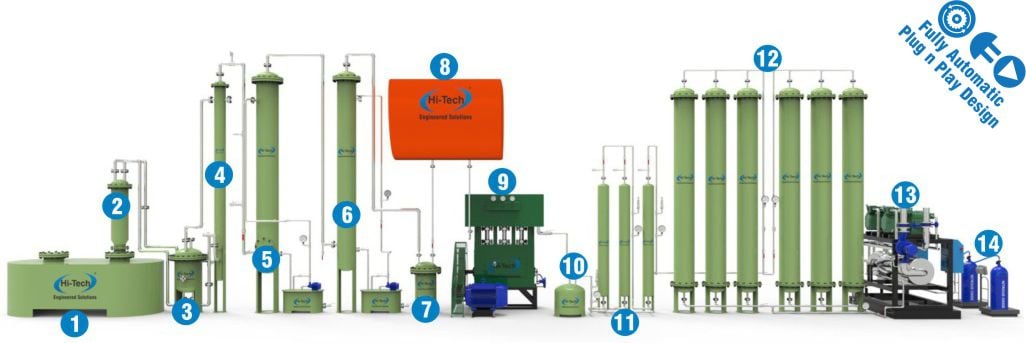
Highlights
- Ultra-High Purity Production: Achieving 99.999% N₂O purity essential for specialized industries.
- Advanced Purification Steps: Multi-stage systems including rectification, washing towers, and filtration.
- Modular and Customizable Design: Adaptable unit concepts supporting diverse production requirements worldwide.
Overview of the Socsil N2O Purifier
The Socsil N2O purifier represents an integrated system of advanced engineering designed to produce and purify nitrous oxide (N₂O) at ultra-high purity levels. This cutting-edge technology is essential for a range of industrial applications—from semiconductor fabrication in the electronics sector to specialized uses in medical and food industries. The system employs a series of precise purification steps to ensure that the final product contains minimal impurities and meets or exceeds the 99.999% purity benchmark.
Core Components and Processes
Production and Initial Processing
The production of nitrous oxide starts with a high-tech synthesis system connected to advanced processing equipment. The initial steps involve the thermal decomposition of ammonium nitrate-based feedstock, allowing the production of a gas stream that contains both N₂O and residual impurities such as nitrogen (N₂) and oxygen (O₂). In traditional N₂O production installations, the initial product may exceed a purity level of 95%; however, additional purification is mandatory to reach the ultra-high purity needed for critical applications.
Thermal Decomposition and Gas Generation
The initial conversion involves a controlled thermal process. Here, the feedstock is decomposed at specific temperatures to generate nitrous oxide, along with non-condensable gases. In some plant designs, this process is supported by automated systems that monitor and adjust temperature and pressure parameters in real time.
Purification Techniques
Fundamental to the Socsil N2O purifier is its multi-stage purification strategy that removes impurities from the gas stream, ensuring the desired ultra-high purity level. These processes are implemented through a combination of rectification, washing towers, chemical treatments, and filtration.
Rectification Column
The rectification column is one of the primary purification units. In this process, the impure fraction of N₂O, which may contain 4-8% of N₂ and O₂ by volume, is separated from the pure gas stream. The impure fraction is typically cycled back into the gasholder, where it is reprocessed. This recycling is essential for operational efficiency and minimizing waste.
Washing Towers
After rectification, the purified N₂O enters a sequence of washing towers. These towers are designed to wash the gas stream using carefully controlled utility water and specific chemical solutions that scrub away soluble impurities. The design of the towers facilitates effective contact between the gas and the cleaning medium, ensuring the removal of contaminants that could interfere with the final purity.
Filtration and Further Treatment
Following washing, the N₂O stream is subject to several filtration steps. High-efficiency filters capture any residual fine dust and chemical impurities. Advanced filters, including those equipped with stone elements, allow for cleaning and reuse, contributing to reduced maintenance costs and sustainable operations. A notable filter in the process is the ammonia nitrate (AN) filter, which is specifically designed to remove ammonium nitrate contaminants.
Water-cooled compressors are in place in some systems to further lower the temperature of the gas, condensing out more volatile impurities. This multi-stage process, which combines physical, chemical, and thermal strategies, is essential for achieving the ultra-high purity levels of 99.999% or more.
Engineering and Design Aspects
Modular and Scalable Systems
One of the remarkable aspects of the Socsil N2O purifier is its modular design. The system is engineered in a way that it can be tailored to meet various production capacities and operational requirements. This flexibility is achieved by designing skid-mounted units that are easy to install, maintain, and upgrade as needed. The modular nature of the equipment also allows for customization, whether the plant requires adjustment for different feedstock qualities or variable production rates.
Adaptability for Different Industries
Industries such as electronics, healthcare, and food processing have particular purity requirements, making the adaptability of this technology a significant advantage. For the electronics industry, where even minute impurities can alter semiconductor behavior, achieving ultra-high purity is non-negotiable. The Socsil system incorporates multiple safeguards and checkpoints during its purification stages, ensuring that the final product meets stringent industry standards.
Supportive Infrastructure and Global Reach
The Socsil N2O purifier is not just about the technical process—it also benefits from extensive support infrastructure. Companies like Linde, with over 130 years of expertise in industrial gases, provide the after-sales service and technical support necessary to maintain smooth operations. Their deep global network ensures that these systems are implemented effectively in various parts of the world, catering to local industrial standards while upholding international quality benchmarks.
Performance Metrics and Quality Assurance
Achieving Ultra-High Purity
At the heart of the Socsil N2O purifier is its capability to produce nitrous oxide with purity exceeding 99.999%. This is crucial for applications where even the slightest impurities can lead to catastrophic failures or inefficiencies, particularly in the semiconductor and electronics manufacturing sectors. Maintaining such high purity involves rigorous monitoring and control of the production process.
Monitoring Systems and Feedback Loops
Modern N₂O purifiers, including the Socsil models, utilize an array of sensors and automated control systems. These systems continuously monitor temperature, pressure, and gas composition. Real-time data analytics feed into automated adjustments that fine-tune the process, ensuring stability and adherence to purity specifications. The integration of digital technologies reduces human error and enhances the reliability of the final product.
Quality Control Measures
Rigorous quality control is implemented at every stage—from initial synthesis to final storage. Multiple checkpoints in the process ensure that any deviation from desired purity levels is promptly corrected. The data gathered from these checkpoints are also used to refine and optimize the production parameters, leading to continuous improvement and enhanced efficiency over time.
Environmental Considerations
Managing By-products and Impurities
The controlled removal and recycling of by-products represent a critical part of sustainable operations in nitrous oxide production. The purification process is designed to maximize gas recovery while minimizing releases of non-condensable gases. Impurities such as nitrogen and oxygen, as well as other minor contaminants, are redirected and processed further rather than being vented into the atmosphere.
Reduction of Greenhouse Gas Impact
Nitrous oxide is a potent greenhouse gas. Hence, the design of the purification process also accounts for environmental safety. By recycling impure fractions and employing advanced cleaning techniques, the system prevents unnecessary emissions. Additional engineered solutions, like the use of catalysts to convert any residual N₂O into harmless nitrogen and oxygen, further contribute to reducing its environmental footprint.
Comparison Table of Purification Processes
| Component | Function | Key Features |
|---|---|---|
| Rectification Column | Separation of impure and pure N₂O | Efficient recycling of impure fraction, thermal control |
| Washing Towers | Scrubbing soluble impurities | Utilizes water and chemical solutions for gas washing |
| Filtration Units | Removal of fine particulate matter and chemical residues | Recyclable stone element filters, AN filters for ammonium nitrate removal |
| Water-Cooled Compressor | Lowering temperature to condense impurities | Improves the separation efficiency and enhances purity |
| Monitoring Systems | Real-time process control and quality assurance | Data analytics, automated feedback loops, digital sensors |
Application Areas of High-Purity Nitrous Oxide
Electronics and Semiconductor Manufacturing
With the ever-increasing demand for miniaturized and high-performance electronic devices, the quality of source gases such as nitrous oxide plays a pivotal role. In this industry, impurities—even those at trace levels—can have significant repercussions on product performance and reliability. Therefore, devices such as the Socsil N2O purifier are indispensable. They deliver ultra-high purity N₂O that meets the stringent standards necessary for processes like chemical vapor deposition (CVD) and plasma etching, processes vital for semiconductor fabrication.
Medical and Food Applications
While the electronics sector demands extreme purity for technical reasons, other industries also have critical quality requirements for nitrous oxide. In medical anesthesia and dental practices, ultra-clean N₂O is needed to ensure patient safety and the efficacy of medical procedures. In the food sector, nitrous oxide serves as a propellant in aerosol-based food products; thus, it must not contain impurities that could affect food quality or safety.
Technological Evolution and Industry Impact
Historical Evolution
The technological journey of nitrous oxide purification has witnessed significant advancements over the decades. Early production plants were built with simpler designs that did not offer the sophistication required for ultra-high purity outputs. Over time, innovations in materials science, chemical engineering, and digital monitoring have converged to produce highly optimized systems like the Socsil N2O purifier.
Legacy and Innovation
Companies such as Linde have been central to this evolution, leveraging over a century of expertise in industrial gases. Their commitment to research and development has led to incorporation of novel techniques in gas purification and process control. This focus on innovation ensures not only superior product quality but also operational efficiency and environmental compliance.
Industry Impact and Global Reach
The adoption of advanced purification technologies has considerably impacted several industries worldwide. High purity nitrous oxide is now a critical enabler in sectors that demand precise chemical conditions for manufacturing and medical applications. Additionally, the global distribution network and comprehensive after-sales support provided by industry leaders ensure that these systems are kept at optimum functionality, regardless of geographic location.
Operational Reliability and Maintenance
The modular design of the Socsil N2O purifier significantly simplifies maintenance procedures. Routine checks, coupled with automated alerts, facilitate timely interventions that minimize downtime. Moreover, the reusability of certain filter elements underscores the system’s sustainability and cost-effectiveness – factors that are increasingly appreciated in a competitive industrial environment.
Future Trends and Innovations in N₂O Purification
Digital Integration and Process Automation
Future improvements in N₂O purification systems are likely to be centered around increased digital integration. Enhanced sensor networks, machine learning algorithms, and real-time process optimization can further boost the reliability and efficiency of these purifiers. Enhanced traceability and automatic quality control measures will likely become standard practice, allowing plants to dynamically adjust purification parameters in response to fluctuating production conditions.
Data-Driven Optimization
Leveraging the power of data analytics and artificial intelligence, next-generation purification systems will be capable of predictive maintenance and performance tuning. By continuously monitoring key process indicators, such systems can preemptively identify potential failures, thereby reducing waste and ensuring consistent quality. This is particularly significant for industries where gas purity is directly linked to product performance and safety.
Sustainable Production Methods
Sustainability remains a critical focus across all manufacturing sectors, and nitrous oxide production is no different. Future innovations are expected to include developments aimed at reducing the environmental impact during production. This includes more efficient catalyst systems to degrade unwanted by-products and advanced recirculation methods to minimize wastage.
The evolution of technologies such as the Socsil N₂O purifier exemplifies the industry's response to these challenges, combining high operational efficiency with robust environmental safeguards.
References
- Socsil N2O Plants - N2O Plant
- Nitrous Oxide Production - N2O Plant
- Linde Gas News - Linde
- About Linde - N2O Plant
- Plant Upgrades - N2O Plant
Recommended Queries for Further Insight
Last updated March 12, 2025