
Understanding the Melting of Sodium Chloride
An in-depth exploration of phase transitions and ionic behavior
Key Highlights
- Melting and Ionic Disruption: At approximately 801°C, sodium chloride transitions from a crystalline solid into a highly mobile, ionic liquid known as molten salt.
- Conductivity and Industrial Applications: The molten state allows for electrical conductivity which is harnessed in industrial electrolysis processes, including the manufacture of sodium metal and chlorine gas.
- Temperature-Dependent Behavior: The unique properties of sodium chloride both as an ice-melting agent and during high-temperature melting underline its diverse practical applications.
Introduction
Sodium chloride, commonly referred to as table salt, plays a critical role in both everyday life and industrial applications. When it is heated and reaches its melting point of about 801°C (1,474°F), it experiences significant changes at a molecular level. This transition from a rigid crystalline solid to a fluid ionic liquid is central to many industrial processes and chemical reactions.
The Melting Process: Transition from Solid to Molten Salt
Phase Transition and Thermal Dynamics
At a temperature of approximately 801°C, solid sodium chloride transitions into its molten state. This temperature is critical because it marks the point at which the thermal energy provided overcomes the strong electrostatic forces (ionic bonds) keeping the sodium (Na⁺) and chloride (Cl⁻) ions in place within the crystalline lattice structure.
Breaking the Crystalline Lattice
In its solid state, sodium chloride exists in a well-organized, cubic lattice structure in which each ion is held in place by the alternating pattern of positive and negative charges. When the salt is heated to its melting point, the previously ordered arrangement begins to collapse as the thermal energy causes the ions to vibrate increasingly. Once the energy threshold is reached, these vibrations weaken the electrostatic attractions, resulting in the disintegration of the rigid structure.
Ionic Mobility in the Molten State
After the disintegration of the crystal lattice, sodium chloride forms what is known as a molten salt. In this state, the ions are no longer fixed in position; instead, they move freely within the liquid medium. This high degree of ionic mobility is a defining characteristic of molten salts and is responsible for the substance’s ability to conduct electricity—a key property that distinguishes it from its solid form.
Electrical Conductivity Explained
The ease with which sodium and chloride ions move within molten sodium chloride allows the substance to conduct electricity. In the solid state, the fixed positions of the ions prevent electrical flow. Once melted, the arbitrarily moving ions create an environment where the transfer of charge is possible, enabling its use in electrochemical processes.
Industrial Applications Involving Molten Sodium Chloride
Electrolysis and the Production of Chemicals
One of the most significant industrial applications of molten sodium chloride is in the field of electrolysis. In this process, an electric current is passed through the molten salt, causing the sodium ions to migrate toward the cathode while the chloride ions move toward the anode. This separation facilitates the extraction of pure sodium metal and chlorine gas, both of which are critical to various chemical manufacturing processes.
The Downs Process
The electrolysis of sodium chloride is often conducted using the Downs process. This industrial method involves using an electrolytic cell where a mixture of sodium chloride and additives such as calcium chloride is heated. The addition of calcium chloride lowers the melting point of the overall solution to around 580°C, thereby reducing energy consumption while still allowing effective electrolysis. This process is widely employed in the production of elemental sodium and chlorine, proving indispensable for the chemical industry.
Other Practical Uses
Beyond industrial electrolysis, molten sodium chloride serves as a solvent in various high-temperature chemical reactions. Its capacity to conduct heat uniformly makes it an attractive medium for certain metallurgical processes. Additionally, sodium chloride is used in research settings to study phase transitions and the properties of ionic liquids under extreme conditions.
Physical and Chemical Changes During Melting
Ionic Disassociation and Structural Changes
When sodium chloride melts, the transition is not just physical but also involves significant changes at the ionic level. The crystalline structure, once responsible for the salt’s stability, breaks down, allowing individual Na⁺ and Cl⁻ ions to separate and move independently. This separation is key to the resulting properties of the molten salt.
Visual and Physical Transformations
One notable physical change is the alteration in appearance. As sodium chloride transitions to a molten state, it often becomes more transparent or translucent compared to its opaque solid form. The liquid phase is less ordered, which changes not only its visual properties but also its physical behavior under various conditions.
Thermal Stability and Further Heating
Sodium chloride remains stable as a molten salt up to temperatures well beyond its melting point. However, if the temperature is increased much further—approaching its boiling point of approximately 1465°C (2670°F)—the continued energy input can eventually lead to decomposition of the compound. This stability at high temperatures makes molten sodium chloride a reliable medium for high-temperature processes.
Behavior Beyond the Melting Point
Beyond the melting point, the ionic bonds continue to weaken and the density of the molten salt changes. This can impact the conductivity and viscosity of the liquid, which must be carefully managed in industrial applications to ensure optimal performance during processes such as electrolytic reduction.
Comparison: Melting Sodium Chloride vs. Its Role in Melting Ice
Freezing Point Depression
While sodium chloride itself is primarily known for its high melting point, it also plays a pivotal role in de-icing and melting ice when applied externally at low temperatures. This process, known as freezing point depression, involves sodium chloride dissolving into separate Na⁺ and Cl⁻ ions when in contact with water on the surface of ice.
Mechanism of Dissolution on Ice
When salt is sprinkled over ice, it dissolves into the thin layer of water on the ice’s surface. The ions then interfere with the ability of water molecules to form a stable ice structure by disrupting the hydrogen bonds. This interaction lowers the freezing point of water, allowing ice to melt even when the ambient temperature is below 0°C (32°F). However, it is crucial to note that for optimal de-icing, sodium chloride is effective only above temperatures of about 15°F (-9°C). Below these temperatures, other salts, such as magnesium chloride or calcium chloride, are more effective.
Tabulated Overview of Sodium Chloride Properties
The following table provides a concise overview of key properties of sodium chloride during its transition from solid to liquid. This includes melting temperatures, structural changes, and practical implications:
| Property | Solid State | Molten State |
|---|---|---|
| Melting Point | 801°C (1,474°F) | N/A (transition point) |
| Structure | Crystalline cubic lattice | Disrupted ionic network |
| Ionic Mobility | Very low (ions fixed in lattice) | High (ions move freely) |
| Electrical Conductivity | Low (non-conductive) | High (conductive) |
| Industrial Application | Used in solid state applications | Electrolysis and high-temperature processes |
Safety Considerations and Physical Phenomena
Hazards Associated with Molten Sodium Chloride
The high temperatures required to melt sodium chloride pose significant hazards. The process involves not only the risk of burns and thermal injuries but also the potential for explosive reactions under certain conditions. For instance, if molten sodium chloride is inadvertently poured into water, the rapid vaporization of water can cause an explosive reaction due to the sudden pressure build-up from superheated steam.
Preventive Measures
Strict safety protocols must be followed when handling sodium chloride at high temperatures. This includes maintaining proper temperature controls, using suitable containment methods, and ensuring that water or other reactive liquids are adequately isolated from the molten salt. These measures are critical for minimizing risks during industrial operations.
Physical Observations and Experimental Findings
Laboratory studies and experimental findings highlight that molten sodium chloride exhibits unique optical properties. It tends to become more transparent or slightly translucent, which can be attributed to the loss of crystalline order. Such observations help scientists understand the behavior of ionic compounds under extreme conditions and contribute to the development of new materials and processes.
Extended Industrial and Scientific Relevance
Utilization in Research and Technological Innovations
The transition of sodium chloride into its molten state has extended relevance beyond conventional industrial processes. Researchers utilize molten salts, including sodium chloride, in various fields of study, such as high-temperature superconductivity, nuclear reactor coolant systems, and the study of ionic liquids. These studies are not only advancing our theoretical understanding of materials science but also paving the way for technological innovations.
Emerging Applications
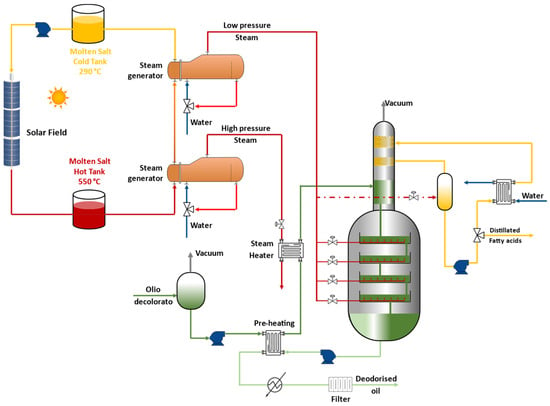
Emerging applications include the use of molten salts as heat transfer fluids in solar power plants and in novel energy storage systems. The high thermal capacity and stability of these ionic liquids make them suitable candidates for harnessing and storing thermal energy. Such applications are increasingly important in the context of sustainable energy solutions and industrial efficiency improvements.
Role in Metallurgy and Chemical Synthesis
In metallurgy, the properties of molten sodium chloride are exploited to facilitate chemical reactions and extract pure metals from ores. The effective conduction of heat and electricity within the molten state allows for controlled reactions that are critical to ensuring the desired production outcomes. Additionally, its role as a solvent in chemical synthesis allows for unique high-temperature reaction pathways that are otherwise difficult to achieve.
Conclusion
The melting of sodium chloride represents a remarkable example of how a common substance can undergo dramatic transformations under extreme conditions. When heated to its melting point of around 801°C, sodium chloride transitions from a structured crystal lattice into a highly mobile, electrically conductive molten salt. This change is accompanied by the breakdown of ionic bonds and the free movement of sodium and chloride ions, thereby significantly altering its physical and chemical properties.
Industrially, these properties are harnessed in processes such as the Downs process for electrolytic production of sodium metal and chlorine gas, as well as in various chemical manufacturing techniques. Moreover, sodium chloride serves a dual role, both as a substance with intrinsic high-temperature behavior and as an effective agent in lowering the freezing point of water to de-ice surfaces. Its duality in function highlights the importance of understanding phase transitions and ionic interactions in practical applications.
In conclusion, the study of sodium chloride melting not only reveals the intricate interplay between structure, temperature, and ionic behavior, but also underpins many critical industrial and scientific processes. The careful manipulation of its properties enables advancements in energy, metallurgy, and materials science, making it a substance of continuing interest both in research and in practical applications.
References
- Electrolysis-Production sodium-chlorine - Science Encyclopedia
- Electrolysis of Sodium Chloride: Molten and Aqueous - Science Info
- Sodium Chloride - Wikipedia
- What Is Molten Salt - Molten Salt Organization
- Molten Salt Reactions - Science Alert
Recommended Further Queries
Last updated February 28, 2025