
Unlocking Stock Market Moves: A Deep Dive into Options Using SoFi (SOFI) Stock
Discover how call, put, and covered call options work with real-world SoFi stock examples to enhance your investment strategy.
Essential Insights into Options Trading
- Options offer flexibility: They provide the right, not the obligation, to buy (call) or sell (put) an underlying asset like SoFi stock at a set price by a specific date.
- Strategic applications: Options can be used for speculating on price movements, hedging existing positions against losses, or generating income (e.g., through covered calls).
- Risk and reward dynamics: While options can offer high leverage and profit potential, they also involve significant risks, including the potential loss of the entire premium paid.
Understanding the Fundamentals of Options
Options are financial contracts that derive their value from an underlying asset, such as a stock. In this case, we'll use SoFi Technologies, Inc. (SOFI) as our example. An option gives the buyer the right, but not the obligation, to either buy or sell a specific quantity of the underlying asset (typically 100 shares per contract) at a predetermined price (the "strike price") on or before a specific date (the "expiration date"). The seller (or "writer") of the option receives a payment, known as the "premium," from the buyer for taking on the obligation associated with the contract.
Investors use options for various purposes, including:
- Speculation: Betting on the future direction of a stock's price.
- Hedging: Protecting an existing stock position from potential adverse price movements.
- Income Generation: Earning premiums by selling options, such as in a covered call strategy.
It's crucial to remember that options trading involves a high degree of risk and is not suitable for all investors. Understanding the mechanics and potential outcomes is vital before engaging in options trading. As of today, Wednesday, 2025-05-07, the principles discussed remain fundamental to options markets.
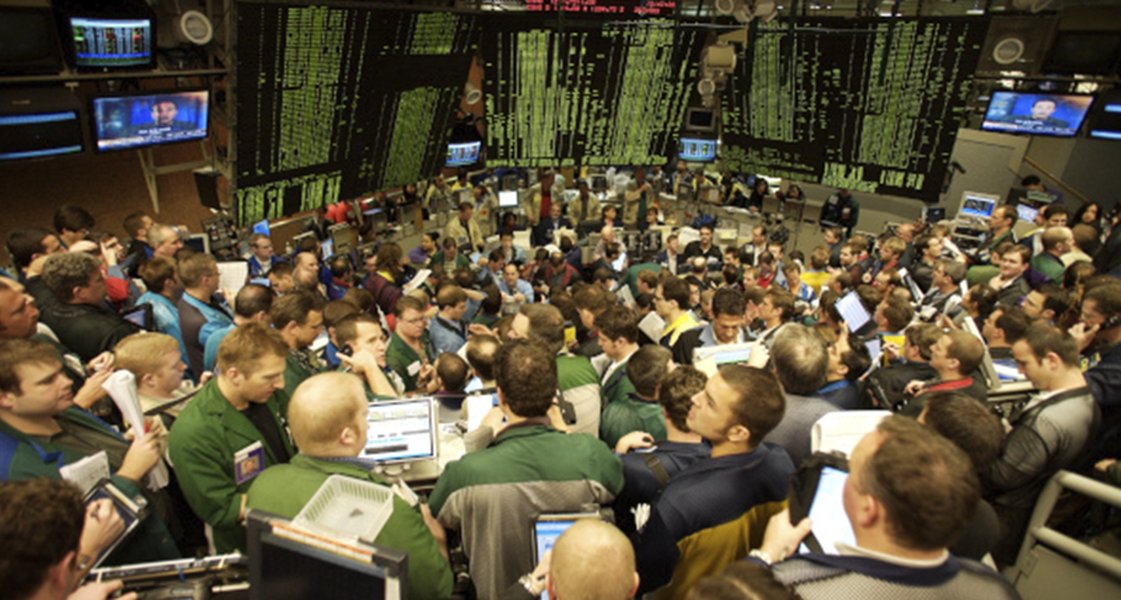
An options trading floor, illustrating the dynamic environment of financial markets.
Decoding Call Options: Betting on a Price Rise
What is a Call Option?
A call option grants the holder the right, but not the obligation, to buy the underlying stock at the strike price on or before the expiration date. Investors typically buy call options when they are bullish on a stock, anticipating its price will increase significantly.
Example: Buying a SoFi (SOFI) Call Option
Let's assume SoFi Technologies Inc. (SOFI) stock is currently trading at $7 per share.
- You believe SOFI's price will rise in the near future.
- You decide to buy one SOFI call option contract (representing 100 shares) with a strike price of $8 that expires in one month.
- The premium for this call option is $0.50 per share. Thus, the total cost for the contract is $0.50 x 100 shares = $50 (excluding commissions).
Potential Scenarios:
- SOFI's price rises to $10 before expiration:
- Your call option is now "in-the-money" because the market price ($10) is above the strike price ($8).
- You can exercise your option to buy 100 SOFI shares at $8 per share (total cost $800).
- You could then immediately sell these shares at the market price of $10 per share (total proceeds $1000).
- Your gross profit from the shares would be $1000 - $800 = $200.
- Your net profit would be the gross profit minus the premium paid: $200 - $50 = $150.
- Alternatively, you could sell the option contract itself, which would have increased in value due to the stock price rise.
- SOFI's price stays at $7 (or remains below $8) by expiration:
- Your call option is "out-of-the-money" or "at-the-money" but without intrinsic value to make exercising it worthwhile.
- The option would likely expire worthless.
- Your loss would be limited to the premium paid: $50.
Call option buyers profit if the stock price rises substantially above the strike price, enough to cover the premium paid. Their maximum loss is capped at the premium paid for the option.
Understanding Put Options: Profiting from or Hedging Against a Price Drop
What is a Put Option?
A put option grants the holder the right, but not the obligation, to sell the underlying stock at the strike price on or before the expiration date. Investors typically buy put options when they are bearish on a stock, anticipating its price will decrease, or when they want to hedge an existing long stock position against potential losses.
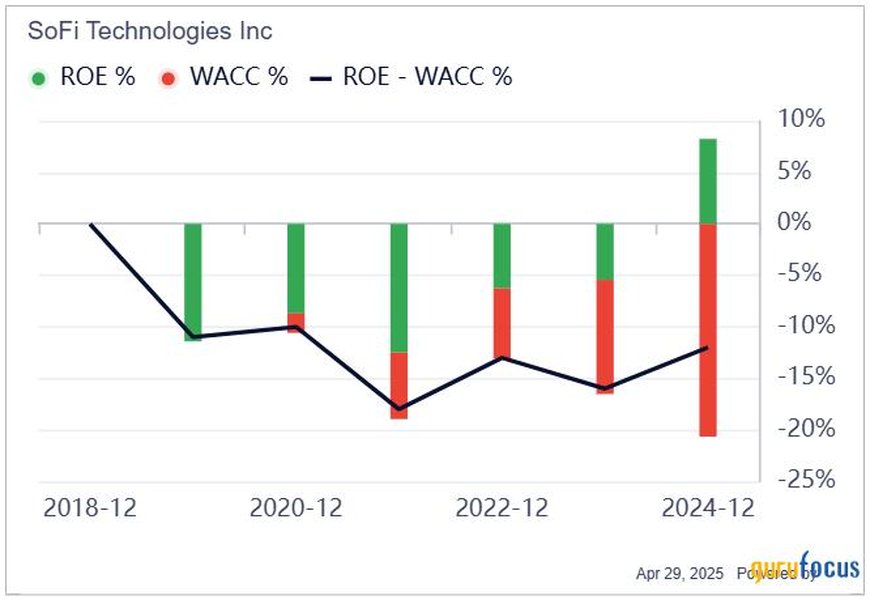
SoFi Technologies (SOFI) stock performance charts are closely watched by options traders.
Example: Buying a SoFi (SOFI) Put Option
Again, let's assume SOFI stock is currently trading at $7 per share.
- You believe SOFI's price will fall, or you own SOFI shares and want to protect against a potential decline.
- You decide to buy one SOFI put option contract with a strike price of $6 that expires in one month.
- The premium for this put option is $0.40 per share. The total cost for the contract is $0.40 x 100 shares = $40 (excluding commissions).
Potential Scenarios:
- SOFI's price falls to $4 before expiration:
- Your put option is "in-the-money" because the market price ($4) is below the strike price ($6).
- You can exercise your option to sell 100 SOFI shares at $6 per share.
- If you already own the shares (hedging), you effectively sell them for $6 each, despite the market price being $4, limiting your loss on the stock.
- If you are speculating (and don't own shares), you could buy 100 shares in the market at $4 (cost $400) and immediately use your put option to sell them at $6 (proceeds $600).
- Your gross profit from exercising the put in the speculative scenario would be ($6 - $4) x 100 = $200.
- Your net profit would be $200 - $40 (premium paid) = $160.
- Alternatively, you could sell the put option contract itself, which would have increased in value.
- SOFI's price stays at $7 (or remains above $6) by expiration:
- Your put option is "out-of-the-money."
- The option would likely expire worthless.
- Your loss would be limited to the premium paid: $40.
Put option buyers profit if the stock price falls significantly below the strike price, enough to cover the premium. Their maximum loss is also capped at the premium paid.
Generating Income with Covered Calls
What is a Covered Call?
A covered call is an options strategy where an investor holds a long position in an asset (e.g., owns 100 shares of stock) and then sells (writes) call options on that same asset to generate income from the option premium. It's considered "covered" because the shares owned can be delivered to the option buyer if the call option is exercised.
This strategy is often used by investors who are neutral to moderately bullish on their stock holdings and are looking to generate additional income. They are willing to sell their shares at the strike price if the stock price rises above it.
Example: Selling a SoFi (SOFI) Covered Call
Assume you own 100 shares of SOFI stock, which you purchased at $7 per share. The stock is currently trading at $7 per share.
- You decide to sell (write) one SOFI call option contract with a strike price of $8 that expires in one month.
- You receive a premium of $0.50 per share for selling this option. This means you immediately collect $0.50 x 100 shares = $50 (less commissions).
Potential Scenarios:
- SOFI's price stays below $8 (e.g., at $7.50) by expiration:
- The call option you sold expires worthless because it's "out-of-the-money."
- You keep the full premium of $50 as income.
- You still own your 100 shares of SOFI.
- This strategy has successfully generated extra income on your stock holding.
- SOFI's price rises to $10 (above the $8 strike price) by expiration:
- The call option you sold is now "in-the-money," and the buyer will likely exercise their right to buy your SOFI shares at $8.
- You are obligated to sell your 100 SOFI shares at $8 per share.
- Your profit from the stock sale (if bought at $7) is ($8 - $7) x 100 = $100.
- You also keep the premium of $50.
- Your total gain is $100 (from stock appreciation to strike) + $50 (premium) = $150.
- However, you miss out on any further appreciation of SOFI stock above $8 (in this case, from $8 to $10). Your upside profit is capped at the strike price plus the premium received.
Selling covered calls can be an effective way to generate income from existing stock holdings, but it limits potential upside gains if the stock price rallies significantly beyond the strike price. The risk is that if the stock price falls, the premium received may only partially offset the loss on the shares.
Key Options Terminology at a Glance
Understanding the language of options is fundamental. Here's a table summarizing crucial terms:
| Term | Definition | Relevance to SOFI Options |
|---|---|---|
| Underlying Asset | The financial instrument (e.g., stock, ETF, index) on which the option contract is based. | For our examples, SoFi Technologies, Inc. (SOFI) stock is the underlying asset. |
| Strike Price (Exercise Price) | The predetermined price at which the underlying asset can be bought (for a call) or sold (for a put) if the option is exercised. | e.g., An $8 strike price for a SOFI call means the buyer can purchase SOFI at $8. |
| Expiration Date | The last day on which an option contract is valid. After this date, the option ceases to exist. | e.g., A SOFI option expiring "in one month." |
| Premium | The price of the option contract, paid by the buyer to the seller (writer). It's quoted on a per-share basis. | e.g., A $0.50 premium for a SOFI option contract costs the buyer $50 (0.50 x 100 shares). |
| Contract Size | The number of shares of the underlying asset covered by one option contract. Typically 100 shares for stock options. | One SOFI option contract controls 100 shares of SOFI stock. |
| In-the-Money (ITM) | A call option is ITM if the stock price is above the strike price. A put option is ITM if the stock price is below the strike price. These options have intrinsic value. | A SOFI call with a $8 strike is ITM if SOFI trades at $9. A SOFI put with a $6 strike is ITM if SOFI trades at $5. |
| Out-of-the-Money (OTM) | A call option is OTM if the stock price is below the strike price. A put option is OTM if the stock price is above the strike price. These options have no intrinsic value. | A SOFI call with an $8 strike is OTM if SOFI trades at $7. A SOFI put with a $6 strike is OTM if SOFI trades at $7. |
| At-the-Money (ATM) | An option is ATM if the stock price is equal (or very close) to the strike price. | A SOFI call or put option with a $7 strike when SOFI is trading at $7. |
| Exercise | The act of the option holder invoking their right to buy (call) or sell (put) the underlying asset at the strike price. | Exercising a SOFI call means buying SOFI shares at the strike. Exercising a SOFI put means selling SOFI shares at the strike. |
| Assignment | The obligation of an option seller (writer) to fulfill the terms of the contract if the option is exercised by the buyer. For a call writer, this means selling the stock; for a put writer, buying the stock. | If you sold a SOFI covered call and it's exercised, you are assigned and must sell your SOFI shares. |
Visualizing Strategy Profiles: Risk, Reward, and More
Different investment strategies involving SOFI stock and its options come with varying profiles in terms of potential profit, potential loss, income generation capability, capital required, and complexity. The radar chart below offers a comparative visualization of these aspects for common approaches. A higher score (further from the center) indicates a greater magnitude for that characteristic (e.g., higher potential profit, greater complexity).
This chart helps illustrate that buying call or put options requires less initial capital than buying stock outright and offers high profit potential, but also comes with the risk of losing the entire premium. Selling covered calls generates income and has a defined risk if you already own the stock, but it caps upside profit potential from the stock itself.
Mapping Out Options Concepts with SOFI Stock
To further clarify how these concepts interrelate, the mindmap below provides a visual summary of options trading focused on SOFI stock, breaking down core ideas, types of options, and key considerations.
Buy SOFI Call @ $8 Strike"] id3["Put Options (SOFI)"] id3_1["Right to SELL SOFI"] id3_2["Outlook: Bearish on SOFI / Hedging"] id3_3["Profit if SOFI Price < Strike - Premium"] id3_4["Max Loss: Premium Paid"] id3_5["Example:
Buy SOFI Put @ $6 Strike"] id4["Covered Calls (SOFI)"] id4_1["Requirement: Own 100 SOFI Shares"] id4_2["Action: Sell Call Option on SOFI"] id4_3["Goal: Income Generation (Premium)"] id4_4["Profit: Capped Upside"] id4_5["Obligation: Sell Shares if SOFI > Strike"] id4_6["Example:
Own SOFI, Sell Call @ $8 Strike"] id5["Key Considerations"] id5_1["Risk vs. Reward Profile"] id5_2["Impact of Market Volatility"] id5_3["Effect of Time Decay (Theta)"] id5_4["Option Liquidity"] id5_5["Trading via Platforms like SoFi Invest"]
This mindmap highlights the interconnectedness of basic option terms, specific strategies like calls, puts, and covered calls using SOFI as the underlying stock, and overarching factors investors must consider.
Trading Options on SoFi's Platform
Financial platforms like SoFi Invest provide tools and educational resources for investors looking to trade options, including those on SOFI stock. These platforms often feature user-friendly interfaces for buying calls and puts, and for implementing strategies like covered calls. Many offer in-app guides and learning materials to help users understand the intricacies of options trading.

Modern investment platforms often provide accessible ways to trade options and learn about strategies.
The video below demonstrates how one might approach trading options, giving a glimpse into the practical aspects of using a platform like SoFi for such transactions. It's important to note that while platforms facilitate trading, the responsibility for understanding risks and making informed decisions lies with the investor.
This video, titled "How to Trade Options with SoFi," provides insights into using the SoFi app for options trading, particularly focusing on buying call options. It can help visualize the process on a typical trading platform.
Remember, options trading involves substantial risk and is not suitable for every investor. Ensure you understand the products and the risks before trading. SoFi and similar platforms often provide resources to help you learn, but thorough personal research and potentially consultation with a financial advisor are recommended.
Frequently Asked Questions (FAQ)
What is an options premium?
The premium is the price an option buyer pays to the option seller (writer) for the rights granted by the option contract. It is quoted on a per-share basis, so the total cost of one contract (typically covering 100 shares) is the premium multiplied by 100. For example, if a SOFI option has a premium of $0.50, one contract would cost $50 ($0.50 x 100 shares), plus any commissions.
What does "strike price" mean in options trading?
The strike price (or exercise price) is the predetermined price at which the underlying stock can be bought (in the case of a call option) or sold (in the case of a put option) if the option holder decides to exercise the option. For example, a SOFI call option with a $10 strike price gives the holder the right to buy SOFI stock at $10 per share, regardless of the current market price, until the option expires.
What is an "expiration date" for an option?
The expiration date is the specific date by which an option contract must be exercised, sold, or closed. If an option is not exercised by its expiration date, it expires worthless, and the buyer loses the premium paid. Options can have various expiration periods, from weekly to monthly, quarterly, or even longer-term (LEAPS).
What are the main risks of trading options?
Options trading involves significant risks. For option buyers, the primary risk is losing the entire premium paid if the option expires out-of-the-money. For option sellers (writers), the risks can be more substantial. For example, sellers of uncovered (naked) calls face theoretically unlimited risk if the stock price rises sharply, while sellers of uncovered puts face substantial risk if the stock price falls significantly. Even covered call writers face the risk of their stock being called away (limiting upside) or the stock price falling below their cost basis less the premium received.
What does it mean to "exercise" an option?
Exercising an option means the option holder invokes the right granted by the contract. For a call option, exercising means buying the underlying asset at the strike price. For a put option, exercising means selling the underlying asset at the strike price. Most retail traders close out their profitable option positions by selling the option contract itself before expiration, rather than exercising, to capture any remaining time value and avoid the complexities of share settlement, though exercising is a key feature of options.
Recommended Further Exploration
- What are the differences between American and European style options?
- How does implied volatility affect SOFI option prices?
- Explain advanced options strategies like spreads and straddles using SOFI stock examples.
- What are the tax implications of trading options on stocks like SOFI?
References
Last updated May 7, 2025