
Unlocking the Magnetic World: A Deep Dive into Soft and Hard Ferrites
Explore the fundamental distinctions and diverse applications of these essential magnetic materials in modern electronics.
Key Insights into Ferrite Classification
- Coercivity is Key: The primary differentiator between soft and hard ferrites is their coercivity—the resistance to demagnetization. Soft ferrites have low coercivity, making them easy to magnetize and demagnetize, while hard ferrites possess high coercivity, allowing them to retain magnetism for extended periods.
- Tailored Applications: Soft ferrites are engineered for dynamic applications requiring rapid changes in magnetic fields, such as high-frequency transformers and EMI suppression. Hard ferrites are designed for static, permanent magnet applications like motors and loudspeakers.
- Structural Foundations: Their distinct magnetic behaviors are rooted in their crystal structures. Soft ferrites typically feature a cubic spinel structure, promoting isotropic magnetic behavior, while hard ferrites exhibit a hexagonal structure with uniaxial anisotropy, enabling permanent magnetism.
Ferrites are a fascinating class of ceramic magnetic materials predominantly composed of iron oxides, often combined with other metallic elements such as manganese, zinc, nickel, barium, or strontium. These materials are indispensable in various electronic and electromagnetic applications due to their unique properties, including high magnetic permeability, high electrical resistivity, and exceptional corrosion resistance. The classification of ferrites into "soft" and "hard" types is based on their magnetic characteristics, particularly their coercivity, which is a measure of their resistance to demagnetization. This distinction is crucial for selecting the appropriate ferrite material for specific performance requirements and ensuring optimal efficiency in diverse technological contexts.
Decoding Ferrite: What Makes Them Unique?
Ferrites are not only known for their magnetic properties but also for their robust ceramic nature. They are generally hard, brittle, and poor conductors of electricity, yet they exhibit ferrimagnetism—a type of permanent magnetism. This combination of properties makes them ideal for a broad spectrum of applications, from compact electronic components to powerful industrial magnets.
The Core Difference: Coercivity
The defining characteristic that separates soft and hard ferrites is their coercivity. Coercivity refers to the intensity of the magnetic field required to demagnetize a material. Ferrites are engineered to exhibit specific coercivity levels to suit their intended function:
- **Soft Ferrites:** Characterized by low coercivity, these materials can be easily magnetized and demagnetized even in weak magnetic fields. This property makes them ideal for applications where rapid changes in magnetic flux are necessary, as they experience minimal energy dissipation (low hysteresis loss) during magnetization cycles.
- **Hard Ferrites:** Conversely, hard ferrites possess high coercivity, meaning they are highly resistant to demagnetization. Once magnetized, they retain their magnetic properties for extended periods without an external magnetic field, making them suitable for permanent magnet applications.
Crystalline Structures: The Foundation of Magnetic Behavior
The distinct magnetic behaviors of soft and hard ferrites are intrinsically linked to their atomic and crystalline structures:
- **Soft Ferrites:** Typically feature a **cubic spinel crystal structure**. This structure allows for multiple "easy axes" of magnetization, contributing to their low coercivity and isotropic magnetic behavior. Common compositions include Manganese-Zinc (MnZn) ferrites and Nickel-Zinc (NiZn) ferrites.
- **Hard Ferrites:** Primarily exhibit a **hexagonal crystal structure** with strong uniaxial magnetic anisotropy. This uniaxial anisotropy dictates a single "easy axis" for magnetization, which is crucial for their ability to maintain a stable magnetic state and function as permanent magnets. Barium ferrite (BaFe12O19) and Strontium ferrite (SrFe12O19) are prime examples.
Soft Ferrites: The Dynamic Magnetic Responders
Soft ferrites are engineered for efficiency in dynamic magnetic environments. Their ability to rapidly change magnetic states with minimal energy loss makes them indispensable in high-frequency electronic circuits.
Properties and Composition
- Low Coercivity: Easily magnetized and demagnetized.
- High Magnetic Permeability: Efficiently concentrates and guides magnetic flux.
- Narrow Hysteresis Loop: Indicates low energy loss per magnetization cycle.
- Low Residual Magnetism: Retains very little magnetism after the external field is removed.
- High Electrical Resistivity: Crucial for preventing eddy current losses, especially at high frequencies.
- Common Compositions: MnZn ferrites (for power, shielding, and linear inductive components, generally up to a few MHz) and NiZn ferrites (for higher frequency applications like RF transformers and EMI filters, operating from 2 MHz to several hundred megahertz).
This radar chart visually compares the key magnetic properties of soft and hard ferrites. It highlights how soft ferrites excel in high magnetic permeability and low hysteresis loss, making them suitable for applications requiring easy magnetization/demagnetization. Conversely, hard ferrites exhibit high coercivity and significant residual magnetism, ideal for permanent magnetic fields.
Applications of Soft Ferrites
Soft ferrites are ubiquitous in modern electronics due to their low losses and high-frequency performance:
- **Transformer Cores:** Essential for high-frequency transformers in power supplies, ensuring efficient energy transfer.
- **Inductors and Chokes:** Used in various electronic circuits to store energy or filter signals.
- **EMI Suppression:** Ferrite beads and filters are widely employed to suppress high-frequency electrical noise (Radio Frequency Interference/EMI) in cables and electronic circuits, enhancing signal integrity.
- **Radio Antennas:** Such as AM loopstick antennas, where they improve signal reception.
- **Microwave Devices:** Including circulators, isolators, and phase shifters.
- **Electromagnets:** Where temporary magnetization is desired.
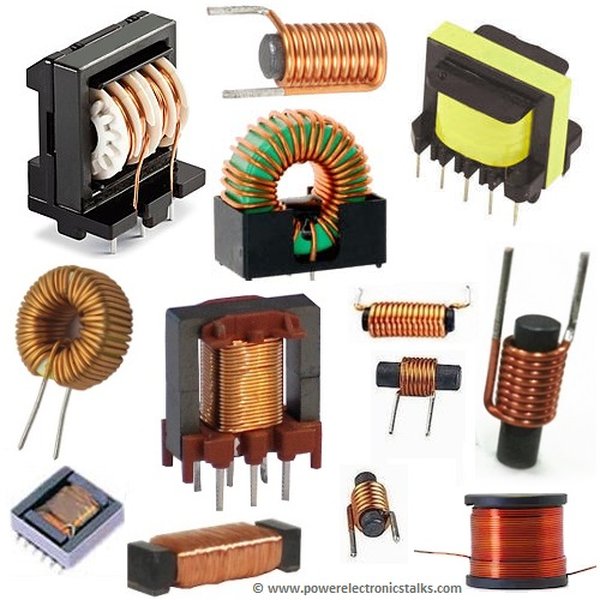
Soft ferrite cores are commonly used in inductors and transformers due to their low losses and high-frequency capabilities.
Hard Ferrites: The Stalwart Permanent Magnets
Hard ferrites are the workhorses of permanent magnetism, prized for their ability to maintain a strong, stable magnetic field without continuous external power.
Properties and Composition
- High Coercivity: Difficult to demagnetize, requiring a strong magnetic field for reversal.
- High Remanence: Retains significant magnetization after the external field is removed.
- Wide and Square Hysteresis Loop: Indicates large energy loss during magnetization but strong remanent magnetization.
- Lower Magnetic Permeability: Compared to soft ferrites.
- Composition: Primarily composed of barium or strontium ferrite (e.g., BaFe12O19 or SrFe12O19), often with additives like cobalt or lanthanum to enhance properties.
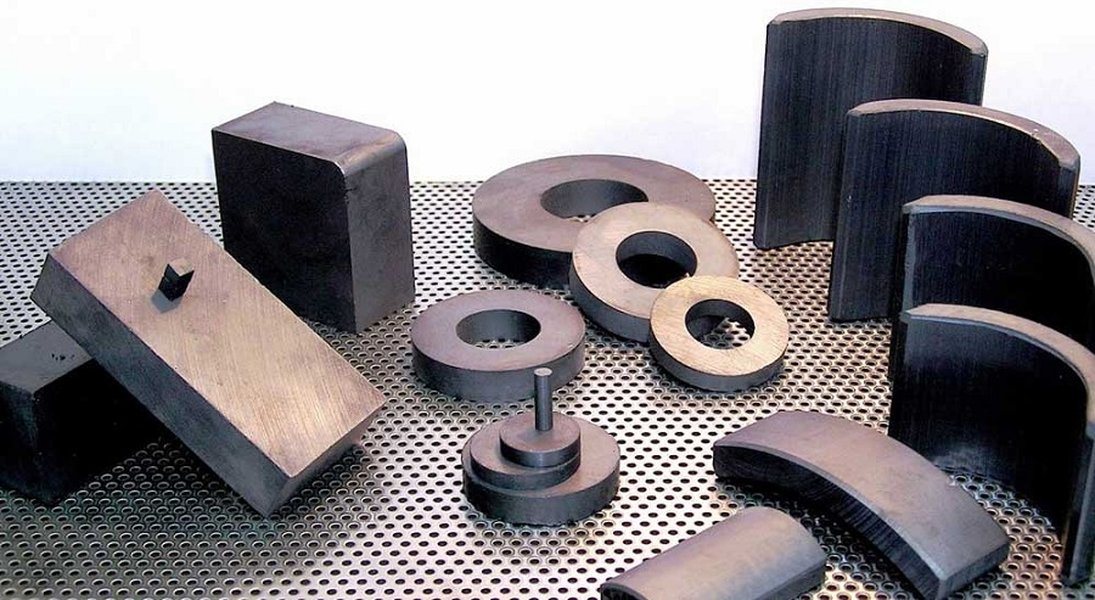
Hard ferrite magnets are widely used in various applications requiring a permanent magnetic field, such as motors and loudspeakers.
Applications of Hard Ferrites
Hard ferrites are essential in applications where a stable and lasting magnetic field is required:
- **Permanent Magnets:** Used in electric motors (e.g., small DC motors), loudspeakers, and magnetic separators.
- **Refrigerator Magnets:** Their familiar use for holding items.
- **Magnetic Recording Media:** Ferrite powders are used in the coatings of magnetic recording tapes.
- **Sensors:** Employed in various sensors requiring a stable magnetic field.
- **Xerography/Laser Printers:** Used in copiers based on the xerographic principle.
- **Biomarkers and Biosensors:** Due to their ability to be powdered and formed into micro/nano-systems.
Comparative Analysis: Soft vs. Hard Ferrites
Understanding the fundamental differences between soft and hard ferrites is critical for material selection in engineering and design. The table below summarizes their key contrasting properties and applications.
| Property | Soft Ferrites | Hard Ferrites |
|---|---|---|
| Coercivity (Resistance to Demag.) | Low (~100 Oe) | High (several kOe) |
| Magnetic Permeability | High | Low |
| Hysteresis Loss | Low (Narrow loop) | High (Wide and square loop) |
| Retention of Magnetism | Temporary (easily demagnetized) | Permanent (retains magnetism) |
| Crystal Structure | Cubic Spinel | Hexagonal (uniaxial anisotropy) |
| Electrical Resistivity | Very High (minimizes eddy currents) | High |
| Typical Use | Inductor/transformer cores, EMI filters, RF components | Permanent magnets (motors, speakers, sensors) |
| Common Compositions | Manganese-Zinc (MnZn), Nickel-Zinc (NiZn) | Barium Ferrite (BaFe12O19), Strontium Ferrite (SrFe12O19) |
This table provides a concise comparison of soft and hard ferrites, highlighting their distinct magnetic properties, structural characteristics, and typical applications, which are essential for material selection.
Additional Considerations and Manufacturing Insights
Beyond their primary magnetic classifications, several other factors influence the application and performance of ferrite materials.
Mechanical and Thermal Properties
Both soft and hard ferrites are robust ceramic materials. They exhibit high density (around 4.85 g/cm³) and good compressive strength (200–700 units). However, their brittleness means they have low tensile strength (20–65 units) and require specialized machining, often with diamond tools. In terms of thermal stability, soft ferrites can retain about 75% of their magnetization at elevated temperatures (e.g., 350°F), while hard ferrites generally maintain their properties more consistently due to their inherent magnetic stability.
Manufacturing Processes
The manufacturing techniques for soft and hard ferrites also differ to optimize their final magnetic properties. Hard ferrite magnets are often produced via wet-type shaping, where a slurry is injected into a mold under a magnetic field to align the particles. In contrast, soft ferrite transformer cores are commonly made by dry-type shaping, involving the pressurization of ferrite particles in a mold.
Tailoring Properties with "Mixes"
The versatility of ferrites largely stems from the ability to tailor their properties through specific combinations of metal oxides, known as "mixes." These specialized compositions allow engineers to optimize ferrite performance for various frequency ranges and application requirements, from high-frequency switching to stable DC magnetic fields.
Visualizing Ferrite Applications and Properties
To further illustrate the diverse applications and interconnected properties of ferrites, consider the following mindmap:
This mindmap illustrates the hierarchical relationship between the two main types of ferrites—soft and hard—and branches out to detail their key properties, common compositions, and diverse applications in electronics and beyond.
Understanding Ferrites in Action: A Deeper Look
To gain a more in-depth understanding of how ferrites are manufactured and their diverse applications, particularly in power electronics, consider the following video:
This video from the "Soft Magnetics, Hard Topics" podcast by Fair-Rite delves into "What is a Power Ferrite?". It offers valuable insights into the specific characteristics and materials that make ferrites suitable for power applications, highlighting their role in efficient energy conversion and management. This is particularly relevant as power ferrites are a key subset of soft ferrites, optimized for managing high power and frequency in modern electronic systems.
Frequently Asked Questions (FAQ)
What is the primary difference between soft and hard ferrites?
What are soft ferrites typically used for?
What are hard ferrites typically used for?
Do "soft" and "hard" refer to physical properties?
Why do soft ferrites have high electrical resistivity?
Conclusion
The distinction between soft and hard ferrites is fundamental to understanding their widespread utility in modern technology. While soft ferrites, with their low coercivity and high permeability, excel in dynamic, high-frequency applications like signal processing and power conversion, hard ferrites, characterized by high coercivity and remanence, are the backbone of permanent magnetism in motors, sensors, and recording technologies. Their unique crystalline structures and tailored compositions underscore their versatility, making ferrites indispensable materials that enable countless electronic and magnetic innovations in our daily lives. The ongoing development of new ferrite "mixes" continues to push the boundaries of their performance, ensuring their relevance in future technological advancements.
Recommended Further Exploration
- How do ferrite materials optimize performance in high-frequency applications?
- What is the significance of the magnetic hysteresis loop in distinguishing ferrite types?
- What are the latest advancements and emerging applications in ferrite technology?
- How do manufacturing processes influence the magnetic properties of ferrites?