
How to Build a Solar Sail
Innovative design and step-by-step guidance for solar sail construction
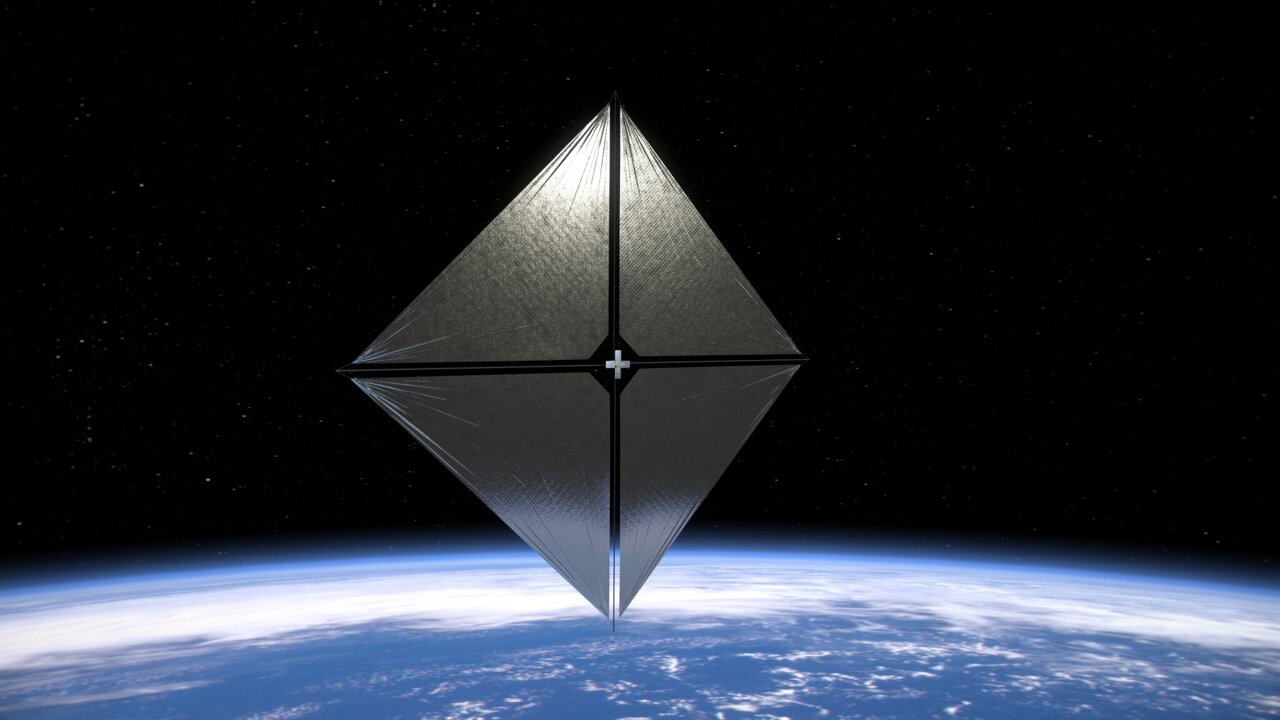
Highlights
- Material Selection and Design Considerations: Use lightweight, reflective materials paired with advanced composite structural components.
- Deployment and Structural Techniques: Incorporate reliable deployment mechanisms and tension-management systems to maintain shape and efficiency.
- Model vs. Real-World Applications: Understand the differences between constructing educational models and space-worthy solar sails.
Understanding Solar Sails
A solar sail is a propulsion technology that leverages the momentum of photons emitted by the Sun to generate thrust. Since the concept relies solely on the radiation pressure of sunlight rather than traditional propellants, solar sails have the potential to enable long-duration space missions and interplanetary travel. The principle was originally theorized centuries ago, but modern research and advanced materials have paved the way for practical applications.
Basic Physics of Solar Sails
The functioning of solar sails hinges on the momentum transfer when sunlight photons strike a reflective surface. In simple terms, when photons hit the sail, they impart a small force which, accumulated over a large surface area, can gradually accelerate a spacecraft. This acceleration is continuous as long as the sail captures solar radiation, reducing the need for carrying massive fuels on board.
Design Considerations
Material Selection
Selecting the right materials is a critical step in solar sail construction. The sail needs to be extremely lightweight and highly reflective to maximize the thrust generated from photon momentum. Common material choices include:
Reflective Films
Materials such as Mylar, polyimide films, or specially engineered nanomaterials are popular choices for the sail surface. These films are often coated with a thin metallic layer (typically aluminum) to enhance reflectivity and overall efficiency. For optimal performance, the material should have a minimal areal density – as low as 0.02 g/m² is desirable in advanced designs.
Structural Components
The supporting framework must be equally lightweight yet robust. Advanced composite materials such as carbon fiber and other ultra-lightweight composites are preferred for space-grade solar sails. For educational models, everyday materials like plastic straws, bamboo skewers, or wooden dowels can be used.
Shape and Size Considerations
The surface area of the sail is directly proportional to the thrust it can generate. Larger sails capture more sunlight, but they also bring additional structural challenges. Typical sizes can range from models around 1 square meter for educational projects to tens of thousands of square meters dedicated to space missions. The shape is conventionally square or rectangular, aiding in uniform distribution of forces and simplifying the design of the deployment mechanism.
Constructing a Solar Sail: Step-by-Step Guide
Step 1: Planning and Design
Begin by defining the purpose of your solar sail project. Are you constructing a model to demonstrate the principles of solar propulsion, or are you developing a design concept for a space mission? Clear objectives help determine appropriate materials, size, and complexity.
Step 2: Material Acquisition
For a space-bound solar sail, choose high-performance, ultrathin reflective films with a metallic coating. For educational or terrestrial models, materials like aluminum foil or Mylar sheets are sufficient. Simultaneously, procure materials for the support structure – from advanced composites in professional applications to readily available items like cardboard tubes and plastic straws for classrooms.
Step 3: Sail Fabrication
Preparing the Sail Surface
Carefully cut the reflective material to your desired dimensions. Precision is key, as neat edges and an even surface maximize the efficiency of photon capture. In professional setups, maintain stringent tolerances to ensure the surface helps optimize the area-to-mass ratio.
Constructing the Support Framework
Assemble the frame in accordance with your design. The framework must provide a robust, lightweight structure that holds the sail taut. The design often involves:
- Using composite booms for large-scale sails to maintain structural integrity
- Employing lightweight materials such as carbon fiber for minimal mass
- Creating segments that deploy from the spacecraft, sometimes employing shape memory alloys like NiTi for automatic unfurling
Step 4: Integration and Attachment
With both the sail material and supporting structure prepared, the next step is their integration. Attach the reflective material securely to the frame, ensuring that the surface is stretched smoothly and uniformly. The goal is to minimize wrinkles and distortions which could affect the sail's performance.
Step 5: Incorporating a Deployment Mechanism
A critical component of any solar sail is its deployment mechanism. Whether for a scale model or an operational spacecraft, the sail must unfold reliably. Options include:
Mechanical Deployment Systems
Traditional rollers, spindles, or folding mechanisms are used to compactly store the sail during launch and then deploy it in space. These systems require careful engineering to balance the need for low mass with reliability.
Advanced Deployment Techniques
Techniques such as using shape memory alloys can simplify deployment by activating automatically when exposed to space conditions (e.g., temperature changes). Using computer-controlled motors offers precise control over the sail’s angle and tension.
Modeling and Testing
Educational Models
For a hands-on understanding of how solar sails work, create a small-scale model. This can be executed using:
- Reflective materials such as aluminum foil or Mylar
- Simple frame constructs using popsicle sticks, cardboard tubes, or lightweight straws
- Tape, glue, and string to secure the different components
Test your model by placing it in a location with ample sunlight or using a fan to simulate solar wind. Observations on how the sail catches the light and directs movement can be extremely educational.
Engineering Scale Models for Space Applications
When developing prototypes for space applications, extensive testing is necessary. This includes overcoming hurdles such as:
- Mass minimization to achieve high acceleration
- Tension and surface area optimization to effectively capture the momentum of photons
- Ensuring the structure withstands extreme environmental conditions (temperature fluctuations, space radiation, and micrometeoroid impacts)
Ground-based simulations, vacuum chamber tests, and scale models all help validate the design before deployment in space.
Comparative Overview: Terrestrial vs. Space Application
| Aspect | Terrestrial Model | Space Application |
|---|---|---|
| Materials | Mylar, aluminum foil, cardboard, plastic straws | Ultrathin reflective films, advanced composites (e.g., carbon fiber), shape memory alloys |
| Framework Design | Simplified frames; often manually assembled | Engineered lightweight booms; deployable structures |
| Deployment Mechanism | Basic unfolding methods or manual setups | Automated, controlled systems using motors or shape memory alloys |
| Purpose | Educational demonstration and experimentation | Actual propulsion for space missions |
Advanced Considerations for Space-Grade Solar Sails
Optimizing the Surface Area-to-Mass Ratio
One of the most critical factors for successful solar sail designs is the ratio of surface area to mass. The larger the sail relative to its weight, the greater its capability to harness photon momentum. Advanced designs target extremely low areal densities by utilizing the latest materials technology, ensuring that every gram of mass contributes minimally to overall weight.
Environmental Durability
Space is a harsh environment where extreme temperature changes, high-energy radiation, and debris impacts are constant challenges. Solar sails designed for space must therefore undergo rigorous material testing to ensure longevity and reliability. Protective coatings and radiation-resistant materials are essential for withstanding prolonged exposure to space weather.
Deployment Dynamics
In space, the deployment of a solar sail is far more complex than simply unfurling a large sheet. The process must be meticulously planned to avoid entanglement, misalignment, or mechanical failure. Utilizing computer modeling and simulation can help optimize the unfolding sequence, ensuring that the sail deploys completely and uniformly. Many concepts feature a phased deployment—gradually extending the structure rather than an abrupt release—in order to minimize the risks associated with structural shifts.
Construction Challenges and Practical Tips
Addressing Structural Integrity
Maintaining the correct tension across the sail surface is paramount. Any slack or wrinkles can reduce effective photon capture and impair thrust generation. Employ tension-management systems that use adjustable strings or advanced retensioning mechanisms to keep the sail optimally stretched.
Precision in Manufacturing
Whether building a model or a prototype for space, precision is everything. Precise cutting, uniform coating, and meticulous assembly contribute to overall performance. In advanced settings, computer numerical control (CNC) machining, laser cutting, or automated processes may be employed to achieve the necessary tolerances.
Testing and Refinement
Experimental testing is vital to validate design assumptions. For educational models, simple tests with sunlight exposure or even a fan can serve to demonstrate basic principles. For space-bound models, more rigorous testing in vacuum chambers, thermal cycles, and vibration tests are conducted to simulate the actual space environment. Iterative designs and continuous refinement based on empirical data ultimately lead to more robust and efficient solar sails.
Summary of the Build Process
Overview of the Steps Involved
- Conceptualization and design: Define objectives, choose materials, and draft the sail design.
- Material preparation: Cut and prepare reflective films and supporting elements with precision.
- Frame and sail integration: Assemble the lightweight structural framework and attach the reflective material ensuring a taut surface.
- Deployment mechanism integration: Incorporate mechanisms (mechanical or motorized) that allow the sail to unfurl reliably.
- Testing and refinement: Conduct ground-based experiments and simulations to analyze performance under expected environmental conditions.
References
- NASA Advanced Composite Solar Sail System - NASA
- Solar Sailing Insights - The Planetary Society
- How Solar Sails Work - HowStuffWorks
- Advanced Materials for Solar Sails - Hindawi
- Solar Sail Workbook - NASA
- Solar Sail - Wikipedia
-
Solar Sail Engineering Concepts - ScienceDirect
-
Solar Sail Propulsion - Space.com
-
Recent Advances in Solar Sail Technology - arXiv
- Solar Sail Research Conferences - LPI
Related Queries
Last updated March 1, 2025