
Unlocking the Future of Power: The Rise of Solid-State Batteries
A detailed exploration into solid-state battery technology, its profound advantages, market landscape, and the companies shaping its future.
Key Insights into Solid-State Batteries
- Revolutionary Design: Solid-state batteries replace flammable liquid electrolytes with solid materials, drastically improving safety by eliminating the risk of thermal runaway and fires.
- Unprecedented Performance: These batteries promise significantly higher energy density, enabling longer ranges for electric vehicles (EVs) and extended operating times for electronics, alongside much faster charging capabilities.
- Rapid Market Evolution: The global solid-state battery market is on a trajectory of exponential growth, driven by increasing demand in EVs, consumer electronics, and renewable energy storage, with major automakers and tech giants heavily investing in their commercialization.
Solid-state batteries (SSBs) represent a monumental leap in energy storage technology, moving beyond the conventional lithium-ion batteries that have powered our world for decades. At their core, SSBs utilize a solid electrolyte to conduct ions between the anode and cathode, a fundamental shift from the liquid or gel electrolytes used in traditional designs. This innovation ushers in a new era of safety, efficiency, and performance for various applications, from electric vehicles to portable electronics and large-scale grid storage. The transition to a solid electrolyte not only mitigates critical safety concerns like fire hazards but also unlocks the potential for superior energy density, faster charging rates, and extended battery lifespans. As of 2025, the development and commercialization of solid-state batteries are accelerating, with numerous companies and research institutions globally racing to bring this transformative technology to market.
Understanding Solid-State Battery Technology
The defining characteristic of a solid-state battery is its use of a solid material as the electrolyte, which facilitates the movement of lithium ions between the positive (cathode) and negative (anode) electrodes. This solid electrolyte can be composed of various materials, including ceramics, glass, or solid polymers, each offering unique properties that impact battery performance and manufacturability. This design stands in stark contrast to traditional lithium-ion batteries, which rely on flammable liquid organic electrolytes.
The elimination of liquid components brings forth several advantages. Firstly, it inherently enhances safety by removing the risk of leakage and significantly reducing the potential for thermal runaway—a phenomenon where uncontrolled heat generation can lead to fires or explosions. Secondly, solid electrolytes often enable the use of lithium metal anodes, which possess a much higher theoretical energy capacity compared to the graphite or silicon-carbon anodes found in conventional lithium-ion batteries. This allows for more energy to be stored in a smaller, lighter package, a critical factor for applications like electric vehicles where weight and volume directly impact range and efficiency.
The Core Components of an SSB
- Solid Electrolyte: The non-flammable, solid material that conducts ions, acting as both an ion conductor and a physical separator between electrodes. Common materials include oxides, sulfides, and polymers.
- Anode: Often composed of lithium metal, which offers extremely high energy density. The solid electrolyte helps suppress dendrite formation, a common issue with lithium metal anodes in liquid-electrolyte batteries.
- Cathode: Typically uses similar materials to conventional lithium-ion batteries, such as lithium nickel manganese cobalt oxide (NMC) or lithium iron phosphate (LFP), though research is ongoing to optimize these for solid interfaces.
The intricate engineering involved in creating stable and efficient interfaces between these solid components is a significant area of research and development, as it directly impacts the battery's overall performance and longevity.
Transformative Advantages of Solid-State Batteries
The shift to solid electrolytes offers a compelling suite of advantages that position solid-state batteries as a truly disruptive force in energy storage. These benefits address many of the limitations inherent in current lithium-ion technology, paving the way for more powerful, safer, and durable devices and vehicles.
Enhanced Safety and Thermal Stability
Perhaps the most critical advantage of SSBs is their inherent safety. By replacing volatile, flammable liquid electrolytes with solid, non-combustible materials, the risk of thermal runaway, overheating, and fire is drastically reduced. This allows for tighter cell packaging and greater design flexibility, which can lead to more compact battery packs without compromising safety. This feature is particularly vital for electric vehicles, where battery integrity in collision scenarios is a paramount concern.
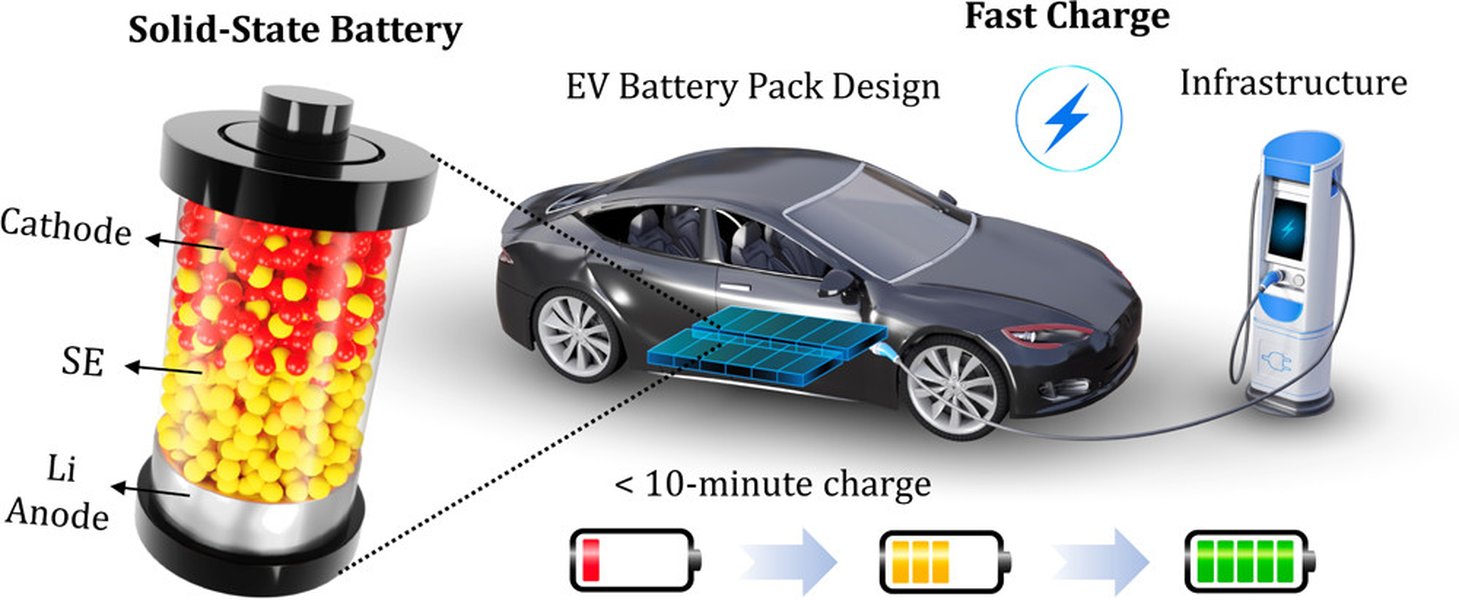
Internal structure of a solid-state battery showing its solid electrolyte.
Superior Energy Density and Driving Range
Solid-state batteries can achieve significantly higher energy densities—meaning they can store more energy in a smaller and lighter volume. This is largely due to the potential to use lithium metal anodes, which offer a much higher energy capacity than the carbon-based anodes in conventional lithium-ion batteries. For electric vehicles, this translates directly into extended driving ranges. Companies like QuantumScape aim for energy densities of 800-1,000 Wh/L, which could enable EVs to travel over 900 miles on a single charge, comparable to or exceeding the range of many gasoline vehicles.
Rapid Charging Capabilities
The unique properties of solid electrolytes can enable much faster charging times. In liquid lithium-ion cells, the diffusion of lithium into carbon particles can create a charge bottleneck. Solid electrolytes can overcome this, potentially allowing batteries to charge in minutes rather than hours, an experience akin to refueling a gasoline car. This capability is a significant factor in addressing range anxiety and accelerating EV adoption.
Extended Cycle Life and Durability
SSBs can offer a longer cycle life and better capacity retention over time. The solid electrolyte prevents unwanted chemical side reactions between the anode and electrolyte that cause capacity fade and degradation in liquid lithium-ion cells. Research has demonstrated lithium metal batteries capable of enduring at least 6,000 charge-discharge cycles, indicating a substantially prolonged battery lifespan.
Wider Operating Temperature Range
Some solid-state battery technologies, such as Factorial Energy's FEST® cells, have been validated to perform effectively across a wide range of temperatures, from -30°C to 45°C. This broad operational window is crucial for automotive applications, ensuring reliable performance in diverse climatic conditions, surpassing the limitations of many conventional batteries.
Improved Recyclability and Design Flexibility
The solid nature of the electrolyte simplifies the recycling process by eliminating leakage risks and contamination from liquid electrolytes. Furthermore, the solid electrolyte can act as both an ion conductor and a separator, allowing for more compact cell designs and potentially reducing the overall weight and volume of battery packs, offering greater design flexibility for manufacturers.
The Global Race: Leading Companies and Their Innovations
The solid-state battery landscape is highly competitive, with a multitude of companies, from established automotive giants to innovative startups, pouring significant resources into research, development, and commercialization. Their efforts are pushing the boundaries of what's possible in energy storage.
Pioneering the Path to Commercialization
- QuantumScape: A leading American company focusing on solid-state lithium-metal battery technology for EVs. Backed by Volkswagen, QuantumScape aims for high energy density, faster charging, and enhanced safety, and has achieved significant milestones by shipping Alpha-2 prototype cells to customers early in 2024.
- Solid Power: Supported by BMW and Ford, Solid Power is working towards initiating mass production of all-solid-state batteries by 2024. They are producing 20 Ah multi-layer solid-state lithium metal batteries on a continuous roll-to-roll production line.
- Toyota: A long-term player in SSB research, Toyota holds numerous patents in the field. Partnering with Idemitsu Kosan, they plan to begin manufacturing solid-state EV batteries by 2027-2028, targeting ranges over 900 miles and improved recyclability.
- Factorial Energy: This U.S.-headquartered company is developing FEST® solid-state cells, which have been validated for performance in extreme temperatures. Collaborations with Mercedes-Benz and Stellantis aim to integrate these batteries into demonstration fleets by 2026 and production vehicles by 2030.
- Mercedes-Benz: Successfully road-tested the first car powered by a lithium-metal solid-state battery in February 2025 (integrated into an EQS prototype), aiming for production vehicle integration by 2030.
- ProLogium Technology: Noted as the world's only solid-state battery manufacturer to have reached mass production, with Mercedes-Benz investing in 2022 to co-develop next-generation ceramic solid-state battery cells.
- Nissan: Actively advancing solid-state battery technology, aiming to complete first solid-state cells in 2025 and achieve mass production by 2029, targeting significant cost reductions.
- SES: Developing "hybrid" lithium-metal solid-state batteries with energy densities up to 400 Wh/kg, crucial for GM's Ultium battery platform strategy.
- Honda: Working on solid-state batteries in its Tokyo-based lab, with plans for a vehicle launch in the latter part of the decade.
- CATL (Contemporary Amperex Technology Co., Limited): The world's largest lithium-ion battery manufacturer is making significant strides in solid-state battery development.
- NIO: This Chinese EV manufacturer is pioneering solid-state battery integration with its 150 kWh semi-solid-state battery, developed in partnership with WeLion, offering a driving range of up to 577 miles.
- TDK: Announced a new CeraCharge solid-state battery in June 2025 with an energy density of 1,000 watt-hours per liter, though acknowledges challenges in scaling oxide-based batteries for larger applications.
Market Dynamics and Future Projections
The global solid-state battery market is currently experiencing a transformative phase, poised for exponential growth fueled by the burgeoning demand for electric vehicles, advancements in consumer electronics, and the need for more efficient renewable energy storage solutions.
A Glimpse into Market Growth
Market valuations vary across different reports, but the consensus points to robust expansion:
- In 2024, the global solid-state battery market size was estimated to be between USD 0.37 billion and USD 2.23 billion.
- Forecasts project the market to reach approximately USD 1.36 billion by 2032, exhibiting a compound annual growth rate (CAGR) of around 41.61% from 2025.
- Other projections are even more aggressive, with some expecting the market to reach USD 6.3 billion by 2032 from USD 380 million in 2025, or even US$9.09 billion by 2035 with a CAGR of 57.4% compared to 2023.
Specifically for solid-state car batteries, the market is projected to grow from 27,070 units in 2025 to 661,724 units by 2030, at a robust CAGR of 89.5%. Asia Pacific is expected to dominate the global market, holding a significant share (e.g., 43.76% in 2024), with China's market alone projected to reach 17.2 billion yuan by 2030.
Understanding the Market's Driving Forces
The rapid growth of the solid-state battery market is underpinned by several key factors:
- Increasing EV Adoption: The global push for electric vehicles to reduce carbon emissions is the primary catalyst. SSBs promise to address current EV limitations related to range, charging time, and safety.
- Advancements in Materials Science: Ongoing breakthroughs in solid electrolyte materials and electrode designs are making SSBs more viable and efficient.
- Government Support and Incentives: Many governments worldwide are offering incentives for clean energy technologies, including advanced battery research and manufacturing.
- Demand for Safer Electronics: Beyond EVs, the consumer electronics sector seeks safer, more compact, and longer-lasting batteries for devices like smartphones, wearables, and laptops.
- Renewable Energy Storage: Solid-state batteries hold potential for grid-scale energy storage, offering safer and more efficient solutions for integrating intermittent renewable energy sources.
Navigating the Hurdles: Challenges and Future Outlook
Despite their immense promise, solid-state batteries face significant challenges that must be overcome before widespread mass production and commercialization for large-scale applications, especially in the automotive sector.
Manufacturing Complexities and Cost Barriers
The production of solid-state batteries is inherently different from conventional lithium-ion batteries, often requiring entirely new manufacturing lines and substantial investments in specialized machinery. This contributes to high manufacturing costs. Scaling up production from laboratory prototypes to millions of units while maintaining consistent performance, reliability, and low defect rates is a major engineering and financial hurdle. Industry experts have warned of a potential "production hell" phase as this technology transitions to mass scale.
Technical Obstacles and Performance Consistency
Key technical challenges include:
- Mechanical Brittleness: Some solid electrolytes, particularly ceramic materials, can be brittle, making larger batteries more fragile and susceptible to damage during manufacturing or operation.
- Interfacial Stability: Achieving a stable and long-lasting interface between the solid electrolyte and electrodes, especially the lithium metal anode, is crucial to prevent degradation and ensure consistent performance over many charge cycles.
- Ionic Conductivity: Ensuring high enough ionic conductivity in solid electrolytes, particularly at lower temperatures, remains a focus of ongoing research to match or surpass liquid electrolytes.
Competitive Landscape with Lithium-ion
Solid-state batteries are entering a market where current lithium-ion technology is a "moving target." Lithium-ion batteries are continuously improving in terms of energy density, charging speed, and cost, with innovations like silicon anodes pushing their capabilities further. This ongoing evolution means SSBs must not only demonstrate superior performance but also achieve cost competitiveness to gain significant market share.
Chart: Comparative Performance Outlook for Battery Technologies
To illustrate the anticipated strengths and challenges of solid-state batteries compared to traditional lithium-ion and emerging semi-solid-state solutions, here's a radar chart. This chart reflects a qualitative assessment of various performance metrics, highlighting where solid-state batteries are expected to excel and where current hurdles exist.
This radar chart visually depicts the strengths of solid-state batteries, particularly in safety, energy density, and cycle life, compared to existing lithium-ion technology. It also highlights the areas where semi-solid-state batteries may act as a "bridge technology," offering a balance of performance while manufacturing scalability and cost-effectiveness are still being optimized for fully solid-state solutions. The chart underscores that while SSBs promise significant advancements, challenges in cost and mass production scalability are actively being addressed by the industry.
The Outlook: Bridging to a Solid Future
Many experts believe that semi-solid-state batteries will likely hit the market first, serving as a transitional technology before fully solid-state packs achieve mass production. While some companies predict commercialization as early as 2027-2028, widespread adoption for consumer EVs is generally expected later in the decade, with some anticipating a more pervasive presence in 10 or more years due to the extensive validation, infrastructure redesign, and cost reduction required. The continuous government support, significant R&D investments, and strategic collaborations among key industry players, however, indicate a strong trajectory for the solid-state battery market, promising a profound impact on the future of energy.
Key Developments and Milestones
The journey of solid-state batteries from concept to commercial viability is marked by significant breakthroughs and strategic partnerships. Companies and research institutions are making tangible progress in laboratory settings and, increasingly, in real-world applications.
Advancements in Energy Density and Range
The pursuit of higher energy density is a central theme in SSB development. Companies like QuantumScape are demonstrating prototypes capable of delivering ranges exceeding current EV capabilities, aiming for over 900 miles. Similarly, SES is developing hybrid lithium-metal solid-state batteries reaching impressive energy densities of 400 Wh/kg, essential for enhancing the performance of platforms like GM's Ultium.
Accelerating Towards Faster Charging
Faster charging is another critical advantage. The solid electrolyte design can alleviate the charge bottleneck seen in conventional lithium-ion cells. Several developers are reporting significant improvements in charging times, with targets often set for charging a substantial percentage of the battery in mere minutes.
From Lab to Road: Prototype Testing
Crucially, solid-state batteries are moving beyond the laboratory. Mercedes-Benz, in collaboration with Factorial Energy, conducted road tests of an EQS prototype powered by a lithium-metal solid-state battery in February 2025. This real-world testing validates the technology's performance and safety under operational conditions, marking a significant step towards integration into production vehicles.
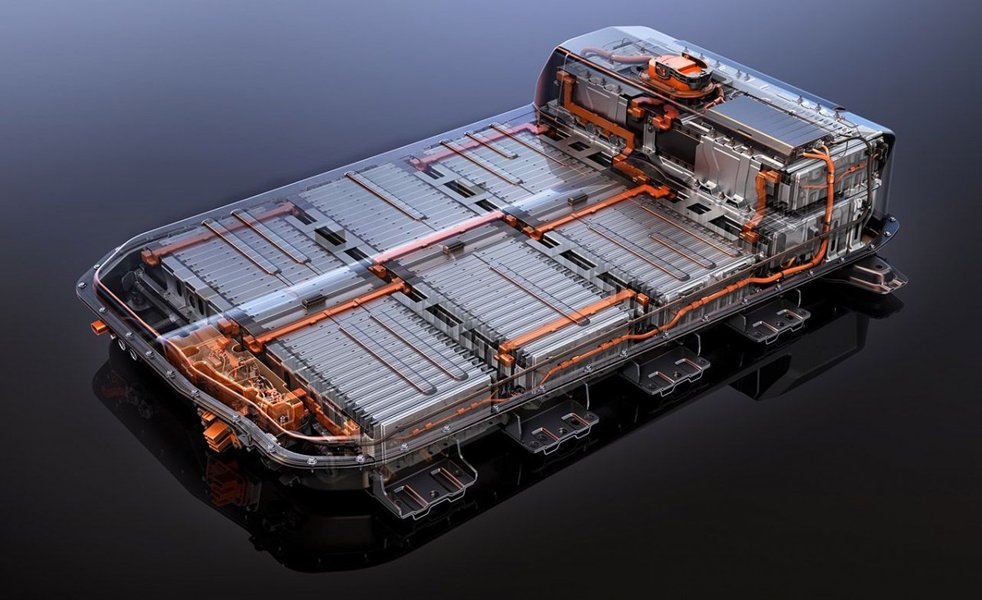
Prototype solid-state battery cells undergoing testing in vehicles.
Mindmap: Key Pillars of Solid-State Battery Development
This mindmap illustrates the interconnected aspects driving the development and adoption of solid-state batteries, highlighting the core components, advantages, key players, and ongoing challenges.
This mindmap visually organizes the multifaceted world of solid-state batteries, demonstrating how advancements in core technology, strategic industry players, and market drivers are all contributing to its promising future, even as challenges in scalability and cost are being addressed.
Collaborations and Partnerships Fueling Progress
Strategic partnerships are accelerating the pace of development. Collaborations like Stellantis and Factorial Energy, or Volkswagen and QuantumScape, are crucial for validating technology at commercial scale and integrating it into production vehicles. These alliances share expertise and resources, mitigating the significant R&D costs and risks involved.
The Impact on Electric Vehicles and Beyond
The advent of solid-state batteries is poised to fundamentally reshape the electric vehicle industry, and its influence extends far beyond automobiles to various other sectors requiring advanced power solutions.
Revolutionizing EV Performance and Adoption
For electric vehicles, solid-state batteries are the "holy grail" that could overcome current limitations and drive widespread adoption:
- Extended Range: Higher energy density means EVs can travel significantly farther on a single charge, alleviating "range anxiety" for consumers.
- Rapid Charging: Faster charging times make EVs as convenient as gasoline cars, removing a major psychological barrier for potential buyers.
- Enhanced Safety: The elimination of flammable liquid electrolytes greatly reduces fire risks, improving consumer confidence and potentially simplifying vehicle design.
- Reduced Weight and Volume: More compact and lighter battery packs allow for greater design flexibility, potentially improving vehicle dynamics and interior space.
The table below summarizes the key differences between traditional lithium-ion batteries and solid-state batteries in terms of their impact on EV performance.
| Feature | Traditional Lithium-ion Battery | Solid-State Battery (Projected) |
|---|---|---|
| Electrolyte Type | Liquid/Gel Polymer | Solid (Ceramic, Glass, Polymer) |
| Energy Density (Wh/kg or Wh/L) | Good (200-300 Wh/kg) | Excellent (300-500+ Wh/kg, 800-1000 Wh/L) |
| Safety Risk (Thermal Runaway) | Moderate to High | Very Low |
| Charging Speed | Moderate (30-60+ mins for 80%) | Very Fast (10-20 mins for 80%+) |
| Cycle Life | Good (500-1500 cycles) | Excellent (2000+ cycles, up to 6000+) |
| Operating Temperature Range | Limited, performance degrades at extremes | Wider, more stable performance |
| Dendrite Formation | Risk, especially with lithium metal anodes | Suppressed by solid electrolyte |
| Manufacturing Cost | Lower, established processes | Currently Higher, developing processes |
This table highlights the significant improvements solid-state batteries are expected to bring across critical performance indicators for electric vehicles.
Beyond EVs: Diverse Applications
While electric vehicles are a primary focus, solid-state batteries have vast potential across numerous other industries:
- Consumer Electronics: Smartphones, laptops, and wearables could benefit from smaller, lighter, safer, and longer-lasting batteries, enabling thinner designs and extended usage.
- Drones and Aerospace: Higher energy density means longer flight times and increased payload capacity for drones, revolutionizing logistics, surveillance, and personal air mobility.
- Medical Devices: The enhanced safety and miniaturization capabilities make SSBs ideal for sensitive applications like pacemakers and implantable medical devices.
- Grid-Scale Energy Storage: For renewable energy sources like solar and wind, SSBs could offer safer and more efficient large-scale storage solutions, improving grid stability and reliability.
- Industrial Robotics: Longer operational periods and faster charging cycles can boost productivity in automated industrial settings.
Video: Honda's Progress in Solid-State Battery Production
The race for solid-state battery dominance is truly global, with major automakers heavily investing in their own R&D and production capabilities. Honda, a prominent Japanese automotive manufacturer, is making significant strides in developing its solid-state battery technology. The following video provides insights into Honda's approach and recent progress in setting up production lines for these advanced batteries. It's a testament to the industry's commitment to bringing this technology to market, highlighting the engineering and manufacturing complexities involved in scaling up such an innovative power source for future electric vehicles.
This video from Honda showcases the dedication and significant investment required to transition from laboratory breakthroughs to tangible production lines for solid-state batteries, underscoring the collaborative and intricate nature of this technological revolution.
Frequently Asked Questions (FAQ)
What is a solid-state battery?
What are the main advantages of solid-state batteries over lithium-ion?
When will solid-state batteries be available for electric vehicles?
Which companies are leading the development of solid-state batteries?
What are the main challenges for solid-state batteries?
Conclusion
Solid-state batteries stand at the forefront of battery technology, promising to revolutionize energy storage across various industries, particularly in electric vehicles. Their inherent safety, superior energy density, and rapid charging capabilities address the fundamental limitations of conventional lithium-ion batteries. While significant hurdles remain in terms of manufacturing scalability and cost reduction, the relentless pace of innovation, coupled with substantial investments and strategic collaborations from global industry leaders, indicates a clear path toward their widespread commercialization. As these challenges are overcome, solid-state batteries are poised to unlock unprecedented levels of performance, efficiency, and safety, shaping a more sustainable and electrified future for transportation, electronics, and energy infrastructure.
Recommended Queries
- How do semi-solid-state batteries bridge the gap to full solid-state?
- What are the latest breakthroughs in solid electrolyte materials?
- Comparison of manufacturing costs for solid-state vs. lithium-ion batteries
- Impact of solid-state batteries on grid energy storage solutions