
Unlock the Secrets to Solving LeetCode Problems More Easily
Transform frustration into mastery with proven strategies for tackling coding challenges efficiently.
LeetCode problems can feel daunting, especially when you're starting out or preparing for technical interviews. However, "easily" solving them isn't about finding shortcuts, but about adopting a structured, strategic approach. By building a solid foundation, understanding common patterns, and practicing consistently, you can significantly improve your problem-solving skills and make the process far more manageable.
Essential Insights for LeetCode Success
- Build Foundational Knowledge: Mastering core Data Structures and Algorithms (DSA) is non-negotiable for recognizing patterns and formulating efficient solutions.
- Embrace Problem Patterns: Many LeetCode problems reuse common algorithmic techniques (like Two Pointers or Sliding Window). Learning these patterns is key to faster solving.
- Practice Systematically: Start with easier problems, focus on understanding *why* solutions work (even if you look them up), and revisit problems to reinforce learning.
Laying the Groundwork: Mastering the Fundamentals
Why Data Structures and Algorithms (DSA) Matter
Before diving headfirst into a sea of LeetCode problems, it's crucial to have a firm grasp of fundamental Data Structures and Algorithms. Think of DSA as your toolkit; without the right tools, even simple tasks become difficult. Many sources emphasize starting here.
Key Areas to Focus On:
- Core Data Structures: Arrays, Strings, Hash Maps (Dictionaries), Sets, Linked Lists (Singly, Doubly), Stacks, Queues, Trees (Binary Trees, Binary Search Trees, Tries), Heaps (Min/Max), Graphs.
- Essential Algorithms: Sorting (like Merge Sort, Quick Sort), Searching (Binary Search), Traversal Algorithms (Breadth-First Search - BFS, Depth-First Search - DFS), Recursion, Dynamic Programming concepts, Greedy Algorithms.
Understanding these concepts allows you to identify the most suitable approach for a given problem, analyze time and space complexity effectively, and ultimately write more optimal code. Resources like LeetCode's own "Explore" cards or dedicated DSA courses can provide structured learning paths.
A Systematic Approach to Problem Solving
Tackling a LeetCode problem shouldn't be a random guess. Following a structured process can demystify even complex challenges.
Step 1: Deeply Understand the Problem
Deconstruct the Request
Don't jump straight into coding. Take the time to:
- Read Carefully: Absorb the entire problem statement, including examples, constraints (input size, value ranges), and expected output format. Constraints often hint at the required time complexity.
- Restate in Your Words: Can you explain the problem simply? This confirms comprehension.
- Analyze Examples: Walk through the provided examples manually. How does the input transform into the output? What are the edge cases?
- Ask Clarifying Questions (Simulated): In a real interview, you'd ask questions. Practice thinking about potential ambiguities: What happens with empty input? Are inputs always valid?
Step 2: Devise a Plan - Brute Force First
Get a Working Solution
It's often easier to start with a straightforward, albeit potentially inefficient, solution. This "brute force" approach ensures you understand the problem's logic.
- Think about the simplest, most direct way to solve it, even if it seems slow.
- Implement this initial solution. Getting *any* correct answer builds momentum.
Step 3: Analyze and Optimize
Refine Your Approach
Once you have a working brute-force solution:
- Analyze Complexity: Determine the time and space complexity (Big O notation) of your brute-force solution. Is it efficient enough given the constraints?
- Identify Bottlenecks: Where is the inefficiency? Are there redundant calculations or suboptimal data structure choices?
- Brainstorm Optimizations: Consider if a different algorithm or data structure (leveraging your DSA knowledge) could improve performance. Can you use a hash map to reduce lookup times? Could sorting help? Is a two-pointer approach applicable?
- Implement the Optimal Solution: Refine your code based on your optimization ideas.
Step 4: Test Thoroughly
Validate Your Code
Before submitting:
- Use Provided Examples: Ensure your code passes all given test cases.
- Consider Edge Cases: Test with empty inputs, single-element inputs, large inputs, inputs with duplicates, negative numbers, etc.
Effective Practice Strategies
Consistency and smart practice methods are crucial for making LeetCode feel easier over time.
Start Smart: Easy Problems and High Acceptance
Don't overwhelm yourself initially. Begin with problems marked "Easy" on LeetCode. Filtering problems by "Acceptance Rate" (highest first) can also guide you to more straightforward introductory problems that many others have successfully solved. Aim to build a solid base (e.g., 50-100 easy problems) before consistently tackling "Medium" ones.
Focus on Patterns, Not Just Problems
Many LeetCode problems are variations of common underlying patterns. Recognizing these patterns is a superpower.
Key Patterns to Master:
- Two Pointers
- Sliding Window
- Fast & Slow Pointers (e.g., cycle detection in linked lists)
- Merge Intervals
- Tree Traversal (BFS, DFS - Inorder, Preorder, Postorder)
- Topological Sort (Graphs)
- Dynamic Programming (various sub-patterns)
- Backtracking
- Heap-based approaches (Top K elements)
- Binary Search (on sorted data or answer ranges)
Practice problems specifically tagged with these patterns to solidify your understanding of each technique. Curated lists like "LeetCode 75" or "Top Interview Questions" often group problems by pattern or topic.
Visualizing Problem-Solving Steps
The process of tackling a LeetCode problem involves several interconnected stages. Understanding this flow can help you navigate challenges systematically. The mindmap below illustrates these key steps and their relationships, from foundational knowledge to advanced practice techniques.
(Arrays, Maps, Lists, Trees, Heaps)"] id1b["Algorithms
(Sorting, Searching, BFS/DFS)"] id1c["Complexity Analysis
(Big O Notation)"] id2["Problem Approach"] id2a["Understand
(Read, Examples, Constraints)"] id2b["Plan
(Brute Force First)"] id2c["Optimize
(Identify Bottlenecks, Choose DSA)"] id2d["Test
(Edge Cases, Examples)"] id3["Practice Strategy"] id3a["Start Easy
(High Acceptance Rate)"] id3b["Focus on Patterns
(Two Pointers, Sliding Window, etc.)"] id3c["Use Curated Lists
(LeetCode 75)"] id3d["Consistent Practice
(Schedule, Repetition)"] id3e["Timed Sessions
(Simulate Interviews)"] id4["Learning & Improvement"] id4a["Handle Being Stuck
(Timebox, Use Hints)"] id4b["Review Solutions
(Understand 'Why')"] id4c["Study Others' Code
(Discussion Section)"] id4d["Revisit Problems"] id5["Mindset"] id5a["Persistence"] id5b["Patience"] id5c["Celebrate Progress"]
Common Problem-Solving Patterns Summarized
Recognizing and applying the right pattern can drastically simplify a problem. Here’s a table summarizing some frequently encountered patterns:
| Pattern Name | Description | Common Use Cases / Problem Types |
|---|---|---|
| Two Pointers | Uses two pointers (indices) that move through data (usually an array), often towards each other, away from each other, or in the same direction at different speeds. | Sorted array problems (finding pairs, removing duplicates), Palindrome checks, Subarray/Substring problems. |
| Sliding Window | Maintains a dynamic subarray or substring (the "window") that moves through a larger data structure. Useful for finding min/max/average or properties of contiguous segments. | Finding max/min subarray sum, Longest substring with K distinct characters, String permutations. |
| Hash Map / Dictionary | Uses key-value pairs for efficient lookups, insertions, and deletions (often O(1) average time). | Frequency counting, Finding duplicates, Grouping items, Implementing caches (LRU), Two Sum problem. |
| Breadth-First Search (BFS) | Level-by-level traversal algorithm, typically using a queue. Finds the shortest path in unweighted graphs or trees. | Shortest path in grids/graphs, Level order traversal of trees, Web crawlers. |
| Depth-First Search (DFS) | Explores as far as possible along each branch before backtracking, typically using recursion or a stack. | Graph/Tree traversal, Detecting cycles, Pathfinding, Solving mazes, Backtracking problems. |
| Binary Search | Efficiently finds an element in a sorted array by repeatedly dividing the search interval in half. | Searching in sorted arrays, Finding insertion points, Optimizing search space (searching on the "answer"). |
| Dynamic Programming (DP) | Breaks down a problem into simpler overlapping subproblems, solving each subproblem just once and storing the results (memoization or tabulation). | Optimization problems (min/max), Counting problems, String problems (LCS, Edit Distance), Knapsack problems. |
Consistency and Timed Practice
Aim for regular practice sessions, even if short. Consistency is more effective than sporadic marathon sessions. Incorporate timed practice (e.g., 30-45 minutes per problem) to simulate interview pressure and improve speed. LeetCode contests are also excellent for practicing under time constraints.
When You Get Stuck: Turning Roadblocks into Learning Opportunities
It's completely normal to get stuck. How you handle it makes the difference.
Timebox Your Struggle
Don't spin your wheels indefinitely. Give yourself a reasonable amount of time (e.g., 20-40 minutes) to actively work on the problem. If you're making no progress, it's time to seek help.
Use Hints and Solutions Strategically
LeetCode often provides hints. Use them one by one. If hints aren't enough, look at the official solution or discussion section.
Learn, Don't Just Copy
- Understand the Logic: Focus on *why* the solution works. What pattern or data structure did it use that you missed? How does it optimize over the brute-force method?
- Code it Yourself: After understanding the solution, close it and try to implement it from scratch. This reinforces learning.
- Analyze Different Solutions: The discussion section often showcases multiple ways to solve a problem, sometimes with different trade-offs in time and space complexity.
Revisit and Reinforce
Mark problems you struggled with and revisit them after a few days or weeks. Can you solve it independently now? This spaced repetition helps solidify concepts in your long-term memory.
Leveraging Resources and Community
You don't have to learn in isolation.
Study Others' Code
The discussion section on LeetCode is a goldmine. Reading elegant, efficient, or simply different solutions from other users can expose you to new techniques and coding styles.
External Learning Aids
Supplement your practice with:
- YouTube Tutorials: Many channels offer detailed walkthroughs of LeetCode problems and explanations of core concepts and patterns.
- Coding Blogs and Articles: Platforms like Medium, DEV Community, and HackerNoon often feature guides and strategy articles.
- Online Courses: Structured courses on DSA can provide a more comprehensive foundation.
This video offers a step-by-step approach to tackling coding interview problems, relevant to LeetCode.
The video above, "How to Solve ANY LeetCode Problem (Step-by-Step)", provides a structured framework that aligns with the strategies discussed here. It emphasizes understanding the problem, planning an approach, optimizing, and testing – key elements for making LeetCode less intimidating and more systematic.
Practice Environment
Using a familiar coding environment can sometimes streamline the process. Tools and plugins exist to integrate LeetCode practice directly into code editors like VS Code, allowing for easier debugging and testing.
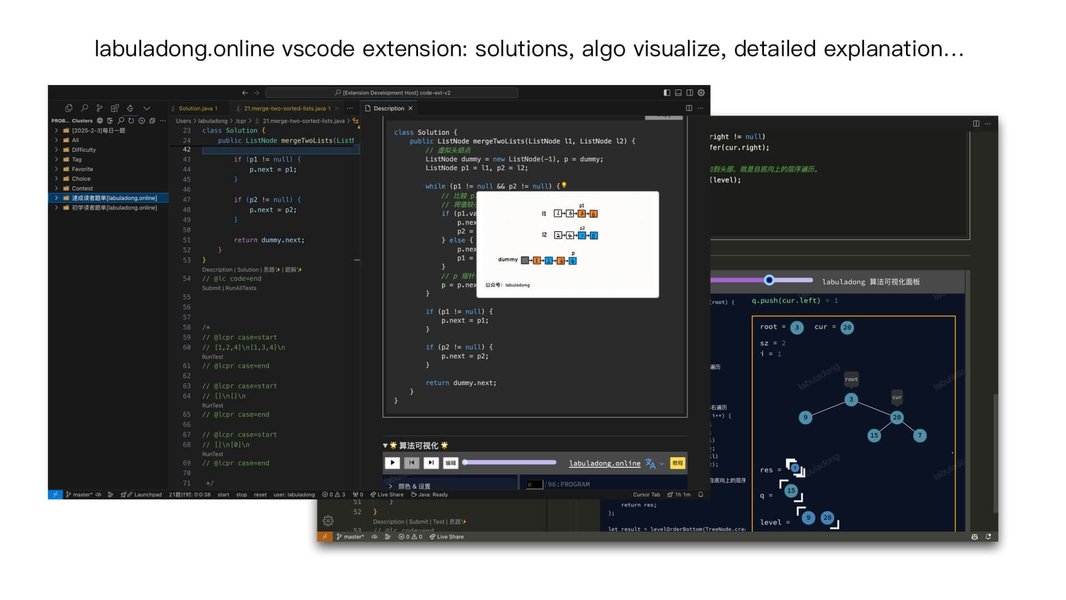
Integrating LeetCode with a local development environment like VS Code can enhance the practice experience.
Visualizing Key Strategy Importance
While all strategies contribute to success, some foundational elements and practices have a higher impact, especially initially. This radar chart offers a perspective on the relative importance of key LeetCode strategies for efficient problem-solving.
As illustrated, having a strong DSA Foundation and engaging in Consistent Practice are paramount. Closely following is the ability for Pattern Recognition and thoroughly Understanding the Problem. While starting with Brute Force is a helpful tactic, and Timed Practice builds speed, dedicating time to Solution Review & Learning from mistakes or optimal approaches is crucial for long-term improvement.
Frequently Asked Questions (FAQ)
+ How much time should I spend stuck on a problem before looking at the solution?
Most sources recommend timeboxing your effort. Spend around 20-40 minutes actively trying to solve the problem. If you're making zero progress after that period (i.e., not developing new ideas or approaches), it's generally more productive to look at hints or the solution. The goal is learning, not endless frustration.
+ Do I really need to know Data Structures and Algorithms (DSA)?
Yes, absolutely. A strong understanding of fundamental DSA is critical. LeetCode problems are designed to test this knowledge. Without it, you'll struggle to identify efficient solutions or understand *why* certain approaches are better than others. Trying to solve LeetCode without DSA basics is like trying to build furniture without knowing how to use tools.
+ Should I solve problems randomly or follow a list/topic?
For beginners, focusing on specific topics or patterns (e.g., Arrays, Hash Maps, Two Pointers) is generally more effective. Solving multiple problems of the same type helps reinforce the underlying concepts and pattern recognition. Using curated lists like "LeetCode 75" or LeetCode's "Explore" cards provides structure. Solving randomly can be overwhelming initially.
+ How many LeetCode problems do I need to solve?
There's no magic number, as quality matters more than quantity. Focus on understanding the concepts behind each problem you solve. However, consistent practice is key. Many users report feeling more comfortable after solving around 100-150 problems, particularly with a good mix of Easy and Medium difficulties across various topics and patterns. The goal is proficiency in common patterns and DSA, not just hitting a number.
Recommended Next Steps
- What are the most common LeetCode problem patterns for interviews?
- How to effectively review LeetCode solutions after attempting a problem?
- Can you suggest a study plan for LeetCode based on difficulty and topic?
- Compare LeetCode with other coding practice platforms like HackerRank or CodeSignal.
References
Last updated May 5, 2025