
Understanding the Problem: Solving for z
Exploring the Ambiguity in the Expression "6 plus 1/2z"
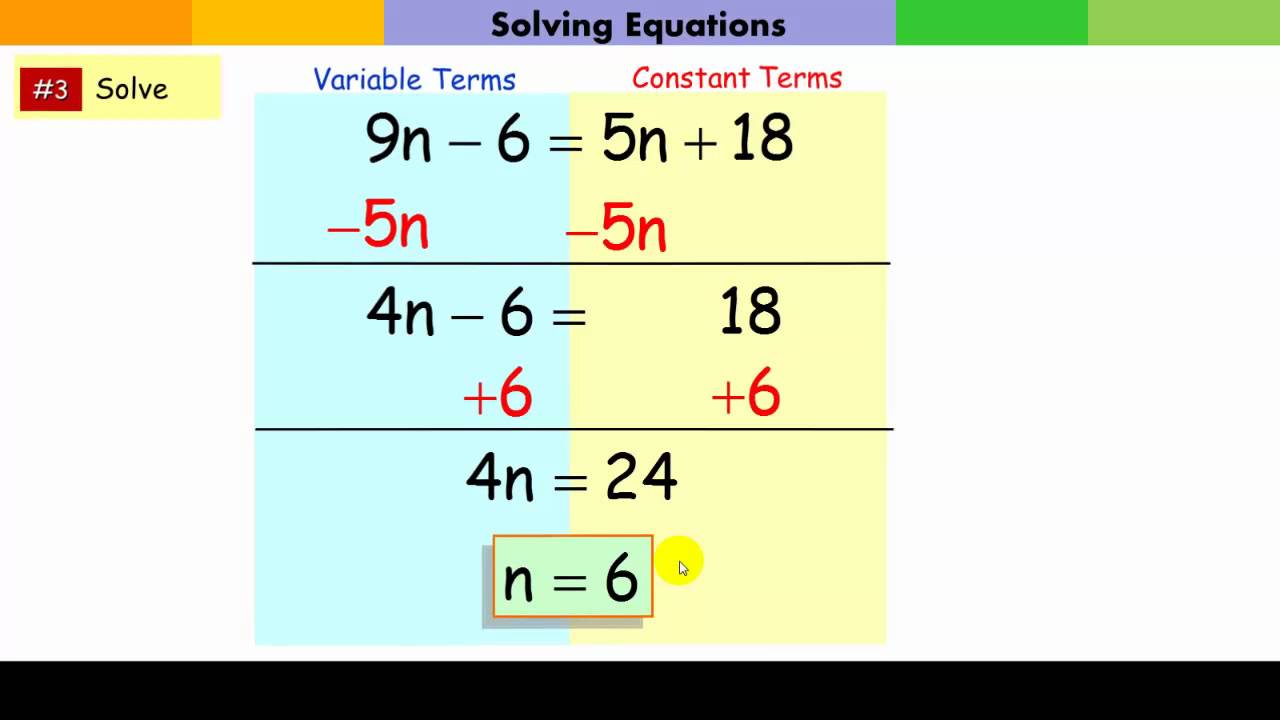
Key Insights
- Equation Is Essential: The expression "6 plus 1/2z" by itself is not an equation and therefore does not provide enough information to solve for z.
- Clarification Needed: A complete equation (such as "6 + 1/2z = 0" or "6 + 1/2z = 12") is required to isolate and determine the value of z.
- Multiple Interpretations: When facing such expressions, one approach is to assume a common or standard form if context is provided; otherwise, further clarification must be requested.
Detailed Analysis of the Expression
In many mathematical problems, the ability to solve for a variable depends on the presence of a complete equation. The expression "6 plus 1/2z" can be represented mathematically as:
\( 6 + \frac{1}{2}z \)
This expression consists of a constant term (6) and a linear term involving z (\(\frac{1}{2}z\)). However, when we talk about finding the value of z, we must have an equation where this expression is set equal to another value or expression. Without an equality sign and another term, the expression by itself is incomplete in the context of solving for a variable.
Assessing the Various Interpretations
Interpretation 1: Missing Equation
If the expression "6 plus 1/2z" does not come with an equation, it implies that no operation such as solving, isolating, or simplifying for z can be carried out because there is no balance or equality. In algebra, an equation must have two sides, such as:
\(6 + \frac{1}{2}z = \text{(some value)}\)
Without an equality, the expression only tells you how to compute a value if you know what z is, rather than finding z itself. This is a crucial distinction in algebra – we require an equation to find the unknown variable.
Interpretation 2: Assuming the Expression as Part of an Equation
Often, when presented with an ambiguous expression in a problem, one might assume a common scenario. For example:
- Assumption A: \(6 + \frac{1}{2}z = 0\)
- Assumption B: \(6 + \frac{1}{2}z = 12\)
- Assumption C: \(6 + \frac{1}{2}z = 10\)
Each of these assumptions leads to a different value for z:
Under Assumption A: \(6 + \frac{1}{2}z = 0\)
To solve for z:
- Subtract 6 from both sides:
\( \frac{1}{2}z = -6 \) - Multiply both sides by 2:
\( z = -12 \)
Under Assumption B: \(6 + \frac{1}{2}z = 12\)
To solve for z:
- Subtract 6 from both sides:
\( \frac{1}{2}z = 6 \) - Multiply both sides by 2:
\( z = 12 \)
Under Assumption C: \(6 + \frac{1}{2}z = 10\)
To solve for z:
- Subtract 6 from both sides:
\( \frac{1}{2}z = 4 \) - Multiply both sides by 2:
\( z = 8 \)
These scenarios clearly demonstrate that without a defined equality, the value of z remains undetermined because every equation leads to a different result.
Visualizing the Problem with a Table
| Assumed Equation | Step 1: Isolate \(\frac{1}{2}z\) | Step 2: Solve for z | Value of z |
|---|---|---|---|
| \(6 + \frac{1}{2}z = 0\) | \(\frac{1}{2}z = 0 - 6 = -6\) | \(z = -6 \times 2\) | \(z = -12\) |
| \(6 + \frac{1}{2}z = 12\) | \(\frac{1}{2}z = 12 - 6 = 6\) | \(z = 6 \times 2\) | \(z = 12\) |
| \(6 + \frac{1}{2}z = 10\) | \(\frac{1}{2}z = 10 - 6 = 4\) | \(z = 4 \times 2\) | \(z = 8\) |
The Importance of Context in Algebraic Expressions
Conceptual Clarification
In algebra, precision is key. When an expression is communicated like "6 plus 1/2z," it provides a relationship between the terms 6 and \( \frac{1}{2}z \) but lacks the necessary detail to solve for the variable. To find a unique solution, the problem statement must specify what the overall expression equals. This could be a numerical value or another algebraic expression. The inclusion of an equality sign transforms the expression into an equation, enabling standard algebraic procedures.
Without specifying an equality, the expression merely serves as a part of a larger equation, potentially used in a multi-step problem. For example, in systems of equations, one might later set this expression equal to another value derived from another part of the problem. Hence, if presented in isolation, the direct answer is that the problem is underspecified.
Real-World Applications
Understanding and solving equations is fundamental in various fields of study such as physics, engineering, and economics. For instance, determining variables accurately is crucial when calculating forces or budgeting financial scenarios. In such cases, every symbol in the equation stands for a measurable quantity, and a balanced equation provides the exact value of the unknown. In academic settings, learning to discern whether a problem is complete or requires further information is a significant skill.
The Process of Verification
Verification of the result is an important step in problem-solving. Once an equation is established (e.g., \(6 + \frac{1}{2}z = 12\)), each step should be verified:
- Subtract the constant correctly from the given equation.
- Multiply or use appropriate inverse operations to isolate the variable.
- Review the solution to ensure that it satisfies the original equation.
Verification ensures that mistakes such as miscalculations or misinterpretations are avoided, especially in real-world scenarios where precision is paramount.
Strategies for Dealing with Ambiguous Problems
Recognize Ambiguity
The first step in approaching ambiguous problems is to recognize when information is missing. If the statement “6 plus 1/2z” is all that is provided, it is essential to ask for clarification or consider the context in which the expression is used. Often, supplementary materials or instructions clarify whether the expression is part of a larger equation.
Request Clarification
When faced with such uncertainties, it is advisable to request more details. For example, a clear problem statement might be: “Find the value of z in the equation \(6 + \frac{1}{2}z = \text{[value]}\).” This communicates that one should isolate z, find its numerical value, and ensures that everyone understands what is being solved.
Assumption-Based Solutions
In certain instances, especially in self-study or tutorial examples, one might choose to assume a typical equation in order to illustrate the method. While this is acceptable as an educational tool, it should be clearly stated that any solution (e.g., \(z = -12\), \(z = 12\), or \(z = 8\)) is based on the assumption you selected. It is a reminder that assumptions must be validated against the original problem context.
Step-by-Step Guide to Solving for z When Given a Complete Equation
Example: Solving \(6 + \frac{1}{2}z = 12\)
Below is a detailed step-by-step approach for solving the equation \(6 + \frac{1}{2}z = 12\), which is one common assumption:
-
Write Down the Equation: Start with the equation:
\(6 + \frac{1}{2}z = 12\). -
Subtract 6 from Both Sides: Removing 6 from both sides of the equation to isolate the term with z:
\( \frac{1}{2}z = 12 - 6 = 6 \). -
Multiply by 2: Multiply both sides of the new equation by 2 to eliminate the fraction:
\( z = 6 \times 2 = 12 \). - Final Answer: The value of \(z\) is 12.
This method can be applied similarly to any equation of the form:
\(6 + \frac{1}{2}z = \text{[some number]}\),
provided that [some number] is clearly defined.
Recommendations When Facing Ambiguous Mathematical Queries
Review the Problem Statement
Always double-check the problem statement to determine if a complete equation is given. Look for an equality sign or additional context that might indicate the intended form of the equation.
Assuming Standard Forms for Practice
If the exercise is for practice purposes, and no complete equation is provided, you might assume one of the standard equations to practice the technique of isolating the variable. However, clearly note the assumption before proceeding with the calculation. This practice sharpens problem-solving skills and prepares you for real-world applications where assumptions must be explicitly stated.
Consult Multiple Resources
Using a variety of educational resources can help clarify common algebraic techniques. From online solvers and calculators to detailed tutorials, each resource can provide additional examples that elucidate the process of solving for variables.
Mathematical Resources for Further Learning
To deepen your understanding of linear equations and variable isolation, consider exploring the following online resources:
- Mathway - Algebra Solutions
- Tiger Algebra - Free Online Solver
- QuickMath - Automatic Problem Solver
- Symbolab - Equation Calculator
- MathPapa - Algebra Calculator
Additional Considerations and Best Practices
Ensuring Precision and Clarity
Whether you are a student learning algebra or a professional revisiting the basics, always pay close attention to the clarity of the problem statement. Recognize that even a minor omission, such as the absence of an equality sign, can significantly alter the approach to solving the problem.
In a formal assessment or academic paper, clearly state any assumptions before proceeding with the solution. This practice not only reflects a thorough understanding of the problem but also safeguards against potential errors that might arise from ambiguous formulations.
Collaborative Learning
Engaging in collaborative learning environments, such as online discussion forums or study groups, can also be beneficial. Sharing experiences and approaches to dealing with ambiguous problems can provide new insights and reinforce the foundational concepts of algebra.
Practical Example Reviewed: What if You Encounter Ambiguity?
Example Scenario
Imagine you are given a homework assignment that states: "Solve for z in the expression 6 plus 1/2z." Without further instructions, it is best to:
- Examine the context of the assignment to see if similar problems were treated as equations in previous sections.
- If similar examples used a complete equation, follow that pattern and select a reasonable value for the other side of the equality.
- Ask your instructor or consult additional resources to ensure that your interpretation meets the intended requirements.
By approaching the problem methodically and verifying the completeness of the information provided, you develop a robust problem-solving framework that is applicable in many areas of study.
References
- Mathway - Algebra Solutions - Mathway
- Tiger Algebra - Free Online Solver - Tiger Algebra
- QuickMath - Automatic Problem Solver - QuickMath
- Symbolab - Equation Calculator - Symbolab
- MathPapa - Algebra Calculator - MathPapa
Recommended Related Queries
Last updated March 11, 2025