
Solving Mathematical Expressions Step-by-Step
A detailed approach to evaluating complex calculations
Evaluating mathematical expressions involves applying the correct order of operations to arrive at an accurate solution. For the expression \(7+6+6*6*55*54*6+6-55\), we will systematically break down each step to ensure clarity and precision.
Key Highlights for Solving Expressions
- Order of Operations: Always follow the established order (Parentheses, Exponents, Multiplication and Division from left to right, Addition and Subtraction from left to right) to ensure correctness.
- Breaking Down Complexity: For longer expressions, tackle operations in manageable steps, focusing on one type of operation at a time according to the order.
- Verification: After reaching a solution, it is good practice to review the steps and calculations to confirm the accuracy of the result.
Understanding the Order of Operations (BODMAS/PEMDAS)
The order of operations is a fundamental concept in mathematics that dictates the sequence in which operations should be performed within a mathematical expression to ensure a unique and correct answer. Different acronyms are used across the globe, such as BODMAS and PEMDAS, but they represent the same hierarchical structure:
- B/P: Brackets or Parentheses - Operations within brackets are always performed first.
- O/E: Orders or Exponents - Powers and roots are evaluated next.
- DM: Division and Multiplication - These operations are performed from left to right as they appear.
- AS: Addition and Subtraction - These operations are performed from left to right as they appear.
Adhering to this order is crucial, especially when dealing with expressions that involve a combination of different operations.
Step-by-Step Evaluation of the Expression \(7+6+6*6*55*54*6+6-55\)
Let's apply the order of operations to the given expression:
\[7+6+6*6*55*54*6+6-55\]Step 1: Address Multiplication
According to the order of operations, multiplication is performed before addition and subtraction. We have a series of multiplications: \(6*6*55*54*6\).
Performing the Multiplications from Left to Right:
- First, calculate \(6 * 6\): \[6 * 6 = 36\]
- Next, multiply the result by 55: \[36 * 55 = 1980\]
- Then, multiply this result by 54: \[1980 * 54 = 106920\]
- Finally, multiply by 6: \[106920 * 6 = 641520\]
So, the expression now becomes:
\[7+6+641520+6-55\]Step 2: Address Addition and Subtraction
Now that all multiplications are done, we perform addition and subtraction from left to right.
Performing Addition and Subtraction from Left to Right:
-
Start with the first addition: \(7 + 6\):
\[7 + 6 = 13\]
-
Add the result to 641520:
\[13 + 641520 = 641533\]
-
Add 6 to the result:
\[641533 + 6 = 641539\]
-
Finally, subtract 55:
\[641539 - 55 = 641484\]
Therefore, the final solution to the expression \(7+6+6*6*55*54*6+6-55\) is \(641484\).
Visualizing Calculator Usage
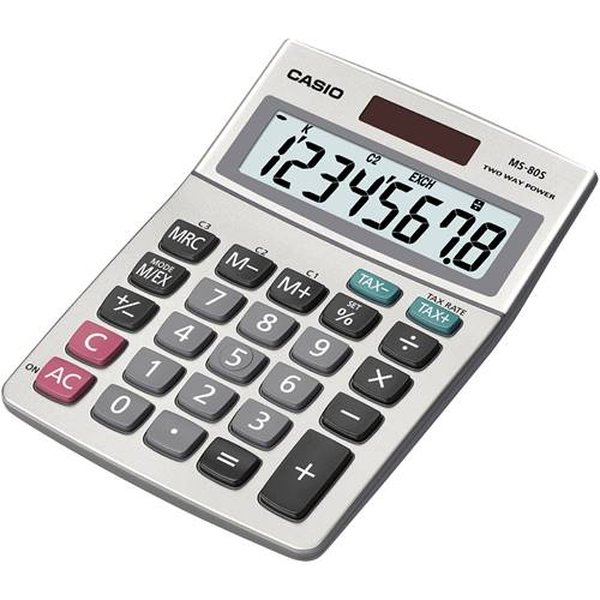
While manual calculation is important for understanding, calculators are invaluable tools for verifying results and handling more complex computations. Here's a visual representation of a calculator, similar to those that can be used to solve such expressions:
Illustration of a typical calculator interface.
Many online tools and applications also offer step-by-step solutions, allowing users to see the breakdown of how the problem is solved, which can be particularly helpful for learning.
Example of a calculator capable of solving equations.
This video demonstrates how an equation solver on a calculator can be used, which is a useful tool for verifying solutions to more complex algebraic problems.
Comparing Different Calculation Tools
Various online tools and calculators offer different functionalities for solving mathematical expressions and equations. Here's a comparison of some types:
| Tool Type | Description | Common Use Cases |
|---|---|---|
| Basic Calculator | Performs fundamental arithmetic operations (addition, subtraction, multiplication, division). | Simple calculations, verifying basic arithmetic. |
| Scientific Calculator | Includes functions for exponents, roots, trigonometry, logarithms, etc. | High school and college level math, physics, engineering. |
| Algebra Calculator/Solver | Solves algebraic equations and expressions, often with step-by-step explanations. | Solving equations, simplifying expressions, learning algebraic methods. |
| Equation Solver | Specifically designed to find the values of variables that satisfy an equation or a system of equations. | Solving linear, quadratic, polynomial, and other types of equations. |
For the expression \(7+6+6*6*55*54*6+6-55\), a basic or scientific calculator following the order of operations or an algebra solver would provide the correct result.
FAQ
What is the most common mistake when evaluating expressions?
The most common mistake is not following the correct order of operations. Many people tend to perform operations from left to right without regard for the priority of multiplication/division over addition/subtraction, or exponents/parentheses over everything else.
Can online solvers provide step-by-step explanations?
Yes, many online math solvers and calculators, such as Symbolab, Wolfram|Alpha, Microsoft Math Solver, and others, offer detailed step-by-step explanations, which are invaluable for understanding the process of solving.
Is it important to understand the steps even when using a calculator?
Absolutely. While calculators provide the answer, understanding the steps and the underlying mathematical principles is crucial for developing problem-solving skills and being able to tackle more complex problems in the future. The step-by-step features of many tools are designed specifically for this educational purpose.
References
Last updated May 8, 2025