
Solving the Riddle: What Am I?
Decoding the Mysteries Behind the Clues in the Riddle
Key Takeaways
- Identification of Smoke: Smoke aligns perfectly with all elements of the riddle, including its association with fire and its upward movement.
- Alternative Perspectives: While contrails and meteors are potential answers, they do not comprehensively satisfy all aspects of the riddle.
- Symbolic Significance: Smoke carries significant symbolic meanings across various cultures and contexts, enhancing its suitability as the riddle's answer.
Introduction
The art of crafting and solving riddles lies in the delicate balance between ambiguity and clarity. Riddles challenge our cognitive abilities, pushing us to interpret clues creatively while grounding our reasoning in reality. The riddle in question presents a poetic description, prompting the solver to deduce an entity that embodies specific characteristics. This comprehensive analysis seeks to unravel the layers of this riddle, meticulously examining potential answers and determining the most fitting solution based on logical inference and contextual understanding.
Breaking Down the Riddle
The riddle reads: "Rising high in the sky, it's a sign of what's aflame; a smoky trail that follows, yet it's not quite the same." Each segment of the riddle provides critical clues that guide the deduction process:
- "Rising high in the sky": Suggests that the subject ascends into the atmosphere, reaching significant altitudes.
- "It's a sign of what's aflame": Indicates a direct or indirect association with fire or something burning.
- "A smoky trail that follows, yet it's not quite the same": Implies the presence of a visible trail resembling smoke, but distinct from actual smoke.
Each clue narrows down the possibilities, directing the solver towards phenomena or objects that exhibit these characteristics. The challenge lies in identifying which entity seamlessly fits all these descriptions without substantial overlap or discrepancy.
Exploring Possible Answers
1. Smoke
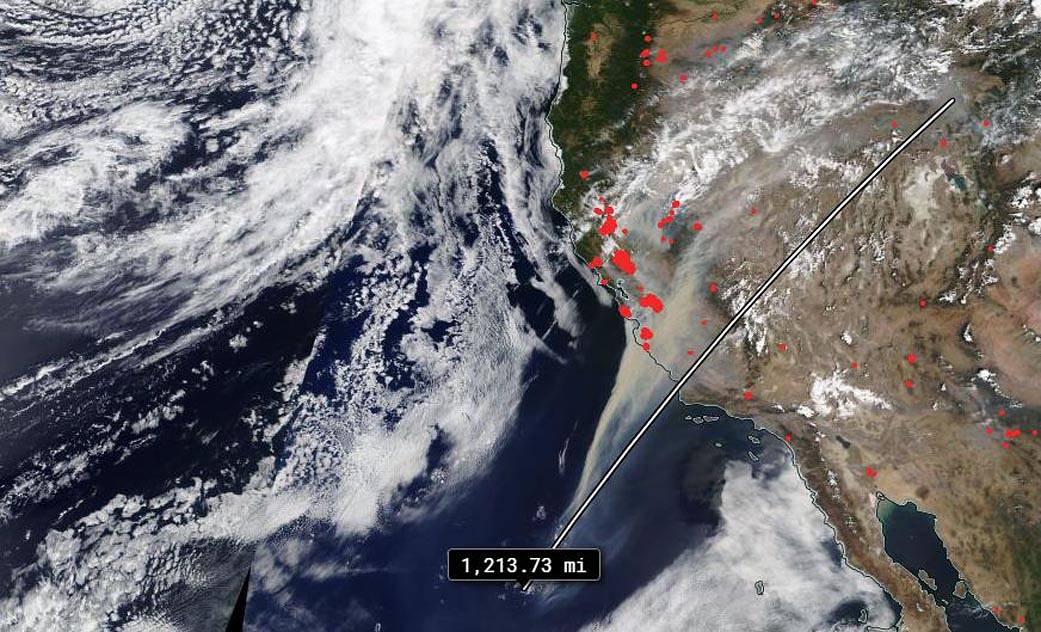
Smoke is a visible suspension of carbon or other particles in air, typically produced by combustion. It naturally rises due to its lower density compared to the surrounding air, aligning with the first clue of ascending high in the sky. Smoke is inherently a byproduct of burning, directly correlating with the notion of being a sign of what is aflame. Furthermore, smoke trails are characteristic of fires, whether they originate from natural sources like wildfires or anthropogenic activities such as industrial processes.
However, the third line introduces a nuance: "a smoky trail that follows, yet it's not quite the same." This suggests that while the trail resembles smoke, it possesses distinct properties or origins, potentially necessitating a more specific identification.
2. Contrail
Contrails, or condensation trails, are line-shaped clouds produced by aircraft engines at high altitudes. They form when water vapor condenses and freezes around small particles emitted from aircraft engines, creating ice crystals. These trails rise into the sky and can stretch over vast distances, echoing the riddle's description. The combustion process in the airplane engines signifies "what's aflame," linking contrails to fire. Despite resembling smoke trails, contrails differ in composition and formation, embodying the "not quite the same" aspect.
While contrails satisfy all elements of the riddle, their occurrence is primarily linked to aviation activities, making them less universally recognizable compared to more general phenomena like smoke from fires.
3. Meteor
Meteors, commonly referred to as shooting stars, are celestial objects that enter the Earth's atmosphere at high velocities. The intense friction causes them to heat up and emit light, creating a visible streak in the sky. This aligns with the idea of "rising high" and being a "sign of what's aflame" as the meteor's luminous path results from its burning. The bright trail left by a meteor's passage resembles smoke but consists of ionized gases and vaporized material, fitting the description of being "not quite the same."
However, meteors are transient and sporadic, making them less consistent in association with fire-related phenomena compared to persistent sources like smoke from controlled or uncontrolled burns.
In-depth Analysis of Smoke
Among the potential answers, smoke stands out as the most fitting solution to the riddle when considering all aspects comprehensively. Here's an exhaustive examination of how smoke aligns with each clue:
Ascending High in the Sky
Smoke invariably rises from its source, buoyed by thermal currents generated by the heat of combustion. This upward movement allows it to disperse into the atmosphere, often reaching considerable altitudes depending on environmental conditions and the intensity of the fire. The visual of smoke ascending is universally recognizable, whether emanating from a campfire, a chimney, or a wildfire.
Indicator of Fire or Combustion
Smoke serves as a direct indicator of fire, both in domestic and natural settings. Its presence signifies that something is burning, whether it's wood in a fireplace, vegetation in a forest fire, or fuel in industrial processes. This characteristic makes smoke a universal symbol of fire and, by extension, destruction, warmth, or cooking, depending on the context.
Smoky Trail with Distinct Properties
The phrase "a smoky trail that follows, yet it's not quite the same" introduces an element of distinction. While the trail resembles smoke, it might possess different characteristics such as density, color, or origin. For instance, the smoke trail from a controlled burn differs from that of an accidental fire in terms of thickness, density, and duration. Additionally, smoke can carry various pollutants, giving it different appearances based on what is being burned.
This differentiation emphasizes that while the trail is reminiscent of smoke, it might not be identical in every aspect, allowing for nuanced interpretations without deviating from the core identification of smoke.
Comparative Analysis
| Clue | Smoke | Contrail | Meteor |
|---|---|---|---|
| Rising High in the Sky | Consistently rises due to buoyancy from heat | Forms at high altitudes due to aircraft engines | Enters the atmosphere from space, creating a visible path |
| Sign of What's Aflame | Directly a byproduct of combustion | Result of fuel combustion in engines | Phenomenon caused by frictional heating |
| Smoky Trail That Follows | Leaves a visible trail from the source of fire | Leaves a contrail resembling smoke but composed of ice crystals | Leaves a luminous streak from ionized gases and vaporized material |
| Not Quite the Same | N/A - aligns directly with the trail aspect | Distinct in composition compared to actual smoke | The trail differs in composition from traditional smoke |
The table above juxtaposes how each potential answer aligns with the riddle's clues. While contrails and meteors share some commonalities with the clues, smoke provides a more direct and encompassing fit, especially considering the persistent and versatile nature of smoke across various contexts.
Symbolic and Cultural Significance of Smoke
Beyond the literal interpretation, smoke holds substantial symbolic value in numerous cultures and traditions. It often represents transformation, purification, communication with the divine, and the ephemeral nature of existence. For instance:
-
Spiritual Rituals: In many indigenous and religious ceremonies, smoke from incense or smoldering herbs is used to purify spaces and individuals, symbolizing the elevation of prayers and intentions.
-
Literature and Art: Smoke is frequently depicted to convey themes of chaos, destruction, or the passage of time, adding layers of meaning to artistic expressions.
-
Environmental Indicators: Smoke serves as a tangible indicator of environmental health, highlighting issues like pollution, deforestation, and climate change through visible manifestations.
This multifaceted significance reinforces smoke's role as a profound and versatile element, capable of embodying both physical phenomena and abstract concepts.
Environmental and Practical Implications
Understanding smoke's characteristics extends beyond symbolic interpretations, encompassing its environmental impact and practical significance:
- Air Quality: Smoke particles contribute significantly to air pollution, affecting respiratory health and contributing to broader environmental issues such as acid rain and smog formation.
- Fire Management: Monitoring smoke is crucial in firefighting and disaster management, aiding in identifying fire sources, assessing spread patterns, and predicting potential escalation.
- Climate Science: Smoke from large-scale fires can influence climate patterns by affecting atmospheric temperatures and cloud formation, demonstrating its role in global ecological systems.
These factors underscore the importance of smoke beyond its immediate visual presence, highlighting its far-reaching consequences and the necessity for effective management and mitigation strategies.
Conclusion
The riddle, through its evocative language, challenges the solver to discern an entity that embodies specific physical and symbolic traits. Upon thorough analysis, smoke emerges as the most fitting answer, harmoniously aligning with each clue presented. Its inherent qualities of rising, association with fire, and the creation of a visual trail encapsulate the essence of the riddle without deviation. While contrails and meteors offer partial congruence, they lack the comprehensive applicability and universal recognition that smoke possesses.
Moreover, the symbolic and environmental dimensions of smoke bolster its suitability as the riddle's answer, rendering it not just a physical phenomenon but also a culturally and ecologically significant element. This multifaceted approach ensures that the answer is both accurate and resonant, fulfilling the riddle's intent with depth and clarity.
References
- https://www.fromtheangels.com/spirituality/spiritual-meaning-and-symbolism-of-smoke/
- https://lucyfolk.com/blogs/stories/behind-the-symbol-smoke
- https://www.reddit.com/r/DMAcademy/comments/13ru4j1/needa-riddle-where-the-answer-is_smoke/
- https://thetrek.co/high-sierra-trail-ring-of-fire/
- https://topostext.org/work/737
- https://cosgrovescosmos.com/tips-n-techniques/smoke-in-the-sky
- https://www.kellenberg.org/wp-content/uploads/2015/10/American-Literature.pdf
- https://www.nps.gov/grsm/learn/news/flint-gap-fire-in-remote-section-of-great-smoky-mountains-estimated-to-be-28-acres.htm
Last updated January 31, 2025