
Comprehensive Overview of SONAR Models
Explore diverse SONAR models across marine, DIY, and advanced AI applications
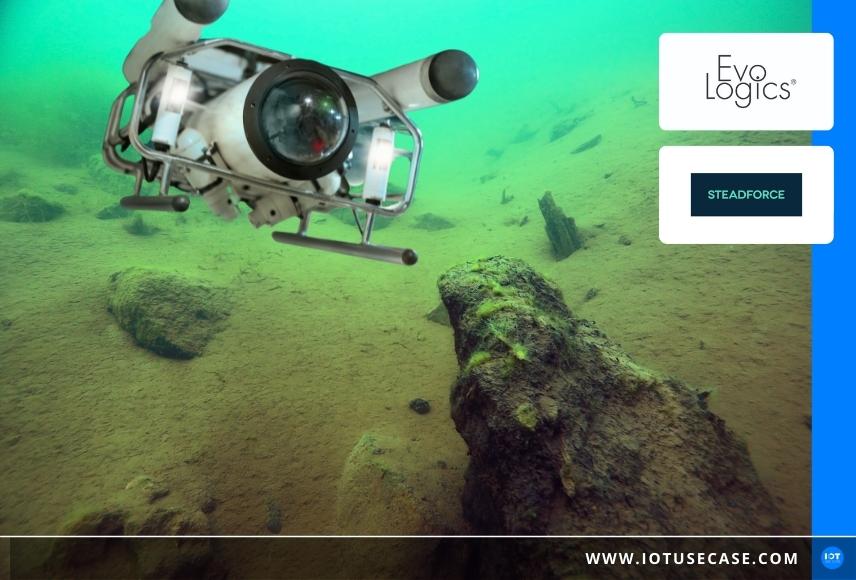
Key Highlights
- Multifaceted Applications: SONAR technology is used in both physically navigational settings and advanced AI language processing.
- Variety of Systems: Options range from marine sonar devices for underwater exploration to large-scale AI models optimized for search and multilingual tasks.
- Technological Evolution: The evolution from traditional sonars to sophisticated AI-driven models demonstrates remarkable versatility and development.
Introduction
SONAR, an acronym for Sound Navigation and Ranging, traditionally refers to techniques that use sound propagation to navigate, detect objects, map underwater environments, or measure distances. Over time, the term “SONAR model” has evolved to encompass several different technologies. Today, SONAR can refer to devices used in maritime contexts as well as sophisticated computational models in artificial intelligence. This overview examines the different dimensions of SONAR technology, exploring marine sonar applications, DIY projects, and notable SONAR models in the AI domain including those developed by major organizations.
Marine and Underwater SONAR Systems
In maritime settings, SONAR is integral for underwater navigation and exploration. These systems typically use sound waves to produce images of underwater structures, detect the presence of obstacles, or even locate schools of fish. Two primary types of sonar are used in marine applications:
Active versus Passive SONAR
Marine sonar systems are categorized as either active or passive. Active SONAR systems emit sound pulses (pings) and analyze the returning echo to determine the location and movement of objects. They are commonly used for mapping the seafloor, detecting submarine vessels, or instructing marine navigation. Passive SONAR, on the other hand, does not emit any sound but rather listens for ambient noise generated by vessels, marine life, or natural phenomena. This approach is crucial in military applications where discreet detection is necessary.
Specialized Marine SONAR Technologies
Beyond the basic classifications of active and passive sonar, various specialized systems are used to address specific needs in navigation and fishing:
Traditional SONAR and CHIRP SONAR
Traditional SONAR operates at fixed frequencies such as 50/200 kHz or 77/200 kHz and has been widely used to detect underwater hazards and fish schools. CHIRP SONAR advances this concept by sweeping a range of frequencies (often between 40–250 kHz) which enables it to deliver superior resolution and target separation. This makes CHIRP particularly effective in distinguishing between multiple reflectors, such as different fish in a school or the structural details of the seafloor.
Side-Scan and Omni Scanning SONAR
For detailed underwater imaging, side-scan sonar systems utilize CHIRP technology to produce high-resolution digital images. Such systems are invaluable in search and recovery missions—mapping shipwrecks and other underwater artifacts. Meanwhile, omni scanning sonar systems offer 360-degree scanning ability, a critical feature in mobile platforms like research vessels or state-of-the-art fishing boats. Some professional-grade models integrate these features to allow for real-time navigation and obstacle monitoring.
Commercial and Recreational Marine SONAR
Numerous marine sonar devices are available commercially. Models designed for recreational fishing, such as advanced fish finders, offer user-friendly interfaces, dynamic bait tracking, and precise altitude measurements. These devices typically integrate both forward-facing and down-facing sonar arrays to provide comprehensive visualizations of underwater conditions. Additionally, portable sonar devices enhance the capabilities of smaller boats and provide essential insight into both depths and the presence of submerged hazards.
Artificial Intelligence SONAR Models
In the realm of artificial intelligence, the term SONAR has taken on new meanings. AI SONAR models are designed to improve data processing, language understanding, and search experience through advanced machine learning architectures. These models leverage the capabilities of large-scale language models to deliver fast and accurate results.
Perplexity AI’s SONAR Models
One of the leading examples is a series of SONAR models developed for enhancing search and chat functionalities. These models are built on robust language model architectures. They are characterized by various parameter scales that allow them to process enormous context lengths and deliver responses with high factuality:
Model Variants and Specifications
The AI SONAR models are available in different sizes to cater to various use cases. Typically, these are segmented into small, large, and huge models. For instance, a small variant might be built on an 8-billion-parameter architecture, suitable for basic chat interactions, whereas a large or huge variant with 70 billion or over 400 billion parameters greatly enhances performance for more complex queries and real-time information synthesis. One of their most unique aspects is the ability to analyse and synthesize contexts stretching up to approximately 127,000 tokens, making them highly effective for in-depth searches.
Technological Infrastructure and Performance
These models are optimized for fast, real-time inference using advanced infrastructures like those provided by state-of-the-art hardware accelerators. For instance, leveraging Cerebras inference infrastructure boosts processing speed, enhancing response times while maintaining high accuracy levels. The design of these models is focused on ensuring that the output is both contextually rich and factually correct, which is particularly important as AI models are deployed in consumer-facing services.
Meta AI’s Multimodal SONAR Model
Another prominent example in the AI domain is the multilingual and multimodal SONAR model developed by a major technology organization. This model stands out due to its capacity to handle numerous languages and modalities:
Multilingual and Multimodal Capabilities
The multilingual SONAR model accommodates over 200 text languages and 37 speech languages. It integrates a dual capability to embed both text and speech signals into a single semantic space. This feature dramatically improves the performance of cross-language tasks such as zero-shot machine translation and multilingual sentiment analysis. By establishing a unified representation, this model can serve applications that require simultaneous processing of different forms of data, such as translating spoken language in real time or analyzing video content with subtitles.
Practical Applications
Applications of this model extend beyond simple translation. It improves machine translation quality, aids in toxicity detection across multiple languages, and enhances the performance of semantic search engines. This capability is particularly useful for global platforms that must cater to a wide audience in various languages and formats. It enables platforms to process speech-to-text conversions with high precision, making conversational AI as effective in multilingual contexts as in monolingual ones.
DIY and Specialty SONAR Systems
Aside from professional and commercial-grade sonar systems, there exists a branch of DIY sonar projects often undertaken for educational or hobby purposes. These systems are much simpler in design and are typically built using accessible hardware components such as Arduino boards paired with ultrasonic sensors. Although these DIY models primarily operate in air rather than underwater, they offer excellent opportunities for learning the fundamentals of sonar technology.
DIY SONAR Projects
DIY sonar setups are popular among makers and educators alike. With a modest investment in microcontrollers and basic sensors, enthusiasts can build devices capable of measuring distances and detecting obstacles. While they do not match the precision or robustness of commercial marine sonar, these projects are useful for understanding the principles of sound wave propagation, echo detection, and distance calculation.
Components and Assembly
Typically, an Arduino-based sonar device includes an ultrasonic sensor, which emits a sound wave and calculates the time it takes for an echo to return. This time difference is then converted into a distance measurement using the speed of sound in the medium, typically air. The simplicity of these components makes them accessible for educational purposes, and many open-source guides and tutorials are available to help beginners assemble and program these devices.
Educational Value
The hands-on experience gained through DIY SONAR projects can lead to a deeper understanding of sensor technology, embedded systems programming, and basic acoustics. Schools and hobbyist groups often use DIY sonar projects as a gateway to exploring more advanced topics in electronics, engineering, and applied physics.
Specialty SONAR Software
In addition to physical devices, there are also specialty software solutions branded under the SONAR name. For example, certain audio enhancement and gaming applications have adopted the SONAR branding to denote high-quality audio processing software designed to improve in-game soundscapes. While these are not physical sonar systems used for underwater detection, they highlight the broad adaptability of the term in the tech industry.
Comparative Analysis of SONAR Models
To better understand the distinct functionalities and specifications across various SONAR models, the following table provides a side-by-side comparison of key features among different systems, ranging from marine applications to AI-driven models. This comparative overview clarifies the differences and similarities in design parameters and intended applications.
| Category | Features | Applications |
|---|---|---|
| Traditional Marine SONAR |
|
|
| Commercial Marine Sonar (Fish Finders) |
|
|
| AI SONAR Models (Search & Chat) |
|
|
| Multilingual and Multimodal SONAR (AI) |
|
|
| DIY SONAR Devices |
|
|
In-Depth Discussion
Technological Evolutions and Innovations
The journey of SONAR technology encapsulates an evolution from its classical use in underwater navigation to its current role in the digital and AI landscape. Early SONAR devices focused on utilitarian needs—primarily mapping and detection. As technology progressed, the parameters such as frequency range, resolution, and processing speed were significantly improved. Modern marine sonar systems leverage advanced digital signal processing techniques to convert raw acoustic signals into actionable visual data with enhanced clarity.
Integration of Hardware and Software
Modern SONAR systems, whether in marine or AI domains, showcase an impressive integration of hardware and software. For marine applications, high-performance transducers paired with robust signal processing algorithms enable precise detection and imaging of underwater features. Meanwhile, in the AI domain, immense computational power, efficient parallel processing, and advanced machine learning techniques enable SONAR models to handle complex linguistic tasks and integrate contextual cues. Both fields illustrate how integrating hardware innovations with software advancements can revolutionize performance, whether it's in real-time mapping of the seafloor or synthesizing information on a global scale.
Practical Considerations and Deployment
The deployment of SONAR devices and models requires careful consideration of the operating environment and intended use case. Marine SONAR devices, for example, must be engineered to function reliably under varying conditions such as changes in water salinity, temperature gradients, and underwater noise. Engineers often deploy adaptive algorithms that calibrate based on environmental feedback, ensuring consistent performance in fluctuating conditions.
In the AI realm, SONAR-based models are optimized for scalability and integration into consumer platforms. The models are designed to factor in real-time user interactions and to process data with low latency. This is critically important when users demand immediate and accurate responses, whether reading search results or engaging in extended conversations. Developers continuously work on refining these models for both speed and accuracy, deploying updates that reflect the latest research in machine learning and language processing.
Economic and Practical Impacts
The economic impact of these technologies is profound. In commercial marine sectors, advanced sonar systems increase operational safety and efficiency while also contributing to the growth of the fishing and tourism industries. On the AI side, powerful models provide significant improvements in customer service, search accuracy, and the quality of digital interactions, which in turn drive customer engagement and satisfaction across digital platforms.
Future Directions and Trends
Looking forward, SONAR technology is set to benefit from further integration with artificial intelligence and machine learning. Innovations in materials science may lead to more durable transducers for marine applications, and breakthroughs in neural network designs promise even more robust and nuanced AI models. Emerging trends include increased emphasis on multimodal data processing, where future systems will not only integrate text and speech but potentially incorporate visual and sensor data to provide even more comprehensive analyses.
The future will likely see a blend of both physical and digital SONAR systems. For example, enhanced deep-sea exploration technologies could integrate AI-driven processing to analyze sonar readings in real time. Similarly, conversational AI platforms may utilize enriched semantic representations from SONAR models to better understand the nuances of human language, driving innovations in translation, sentiment analysis, and personalized user experiences.
Comparative Case Studies and Applications
Examining case studies from both marine and AI fields demonstrates the breadth of impact that SONAR technology has across varying applications. In marine studies, researchers have deployed advanced sonar systems for comprehensive seabed mapping, leading to discoveries of underwater geological formations and shipwrecks. These findings not only contribute to academic knowledge but also assist with maritime safety.
In AI, applications such as enhanced search engines and digital assistants are integrating SONAR models to improve the quality of interactions. For instance, a conversational AI model built on an expansive SONAR architecture has significantly reduced error rates in language translation, particularly in multilingual user bases, leading to improved accessibility and user engagement on global platforms.
The following table illustrates selected case studies and practical applications across the SONAR technology spectrum:
| Case Study | Field | Application |
|---|---|---|
| Seafloor Mapping Expedition | Marine SONAR | High-resolution imaging for geological surveys |
| Underwater Hazard Detection | Marine SONAR | Real-time navigation and obstacle avoidance |
| Multilingual Chatbot Deployment | AI SONAR | Enhancing conversational accuracy and translation capabilities |
| Gaming Audio Enhancement | Specialty SONAR Software | Advanced audio settings to optimize in-game experiences |
| Educational DIY Sonar Project | DIY SONAR | Prototype build for learning electronics and acoustics |
Conclusion and Final Thoughts
The term “SONAR model” covers a remarkable diversity of technologies spanning multiple fields. Whether you are interested in traditional marine SONAR systems designed for navigation and underwater exploration, DIY projects that help learners understand the fundamentals of acoustics, or sophisticated AI models that drive search and language processing, SONAR technology is as versatile as it is impactful.
Marine SONAR systems have evolved from basic detection tools to advanced instruments capable of generating high-resolution images and providing 360-degree scanning. Their applications in navigation, hazard detection, and commercial fishing underscore the critical role they play in ensuring safety and maximizing efficiency in aquatic environments.
On the AI frontier, SONAR models exemplify how traditional concepts can be reimagined to meet the needs of a digital era. With architectures ranging from 8-billion to hundreds of billions of parameters, these models not only enhance conversational accuracy but also underpin seamless multilingual, multimodal data integration. Their ability to handle massive context lengths and deliver fast, fact-based responses represents a significant leap forward in artificial intelligence.
The emerging convergence between physical and digital SONAR platforms suggests a future where these technologies expand their reach even further. Whether in applied research, commercial ventures, or cutting-edge AI innovations, SONAR models continue to redefine the boundaries of what is possible, consistently demonstrating the power of sound – and data – to unlock new insights in both our physical and digital worlds.
In summary, if your interest lies in the SONAR model that best meets your specific needs—be it a marine navigation tool, an AI-powered language model, or a DIY project—the richness of SONAR technology ensures that there is a model designed precisely for the task at hand. Each model has been developed with a focus on addressing unique challenges in its domain, further underscoring the importance of selecting the right system based on your operational requirements.
References
- Ocean Service Facts - NOAA
- Sonar - Wikipedia
- Meet New Sonar - Perplexity AI
- SONAR on Hugging Face - Meta AI
- Unveiling Llama 3.1 Sonar - Mike Leembruggen
Recommended Related Queries
 amazon.com
Last updated February 23, 2025