
SpaceX Recovery Mission for ISS Astronauts
A comprehensive review of the planning and contracting details
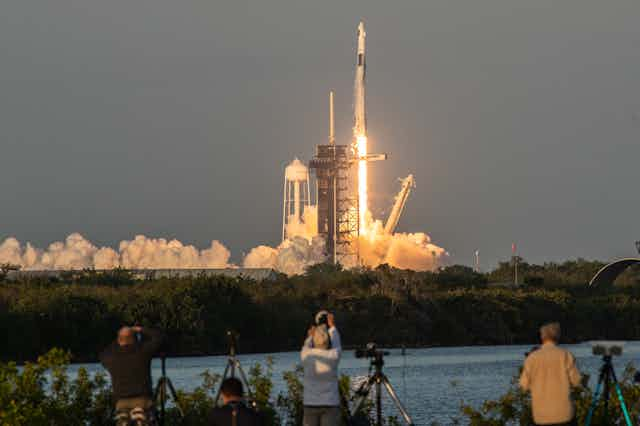
Key Highlights
- Planned and Contracted in 2024: Recovery operations were set in motion as part of NASA's partnership with SpaceX, highlighting advancements under the Commercial Crew Program.
- Timeline and Mission Details: Detailed scheduling from contract announcement to splashdown, involving multiple launches, delays, and critical mission milestones.
- Partnership and Operational Context: The collaboration between NASA and SpaceX underlines a broader operational perspective in crew rotation and crew return strategies from the ISS.
Overview of the Recovery Mission
The recovery of astronauts from the International Space Station (ISS) by SpaceX was a significant milestone under the Commercial Crew Program. Designed to ensure safe transport back to Earth, this mission was initiated amid operational challenges involving the Boeing Starliner spacecraft. In this detailed analysis, we explore the planning, contractual arrangements, and timeline that governed SpaceX's role in the mission.
Planning and Contract Initiation
The planning phase for the astronaut recovery mission was set in motion as early as August 2024. At this time, NASA, which had long been collaborating with commercial partners to ensure safe and efficient crew rotations, publicly announced that it would rely on SpaceX's capabilities. As part of an expanding dialogue on Commercial Crew operations, NASA sought to mitigate risks associated with the Boeing Starliner issues by contracting with SpaceX for alternative spaceflight solutions.
This strategic decision was driven by the need to guarantee a timely return for astronauts stranded on the ISS, which prominently included NASA personnel such as Suni Williams and Butch Wilmore. The contract aligned with NASA’s broader objectives to maintain continuous human presence on the ISS while also ensuring that any potential delays or technical challenges would be managed via collaborative industry approaches.
Details of the Contractual Arrangement
Officially contracted in August 2024, this mission was part of a larger framework where NASA awarded SpaceX a substantial contract, reportedly worth up to $843 million for related deorbit capabilities and crew return services. The agreement ensured that SpaceX’s Crew Dragon capsule was the primary vehicle designated for the return journey of the astronauts, reinforcing SpaceX’s role as a critical partner in human spaceflight operations.
The contractual arrangement covered not only the specific rescue operation but also underscored the ongoing reliance on commercial partners to manage and execute critical aspects of space missions. This approach highlights the evolution of space exploration partnerships, where traditional government-run missions have been complemented—and in some cases supplanted—by commercially driven spaceflight operations.
Timeline of the Mission
A comprehensive timeline is essential to fully understand the sequence of events that led up to the successful recovery of the astronauts. By providing clarity on each milestone, the timeline emphasizes the coordination and necessary adjustments required to ensure a safe return.
Detailed Timeline
The planning and execution of the recovery mission evolved over several critical steps:
| Date | Event |
|---|---|
| August 2024 | NASA, in conjunction with SpaceX, publicly announces the recovery operation. The decision to rely on SpaceX’s Crew Dragon capsule is formalized as part of ongoing efforts to manage risks associated with the Boeing Starliner spacecraft. |
| September 29, 2024 | Launch of Crew Dragon-9 with astronauts including Nick Hague and Aleksandr Gorbunov is executed. This mission plays a dual role by not only facilitating crew rotation but also positioning the spacecraft for the subsequent recovery mission. |
| March 12, 2025 | The scheduled launch of Crew-10, intended to replace the stranded astronauts on the ISS, experiences a delay due to a hydraulics problem. This technical challenge underlines the unpredictable nature of space missions. |
| March 18, 2025 | The Crew Dragon capsule, carrying the astronauts including Suni Williams and Butch Wilmore, departs the ISS and begins its return journey. This marks the beginning of the recovery phase. |
| March 19, 2025 | The recovery mission culminates in a safe splashdown off the coast of Florida. The entire operation from undocking to splashdown takes approximately 17 hours. |
This timeline clearly illustrates that the recovery mission was meticulously planned under NASA's guidelines in August 2024 as a necessary alternative to issues experienced with other spacecraft. Every step, from the initial contract to the final splashdown, was marked by collaborative efforts between NASA and SpaceX.
Coordination Between Multiple Missions
It is noteworthy that the recovery mission was interlinked with other significant launches and crew rotation missions. While the focus remained on the rescue of the astronauts stranded on the ISS, the broader orchestration involved Crew-9 and Crew-10 missions as well. This multi-mission coordination accentuates how operational flexibility is maintained within the Commercial Crew Program, ensuring that any unforeseen challenges can be redressed by alternative plans.
The seamless integration of these missions underscores both SpaceX’s operational prowess and NASA's adaptive strategies. By contracting with SpaceX, NASA ensured that even with delays in one segment (such as with the Boeing Starliner and Crew-10), there remained a robust backup mechanism to avert any mission-critical failures.
Context within Broader Spaceflight Missions
Understanding the SpaceX recovery mission within the context of broader spaceflight operations is essential for grasping its importance. NASA's long-term strategy in human space exploration involves partnerships with private companies to share risks and leverage innovative technologies.
The Commercial Crew Program
The recovery operation was an integral part of NASA’s Commercial Crew Program, which has evolved significantly since its inception. This program is designed to facilitate the transport of astronauts to and from the ISS, reducing the sole reliance on government-operated spacecraft. With companies like SpaceX, Boeing, and others playing crucial roles, the program has added both redundancy and flexibility.
By engaging SpaceX through a clearly defined contract, NASA reiterated its commitment to safe, reliable, and cost-effective human spaceflight operations. This not only helped address short-term technical challenges but also set a precedent for future collaborations that could mitigate risks associated with aging technology or unforeseen anomalies.
Lessons Learned and Operational Flexibility
Each mission under the Commercial Crew Program contributes to a growing body of knowledge that informs subsequent missions. For instance, the delays experienced with Crew-10 due to hydraulic issues provided critical insights into backup strategies and redundancy planning. The ability to reassign priorities and contract alternative spacecraft (like SpaceX's Crew Dragon) demonstrates the resilience of NASA’s operational protocols.
Such flexibility not only ensures the safety of the crew but also reinforces the credibility and reliability of the program. The approach reflects comprehensive risk management strategies that are essential for maintaining a continuous human presence in space. This synergy between public and private sectors is instrumental in addressing the inherent uncertainties of space travel.
Technical Aspects and Challenges
Delving further into the technical and logistical dimensions of this recovery mission sheds light on the complexities involved in orbital mechanics, spacecraft design, and emergency response strategies. The successful use of SpaceX’s Crew Dragon capsule demonstrates significant advancements in autonomous docking, deorbiting, and re-entry procedures.
Technical Robustness of Crew Dragon
The Crew Dragon's operational success in safely returning the astronauts is a testament to its advanced aerodynamics, sophisticated control systems, and reliable life-support mechanisms. Through detailed pre-mission planning and rigorous testing, the capsule was equipped to handle the stresses associated with re-entry from low Earth orbit. This ensured that after undocking from the ISS on March 18, 2025, the capsule could begin a controlled descent leading to an accurate splashdown in the Atlantic waters off Florida.
The recovery mission also highlighted the importance of quick problem-solving and adaptability during spaceflight operations. Despite the delays encountered by the Crew-10 mission, the backup plan executed by SpaceX ensured that the critical requirement of crew safety was not compromised.
Challenges in Multi-Crewrotations
Coordinating multiple missions and ensuring seamless handovers in space is inherently challenging. The integration of the recovery mission with other scheduled crew rotations provided several learning opportunities. These included refining communication protocols between ground control and spacecraft, optimizing flight paths for re-entry, and implementing contingency measures for onboard system failures. Such experiences help improve overall operational efficiency and foster improvements in spacecraft design.
Significance and Broader Impact
The SpaceX recovery mission is a landmark illustration of how modern space operations are evolving through effective public-private partnerships. The mission successfully mitigated risks associated with delayed or problematic spacecraft by leveraging advanced commercial technologies to ensure crew safety.
Impact on Future Missions
Beyond the immediate operational success, the mission carries broader implications for future space exploration endeavors. It reinforces the idea that commercial innovations can enhance the safety and efficiency of crewed spaceflight missions. This, in turn, lays the foundation for even more ambitious projects, including deep space exploration and possible lunar or Martian missions.
Advancements made during this mission also serve as a benchmark for improving the redundancy of life-support systems, re-entry technologies, and scheduling logistics. This progress ensures that any future deviations or technical challenges have established protocols and trained personnel ready to step in.
Economic and Strategic Benefits
Finally, the strategic decision to leverage SpaceX’s capabilities is anchored in both economic and operational rationale. Contracting cost-effective commercial services allows budgetary flexibility and optimizes the allocation of resources for more exploratory or research-based missions. This collaborative model presents a replicable approach for scaling operations in a rapidly evolving sector where risk is distributed between various stakeholders.
Additional Operational Details
The operational details of the recovery mission were meticulously recorded, ensuring that every phase—from initial planning through completion—provided data that could be utilized for future missions. Insights gained from this mission have already begun influencing subsequent commercial contracts and spacecraft designs.
Mission Coordination and Crew Transfer Protocols
The protocols for crew transfer between the ISS and the recovery spacecraft highlighted key facets of modern space operations such as automated docking procedures, real-time telemetry monitoring, and precise orbital adjustments. These elements not only safeguarded the crew but also contributed towards optimizing overall mission timelines. This methodical approach ensures that all parties involved are well-prepared to address technical glitches, thereby reducing the overall mission risk.
Moreover, the collaboration between NASA and SpaceX has paved the way for establishing best practices and refined contingency planning. Such measures are now integral to all Commercial Crew Program missions and serve as a model of operational excellence.
References
- What we know: NASA SpaceX Crew-9 to return with 'stuck' astronauts - USA Today
- The Facts Behind the Delayed Return of U.S. Astronauts - FactCheck.org
- NASA astronauts stuck in space to return to Earth: All you need to know - Al Jazeera
- SpaceX Crew-10 Astronaut Mission at the ISS - Space.com
- Boeing Starliner Astronauts Returning on SpaceX Capsule - CNBC
Recommended Queries for Further Exploration
Last updated March 19, 2025