
The Perpetual Dance: How Speciation and Extinction Sculpt Life's Grand Tapestry
Unraveling the intricate balance between the birth of new species and the loss of existing ones, a process fundamental to Earth's biodiversity.
The story of life on Earth is a dynamic narrative written by two fundamental evolutionary processes: speciation, the creation of new species, and extinction, their ultimate demise. These forces, seemingly in opposition, are intricately linked, continuously shaping the planet's biodiversity. Understanding their relationship is crucial not only for comprehending the history of life but also for addressing the current biodiversity crisis driven by human activities.
Essential Insights: Key Takeaways
- Biodiversity as a Dynamic Equilibrium: The total number of species on Earth, or in any given ecosystem, is determined by the ever-shifting balance between the rate at which new species arise (speciation) and the rate at which existing species are lost (extinction).
- Interconnected Influences: Many ecological and evolutionary factors, such as geographic range size, population size, niche specialization, and genetic diversity, simultaneously influence both speciation and extinction rates, often in complex and sometimes counterintuitive ways.
- The Anthropocene Challenge: Human activities are dramatically accelerating extinction rates to levels far exceeding natural background rates, creating a profound imbalance that threatens global biodiversity and may fundamentally alter future evolutionary trajectories, including the potential for speciation.
The Dual Dance: How Speciation and Extinction Shape Life
Speciation and extinction are the two primary architects of biodiversity. Together, they determine the richness and variety of life forms found across different geographical regions and throughout geological time.
Opposing Yet Intertwined Forces
At its core, speciation is an additive process, increasing the number of distinct evolutionary lineages. This typically occurs when populations become reproductively isolated, allowing them to diverge genetically and phenotypically over time, eventually forming new species. Mechanisms driving speciation include geographic isolation (allopatric speciation), adaptation to different ecological niches (ecological speciation), or genetic changes like polyploidy (sympatric speciation).
Conversely, extinction is a subtractive process, representing the permanent loss of a species. When a species can no longer survive and reproduce in its environment, it disappears, reducing biodiversity. The balance between these two rates dictates the net change in species diversity over time.
Continental drift is a major driver of allopatric speciation, illustrating how geographic barriers can lead to the evolution of new species over vast timescales.
The Numbers Game: Rates and Their Consequences
The relative rates of speciation and extinction determine the trajectory of biodiversity:
- Biodiversity Increase: When the rate of speciation consistently exceeds the rate of extinction, the total number of species increases. This can lead to periods of rapid diversification, often called adaptive radiations, where a single ancestral lineage gives rise to many new species adapted to various ecological niches.
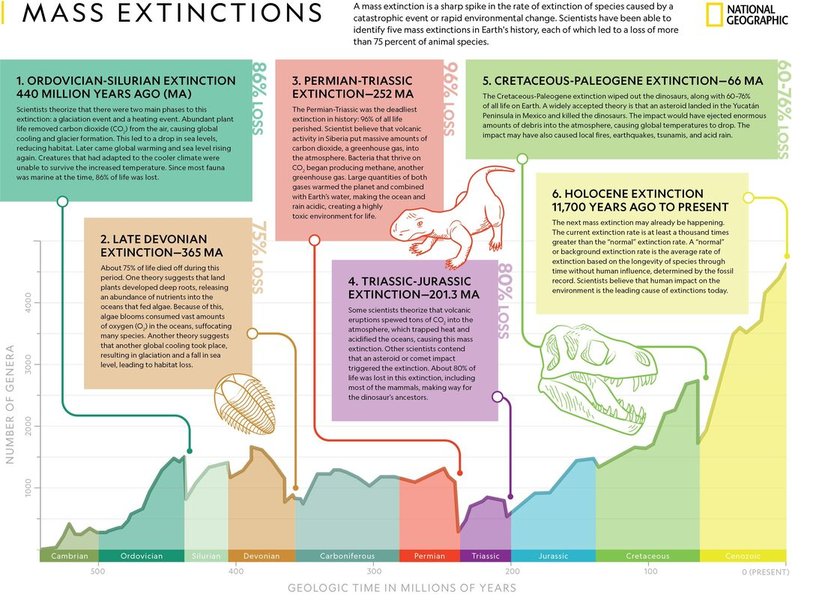
- Biodiversity Decrease: If the extinction rate surpasses the speciation rate, there is a net loss of species. Prolonged periods of high extinction can lead to significant declines in biodiversity, culminating in mass extinction events that have punctuated Earth's history.
- Dynamic Equilibrium: When speciation and extinction rates are roughly equal, biodiversity may remain relatively stable over long periods, though the composition of species can still change. This is a dynamic equilibrium, not a static state.
Factors Influencing the Balance
Several ecological and evolutionary factors mediate the interplay between speciation and extinction rates, often affecting both processes simultaneously.
Geographic Range Size: A Crucial Determinant
The size of a species' geographic distribution plays a significant role. Generally:
- Species with larger geographic ranges tend to have higher speciation rates because they are more likely to encounter geographic barriers that can lead to population subdivision and allopatric speciation. They also tend to have lower extinction rates due to greater genetic variability, more numerous subpopulations, and the ability to recolonize areas after local extinctions.
- Species with smaller, more restricted ranges may have higher extinction risks due to increased vulnerability to localized environmental changes, habitat loss, or demographic stochasticity. While isolation can promote speciation in small populations, the overall vulnerability often outweighs this.
Habitat loss and fragmentation, often driven by human activities, can shrink geographic ranges, thereby potentially decreasing speciation rates and increasing extinction risks.
Population Dynamics and Niche Specialization
Population Size
Larger populations generally have greater genetic diversity, which provides more raw material for adaptation and speciation. They are also more buffered against extinction due to random demographic fluctuations or genetic drift.
Niche Specialization
Highly specialized species, adapted to a narrow range of environmental conditions or resources, may speciate more readily as they exploit unique ecological opportunities. However, this same specialization can make them more vulnerable to extinction if their specific niche disappears or changes significantly. This suggests a potential positive correlation: traits promoting rapid speciation (like niche specialization) might also elevate extinction risk.
The Extinction of Intermediates: A Pathway to New Species?
An interesting aspect of their relationship is that speciation can sometimes be facilitated by localized extinction. If a widespread, geographically variable species has intermediate populations that go extinct, the remaining, now isolated, populations may diverge further, eventually becoming distinct species. This concept, sometimes termed "speciation-by-extinction," highlights how extinction at a population level can contribute to speciation at a species level by eliminating gene flow.
Diversity's Own Influence: Feedback Loops
The existing level of biodiversity can itself influence the rates of speciation and extinction through density-dependent mechanisms:
- Negative Diversity Dependence on Speciation: As species diversity increases within an area or clade, ecological niches may become saturated. This increased competition can reduce the opportunities for new species to arise, potentially slowing down speciation rates.
- Positive Diversity Dependence on Extinction: Higher species richness can also lead to increased interspecific competition for resources, potentially elevating extinction rates for less competitive species.
These feedback loops can play a role in regulating long-term biodiversity levels.
Visualizing Influences: Speciation vs. Extinction Factors
The following chart illustrates how various ecological and evolutionary factors can differentially impact the rates of speciation and extinction. Understanding these influences helps in predicting how changes in these factors might alter biodiversity dynamics. For instance, high niche specialization might drive rapid speciation but also makes species vulnerable if their niche is disturbed.
The chart visualizes conceptual relationships: for example, a large geographic range generally boosts speciation potential (more opportunities for isolation) and reduces extinction risk (greater resilience). Conversely, small population size greatly increases extinction risk, while its effect on speciation is more complex (can lead to rapid drift but limits variation).
A Comparative Look: Factors Driving Speciation and Extinction
The table below summarizes how various factors can influence both speciation rates and extinction risks. It's important to note that these are general tendencies, and the specific impact of each factor can vary depending on the organisms and ecological context involved.
| Factor | Impact on Speciation Rate | Impact on Extinction Risk |
|---|---|---|
| Geographic Range Size | Generally ↑ (more isolation opportunities, larger population facilitating variation) | Generally ↓ (greater resilience, more refugia, larger overall population) |
| Population Size | ↑ (larger populations typically harbor more genetic variation, the raw material for speciation) | ↓ (buffers against stochastic events, inbreeding depression, and loss of genetic diversity) |
| Niche Specialization | ↑ (can drive adaptive divergence into distinct ecological niches, promoting reproductive isolation) | ↑ (high vulnerability to specific environmental changes or loss of particular resources) |
| Genetic Diversity | ↑ (provides the raw material for adaptation and divergence leading to new species) | ↓ (enhances adaptive potential to changing environments, reducing likelihood of extinction) |
| Environmental Stability | May ↓ (less intense selective pressures for rapid adaptation or divergence) | ↓ (fewer disruptive environmental events that could cause population declines) |
| Rapid Environmental Change | Can ↑ (by creating new ecological niches or imposing strong selective pressures) or ↓ (if too rapid for adaptation) | ↑ (if species cannot adapt quickly enough to novel conditions) |
| Habitat Fragmentation | Can initially ↑ (by creating isolated populations) but may ultimately ↓ (due to small, unviable population sizes and reduced gene flow) | ↑ (creates smaller, isolated populations that are more vulnerable to local extinction) |
| Human Impact (e.g., habitat destruction, climate change) | Potentially ↓ (due to habitat loss, environmental homogenization, and disruption of isolating barriers) | Significantly ↑ (primary driver of the current biodiversity crisis) |
Macroevolutionary Rhythms
Over vast geological timescales, the interplay of speciation and extinction creates large-scale evolutionary patterns.
Mass Extinctions: Catalysts for Creative Destruction?
Mass extinctions are periods of catastrophic biodiversity loss, where extinction rates far exceed speciation rates. While devastating, these events can paradoxically pave the way for subsequent bursts of speciation, known as adaptive radiations. By eliminating dominant groups and vacating ecological niches, mass extinctions can create opportunities for surviving lineages to diversify rapidly and fill these newly available roles.
The Complex Timing: Are Radiations Always Immediate?
While the "creative destruction" model is a classic concept in macroevolution, quantitative studies suggest that mass extinctions and the evolutionary radiations that may follow are not always tightly coupled in time. There can be significant lags, and other factors also contribute to periods of evolutionary turnover. Both extinction and radiation contribute to changes in species assemblages over millions of years.
Visualizing the Interplay: A Mindmap of Speciation and Extinction Dynamics
This mindmap provides a conceptual overview of speciation and extinction, their key drivers, and how they interact to shape biodiversity. It highlights the core processes, influencing factors, and broader evolutionary consequences, including the significant impact of human activities.
Speciation & Extinction"] id1["Speciation
(Increases Biodiversity)"] id1a["Mechanisms
(e.g., Allopatric, Sympatric,
Ecological)"] id1b["Drivers
(Reproductive Isolation,
Genetic Divergence,
Natural Selection, Drift)"] id1c["Factors Favoring
(Large Geographic Range,
Genetic Diversity,
New Ecological Niches,
Population Isolation)"] id2["Extinction
(Decreases Biodiversity)"] id2a["Types
(Background Extinction,
Mass Extinction)"] id2b["Causes
(Environmental Change,
Competition, Predation,
Disease, Habitat Loss,
Small Population Size)"] id2c["Factors Increasing Risk
(Small Geographic Range,
Niche Specialization,
Low Genetic Diversity,
Slow Reproduction)"] id3["Interplay & Balance"] id3a["Net Biodiversity Change
(Speciation Rate vs.
Extinction Rate)"] id3b["Correlated Rates
(Shared ecological and
evolutionary influences,
e.g., range size affecting both)"] id3c["Diversity-Dependent Effects
(Niche saturation slowing speciation,
competition increasing extinction)"] id4["Key Influencing Factors"] id4a["Geographic Range Size"] id4b["Population Size & Structure"] id4c["Niche Breadth & Specialization"] id4d["Environmental Stability & Change"] id4e["Genetic Variability"] id5["Human Impact (Anthropocene)"] id5a["Greatly Accelerated Extinction Rates
(Habitat Destruction, Climate Change,
Pollution, Overexploitation)"] id5b["Altered Speciation Dynamics
(Habitat Fragmentation creating barriers,
Homogenization reducing niches,
Introduction of invasive species)"] id5c["Overall: Threat to Future Biodiversity"] id6["Macroevolutionary Patterns"] id6a["Adaptive Radiations
(Often follow mass extinctions
or colonization of new areas)"] id6b["Evolutionary Turnover
(Ongoing replacement of species)"]
The mindmap emphasizes how speciation adds new branches to the tree of life, while extinction prunes them. The balance, influenced by a myriad of factors including profound human pressures, determines the overall shape and richness of this tree.
The Human Epoch: A New Driver of Evolutionary Change
Human activities have become a dominant force shaping the planet's ecosystems, with profound implications for both speciation and extinction.
The Rising Tide of Extinction
The current era, often termed the Anthropocene, is characterized by unprecedented rates of species extinction. Habitat destruction and fragmentation, climate change, pollution, overexploitation of resources, and the spread of invasive species are driving extinction rates to levels estimated to be 100 to 1,000 times higher than natural background rates. This rapid loss of species is leading to a global biodiversity crisis.
Speciation in the Anthropocene: An Uncertain Future
The net effect of human activities on speciation rates is less well understood and more complex. While habitat fragmentation can create new barriers and potentially lead to isolation and divergence in some cases, the overwhelming impact of habitat loss, population decline, and environmental homogenization likely reduces overall opportunities for speciation. Furthermore, human-facilitated hybridization can sometimes lead to new hybrid species, but can also break down existing species barriers, leading to genetic swamping. The long-term consequence is likely a net decrease in the potential for new species to arise that could compensate for the current high extinction rates.
Impoverishing Future Diversity
The profound imbalance between greatly accelerated extinction rates and potentially diminished speciation rates threatens to lead to a significantly impoverished biosphere. The loss of species today means the loss of unique genetic information and evolutionary potential, which could take millions of years to recover, if ever. Maintaining the continuity of speciation is critical for replenishing and sustaining biodiversity.
This video by Paul Andersen provides an excellent overview of the evolutionary processes of speciation and extinction, discussing key concepts and examples such as stickleback evolution, helping to illustrate the fundamental mechanisms that drive biodiversity change.
Investigating Life's Birth and Death: Scientific Approaches
Scientists employ various methods to study historical and ongoing rates of speciation and extinction.
Reading the Past: Phylogenetic Trees and Fossils
The primary tools for inferring speciation and extinction dynamics include:
- Phylogenetic Trees: Molecular phylogenies, constructed from DNA sequence data, depict the evolutionary relationships among species. The branching patterns and branch lengths in these trees can be analyzed to estimate rates of speciation (lineage splitting) and extinction (lineage termination) over time.
- Fossil Record: Fossils provide direct evidence of past life forms and their temporal distribution. By studying the appearance and disappearance of species in the fossil record, paleontologists can estimate background extinction rates and identify mass extinction events.
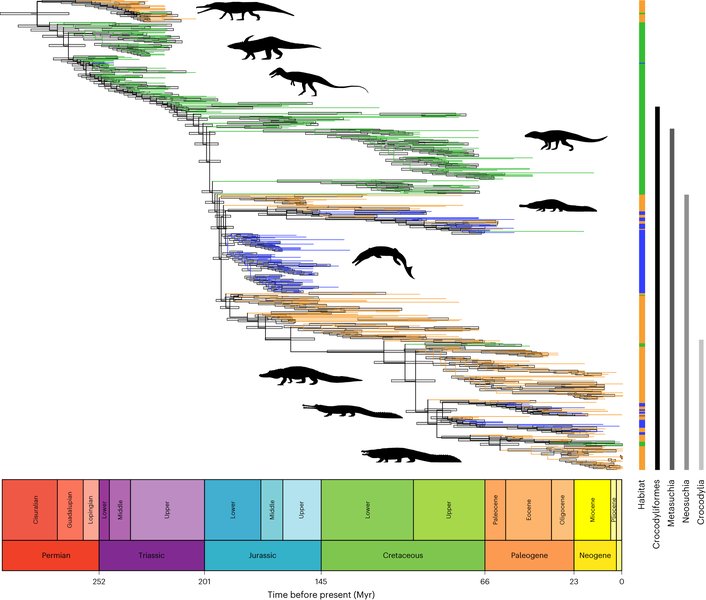
An example of a phylogenetic analysis used to infer speciation and extinction rates across different lineages, highlighting how these processes can vary over evolutionary time and among groups.
Modeling the Dynamics: Birth-Death Processes
Researchers use sophisticated mathematical models, particularly stochastic "birth-death" models, to analyze phylogenetic and fossil data. These models treat speciation as a "birth" event (a new lineage arises) and extinction as a "death" event (a lineage disappears). By fitting these models to data, scientists can estimate how speciation and extinction rates have changed over time and across different clades (groups of related species).
Acknowledging the Unknowns: Challenges in Estimation
Estimating historical speciation and extinction rates is challenging due to several factors:
- Incomplete Fossil Record: Not all organisms fossilize well, leading to gaps in our knowledge of past biodiversity.
- Incomplete Sampling in Phylogenies: Many modern phylogenies do not include all extant (living) species within a group, which can bias rate estimates.
- Rate Heterogeneity: Speciation and extinction rates can vary significantly across different lineages and over time, making it complex to model these dynamics accurately.
- Extinction Signature: Extinction is harder to detect in molecular phylogenies of only living species, as extinct lineages are, by definition, not sampled.
Despite these challenges, ongoing methodological advancements are continually improving our ability to understand the deep-time dynamics of speciation and extinction.
Frequently Asked Questions (FAQ)
Can speciation happen quickly after an extinction event?
Yes, relatively speaking. Following mass extinctions, surviving lineages often undergo adaptive radiation, where they diversify rapidly to fill newly vacant ecological niches. This can lead to a burst of speciation over geological timescales (thousands to millions of years). The availability of empty niches reduces competition and provides opportunities for new adaptations and species to arise.
How do scientists measure speciation and extinction rates?
Scientists primarily use two sources of data: the fossil record and molecular phylogenies (evolutionary trees based on DNA). For the fossil record, they track the first and last appearances of species to estimate origination and extinction times. For phylogenies, they use mathematical models (like birth-death models) that analyze the branching patterns and timings in the tree to infer historical rates of lineage diversification (speciation minus extinction) and, in some cases, separate speciation and extinction rates.
Does a high rate of speciation in a group mean its species are safe from extinction?
Not necessarily. Some studies suggest that clades (groups of related species) with high speciation rates may also have high extinction rates. This can happen if the traits that promote rapid speciation, such as small, isolated populations or high niche specialization, also make those species more vulnerable to environmental changes or other threats. So, a rapidly diversifying group might also be experiencing a high turnover of species.
How are human activities uniquely affecting the balance between speciation and extinction?
Human activities are unique in their scale and speed of impact. We are causing extinction rates to skyrocket through habitat destruction, climate change, pollution, and overexploitation – far exceeding natural background rates. Simultaneously, while some human actions (like creating novel environments or fragmenting habitats) could theoretically spur some speciation, the net effect is likely a drastic reduction in the overall capacity for speciation to keep pace with extinctions. This is leading to a net loss of biodiversity at an alarming rate, unlike most natural fluctuations seen in Earth's history, with the exception of major mass extinction events.
Recommended Further Exploration
- What are the primary mechanisms of allopatric versus sympatric speciation?
- How do mass extinction events reshape the tree of life and open ecological niches?
- What is the role of geographic range size in determining a species' vulnerability to extinction?
- How are current human-induced extinction rates compared to background extinction rates in Earth's history?
References
Last updated May 12, 2025