
Understanding Spectator Oriented Theatre
Exploring active audience participation in contemporary performance art
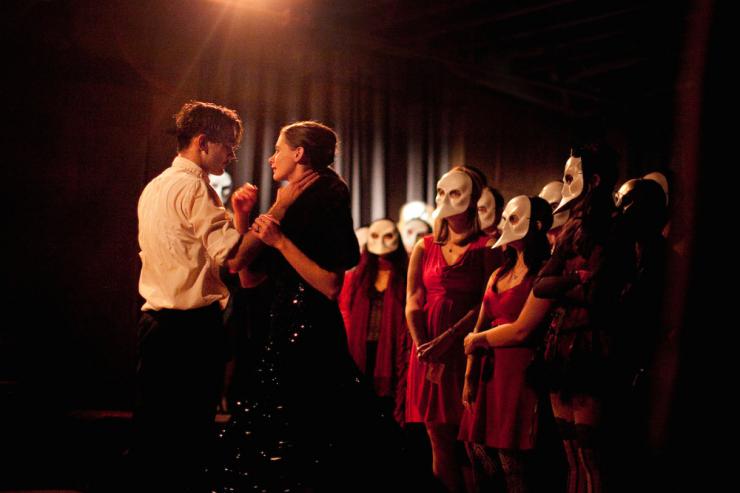
Key Takeaways
- Active Audience Role: Spectator oriented theatre transforms traditional spectators into active participants who help shape the performance.
- Engagement and Immersion: By breaking down the barrier between stage and audience, this theatrical form has an emphasis on immersive, multisensory experiences.
- Democratic and Critical Framework: The approach encourages critical engagement with social, political, and artistic themes by challenging established hierarchical theatre traditions.
Introduction
Spectator oriented theatre represents a significant shift in theatrical practice. It moves away from the conventional model of a fixed stage with a clear separation between performers and an audience that passively absorbs the performance. Instead, this form of theatre invites spectators into the creative process, making them active, engaged participants who can directly influence the unfolding of the narrative and the overall theatrical experience. This transformation in audience roles serves broader cultural, political, and artistic purposes by democratizing the experience and stimulating dialogue around performance and reality.
Historical Context and Evolution
From Passive Observation to Active Engagement
Traditional theatre models have long defined the audience as passive recipients of a pre-determined narrative. The audience would watch, enjoy, and interpret the performance after it had already been completed by the actors. However, the concept of spectator oriented theatre emerged as theatre practitioners began questioning this passivity. Influenced by movements that challenged established artistic hierarchies—such as the Epic Theatre developed by Bertolt Brecht—artists and directors started incorporating methods to invite reflection, critique, and even intervention by the audience.
Shifts in Theatrical Practice
The transformation in audience participation can be traced from earlier forms of interactive theatre, including practices in participatory and immersive theatre. For instance, historical forms such as Renaissance theatre and pantomime already hinted at blurring roles, though not to the extent seen in modern spectator oriented performance. Building on this legacy, contemporary theatre practitioners reconfigured not just the narrative but also the performance space, challenging the clear physical and metaphorical boundaries between stage and seating.
Defining Features of Spectator Oriented Theatre
Reconfiguring the Role of the Spectator
Active Participation and Involvement
At its core, spectator oriented theatre is about reimagining the role of the audience. Here, spectators are not merely passive observers but are integral components of the performance. This role transformation is achieved through various techniques that encourage direct interaction with the performers and influence over the storyline. In many instances, the narrative unfolds with the expectation that the audience will contribute ideas, challenge the status quo, or even physically move within the performance space. Such interaction can include direct verbal exchanges with actors, participation in decision-making, or even altering the outcome of scenes.
Techniques for Engagement
The methods used to foster spectator involvement vary widely but are grounded in a few recurring techniques:
- Breaking the Fourth Wall: Actors acknowledge the audience's presence, sometimes breaking character to directly address them. This technique reminds spectators that they are part of a created artifice, inviting them to engage critically with the performance.
- Interactive Narrative Structures: The narrative may have branching paths influenced by audience choices. This could involve inviting members onto the stage or incorporating live feedback into the performance’s progression.
- Visible Stage Mechanics: By making elements of production—such as set changes and lighting decisions—more apparent, the performance underlines its constructed nature, prompting a more analytical and reflective audience experience.
- Immersive Environments: Productions often extend into non-traditional performance spaces, allowing audiences to physically navigate the setting, interact with objects, or participate in sensory experiences that heighten their connection to the narrative.
Philosophical and Political Dimensions
Democratizing Theatre Experiences
One of the most significant contributions of spectator oriented theatre is its democratic approach to performance. Traditional theatre is often characterized by a rigid hierarchy: the director and actors dictate the narrative, while the audience is left in an observer role. However, by inviting spectators to actively interpret and sometimes modify the performance, this form of theatre decentralizes authority. This democratization allows a more pluralistic set of viewpoints to emerge, fostering a shared responsibility for the narrative development.
Stimulating Social and Political Dialogue
Beyond its aesthetic innovations, spectator oriented theatre frequently addresses contemporary social and political issues. By involving the audience in the performance process, it creates a space where challenging topics—such as justice, inequality, and political power—are dissected and discussed in real time. This approach is particularly resonant with the ideas of artists like Augusto Boal, whose "Theatre of the Oppressed" sought to use theatre as a tool for social change. When spectators engage in the performance, their active participation in debating and questioning the issues on stage serves as a microcosm for wider societal debates.
Theoretical Underpinnings
The shift from passive spectatorship to active engagement is supported by several theoretical frameworks. Scholars have posited that the knowingly interactive nature of these performances underscores the idea that meanings are co-created by the audience rather than being unilaterally imposed by the director. Drawing from critical theories, this participatory approach places emphasis on the "emancipated spectator"—a viewer who is both aware of the theatrical process and capable of contributing to it meaningfully. This vision aligns with broader cultural narratives about individual agency and shared community responsibility in artistic expression.
Practical Manifestations in Modern Theatre
Immersive and Participatory Methods
In practice, spectator oriented theatre can take many forms. One widely recognized format involves immersive theatre, where performances occur in environments that break free of traditional stage setups. In these productions, the audience is often free to move within a space that doubles as part of the stage. Every element—from ambient sounds to tactile set designs—contributes to a multisensory journey that transforms the act of viewing into an act of experience.
Conversely, other forms are closely aligned with participatory methods, where the narrative is designed to evolve through the contributions of the audience. The interactivity can range from subtle influences on dialogue to overt decisions that alter the direction of a play. This method not only fosters a deeper connection between spectator and performance but also allows a singular performance to have multiple interpretations and outcomes.
Case Studies: Immersive Experiences in Action
Consider productions that adapt the performance space to reflect real-world contexts. For example, companies have taken traditional narratives and infused them with elements of non-linear storytelling. Audiences might be invited to follow characters through an entire building rather than merely sit in a fixed theatre seat. This physical freedom allows participants to engage actively with the narrative, with each individual’s path contributing to the overall story.
| Aspect | Traditional Theatre | Spectator Oriented Theatre |
|---|---|---|
| Audience Role | Passive observers | Active participants influencing the narrative |
| Staging | Fixed stage and seating arrangement | Flexible, immersive spaces often breaking conventional boundaries |
| Narrative Delivery | Linear and predetermined | Interactive, with potential for multiple outcomes driven by audience input |
| Theoretical Emphasis | Entertainment and aesthetic immersion | Critical engagement, democratic participation, and social commentary |
This table highlights the contrasts between traditional theatrical methods and the practices of spectator oriented theatre. The emphasis on active participation and flexible narrative structure is what sets this form apart, making it a dynamic and evolving field within contemporary performance art.
Impact on Performance Spaces
One of the distinctive features of spectator oriented theatre is the transformation of the performance venue. Traditional theatres are typically designed with a clear separation between the “onstage” world and the audience area. Spectator oriented theatre, however, often involves reconfiguring these spaces to foster interaction. This might include non-seated audiences, immersive sets that extend into audience areas, and even performances staged in unconventional locations such as abandoned buildings, outdoor public spaces, or repurposed industrial sites.
By dissolving the barriers that separate the stage from the audience, such practices create an environment where every participant feels not only like a witness but also an essential component of the creative process. The physical layout itself becomes a medium for engaging with the narrative, reinforcing the idea that the audience's input is as critical as any scripted dialogue.
Cultural and Societal Implications
Empowerment Through Participation
Spectator oriented theatre carries a strong message of empowerment by actively inviting audiences to step beyond their traditional roles. Through participation, spectators are encouraged to contribute their own perspectives, critiques, and creative inputs into the performance. This involvement is not just an artistic convenience but a deliberate effort to create a space where diverse voices can be heard and valued.
This democratization of the theatre experience can be seen as a form of social engagement. By turning viewers into collaborators, performances become platforms for negotiating collective experiences, sharing socially relevant ideas, and challenging established cultural or political paradigms. The theatre, thus, evolves from being a venue of passive consumption into one of active social discourse.
Reflections on Power Dynamics
Another potent aspect of spectator oriented theatre is its capacity to reflect and subvert traditional power dynamics. In a conventional theatre production, the control of narrative and direction rests solely with the creators, leaving the audience with little agency. By contrast, in spectator oriented performances, the audience is entrusted with a measure of creative power. This exchange of control can serve as a metaphor for broader social movements that seek to decentralize power and promote collective decision-making.
Both in content and method, this alignment with democratic principles prompts audiences to consider their role not just within the theatre, but also in broader societal structures. By experiencing firsthand the benefits of shared creative ownership, participants may be more inclined to apply these principles to other areas of their lives, fostering a more participative and engaged community dynamic.
Comparative Analysis with Other Theatrical Forms
Contrasting Spectacle Oriented Theatre
While spectator oriented theatre emphasises active engagement, other contemporary performance approaches, sometimes termed as spectacle oriented or world-centric theatre, aim to create immersive, illusionistic experiences. These traditional approaches prioritize escapism by constructing elaborate worlds that draw audiences into a narrative without overt reminders of the constructed nature of the performance.
The spectator oriented approach, by contrast, maintains an explicit awareness of its theatricality. This explicitness serves as a reminder that what is being experienced is a crafted performance—a deliberate invitation to think critically about the underlying themes. The contrast highlights fundamental questions about realism, illusion, and the nature of art, making spectator oriented theatre a particularly reflective and intellectually engaging form of performance.
Integration of Digital and Live Formats
Modern implementations of spectator oriented theatre have also begun to integrate digital technology into live performances. With the advent of live broadcasting and virtual theatre platforms, elements of spectator participation extend beyond physical presence. Digital formats allow remote audiences to interact with performances in real time, using social media, live chats, or even augmented reality to contribute to the unfolding narrative.
This integration creates hybrid forms of engagement that blend the immediacy of live theatre with the expansive reach of online media. Strategically deployed, these elements maintain the core tenet of spectator oriented theatre—active participation—while also offering innovative methods to engage audiences who cannot be physically present.
Challenges and Considerations
Balancing Artistic Control and Audience Input
Despite its many advantages, spectator oriented theatre presents certain challenges. One of the foremost considerations is finding a balance between maintaining artistic integrity and incorporating audience input. Directors and performers must craft experiences that are both fluid enough to welcome spontaneous participation and structured enough to provide a coherent narrative. This balance can be delicate; too much emphasis on audience involvement might disrupt the narrative flow, while too little may fail to engage participants effectively.
Furthermore, there can be logistical challenges involved in managing interactive performances, especially when dealing with large or diverse audiences. Practitioners must anticipate various audience responses and adapt on the fly, which requires a high degree of flexibility and preparedness. The need for improvisational skills among performers and backstage teams becomes paramount in ensuring that the performance remains engaging and meaningful.
Maintaining a Unified Vision
Another challenge is ensuring that the performance radiates a unified artistic vision despite the decentralized input. The participatory mechanism, while offering a democratic platform for expression, also carries the risk of diluting the intended themes if not managed carefully. Artistic teams often need to employ sophisticated dramaturgical strategies to gather, filter, and integrate audience contributions while staying true to their creative objectives.
In addition to these creative logistics, producers must also consider practical elements such as safety protocols, especially when audiences are invited to physically move within performance spaces that may not be designed for large-scale interaction. The innovative use of space, while enriching the performance, also demands careful planning and organization to ensure that both the narrative and the participants' well-being are maintained.
Innovative Examples and Future Directions
Case Examples of Successful Productions
Multiple innovative theatre companies have showcased the transformative power of spectator oriented theatre. In productions where audiences are encouraged to wander through intricately designed sets, the performance unfolds as an exploration rather than a linear narrative. This approach not only challenges conventional theatre dynamics but also offers a unique platform for audiences to experience stories in an intimate and personal manner.
Examples of such productions include immersive performances that combine narrative, dance, and interactive digital elements. In carefully crafted scenarios, participants may follow characters through a labyrinthine setting, interact with various narrative checkpoints, and help determine the final outcome. These experiences often resonate with audiences on a personal level, reinforcing the idea that each spectator brings a unique perspective to the overall narrative.
The Future of Spectator Oriented Theatre
The evolution of spectator oriented theatre continues to be driven by both technological advancements and cultural shifts in audience expectations. As digital platforms further blur the boundaries between virtual and physical spaces, the practice is likely to expand into hybrid performances that leverage augmented reality, live-streaming, and interactive social media tools. The challenge will be to harness these technologies in ways that preserve the core principle of active audience engagement while still delivering a unified, coherent artistic experience.
Moreover, as societal conversations increasingly emphasize democratic participation and community engagement, spectator oriented theatre is poised to play an important role in cultural discourse. It not only offers a space for artistic exploration but also acts as a catalyst for broader social and political dialogue, making it a vital component of contemporary performance art.
Conclusion
In summary, spectator oriented theatre is an innovative and evolving approach that redefines the traditional boundaries between performers and their audience. By fostering active participation and immersive engagement, this theatrical form transforms spectators into co-creators of the narrative. It challenges the conventions of passive viewing, democratizes the creative process, and provides a platform for critical dialogue on societal issues. While it presents challenges in balancing artistic vision with interactive participation, its ability to engage audiences on multiple levels ensures that it remains at the forefront of contemporary performance art. This dynamic interplay of artistic control and audience empowerment not only enriches the theatrical experience but also reflects wider cultural shifts towards participatory and inclusive practices.
References
- The Spectator in Drama – Academia.edu
-
Spectator Participation – Fiveable Library
- Spectator Oriented Performances – Theatre Conference JAMU
- The Role of the Modern Spectator – UK Essays
- Performance Spectatorship – Critical Stages
- Experiences in Contemporary Theatre – Critical Stages
- Invisible Theater – Wikipedia
- JCD - De Gruyter
- Theatre of the Oppressed – Beautiful Trouble
- Theatre of the Oppressed – Wikipedia
More
Last updated February 19, 2025