
Unlocking PSDL Practicals: Your Comprehensive Guide for SPPU IT Students
Navigate the world of Embedded C, microcontrollers, and hands-on programming in SPPU's IT curriculum.
Highlights of PSDL for SPPU IT
- Core Focus: PSDL primarily revolves around Programming Skill Development Lab, emphasizing Embedded C programming and hands-on experience with PIC microcontrollers (like PIC18FXXX series).
- Practical Application: Students undertake numerous assignments (typically 10-14) involving array manipulations, I/O port programming, and interfacing with peripherals, bridging theoretical knowledge with real-world application.
- Resource Availability: A wealth of resources, including GitHub repositories, university-provided lab manuals, and online coding platforms, support students in their PSDL journey.
Understanding PSDL at SPPU IT
What Exactly is PSDL?
PSDL, predominantly known as the Programming Skill Development Lab, is a crucial practical course for Second Year (SE) Information Technology (IT) students at Savitribai Phule Pune University (SPPU), often scheduled in the third or fourth semester. While some older contexts might allude to "Product Specific Design Lab," the contemporary curriculum heavily emphasizes programming proficiency. This lab is designed to move beyond theoretical computer science concepts and immerse students in the practical aspects of coding, particularly for embedded systems. It forms a foundational block for more advanced topics in IT and computer engineering.
Core Objectives and Learning Outcomes
The primary objectives of the PSDL course are multifaceted, aiming to equip students with essential skills for their future careers:
- Develop Strong Programming Foundations: To build and enhance fundamental programming skills using languages like C and, more specifically, Embedded C.
- Master Microcontroller Programming: To gain hands-on experience with microcontrollers, especially the PIC18FXXX series, learning to write code that interacts directly with hardware.
- Cultivate Problem-Solving Abilities: To apply programming knowledge to solve practical, real-world problems through structured lab assignments.
- Bridge Theory and Practice: To connect the theoretical concepts learned in lectures (like data structures, algorithms, and computer organization) with practical implementation in an embedded context.
- Understand Embedded Systems: To introduce the basic principles of embedded systems, including I/O operations, peripheral interfacing, and real-time control.
- Prepare for Advanced Studies: To lay the groundwork for more specialized subjects in later semesters, such as IoT, robotics, and advanced embedded systems design.
Deep Dive into PSDL Practicals
Curriculum Blueprint: Syllabus and Experiment Groups
The PSDL syllabus is carefully structured to ensure comprehensive skill development. Students are typically required to complete a set number of practicals, often around 14 experiments. These are usually categorized into groups to cover a wide range of topics:
- Group A: Core Experiments: These assignments focus on the fundamentals of Embedded C programming, including syntax, data types, operators, and basic program structure. Students might start with simple programs to understand the development environment and microcontroller basics.
- Group B: Programming Assignments: This group emphasizes problem-solving using Embedded C. Typical tasks include array manipulations (sorting, searching, arithmetic operations), string processing, and implementing control structures (loops, conditional statements) for specific applications.
- Group C: Advanced Topics / Mini-Projects: These assignments may involve more complex programming tasks or small-scale projects, potentially integrating multiple concepts learned. This could include working with timers, interrupts, or communication protocols.
- Group D: Hardware-Focused Tasks: Practicals in this category often involve direct interfacing with hardware components like LEDs, switches, LCD displays, sensors, or actuators, requiring students to write code that controls these physical devices.
Each practical session is conducted in batches, ensuring that every student gets adequate hands-on experience with the development kits and tools. Meticulous documentation in a lab journal, including the problem statement, algorithm, code, and results, is a standard requirement.
Key Practical Topics and Skill Enhancement
Throughout the PSDL course, students engage with a variety of topics designed to build a robust skillset:
- Embedded C Programming: In-depth study of C language features relevant to embedded systems, including pointers, bitwise operations, and memory management.
- PIC Microcontroller Architecture: Understanding the basics of the PIC18FXXX family, its registers, memory organization, and peripherals.
- I/O Port Programming: Configuring ports as inputs or outputs to interact with external devices. This includes reading sensor data and controlling actuators.
- Array and Data Structures: Implementing and manipulating arrays for tasks like data storage, signal processing, and calculations.
- Functions and Modular Programming: Writing well-structured, reusable code using functions.
- Timers and Counters: Programming on-chip timers and counters for timing events, generating delays, or measuring frequencies.
- Interrupts: Handling external and internal interrupts for responsive and efficient system design.
- Serial Communication: Potentially exploring UART/USART for communication with other devices or a host PC.
- Interfacing Peripherals: Hands-on work with common peripherals such as LEDs, LCDs, keypads, and sensors.
Essential Tools and Technologies
To facilitate effective learning, PSDL practicals utilize specific hardware and software tools:
- Microcontroller Kits: Development boards featuring PIC microcontrollers (e.g., PIC18F4550 or similar) are central to the lab.
- Embedded C Compilers: Software like MPLAB XC8 (from Microchip) or other C compilers compatible with PIC microcontrollers are used to compile the source code.
- Integrated Development Environments (IDEs): MPLAB X IDE is commonly used, providing an environment for writing, compiling, debugging, and programming the microcontrollers.
- Simulators: Software simulators (often part of the IDE) allow students to test their code and logic even before deploying it on actual hardware, aiding in debugging.
- Hardware Debuggers/Programmers: Tools like PICKit are used to load compiled code onto the microcontroller and for hardware-level debugging.
- Basic Lab Equipment: Oscilloscopes, logic analyzers, multimeters, and power supplies might be used for testing and troubleshooting circuits.
- Patch Cords and Breadboards: For making temporary connections and building circuits around the microcontroller.
Visualizing the PSDL Ecosystem
The Programming Skill Development Lab encompasses various interconnected elements, from core programming concepts to practical application and assessment. The mindmap below illustrates these key components and their relationships within the SPPU IT curriculum.
SPPU IT"] id1["Core Focus"] id1_1["Embedded C Programming
(Syntax, Data Types, Operators)"] id1_2["PIC Microcontrollers
(e.g., PIC18FXXX Architecture & Peripherals)"] id1_3["Problem-Solving Techniques
(Algorithmic Thinking)"] id2["Practical Assignments"] id2_1["Array & String Manipulations"] id2_2["I/O Port Operations
(Input Reading, Output Control)"] id2_3["Interfacing Peripherals
(LEDs, LCDs, Sensors, Switches)"] id2_4["Real-time Control Logic
(Timers, Interrupts)"] id3["Learning Objectives"] id3_1["Develop Strong Programming Skills"] id3_2["Understand Embedded System Fundamentals"] id3_3["Bridge Theoretical Knowledge with Practice"] id3_4["Enhance Debugging & Troubleshooting Skills"] id4["Assessment Methods"] id4_1["Lab Journal / Record
(Documentation of Experiments)"] id4_2["Viva-Voce
(Oral Examination)"] id4_3["Practical Examinations
(End-Semester Performance)"] id4_4["Continuous Internal Evaluation"] id5["Resources & Tools"] id5_1["Official SPPU Lab Manuals & Syllabus"] id5_2["GitHub Repositories for Code Samples"] id5_3["Online Coding Platforms & Forums"] id5_4["MPLAB X IDE & XC8 Compiler"] id5_5["PIC Development Boards & Programmers"]
This mindmap provides a holistic view of PSDL, highlighting its multifaceted nature and the comprehensive learning experience it offers to IT students.
A Glimpse into PSDL Assignments
Example Practical: Summing Array Elements in Embedded C
A common introductory practical in PSDL involves manipulating arrays using Embedded C, targeting a PIC microcontroller. This type of assignment helps students understand data storage, iteration, basic arithmetic operations, and outputting results to microcontroller ports (which could, for instance, drive an LED display or be observed with debugging tools).
Below is an illustrative example of an Embedded C program designed to sum the elements of a predefined array and display the sum on PORTB of a PIC18F4550 microcontroller. This task covers fundamental concepts like variable declaration, array initialization, loop structures, and port manipulation.
// Program to sum elements of an array and output to PORTB
// Target Microcontroller: PIC18F4550

#include <xc.h> // Standard XC8 header for PIC18F4550 (or pic18f4550.h for older compilers)

// Configuration bits (example, specific to your setup and compiler)
#pragma config FOSC = INTOSCIO_EC // Internal oscillator, RA6/7 are I/O
#pragma config WDT = OFF          // Watchdog Timer disabled
#pragma config LVP = OFF          // Low Voltage Programming disabled
#pragma config PBADEN = OFF       // PORTB A/D disabled, digital I/O

void main(void) {
    int i;                  // Loop counter
    int n = 10;             // Number of elements in the array
    int sum = 0;            // Variable to store the sum

    // Define and initialize the array
    int numbers[] = {1, 2, 3, 4, 5, 6, 7, 8, 9, 10};

    TRISB = 0x00;           // Configure PORTB as output (0 for output, 1 for input)
    PORTB = 0x00;           // Initialize PORTB to 0

    // Loop through the array and calculate the sum
    for (i = 0; i < n; i++) {
        sum += numbers[i];
    }

    // Output the sum to PORTB
    // If sum > 255, only the lower 8 bits will be displayed on PORTB
    PORTB = sum;

    while(1) {
        // Program remains in an infinite loop here
        // The value on PORTB will persist
    }
    return;
}
Explanation:
- The
#include <xc.h>directive includes the necessary definitions for the PIC18F4550 microcontroller using the XC8 compiler. - Configuration bits (
#pragma config) are set to define basic operational parameters of the microcontroller, like oscillator source and Watchdog Timer status. These settings are crucial and might vary based on the specific development board and project requirements. TRISB = 0x00;configures all pins of PORTB as outputs. In PIC microcontrollers, TRIS (Tri-State) registers control the direction of data flow for the corresponding port pins.- The
forloop iterates through thenumbersarray, adding each element to thesumvariable. - Finally,
PORTB = sum;assigns the calculated sum to PORTB. If the sum is larger than 255 (the maximum value representable by an 8-bit port), only the least significant 8 bits of the sum will be reflected on the port pins. - The
while(1);loop ensures the program doesn't terminate, keeping the output on PORTB stable.
This simple example demonstrates core PSDL concepts: microcontroller setup, I/O configuration, array handling, and algorithmic logic in an embedded context.
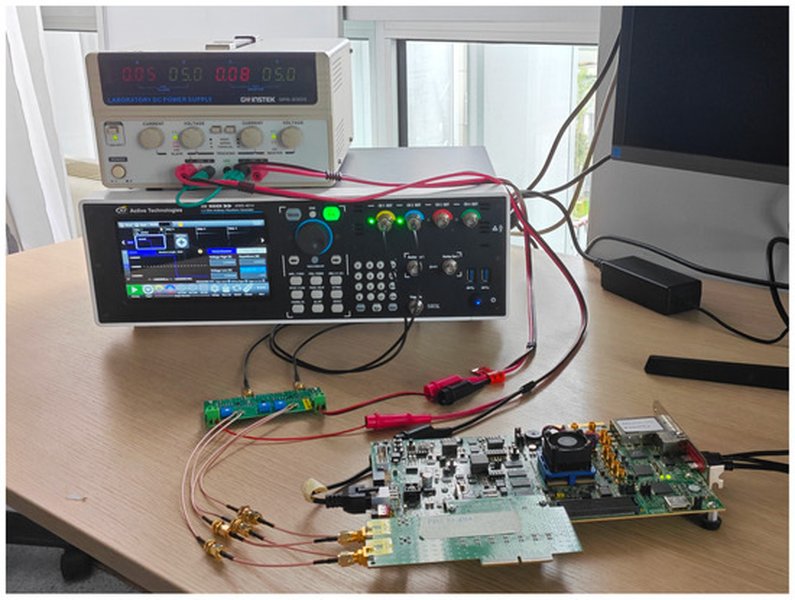
A diagram illustrating complex electronic circuitry, foundational to understanding embedded systems tackled in PSDL.
Mastering PSDL: Assessment and Evaluation
How PSDL Performance is Measured
Assessment in PSDL is typically comprehensive, aiming to evaluate both the practical skills and theoretical understanding of the students. The evaluation process generally includes several components:
- Lab Journal/Record: Students are required to maintain a detailed journal for all practicals performed. This journal usually includes the aim of the experiment, algorithm/flowchart, source code, observations, results (screenshots or hardware outputs), and conclusions. This component often carries significant weight (e.g., 10-20 marks) and is assessed for completeness, correctness, and neatness.
- Continuous Internal Evaluation (CIE): This involves ongoing assessment by the lab instructor throughout the semester. It can include regular checking of lab work, performance during practical sessions, punctuality, and active participation.
- Viva-Voce: An oral examination, often conducted during or after practical sessions, or as part of the final practical exam. Examiners ask questions related to the experiments performed, underlying concepts, code logic, and troubleshooting techniques. This tests the student's understanding and ability to explain their work (e.g., 10-20 marks).
- Practical Examination (End-Semester Exam): A formal examination conducted at the end of the semester where students are typically given one or more new problems to solve within a stipulated time. This tests their ability to apply learned skills independently. This usually forms the largest component of the PSDL grade (e.g., 50-80 marks out of 100).
- Timely Completion and Submission: Adherence to deadlines for completing assignments and submitting the lab journal is also often a factor in the overall assessment.
The faculty ensures that term work is certified, and students must submit this for final evaluation. The SPPU syllabus provides specific guidelines on the distribution of marks and the minimum number of practicals to be completed for eligibility to appear in the final examination.
PSDL Skill Development Profile
The Programming Skill Development Lab is designed to foster a range of critical skills in IT students. The radar chart below illustrates the typical emphasis placed on various competencies within the PSDL curriculum and the expected skill gain for students who diligently complete the course. These are representative values reflecting the course's design and objectives.
This chart visualizes how PSDL aims to develop a well-rounded skill set, with strong emphasis on core programming and interfacing, supported by problem-solving and documentation abilities. The "Expected Student Skill Gain" reflects a realistic improvement, acknowledging that mastery comes with continued practice beyond the course.
Key Resources for PSDL Students
Students undertaking PSDL practicals have access to a variety of resources to aid their learning and assignment completion. The table below summarizes some key platforms and materials typically used or recommended:
| Resource Type | Examples / Description | Typical Use |
|---|---|---|
| GitHub Repositories | Collections of PSDL practical codes and assignments (e.g., repositories by Atharv1903, bhaumikmaan, atharvabhide). Some provide text files with solutions. | Reference for coding syntax, understanding assignment structure, sample solutions. |
| Online Coding Platforms | Websites like sppucodes.vercel.app offering structured SPPU programming codes, assignments, and practical solutions. | Access to verified and easy-to-understand code for various subjects, including PSDL-related material. |
| University/College Lab Manuals | Official PSDL lab manuals provided by SPPU or affiliated colleges (sometimes found on platforms like Studocu). | Contains detailed problem statements, experiment procedures, and guidance aligned with the syllabus. |
| SPPU Syllabus Documents | Official syllabus PDFs for SE IT (e.g., from SPPU's website or college circulars). | Understanding course objectives, PSDL structure, experiment groups, and assessment guidelines. |
| Microcontroller Datasheets & Manuals | Datasheets for PIC18FXXX series and manuals for MPLAB X IDE and XC8 compiler from Microchip. | Detailed technical information about microcontroller architecture, registers, peripherals, and development tools. |
| Online Forums & Communities | Platforms like Stack Overflow, Microchip forums, or student groups. | Seeking help for specific coding problems, debugging issues, or conceptual clarifications. |
Utilizing these resources effectively can significantly enhance the learning experience and success in PSDL practicals.
PSDL in Action: LCD Interfacing with PIC Microcontroller
To get a better sense of the practical work involved in PSDL, consider tasks like interfacing an LCD (Liquid Crystal Display) with a PIC microcontroller. This is a common and valuable experiment as LCDs are widely used for displaying information in embedded systems. The following video demonstrates such an interfacing task using a PIC18F458 microcontroller and a simulator, which is highly relevant to the PSDL curriculum.
The video titled "PSDL - 5 LCD Interfacing using PIC18458 stimulator" showcases the process of writing and simulating code to send commands and data to an LCD, making it display desired characters or messages. This involves understanding the LCD's command set, timing requirements, and how to control the data and control lines from the microcontroller's I/O ports. Such practicals are excellent for learning about hardware-software interaction, a core tenet of PSDL.
Watching such demonstrations can provide valuable insights into how theoretical concepts are translated into working embedded applications, reinforcing the practical skills developed in the PSDL course.
Frequently Asked Questions (FAQ)
What programming language is primarily used in PSDL?
The primary programming language used in PSDL for SPPU IT students is Embedded C. This version of the C language is optimized for programming microcontrollers and embedded systems, allowing for direct hardware manipulation and efficient code.
Which microcontrollers are commonly used in SPPU PSDL practicals?
The PSDL curriculum at SPPU IT typically focuses on the PIC microcontroller family, particularly devices from the PIC18FXXX series (e.g., PIC18F4550, PIC18F458). These microcontrollers are popular for educational purposes due to their robust feature set and availability of development tools.
How many practicals are typically required in the PSDL course?
Students are generally required to complete a minimum of 10 to 14 practical assignments or experiments in the PSDL course. These are often divided into groups (e.g., Group A, B, C, D) covering different aspects of embedded programming and microcontroller applications, as per the SPPU syllabus guidelines.
Where can I find study materials and code examples for PSDL?
Study materials and code examples for PSDL can be found in several places:
- Official SPPU Lab Manuals: Provided by the university or your college.
- GitHub Repositories: Many students and educators share their PSDL codes and solutions on GitHub (e.g., search for "SPPU PSDL codes").
- Online Educational Platforms: Websites like Studocu may host lab manuals or notes. Sites like sppucodes.vercel.app also offer structured code.
- Microchip's Website: For datasheets, application notes, and information on MPLAB IDE and XC8 compiler.
Recommended Further Exploration
- What are some advanced Embedded C programming techniques specifically for PIC microcontrollers?
- Can you show project examples of interfacing various sensors and actuators with the PIC18F4550?
- What are the common career paths for IT graduates from SPPU who specialize in embedded systems?
- How do PIC microcontrollers compare to platforms like Arduino for learning embedded systems?
References
 keerthicomputerstudymaterials.files.wordpress.com

Last updated May 6, 2025