
Managing SQL Server Index Operations and Statistics Updates
Ensuring Optimal Performance Through Effective Maintenance Strategies
Key Takeaways
- Index Rebuild Automatically Updates Associated Statistics: When you rebuild an index, SQL Server updates the statistics for that specific index, ensuring that the query optimizer has the latest data distribution information.
- Index Reorganize Does Not Update Statistics: Unlike rebuilding, reorganizing an index does not refresh any statistics. Manual updates are necessary to maintain query performance.
- Comprehensive Maintenance Enhances Query Optimization: Regularly updating statistics, especially after reorganize operations, is crucial for the query optimizer to generate efficient execution plans.
Introduction to SQL Server Index Operations
In SQL Server, maintaining optimal performance is essential for efficient data retrieval and overall system responsiveness. Two fundamental index maintenance operations—Index Rebuild and Index Reorganize—play a pivotal role in achieving this goal. Understanding the nuances of these operations, especially in relation to statistics updates, is crucial for database administrators aiming to maintain robust and high-performing databases.
Understanding Index Rebuild
What is an Index Rebuild?
Index rebuilding involves dropping and recreating indexes on a table. This process effectively eliminates fragmentation by recreating the index pages, resulting in a more orderly and efficient index structure. Rebuilding an index can be resource-intensive but is highly effective in restoring index efficiency.
Impact on Statistics
One of the significant advantages of rebuilding an index is that it automatically updates the statistics associated with that index. This update is equivalent to running the UPDATE STATISTICS command with a FULLSCAN option for the rebuilt index. Consequently, there is no need to manually update statistics for the specific index that underwent a rebuild.
Limitations of Index Rebuild
While rebuilding an index updates the statistics for that index, it does not affect statistics for non-indexed columns or other indexes within the same table. Therefore, if your queries rely on these additional statistics, you may need to perform manual updates to ensure comprehensive optimization.
Understanding Index Reorganize
What is an Index Reorganize?
Index reorganizing is a less intensive operation compared to rebuilding. It involves defragmenting the existing index structure by physically rearranging the leaf-level pages to improve performance. Unlike rebuilding, reorganizing does not drop and recreate the index but optimizes its existing structure.
Impact on Statistics
Unlike the rebuild operation, reorganizing an index does not update any statistics, whether they are associated with the index or are column-level statistics. This means that after an index reorganize, the statistics remain unchanged, which can lead to outdated information being used by the query optimizer.
The Role of Statistics in SQL Server
Why Are Statistics Important?
Statistics in SQL Server provide the query optimizer with essential data distribution information about the tables and indexes. This data allows the optimizer to make informed decisions about the most efficient way to execute queries, such as which indexes to use or the best join strategies to employ.
Types of Statistics
There are two primary types of statistics in SQL Server:
- Index Statistics: These are tied to a specific index and are automatically updated during index rebuild operations.
- Column-Level Statistics: These statistics are not associated with any specific index and must be updated manually or via maintenance plans.
Consequences of Outdated Statistics
Outdated or inaccurate statistics can lead the query optimizer to generate suboptimal execution plans. This can result in inefficient query performance, increased load times, and overall degradation of database performance.
When to Update Statistics
After Index Rebuild Operations
Since rebuilding an index automatically updates the statistics for that specific index, there is generally no need to perform a manual update for those statistics. However, it's essential to consider updating statistics for non-indexed columns or other indexes if they significantly impact query performance.
After Index Reorganize Operations
Unlike rebuild operations, reorganizing an index does not update any associated statistics. Therefore, it is recommended to manually update statistics after performing a reorganization to ensure that the query optimizer has the most accurate and up-to-date information.
Determining Frequency of Statistics Updates
Updating statistics too frequently can lead to unnecessary overhead and cause query plans to recompile more often than needed. It is advisable to schedule statistics updates based on the level of data modifications in the table. Significant inserts, updates, or deletes should trigger a statistics update to maintain optimal query performance.
Best Practices for Maintaining Statistics
Automate Statistics Updates
Incorporate statistics updates into your regular maintenance plans, especially after index reorganize operations. Automating this process ensures that statistics remain current without requiring manual intervention.
Use Appropriate Update Methods
When updating statistics, choose the appropriate method based on your specific needs:
-
FULLSCAN: Performs a complete scan of the table, providing the most accurate statistics but at the cost of higher resource usage.
-
SAMPLE: Scans a representative subset of the data, balancing accuracy and resource consumption.
Monitor and Analyze Query Performance
Regularly monitor query performance to identify whether outdated statistics are affecting efficiency. Tools such as SQL Server Profiler and Query Store can help in diagnosing and addressing performance issues related to statistics.
Practical Steps for Updating Statistics
Updating Statistics for a Specific Table
To update statistics for a specific table, execute the following SQL command:
UPDATE STATISTICS table_name WITH FULLSCAN;Updating Statistics for All Tables in a Database
If you need to update statistics for all tables within a database, use the following command:
EXEC sp_updatestats;Incorporating Statistics Updates into Maintenance Plans
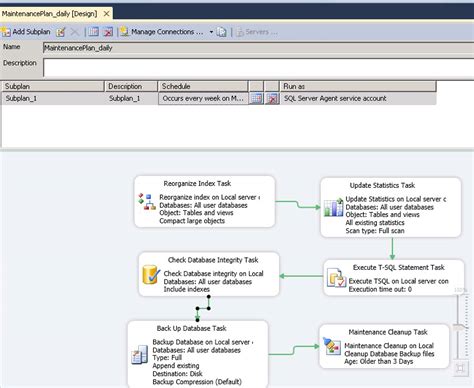
To streamline the process, include statistics updates as part of your database maintenance plans. This integration ensures that statistics are consistently updated following maintenance operations like index reorganize.
Comparative Overview of Index Operations
| Operation | Fragmentation Reduction | Statistics Update | Resource Intensity | Typical Use Case |
|---|---|---|---|---|
| Index Rebuild | Removes all fragmentation | Automatically updates index-specific statistics | High | When significant fragmentation is present and comprehensive optimization is required |
| Index Reorganize | Reduces fragmentation gradually | Does not update any statistics | Low to Medium | When minor fragmentation exists and a quick, less resource-intensive operation is preferred |
Conclusion
Effective management of index operations and statistics updates is paramount for maintaining optimal SQL Server performance. While rebuilding indexes inherently updates the associated statistics, reorganizing indexes necessitates manual intervention to refresh statistics. By adhering to best practices—such as scheduling regular statistics updates and integrating them into maintenance plans—database administrators can ensure that the query optimizer has access to accurate data distribution information, thereby facilitating efficient query execution and overall database performance.
References
Last updated January 20, 2025