
Navigating the New Financial Landscape: How Sri Lanka's Banking Sector Is Being Transformed
A comprehensive look at the pivotal regulatory shifts reshaping Sri Lanka's banking institutions in 2023-2025
Key Regulatory Developments at a Glance
- Banking (Amendment) Act No. 24 of 2024: The first major overhaul of Sri Lanka's banking code in decades, introducing stricter governance standards and enhanced capital requirements
- Basel III Implementation: Strengthened capital requirements driving consolidation among financial institutions while bolstering system stability
- Digital Transformation: New regulatory frameworks encouraging technological adoption and innovation within the banking sector
The Banking (Amendment) Act: Cornerstone of Reform
The Banking (Amendment) Act No. 24 of 2024 represents the most significant transformation of Sri Lanka's banking regulatory framework in recent history. Enacted in mid-2024, this legislation introduces comprehensive reforms designed to align Sri Lanka's banking sector with international best practices while addressing specific domestic challenges.
Key Provisions of the Banking Amendment Act
The Act introduces several groundbreaking changes to the banking landscape:
- Stricter governance standards and enhanced board responsibility requirements
- More rigorous capital and liquidity requirements aligned with international standards
- Enhanced financial reporting and auditing obligations
- Authorization for banks to merge with or acquire licensed finance companies, facilitating industry consolidation
- Improved depositor protection mechanisms
Compliance monitoring is scheduled to begin in January 2026, with full implementation required by the end of 2028. This phased approach gives financial institutions adequate time to adapt their operations and capital structures.
Implementation Timeline
- June 2024: Enactment of the Banking Amendment Act
- January 2026: Commencement of compliance monitoring
- December 2028: Deadline for full compliance with all provisions
Basel III and IFRS 9: Strengthening Financial Resilience
The Central Bank of Sri Lanka has accelerated the implementation of international standards to enhance the resilience of the banking sector and align with global practices.
Basel III Implementation
The implementation of Basel III has significantly strengthened capital requirements for Sri Lankan banks, with several key impacts:
- Higher quality capital requirements, with a stronger emphasis on Common Equity Tier 1 (CET1)
- Introduction of additional capital buffers, including capital conservation and countercyclical buffers
- Enhanced liquidity standards through the Liquidity Coverage Ratio (LCR) and Net Stable Funding Ratio (NSFR)
- Market-driven consolidation, particularly among non-banking financial institutions (NBFIs)
IFRS 9 (SLFRS 9) Adoption
The full implementation of IFRS 9 (known locally as SLFRS 9) has fundamentally changed how banks approach loan loss provisioning:
- Shift from an incurred loss model to an expected credit loss (ECL) model
- Forward-looking approach to credit risk assessment
- More granular classification and measurement of financial assets
- Enhanced disclosure requirements to improve transparency
This shift has required banks to develop more sophisticated risk models and collect more comprehensive data on borrowers, leading to improved risk management practices across the sector.
Central Bank Policy Changes and Initiatives
Monetary Policy Adjustments
The Central Bank of Sri Lanka (CBSL) has implemented significant monetary policy changes to address economic challenges and support financial stability:
- Introduction of a single policy rate of 8% in early 2025 to address the deflationary environment
- Lifting of the ban on forward foreign exchange transactions in March 2025, enhancing liquidity and supporting importers in managing foreign currency risks
- Recalibration of the national rating scale by Fitch Ratings, affecting the National Long-Term Ratings of several Sri Lankan banks
Enhanced Supervision and Systemic Stability
The CBSL has strengthened its supervisory framework through several initiatives:
- Development of a comprehensive Bank Recapitalization Strategy to ensure banks meet minimum capital requirements
- Reassessment of Domestic Systemically Important Banks (DSIBs) with required capital buffers
- Enhancement of systemic risk surveillance and stress testing frameworks, with plans to extend these to finance companies in 2025
- Implementation of a foreign exchange matching platform to facilitate price discovery and improve efficiency in the foreign exchange market
Foreign Exchange Reforms
The lifting of restrictions on forward foreign exchange transactions represents a significant shift in policy, aimed at normalizing market operations after the economic crisis. This change enables banks to better serve clients with international exposure and manage their own foreign exchange risk more effectively.
This radar chart illustrates the comprehensive strengthening of Sri Lanka's banking regulatory framework across key dimensions, comparing the pre-2023 regulatory environment with the enhanced 2025 framework. The chart shows significant improvements across all regulatory aspects, with particularly strong advancements in governance standards, capital requirements, and digital transformation requirements.
Anti-Money Laundering and Combating the Financing of Terrorism (AML/CFT)
Sri Lanka has significantly enhanced its AML/CFT regulatory framework to align with international standards and address financial security concerns:
Key AML/CFT Regulatory Developments
- Strengthened Financial Transactions Reporting Act with enhanced reporting requirements for suspicious transactions
- Updated Know Your Customer (KYC) and Customer Due Diligence (CDD) rules for Licensed Banks and Licensed Finance Companies
- Expanded regulatory scope to cover a wider range of financial institutions and designated non-financial businesses
- Enhanced monitoring and enforcement mechanisms through the Financial Intelligence Unit of Sri Lanka
These measures aim to improve the security of financial institutions, prevent financial crimes, and ensure Sri Lanka meets international standards for financial transparency and integrity.
Financial Consumer Protection and Inclusion
The CBSL has placed increased emphasis on consumer protection and financial inclusion through new regulatory frameworks:
Financial Consumer Protection Regulations
The Financial Consumer Protection Regulations (No. 01 of 2023) have introduced comprehensive measures to safeguard consumer interests:
- Requirements for fair treatment of consumers by financial service providers
- Enhanced disclosure requirements for financial products and services
- Strengthened dispute resolution mechanisms
- Prohibition of unfair business practices
- Reduced penal interest rates on loans and overdrafts
Financial Inclusion Initiatives
Regulatory changes are also aimed at promoting greater financial inclusion:
- Strengthening the regulatory framework for the microfinance sector
- Promoting digital financial services and mobile banking to reach underserved populations
- Enhancing financial literacy and education programs
- Supporting sustainable financing frameworks to attract global investment
| Regulatory Area | Pre-2023 Framework | Current Framework (2025) | Primary Impact on Banks |
|---|---|---|---|
| Capital Requirements | Basic Basel II standards | Enhanced Basel III standards with additional buffers | Higher capital costs, improved stability, potential consolidation |
| Loan Loss Provisioning | Incurred loss model | Expected Credit Loss (ECL) model under IFRS 9 | Higher provisions, improved risk management, better forward planning |
| Governance | Basic corporate governance requirements | Enhanced board responsibility, stricter fit and proper criteria | Improved risk oversight, better strategic alignment, increased board accountability |
| Consumer Protection | Limited formal protection framework | Comprehensive Financial Consumer Protection Regulations | Increased compliance costs, improved customer trust, potential litigation reduction |
| Digital Banking | Limited specific regulations | Comprehensive frameworks for digital transformation | Technology investment requirements, new business opportunities, operational efficiency |
| AML/CFT | Basic compliance requirements | Enhanced reporting and monitoring standards | Increased compliance costs, reduced regulatory risk, international credibility |
Digital Transformation and Technological Innovation
Sri Lankan banks are facing increasing regulatory pressure to embrace digital transformation and technological innovation:
Digital Banking Frameworks
- New guidelines for mobile banking and electronic payment systems
- Regulatory frameworks for open banking initiatives
- Enhanced cybersecurity requirements and data protection standards
- Support for fintech partnerships and innovation hubs
These initiatives aim to modernize the banking sector, improve operational efficiency, and enhance customer experience while ensuring appropriate risk management and security measures are in place.
Understanding the Regulatory Landscape through Visualization
This mindmap illustrates the multifaceted nature of the regulatory changes impacting Sri Lankan banks, highlighting the interconnected nature of various regulatory initiatives and their focus areas.
Central Bank's Vision for the Banking Sector
This video features insights on "The New Banking Act and Future of the Financial System," discussing how Sri Lanka's new banking code, which came into effect in June 2024, is reshaping the financial landscape. The discussion highlights the key changes introduced by the Banking Act and their implications for the future of Sri Lanka's financial system.
Visual Representation of Regulatory Changes
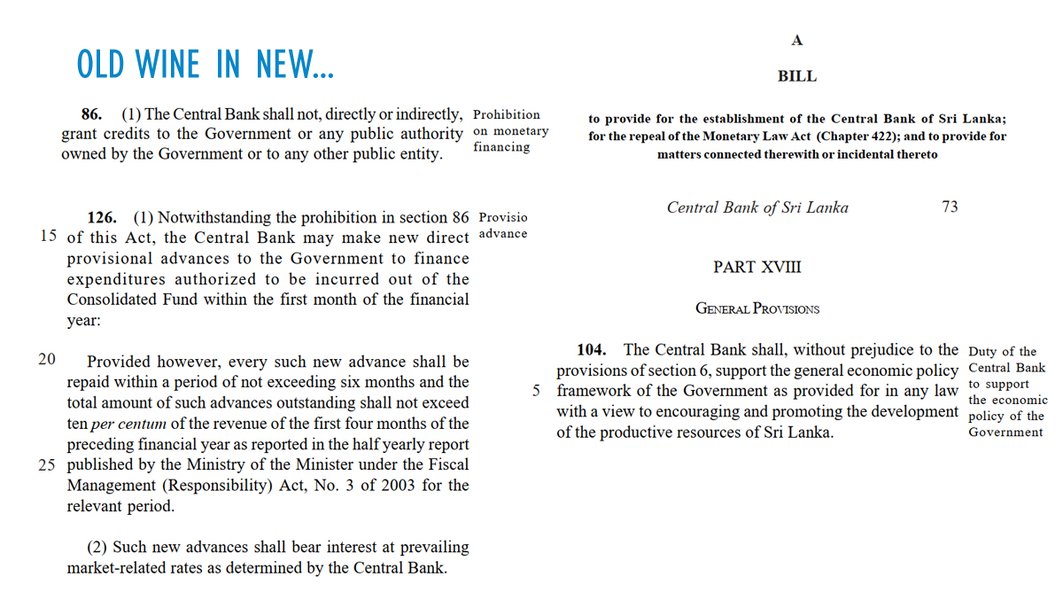
The image above illustrates Sri Lanka's efforts to modernize its monetary law framework. The Central Bank of Sri Lanka has been working on creating a more flexible policy environment that can better respond to economic challenges while maintaining financial stability. These changes complement the banking sector reforms by providing a more robust macroeconomic framework within which banks operate.
Frequently Asked Questions
References
- Central Bank of Sri Lanka - Legislative Enactments
- Fitch Upgrades 10 Sri Lankan Banks' National Ratings - Fitch Ratings
- Central Bank's Policy Agenda for 2025 and Beyond - CBSL
- Regulations on Financial Consumer Protection - CBSL
- Financial Inclusion, Regulation, and Education in Sri Lanka - Asian Development Bank
- Acts and Regulations - Financial Intelligence Unit of Sri Lanka
- Sri Lankan Banks Embrace Digital Transformation - World Finance
Recommended Topics
Last updated April 6, 2025