
Unveiling System Stability: A Deep Dive into Frequency vs. Time Domain Analysis
Explore the distinct advantages and synergistic applications of these crucial engineering methodologies.

- 1.Key Insights into Stability Analysis Approaches
- 2.Frequency Domain Analysis: A Harmonic Perspective
- 3.Time Domain Analysis: Observing Evolution Over Time
- 4.Comparative Analysis: Strengths and Weaknesses
- 5.Synthesizing Both Worlds: A Mindmap of Integrated Stability Approaches
- 6.Case Studies: Real-World Applications
- 7.Evaluating the Analytical Capabilities
- 8.Impact on Design and Verification Cycles
- 9.Frequently Asked Questions about Stability Analysis
- 10.Conclusion: A Dual Perspective for Robust Systems
- 11.Recommended Further Exploration
- 12.Referenced Search Results
Key Insights into Stability Analysis Approaches
- Frequency Domain Analysis (FDA) excels in characterizing Linear Time-Invariant (LTI) systems, offering rapid insights into stability margins (gain and phase) and robustness through tools like Bode and Nyquist plots.
- Time Domain Analysis (TDA) is paramount for understanding transient responses, nonlinear behaviors, and the effects of large disturbances, often relying on direct simulation of differential equations.
- Hybrid Approaches, combining FDA for initial screening and TDA for detailed verification, often provide the most comprehensive and reliable stability predictions, especially for complex systems.
Understanding the stability of a system is fundamental across numerous engineering disciplines, from control systems to civil engineering and power grids. Two primary methodologies dominate this field: frequency domain analysis (FDA) and time domain analysis (TDA). While both aim to assess a system's stability, they approach the problem from fundamentally different perspectives, offering unique strengths and insights. The optimal choice, or often a synergistic combination, depends heavily on the system's characteristics and the specific stability questions being addressed.
Frequency Domain Analysis: A Harmonic Perspective
Frequency domain analysis examines a system's behavior by observing its response to sinusoidal inputs across a spectrum of frequencies. This method is particularly powerful for Linear Time-Invariant (LTI) systems, where complex mathematical tools simplify the analysis significantly. By transforming system equations into the frequency domain, engineers can readily assess how a system will react to various input frequencies, thereby inferring its stability characteristics.
Core Principles and Techniques
At its heart, FDA leverages concepts like transfer functions, which mathematically describe the relationship between a system's input and output in the frequency domain. Key graphical tools facilitate this analysis:
- Bode Plots: These plots illustrate the system's magnitude and phase response as a function of frequency. They are invaluable for determining gain margin and phase margin, which are crucial indicators of a system's relative stability and robustness to parameter variations.
- Nyquist Plots: These complex plane plots depict the frequency response and are used to determine absolute stability by observing whether the plot encircles a critical point. Nyquist plots provide a comprehensive view of stability for both minimum and non-minimum phase systems.
- Polar Plots: Similar to Nyquist plots, polar plots also show the magnitude and phase angle of the frequency response but often in a single polar coordinate system.
These techniques provide quick insights into how changes in system dynamics, such as controller gains or time constants, might affect stability without the need for extensive time-domain simulations. FDA is also extendable to analyzing certain nonlinear control systems through methods like describing functions or by linearizing around an operating point.
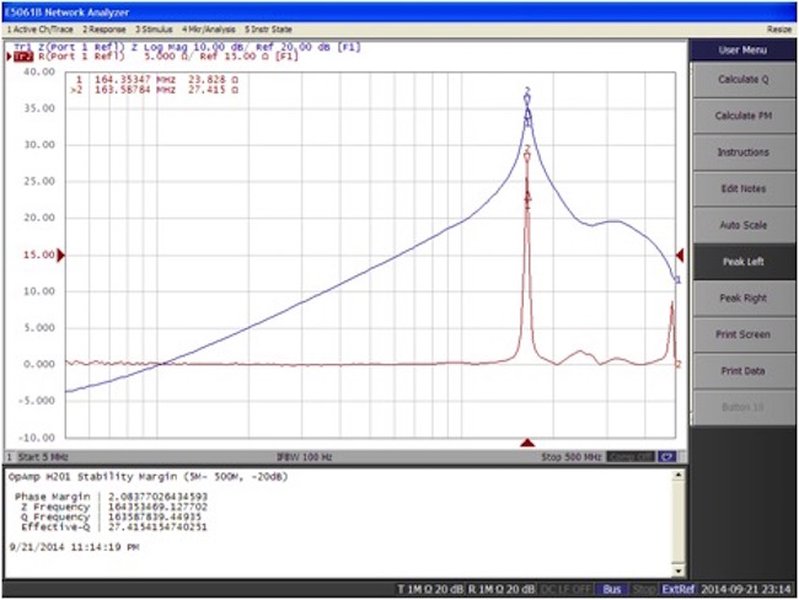
Example of a Bode Plot, a cornerstone of Frequency Domain Analysis.
Time Domain Analysis: Observing Evolution Over Time
In contrast to the frequency domain, time domain analysis focuses on a system's behavior as it evolves over time. This approach typically involves solving the system's differential equations to observe its transient response to various inputs or disturbances. TDA is essential for understanding dynamic behaviors, including oscillations, settling times, and peak overshoots, especially when these transient characteristics are critical to system performance.
Key Aspects and Applications
TDA is particularly well-suited for:
- Nonlinear Systems: Unlike FDA, which often requires linearization, TDA can directly model and simulate systems with inherent nonlinearities, capturing their true behavior under varying conditions.
- Transient Responses: It provides a direct view of how a system responds to sudden changes, such as step inputs, impulses, or external disturbances, which is crucial for assessing performance and safety.
- Energy-Storing Elements: Systems containing components like inductors and capacitors, which have memory and exhibit dynamic responses, are effectively analyzed in the time domain.
- Large-Signal Events and Delays: TDA can accurately model and predict system behavior during large disturbances, saturation, and the impact of time delays, which are often difficult to capture accurately in the frequency domain.
While often more computationally intensive, especially for complex nonlinear systems, time-domain simulations offer a direct and intuitive understanding of how a system will behave in a real-world scenario.
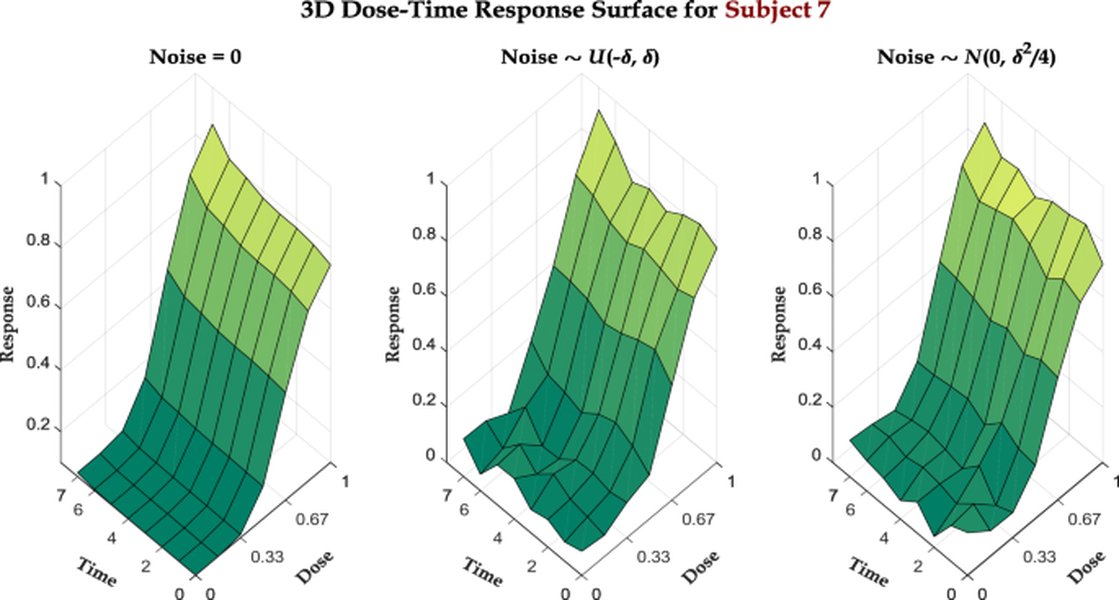
An example of a time-domain response curve, illustrating system behavior over time.
Comparative Analysis: Strengths and Weaknesses
The choice between frequency and time domain analysis is not always straightforward. Each method has distinct advantages and disadvantages, making them suitable for different types of systems and analytical goals. The table below summarizes their key differences:
| Feature | Frequency Domain Analysis (FDA) | Time Domain Analysis (TDA) |
|---|---|---|
| Primary Focus | System response to sinusoidal inputs across frequencies; stability margins. | System response over time; transient behavior. |
| System Type | Highly effective for Linear Time-Invariant (LTI) systems. | Handles both linear and nonlinear systems, especially for large disturbances. |
| Key Tools | Bode plots, Nyquist plots, transfer functions, Routh-Hurwitz criterion. | Differential equations, step response, impulse response, simulations. |
| Advantages | Quick assessment of stability margins, robustness, resonant frequencies; good for parametric studies and controller design. | Accurate for nonlinearities, time delays, and large-signal events; provides direct insight into real-world behavior. |
| Disadvantages | Can be less accurate for highly nonlinear systems; interpretation might be less intuitive for transient behavior. | Computationally intensive; sensitive to initial conditions; sometimes harder to get general insights into stability margins without extensive simulations. |
Synthesizing Both Worlds: A Mindmap of Integrated Stability Approaches
For complex engineering challenges, especially those involving nonlinear dynamics or critical performance requirements, a combined approach often yields the most robust and insightful stability analysis. This synergistic perspective leverages the strengths of both frequency and time domain methods, providing a holistic understanding of system behavior.
A mindmap illustrating the interconnectedness and application areas of frequency and time domain stability analysis.
Case Studies: Real-World Applications
The theoretical distinctions between FDA and TDA become clearer when examining their practical applications across diverse engineering domains.
Stability in Power Systems
Power systems, with their complex interconnected grids, present a critical need for robust stability analysis. Here, both approaches find distinct roles:
- Frequency Domain (FDA Focus): For analyzing small-disturbance stability, especially with increasing load demands and renewable energy integration, FDA is often used. It helps assess the dynamic stability of power systems by modeling the network as a multivariable feedback system. This allows engineers to determine stability margins and design protective devices to prevent system splitting. An IEEE conference paper highlights the application of FDA for dynamic stability and robustness in power systems, effectively modeling the network to assess stability without extensive time simulations.
- Time Domain (TDA Focus): When dealing with large disturbances, such as short circuits or generator trips, or when considering communication delays in distributed control systems and wide-area measurements, TDA becomes indispensable. Time-domain simulations can identify stability regions, capturing the intricate nonlinear dynamics and transient behaviors that FDA might miss. An OSTI case study, for instance, explores time-domain stability with wide-area measurements and delays, revealing how stability depends on these factors and network conditions.
Geotechnical Stability: Slopes and Breakwaters
In civil and geotechnical engineering, stability analysis often involves structures like slopes and breakwaters, where environmental factors play a significant role:
- Slope Stability: For analyzing rainfall-induced slope failures, traditional limit equilibrium methods (LEM) and finite element methods (FEM) are predominantly used. These are time-domain approaches that simulate progressive failure under various loading conditions, including seismic and static loads. Probabilistic approaches further enhance understanding of landslide risks. Studies on cut slopes in Nepal and quarry rock slopes demonstrate the utility of these methods for predicting failure mechanisms and optimizing designs.
- Breakwaters: Empirical methods, largely time-domain in nature, have been developed over decades for assessing the stability of older breakwaters. These methods account for complex interactions between waves, structures, and soil, providing critical insights into their long-term integrity.
In these geotechnical contexts, combining frequency-domain modal analysis to screen critical modes followed by time-domain verification (e.g., using FEM) often yields the most reliable stability predictions, as seen in comparative studies.
This video demonstrates a case study on unsaturated slope stability analysis using GTS NX, a prime example of time-domain simulation in geotechnical engineering. It highlights how rainfall infiltration, a time-dependent phenomenon, affects soil shear strength and can lead to slope failure, a critical aspect best captured by time-domain modeling.
Control Systems Engineering
Control systems extensively utilize both domains for design and verification:
- Feedback Control: Frequency domain analysis, with tools like Bode and Nyquist plots, is foundational for assessing stability margins, gain bandwidth, and resonance in linear feedback control systems. This allows engineers to tune controllers efficiently and ensure robust performance.
- Nonlinear Control: For systems with significant nonlinearities, time-domain simulations are crucial. They help in understanding the system's response to large command changes, saturation, and other nonlinear effects that are difficult to model accurately in the frequency domain.
Evaluating the Analytical Capabilities
To further illustrate the comparative strengths of frequency and time domain analysis, let's consider their performance across several key analytical attributes. This radar chart visualizes their typical efficacy in various aspects of stability assessment.
Radar chart comparing the strengths of Frequency and Time Domain Analysis across key analytical dimensions.
Impact on Design and Verification Cycles
The choice of stability analysis approach also significantly influences the design and verification phases of engineering projects. Different methods offer varying degrees of insight and efficiency at each stage.
Bar chart illustrating the utility of Frequency and Time Domain Analysis across different stages of design and verification.
Frequently Asked Questions about Stability Analysis
What is the primary advantage of frequency domain analysis?
When is time domain analysis preferred over frequency domain analysis?
Can frequency domain methods be applied to nonlinear systems?
What are "stability margins" and why are they important?
Why is a hybrid approach often considered best for complex systems?
Conclusion: A Dual Perspective for Robust Systems
Both frequency domain and time domain approaches are indispensable tools in stability analysis, each offering a unique lens through which to examine system behavior. Frequency domain analysis provides rapid insights into stability margins and robustness for linear systems, making it ideal for initial design and controller tuning. Conversely, time domain analysis offers a detailed, direct view of transient and nonlinear behaviors, essential for understanding real-world performance under diverse conditions, especially large disturbances or systems with inherent nonlinearities. For the most complex and critical applications, a synergistic approach that leverages the strengths of both methodologies, often by using FDA for initial screening and TDA for detailed verification, yields the most comprehensive and reliable stability predictions. The decision to employ one or both depends on the specific system, its linearity, the nature of the stability question, and the required depth of insight into its dynamic response.
Recommended Further Exploration
- How do advanced techniques handle stability in highly nonlinear control systems?
- What is the specific impact of time delays on system stability in both domains?
- Explore the practical applications and limitations of the Routh-Hurwitz criterion in stability assessment.
- How is frequency response analysis adapted for use in adaptive control systems?