
Unlock the Secret: Keeping Thiourea and BCDMH Stable Together at pH 2
Discover the strategies to prevent breakdown in this challenging acidic chemical mixture.
Mixing chemicals like thiourea and BCDMH (1-bromo-3-chloro-5,5-dimethylhydantoin) presents unique stability challenges, especially in a strongly acidic environment like pH 2. While acidic conditions favour thiourea's stability compared to alkaline environments, thiourea remains vulnerable to oxidation. BCDMH, a disinfectant, complicates matters by releasing oxidizing agents (hypobromous and hypochlorous acid) as it dissolves. This guide synthesizes strategies to maintain the integrity of both compounds in your pH 2 solution.
Essential Insights: Key Stabilization Takeaways
- pH is Crucial but Complex: While pH 2 inherently helps stabilize thiourea more than higher pH levels, it doesn't eliminate breakdown risks, especially from oxidation. Strict maintenance of this pH is vital.
- Combat Oxidation Directly: The primary threat to thiourea in this mixture comes from the oxidizing species released by BCDMH. Using specific stabilizers like antioxidants and complexing agents is necessary.
- Control Environmental Factors: Beyond chemical additives, managing temperature, light exposure, oxygen levels, and water purity significantly impacts the long-term stability of the solution.
Understanding the Components at pH 2
Thiourea's Balancing Act in Acidity
Thiourea, an organosulfur compound with the formula SC(NH₂)₂, exhibits increased stability in acidic conditions compared to neutral or alkaline environments where it readily decomposes. A pH of 2 is generally considered favourable, falling within the range (pH 1.4-2) often used in processes like leaching to minimize thiourea breakdown. However, this stability is relative. Thiourea remains susceptible to:
- Oxidation: This is the primary degradation pathway, especially when oxidizing agents are present. Even atmospheric oxygen can contribute over time. Metal ions like iron (Fe³⁺) or copper (Cu²⁺) act as potent catalysts for this oxidation.
- Hydrolysis: While slower in acidic conditions, interaction with water molecules can destabilize the C-S bond over time, particularly if conditions fluctuate or impurities are present.
Maintaining the strongly acidic environment helps slow these processes, but preventing oxidation requires additional measures, particularly when mixed with an oxidizing agent source like BCDMH.
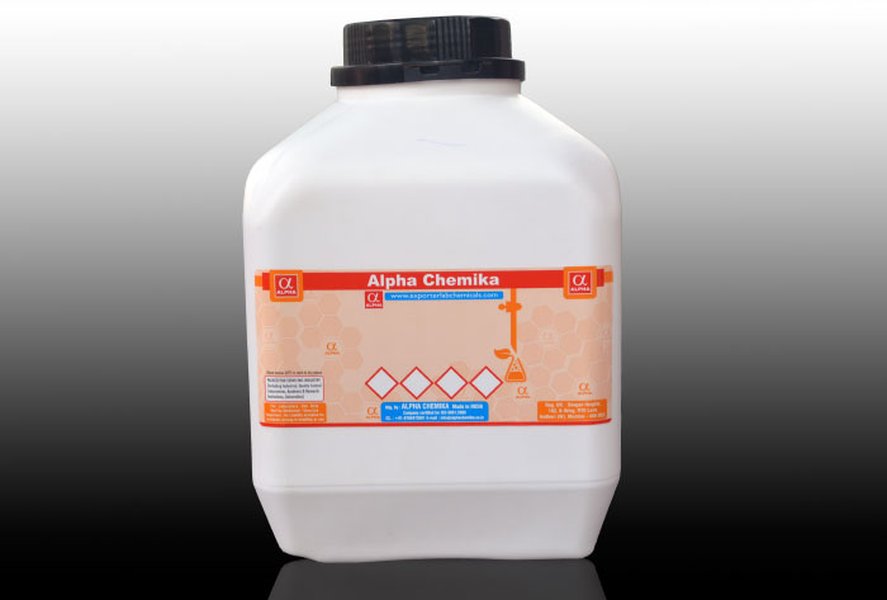
Thiourea, often supplied as a crystalline solid.
BCDMH: Stable but a Source of Oxidants
BCDMH (1-bromo-3-chloro-5,5-dimethylhydantoin) is valued as a disinfectant primarily because it slowly releases hypohalous acids – specifically hypobromous acid (HOBr) and hypochlorous acid (HOCl) – when dissolved in water. Key characteristics at pH 2 include:
- Good Stability: BCDMH itself is relatively stable across a broad pH range, including the acidic condition of pH 2.
- Effective Disinfection: It retains good microbicidal efficiency at low pH.
- Oxidant Release: The slow release of HOBr and HOCl is its intended function for disinfection but poses a direct threat to the stability of co-dissolved thiourea, as these are strong oxidizing agents.
- Sensitivity: While stable in solution, solid BCDMH is sensitive to moisture and incompatible materials (reducing agents, metals, alkalis).
Therefore, while BCDMH doesn't require stabilization *itself* at pH 2, its presence necessitates robust stabilization of the thiourea component.
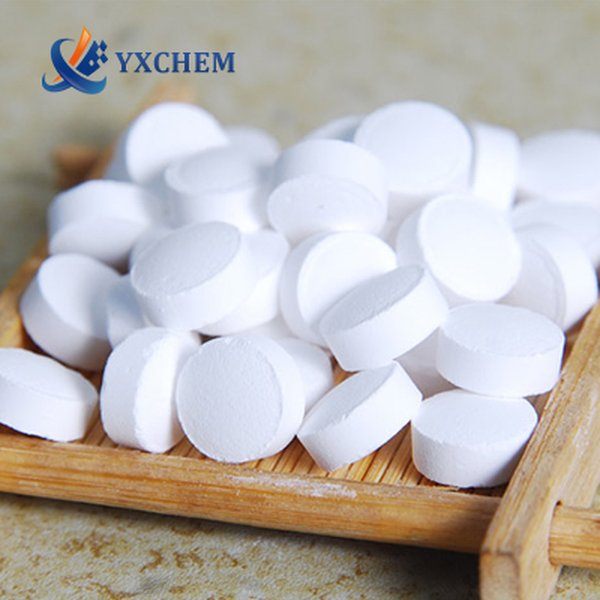
BCDMH is commonly available in tablet or granular form for water treatment.
The Core Challenge: Oxidative Interaction
The central difficulty in stabilizing this mixture lies in the inherent chemical conflict: thiourea is prone to oxidation, and BCDMH actively releases oxidizing agents (HOBr and HOCl). Even at pH 2, where thiourea is comparatively more stable, the continuous generation of these oxidants creates a highly challenging environment, accelerating thiourea's breakdown into compounds like formamidine disulfide.
\[ \text{SC(NH}_2\text{)}_2 + \text{Oxidants (e.g., HOBr, HOCl)} \rightarrow \text{Degradation Products} \]
Therefore, successful stabilization hinges on actively counteracting this oxidative potential while maintaining the desired acidic pH.
Integrated Stabilization Strategies
A multi-faceted approach is required to maintain the stability of both thiourea and BCDMH at pH 2.
1. Rigorous pH Control
Why it Matters
Maintaining the pH precisely at 2 is paramount. Deviations towards higher pH values rapidly decrease thiourea stability. Fluctuations can also impact the effectiveness and stability of some stabilizers.
How to Achieve It
- Use strong acids like sulfuric acid (H₂SO₄) or hydrochloric acid (HCl) for initial adjustment.
- Consider appropriate buffer systems if significant pH drift is anticipated, but ensure buffer components do not react negatively with thiourea or BCDMH. Phosphate or acetate buffers might be considered, but require careful evaluation.
- Regularly monitor the pH of the solution.
2. Chemical Stabilizers for Thiourea
These additives directly interfere with the degradation pathways.
Antioxidants / Reducing Agents
- Sodium Sulfite (Na₂SO₃): Acts as an oxygen scavenger and reducing agent, directly counteracting the oxidizing effects of HOBr/HOCl and dissolved oxygen. Its use helps suppress oxidative decomposition pathways.
Complexing / Protective Agents
- Sodium Silicate (Na₂SiO₃): Can form protective complexes around thiourea molecules and helps stabilize pH. Studies suggest it can reduce the activation energy required for thiourea breakdown. However, excessive concentrations can sometimes weaken stability, so dosage needs careful consideration (e.g., around 0.09 M mentioned in some contexts).
- Phosphoric Acid Derivatives: Although sometimes cited in relation to thiourea dioxide, these may offer protective complexation benefits for thiourea itself in acidic media, potentially improving hydrothermal stability.
Chelating Agents
- EDTA (Ethylenediaminetetraacetic acid), Citrates, Gluconates: These agents bind (chelate) trace metal ions (like Fe³⁺, Cu²⁺) present as impurities in the water or reagents. Since these metals catalyze thiourea oxidation, removing them from active participation significantly enhances stability.
3. Minimizing Oxidative Potential and Catalysts
Water Purity
Use deionized or distilled water to minimize the introduction of catalytic metal ions and other impurities that can accelerate degradation.
Oxygen Exclusion
Minimize exposure to atmospheric oxygen. This can involve:
- Preparing and storing the solution under an inert atmosphere (e.g., nitrogen).
- Using oxygen scavengers (like sodium sulfite mentioned above).
- Using containers with minimal headspace.
4. Environmental Controls
Temperature
Store the solution at low temperatures (refrigerated if possible). Heat accelerates decomposition reactions for both compounds.
Light
Protect the solution from light, especially UV light, by using opaque or amber containers. Photodegradation can contribute to breakdown.
Moisture Control (During Handling/Storage of Solids)
Ensure BCDMH solid is kept dry before dissolution, as it is sensitive to moisture.
Relative Importance of Stabilization Factors
The following chart provides a visual representation of the estimated relative importance of various factors in stabilizing the thiourea-BCDMH solution at pH 2. While all factors contribute, controlling the pH and actively managing oxidation (via antioxidants and chelators) are typically the most critical interventions due to the inherent reactivity in the mixture.
Key Stabilizers and Their Roles
Choosing the right combination of stabilizers is essential. The table below summarizes the primary mechanisms and considerations for the most commonly cited stabilizers for thiourea in acidic, potentially oxidizing conditions.
| Stabilizer | Primary Mechanism | Key Considerations |
|---|---|---|
| Sodium Silicate (Na₂SiO₃) | Forms protective complexes; pH buffering | Concentration sensitive (optimal range needed); potential for weakening stability if overdosed. |
| Sodium Sulfite (Na₂SO₃) | Antioxidant / Reducing Agent (scavenges O₂ and HOBr/HOCl) | Directly counteracts BCDMH byproducts; ensure compatibility with overall solution chemistry. |
| EDTA, Citrates, Gluconates | Chelates (binds) catalytic metal ions (Fe³⁺, Cu²⁺) | Most effective when metal ion impurities are present; minimal effect if water/reagents are very pure. |
| Phosphoric Acid / Phosphates | Potential complexation; pH buffering | May form protective layers; sometimes used with related compounds (thiourea dioxide). |
Visualizing the Stability Challenge
This mindmap illustrates the relationships between the components, the breakdown challenges at pH 2, and the strategic approaches needed for stabilization.
Understanding Thiourea: The Molecule
Gaining a deeper understanding of the thiourea molecule itself can provide context for its stability challenges. The following video gives a brief overview of this organosulfur compound.
As the video explains, thiourea's structure, SC(NH₂)₂, is similar to urea but with sulfur replacing oxygen. This sulfur atom is key to its reactivity, including its susceptibility to oxidation, which is the central problem when combined with an oxidizer source like BCDMH, even under otherwise stabilizing acidic conditions.
Frequently Asked Questions (FAQ)
▶ Why is pH 2 specifically important for this mixture?
▶ What happens if the thiourea breaks down?
▶ Can the stabilizers used for thiourea negatively affect BCDMH?
▶ Are there alternatives to sodium silicate or sodium sulfite?
References
- Effects of Stabilizers on Stability of Thiourea in Alkaline Solution - MDPI
-
Structure and stability of thiourea with water: DFT and MP2 calculations - ScienceDirect
- Thiourea dioxide hydrothermal stabilizer and preparation method thereof - Google Patents
- BCDMH TABS Safety Data Sheet - Enviro Tech Chemical Services
- The Decomposition of Thiourea in Water - ACS Publications
- BCDMH Technical Booklet - Enviro Tech Chemical Services
-
Thiourea - Overview - ScienceDirect Topics
Recommended Reading
Last updated April 17, 2025