
Mastering Operational Excellence: A Deep Dive into Standard Operating Procedures
Unlocking Consistency, Efficiency, and Compliance Through Effective SOP Implementation
Standard Operating Procedures (SOPs) are the backbone of any well-functioning organization, serving as a comprehensive blueprint for routine tasks and critical processes. Far from being mere bureaucratic documents, SOPs are detailed, step-by-step instructions compiled to ensure uniformity, efficiency, and quality output while significantly reducing errors and miscommunication. They are vital for training new employees, maintaining consistency in task performance, and ensuring compliance with industry regulations and internal standards. Understanding and effectively implementing SOPs is paramount for operational success, fostering a culture of safety, quality, and continuous improvement.
Key Insights into Standard Operating Procedures
- Foundation of Consistency: SOPs provide standardized, step-by-step instructions, ensuring that tasks are performed uniformly across an organization, leading to consistent quality and predictable outcomes.
- Drivers of Efficiency and Training: By clearly outlining processes, SOPs streamline operations, reduce errors, and significantly cut down on training time for new and existing staff, making organizations more productive.
- Ensuring Compliance and Safety: SOPs are critical for adhering to regulatory requirements and safety protocols, minimizing risks, preventing accidents, and demonstrating compliance to external bodies like the FDA or ISO.
What Exactly is an SOP?
Defining the Core of Standardized Operations
At its essence, an SOP, or Standard Operating Procedure, is a written document that provides clear, concise, and detailed instructions on how to perform a specific task or process. It's a fundamental tool for any organization, regardless of its size or industry, designed to standardize operations, minimize variations, and ensure that all activities are carried out consistently and correctly. Think of an SOP as a recipe that, when followed, yields the same high-quality result every time.
SOPs are not merely guidelines; they are enforceable documents that dictate the precise steps workers must follow to achieve a desired outcome. This commitment to detail helps prevent errors, reduces the need for constant supervision, and ensures that critical tasks are performed safely and effectively. The ultimate goal of an SOP is to achieve efficiency, maintain quality output, and ensure uniformity of performance, while simultaneously reducing miscommunication and preventing non-compliance with industry regulations.
SOP vs. Process Document: Clarifying the Distinction
While often used interchangeably, it's important to differentiate SOPs from broader process documents. A process document typically offers a high-level overview or a "sketch of the journey" from Point A to Point B. It describes what needs to be done and often why, but it doesn't necessarily dive into the granular details. In contrast, an SOP is a "detailed map" that lays out the exact, step-by-step instructions for executing a specific task within that broader process. It specifies how each step is to be performed, who is responsible, and what tools or resources are needed. This level of detail ensures consistency and precision, making SOPs invaluable for training and quality control.
The Indispensable Role of SOPs in Organizations
Driving Success Through Structured Operations
The significance of SOPs extends across various facets of an organization, impacting everything from daily operations to long-term strategic goals. Their benefits are manifold, contributing to a more robust, resilient, and high-performing business environment.
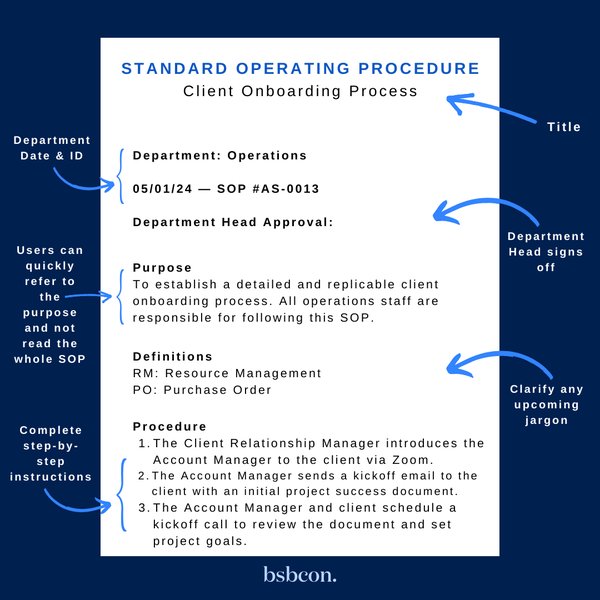
Benefits of Implementing Standard Operating Procedures
Enhancing Consistency and Quality Output
One of the primary aims of SOPs is to ensure uniformity. By providing clear, consistent instructions, SOPs guarantee that tasks are performed the same way every time, regardless of who is executing them. This standardization directly translates to consistent quality in products, services, and operational outcomes. For example, in pharmaceutical processing or clinical studies, strict adherence to SOPs is critical for maintaining product integrity and patient safety, as defined by organizations like the International Council for Harmonisation (ICH).
Streamlining Training and Onboarding
SOPs are powerful training tools. New employees can use them to quickly learn how to perform routine tasks without constant supervision, accelerating their integration into the workforce. For existing staff, SOPs serve as a reliable reference, reducing the need to interrupt supervisors with basic questions. This not only saves time but also ensures that training is standardized and effective, contributing to a more knowledgeable and capable workforce.
Ensuring Compliance and Mitigating Risk
In many industries, adherence to specific regulations and quality standards (e.g., ISO, FDA) is non-negotiable. SOPs play a crucial role in documenting and enforcing these compliance requirements. They provide a clear audit trail, demonstrating that an organization is following established procedures and regulations, thereby minimizing the risk of fines, penalties, and legal issues. Furthermore, SOPs can include safety protocols for hazardous processes, materials, or equipment, helping to prevent accidents and create a safer working environment.
Boosting Efficiency and Productivity
By clearly outlining the most efficient way to perform a task, SOPs help eliminate guesswork, reduce errors, and streamline workflows. This leads to increased productivity and optimized resource utilization. When employees know exactly what to do and how to do it, they can complete tasks more quickly and effectively, allowing the organization to operate like a "finely-tuned machine."
Preserving Institutional Knowledge
SOPs act as a repository of organizational knowledge. When key employees leave, their expertise doesn't depart with them if it has been documented in SOPs. This preserves valuable operational insights, prevents knowledge loss, and ensures business continuity, even in the face of staff turnover or unforeseen disruptions.
Crafting Effective Standard Operating Procedures
A Step-by-Step Guide to Development and Implementation
Developing robust and usable SOPs requires a systematic approach, from initial planning to ongoing review. The goal is to create documents that are not just technically accurate but also practical and easy for employees to follow.
1. Define the Scope and Purpose
Before writing, clearly define what the SOP will cover and what it aims to achieve. Identify the specific process or task that needs documentation and determine its objectives. This initial step helps guide the level of detail and language used, ensuring alignment with organizational goals.
2. Gather Information and Involve Stakeholders
Research the task or process thoroughly, gathering all relevant information, including industry guidelines, best practices, and existing policies. Crucially, involve subject matter experts and the workers who actually perform the tasks. Their input is invaluable for ensuring accuracy, practicality, and buy-in. A collaborative approach leads to more effective and user-friendly SOPs.
3. Choose the Right Format and Structure
The format of an SOP should enhance clarity and ease of use. While there's no single official standard, common elements include a title, purpose, scope, definitions, roles and responsibilities, references, step-by-step procedures, and revision history. Using a consistent structure across all SOPs makes navigation more intuitive. Formats can range from simple step-by-step lists to flowcharts or hierarchical structures, depending on the complexity of the task.
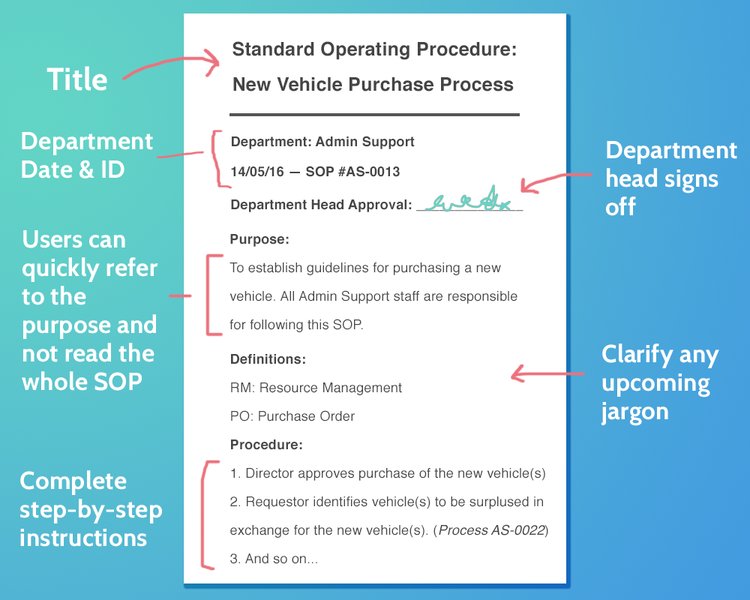
Example Structure of an SOP Document
4. Write Clear, Concise, and Actionable Steps
This is the most critical part. Write the procedures in a clear, concise, and easy-to-follow manner. Use simple, common terms and avoid jargon where possible. Employ present tense and an active voice (e.g., "Connect the cable," instead of "The cable should be connected"). Break down complex tasks into smaller, manageable steps. Each step should be actionable and unambiguous. Avoid generalized terms like "periodic" or "typical" that can lead to inconsistent execution.
5. Include Supporting Information and Visual Aids
Enhance the clarity of your SOPs with supplementary details such as safety warnings, necessary equipment lists, and troubleshooting tips. Visual aids like flowcharts, diagrams, or images can significantly improve understanding, especially for complex processes. They offer a quick, visual representation of the workflow, making it easier for users to grasp the sequence of steps and dependencies.
Watch this video to learn more about how to write an effective SOP with examples.
This video provides practical guidance and examples for constructing effective Standard Operating Procedures, aligning with the principles discussed in this guide. It emphasizes clarity, structure, and actionable steps, which are crucial for any well-written SOP.
6. Review, Test, and Revise
Once drafted, the SOP should be reviewed by subject matter experts for technical accuracy and by end-users for clarity and practicality. Ideally, have someone not familiar with the procedure test it by following each step exactly as written, while the author observes. Any steps causing confusion or hesitation should be revised. Feedback mechanisms, such as allowing users to provide comments directly on the SOP, are beneficial for continuous improvement. Regularly review and revise SOPs to ensure they remain current and effective, as processes and regulations can change over time.
7. Distribution and Accessibility
Make sure SOPs are easily accessible to all relevant employees. Whether compiled into a centralized SOP manual or distributed individually, ensure that workers can find and reference them whenever needed. This might involve digital platforms, a central file location, or even physical copies in relevant workspaces.
Essential Elements of a Comprehensive SOP
Building a Robust Instructional Framework
While the exact structure can vary, certain elements are crucial for any effective SOP. The table below outlines these key components and their significance:
| SOP Element | Description | Importance |
|---|---|---|
| Title & Identification | Clear, descriptive title; unique ID number; author/owner; date of creation/revision; version number. | Ensures easy identification, tracking, and version control. |
| Purpose | Brief statement explaining why the SOP exists and what it aims to achieve. | Provides context and clarifies the objective for the user. |
| Scope | Defines the boundaries of the procedure, specifying what it covers and who it applies to. | Prevents misapplication and sets clear expectations. |
| Definitions / Acronyms | Explanation of any technical terms, jargon, or acronyms used within the document. | Ensures all users understand the terminology, avoiding ambiguity. |
| Roles & Responsibilities | Identifies who is responsible for performing each step or aspect of the procedure. | Clarifies accountability and ensures proper delegation of tasks. |
| References & Related Documents | Lists any external documents (e.g., policies, other SOPs, regulations) that are relevant or referenced. | Provides necessary background information and ensures compliance linkages. |
| Procedure (Step-by-Step Instructions) | Detailed, actionable steps to perform the task, often with sub-steps. Includes safety warnings, equipment, and materials. | The core of the SOP; ensures consistent, accurate, and safe execution. |
| Quality Control / Verification | Describes how to verify that the task was completed correctly and meets quality standards. | Ensures the desired outcome and helps maintain quality. |
| Forms / Appendices | Any templates, checklists, or supplementary materials needed to complete the procedure. | Provides practical tools and additional relevant information. |
| Revision History | Records of changes made to the SOP, including date, description of change, and author. | Maintains an audit trail and ensures users are working with the latest version. |
Assessing SOP Effectiveness: A Radar Chart Analysis
Visualizing Key Performance Indicators for Standard Operating Procedures
Evaluating the effectiveness of Standard Operating Procedures involves assessing several critical attributes that contribute to their overall utility and impact. This radar chart illustrates a hypothetical assessment of different aspects of SOP effectiveness, showcasing areas of strength and potential improvement. For instance, a well-written SOP should excel in clarity and conciseness, be easily accessible, and undergo regular review and updates. User adoption and the resulting improvement in efficiency and quality are also key indicators of success.
As depicted, an "Ideal SOP Effectiveness" dataset aims for high scores across all attributes, signifying a well-optimized and impactful SOP system. In contrast, "Typical Current SOP Effectiveness" might show lower scores in areas like user adoption or regular review, indicating common challenges faced by organizations. This visual tool helps pinpoint specific areas where SOP development and management strategies need to be strengthened to bridge the gap between current state and ideal performance.
Challenges in SOP Implementation
Overcoming Obstacles to Operational Success
Despite their clear benefits, organizations often face challenges in creating and maintaining effective SOPs. These can include:
- Resistance to Change: Employees may be accustomed to informal processes and resist adopting new, formalized procedures.
- Lack of Clarity and Detail: Poorly written SOPs that are vague, too complex, or lack sufficient detail can lead to confusion and non-compliance.
- Inadequate Training: Simply providing SOPs is not enough; proper training on how to use and adhere to them is essential.
- Infrequent Review and Updates: Processes evolve, and if SOPs are not regularly reviewed and updated, they quickly become outdated and ineffective.
- Lack of Ownership: Without clear ownership for writing and maintaining SOPs, they can fall by the wayside.
Frequently Asked Questions about SOPs
Addressing Common Queries
What is the primary difference between a policy and an SOP?
How often should SOPs be reviewed and updated?
Who is responsible for writing SOPs?
Can SOPs be used for all types of tasks?
What are the consequences of not having effective SOPs?
Conclusion
Standard Operating Procedures are indispensable tools for any organization striving for operational excellence. By meticulously documenting routine tasks and critical processes, SOPs provide a clear roadmap for consistent performance, enhanced efficiency, robust compliance, and effective knowledge transfer. Their proper development, thoughtful implementation, and continuous review are not just good practices but essential strategies for achieving sustainable success and building a resilient, high-performing workforce. Embracing SOPs transforms a business from a collection of individual efforts into a cohesive, well-oiled machine, ensuring quality, safety, and consistent outcomes in every operation.
Recommended Further Exploration
- Discover best practices for creating comprehensive SOP manuals for your organization.
- Explore various tools and software solutions to streamline your SOP documentation and management.
- Examine real-world case studies showcasing successful SOP implementation across different industries.
- Learn how to effectively integrate SOPs within a broader quality management system (QMS).
References
Last updated May 21, 2025