
The Long Road to HD: When Might We See Deep Space Nine Remastered?
Exploring the complexities, fan efforts, and potential future for a high-definition journey back to the Bajoran Wormhole.
Star Trek: Deep Space Nine (DS9) remains a fan-favorite cornerstone of the Star Trek universe, acclaimed for its complex characters, serialized storytelling, and darker themes. Yet, unlike its predecessors, The Original Series and The Next Generation, DS9 has never received an official high-definition (HD) remaster. As of May 1, 2025, the question lingers: will we ever see Captain Sisko and his crew in glorious HD, and if so, when? This exploration delves into the significant hurdles, ongoing developments, and potential pathways that might lead to an HD release.
Highlights: The Quest for DS9 in HD
- Technical Hurdles Persist: Unlike TNG, DS9's production involved a mix of 35mm film for live-action scenes and standard-definition (SD) digital video for visual effects, making a simple film rescan insufficient for a true HD upgrade.
- Financial Realities: The costly and time-consuming process of recreating potentially thousands of SD visual effects shots, combined with uncertain returns based on TNG Blu-ray sales, presents a major financial barrier for Paramount.
- Fan Innovation & AI Hope: Passionate fan projects utilizing Artificial Intelligence (AI) upscaling techniques have demonstrated the potential to bring DS9 to HD-like quality, potentially influencing official strategies or offering interim solutions.
Why No Official DS9 HD Yet? The Core Challenges
The primary reason *Star Trek: Deep Space Nine* hasn't received an official HD remaster lies in the way it was produced between 1993 and 1999. While the live-action segments featuring the actors were typically shot on 35mm film—a format easily rescanned for high definition—the show heavily relied on computer-generated imagery (CGI) and digital compositing for its numerous space battles, station exteriors, and other visual effects. Crucially, these digital elements were created and finalized in Standard Definition (SD).
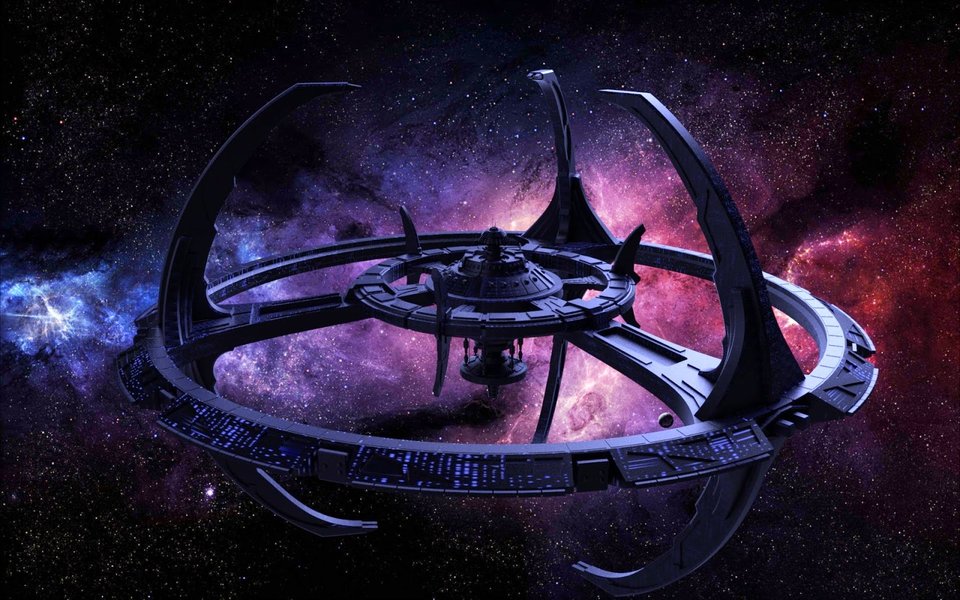
The crew of Deep Space Nine, awaiting their HD upgrade.
The Problem of Mixed Media and Composite Effects
To create a true HD version, simply scanning the film elements isn't enough. Every shot containing SD digital effects would need to be painstakingly revisited. This involves:
- Rescanning Film: Locating and rescanning the original 35mm film negatives for the live-action parts of each effects shot.
- Recreating Effects: Rebuilding the CGI models and animations (like ships, weapons fire, station views) in HD or higher resolution.
- Recompositing: Seamlessly integrating the newly rescanned film elements with the newly created HD effects elements, matching the original artistic intent.
This process is significantly more complex and resource-intensive than remastering a show shot entirely, or almost entirely, on film.
The Shadow of TNG's Remastering
The experience with remastering *Star Trek: The Next Generation* (TNG) serves as a relevant, albeit cautionary, precedent. While TNG was also shot on film, its effects required similar, though perhaps less extensive, recreation. The TNG remastering project reportedly cost CBS/Paramount around $10 million and took considerable time. While critically acclaimed, the subsequent Blu-ray sales were perceived by some industry observers as not meeting expectations, potentially making the studio hesitant to invest a similar or likely greater amount into the 176 episodes of DS9, especially given DS9's even heavier reliance on SD digital effects.
Glimmers of Hope: The Documentary and Fan Efforts
Despite the lack of an official remaster, fans have had glimpses of what could be, and dedicated individuals are exploring alternative paths.
"What We Left Behind": A Taste of HD
The crowdfunded documentary *What We Left Behind: Looking Back at Star Trek: Deep Space Nine* (2019) provided a tantalizing preview. The production team, working with CBS Digital and the show's original director of photography, undertook the expensive process of scanning original film negatives and recompositing effects for select scenes featured in the documentary. While this demonstrated the technical feasibility and stunning visual improvement of an HD DS9, it was a limited effort specifically for the documentary and not part of a larger series remastering project.
The Rise of AI Upscaling
In recent years, advancements in Artificial Intelligence have opened new possibilities. Several fan-led projects, such as the notable "DS9: Redefined," have utilized sophisticated AI algorithms (like Gigapixel AI) to upscale the existing SD episodes to HD (1080p) or even 4K quality. These AI tools analyze the SD source material and intelligently add detail to simulate a higher resolution.
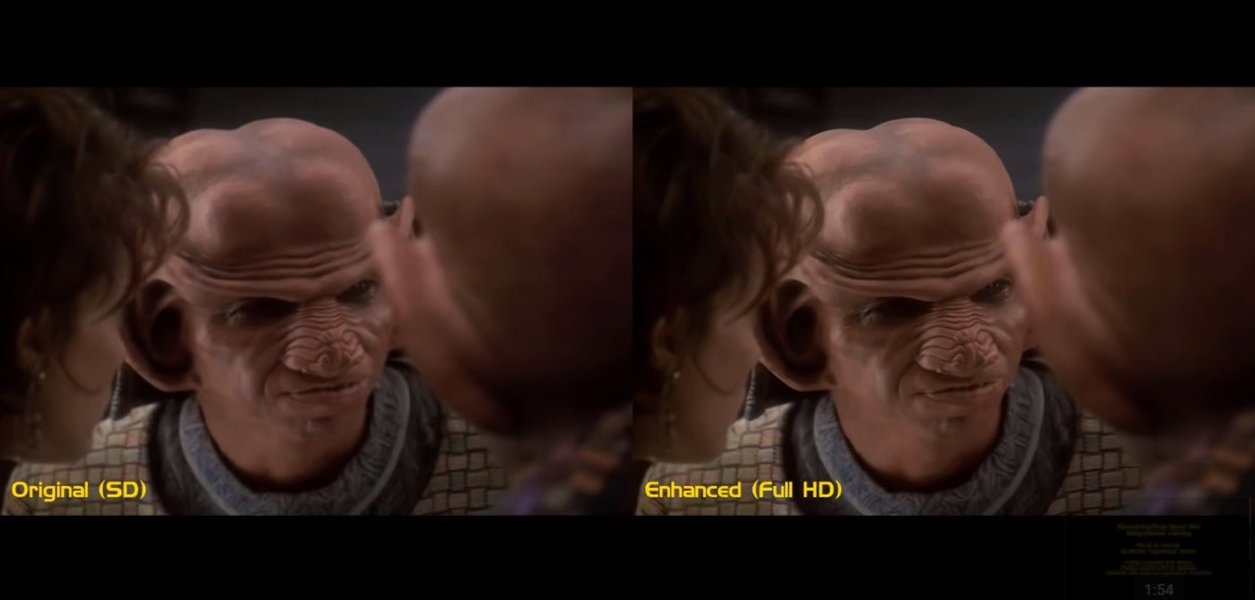
An example demonstrating the visual improvement AI upscaling can offer for DS9 footage.
While AI upscaling cannot perfectly replicate the detail of a true remaster from original film elements (especially for complex effects shots), the results can be remarkably good, offering a significantly improved viewing experience over the standard DVD or streaming SD versions. These fan efforts not only provide enhanced versions for the community but also serve as proof-of-concept, potentially influencing Paramount's decisions by demonstrating fan interest and showcasing more cost-effective, albeit imperfect, methods.
Exploring the Pathways to HD
Several potential routes exist for bringing DS9 to a higher definition format, each with distinct advantages and disadvantages regarding quality, cost, and time. Understanding these options helps contextualize the challenges and possibilities surrounding an official HD release.
The following table compares the primary methods discussed for potentially upgrading DS9's visual quality:
| Method | Description | Pros | Cons | Official Status |
|---|---|---|---|---|
| Full HD Remaster | Rescanning original film, recreating SD visual effects in HD, recompositing all elements. | Highest possible quality, true HD resolution, future-proof. | Extremely expensive, time-consuming, complex technical process. | Not currently planned or announced by Paramount. |
| Official AI Upscaling | Paramount uses AI tools to enhance the existing SD masters to HD resolution for official release. | Much cheaper and faster than full remaster, significantly better than SD. | Quality lower than full remaster, potential for AI artifacts, may not satisfy purists. | Rumored to be under consideration, but unconfirmed. |
| "Demastered" Edition | Re-release on physical media using existing SD masters, possibly with some minor cleanup or encoding improvements, but not HD. | Low cost, provides a physical media option. | Not HD, minimal quality improvement over existing versions. | Officially released by Paramount in 2022 for DS9 and Voyager. |
| Fan AI Upscaling Projects | Community-driven efforts using publicly available AI software to upscale SD episodes to HD/4K. | Provides accessible HD-like versions now, demonstrates fan interest. | Unofficial, variable quality, potential legal grey areas, not a replacement for official release. | Ongoing (e.g., DS9: Redefined), not endorsed by Paramount. |
Factors Influencing the Decision
The decision by Paramount to pursue (or not pursue) an official DS9 HD release likely hinges on a complex interplay of factors. The following chart visualizes a hypothetical assessment of these key drivers, reflecting the current understanding based on available information. Higher scores indicate a stronger influence or greater magnitude.
As illustrated, the high cost and technical difficulty remain significant deterrents, while factors like fan demand, the potential value add for streaming services like Paramount+, and the maturation of AI technology act as potential drivers or mitigating factors. The perceived return on investment remains a critical unknown.
Mapping the DS9 HD Landscape
The journey towards a potential HD release for *Deep Space Nine* involves navigating a complex web of challenges, potential solutions, and motivating factors. This mind map provides a visual overview of the key elements involved in the discussion:
This map highlights the central dilemma: the significant challenges weighed against various potential solutions and the factors pushing for an upgrade. The path forward remains unclear, balancing cost, quality, and market demand.
Paramount's Position and Future Prospects
Officially, Paramount's stance has been cautious. The release of the "Demastered" editions in 2022, which were essentially SD versions on physical media, suggested a reluctance to commit to a full, expensive HD remaster at that time. However, the landscape is constantly evolving.
Rumors surfaced around late 2023/early 2024, mentioned in fan communities and podcasts like "Inglorious Treksperts," suggesting Paramount might be seeking bids from visual effects houses for potential work on DS9 (and possibly *Voyager*). It's unclear if these bids were for a full traditional remaster, an AI-assisted approach, or merely exploratory assessments. As of May 2025, no official confirmation or announcement has followed these rumors.
The strategic value of having the entire Star Trek catalogue available in HD on Paramount+ cannot be understated. As streaming competition intensifies and audience expectations favor higher resolutions, the pressure to "future-proof" valuable library content like DS9 increases. The key question remains whether the cost of doing so—either through traditional remastering or leveraging AI—is deemed justifiable by the studio.
This video discusses the fan desire and arguments for remastering DS9 and Voyager, reflecting the ongoing community interest.
The video above echoes the sentiments of many fans who believe it's long past time for DS9 and its contemporary, *Star Trek: Voyager*, to receive an HD or even 4K upgrade. It encapsulates the passion surrounding these series and the desire to see them preserved and presented in the best possible quality for current and future generations, highlighting the strong emotional connection audiences have with the show and its characters.
Projected Timeline: Navigating the Uncertain Future
Predicting a precise timeline for an official *Star Trek: Deep Space Nine* HD release is inherently speculative, given the lack of official confirmation and the significant hurdles involved. However, based on the factors discussed—technical challenges, cost, fan efforts, potential AI advancements, and strategic considerations for Paramount+—we can outline a *potential, heavily caveated* projection:
Phase 1: Evaluation & Technology Assessment (Present - 2026)
- Continued internal assessment by Paramount regarding costs vs. benefits.
- Monitoring advancements and cost-effectiveness of AI upscaling technologies.
- Potentially commissioning small-scale test projects (either traditional or AI-based) to evaluate workflows and quality.
- Close observation of fan projects and community reception to gauge persistent demand.
- Outcome: Decision point – proceed with a specific approach (full remaster, AI, hybrid) or maintain status quo. Likelihood of public announcement remains low unless a firm decision and budget are committed.
Phase 2: Potential Project Initiation (2027 - 2028) *IF Approved*
- IF a full remaster is chosen: Securing funding, selecting vendors, beginning the lengthy process of element scanning, effects recreation, and recompositing. This phase alone could take several years.
- IF an official AI-enhanced release is chosen: Development or acquisition of AI tools/workflows, processing episodes, quality control. This would be significantly faster than a full remaster.
- An official announcement is more likely during this phase *if* a project is greenlit.
Phase 3: Potential Release Window (Late 2020s - Early 2030s) *IF Project Proceeds*
- For a Full Remaster: Given the TNG timeline and DS9's added complexity, a release before the late 2020s seems highly optimistic. A phased release (season by season) starting around 2029-2030 or later is more plausible *if* work began in the preceding years.
- For an Official AI-Enhanced Release: This could potentially happen much sooner, perhaps within the 2026-2028 timeframe, *if* Paramount decides this approach offers an acceptable balance of quality, cost, and speed.
Important Caveats:
- This timeline is highly speculative and not based on any official information from Paramount.
- A full HD remaster comparable to TNG's remains financially and technically daunting and may never happen.
- A shift in corporate strategy, a significant drop in remastering costs (perhaps via AI breakthroughs), or overwhelming market pressure could accelerate or fundamentally change these projections.
- Paramount might choose to prioritize other projects or stick with the current SD availability indefinitely.
In essence, while hope persists, particularly fueled by AI advancements and fan dedication, a definitive timeline for an official DS9 HD release remains elusive. Fans currently rely on the existing SD versions or the impressive, though unofficial, AI-upscaled fan projects.
Frequently Asked Questions (FAQ)
Why is remastering DS9 harder than TNG?
While TNG also required effects work, much of its content was shot on 35mm film. DS9 integrated significantly more computer-generated imagery (CGI) and digital composite shots that were created and finalized in standard definition (SD). Remastering DS9 requires not just scanning film but completely recreating or meticulously upscaling and re-integrating these numerous SD digital effects shots, a much more complex and expensive task.
Could Artificial Intelligence (AI) be the solution?
AI offers a potential pathway. AI upscaling can enhance the existing SD masters to HD or even 4K, offering significant visual improvement at a fraction of the cost and time of a full remaster. Fan projects have demonstrated impressive results. While potentially not matching the quality of a true remaster from original elements, AI could offer a viable "good enough" solution for Paramount, or at least improve the currently available versions. Whether Paramount will officially adopt this technology for DS9 remains to be seen.
Wasn't some DS9 footage already remastered for the documentary?
Yes, the 2019 documentary "What We Left Behind: Looking Back at Star Trek: Deep Space Nine" featured several minutes of select scenes remastered in HD. This involved scanning original film elements and recompositing effects for those specific clips. While it showcased the potential quality, it was a very limited effort undertaken specifically for the documentary and did not signify the start of a full series remaster.
So, will DS9 *ever* get an official HD release?
It's impossible to say for certain. The barriers (cost, complexity) are significant. However, factors like the desire to have premium content on Paramount+, continued fan interest, and advancements in technology (especially AI potentially reducing costs) keep the possibility alive. An official AI-enhanced release seems more plausible in the near-to-mid term than a full, traditional remaster, but neither is guaranteed. As of May 2025, there is no official plan announced by Paramount.
Recommended
- What are the best fan projects for upscaling DS9 to HD?
- How much did the Star Trek TNG HD remaster cost?
- Compare technical challenges of remastering DS9 vs Voyager.
- Explain the process of AI video upscaling.
References
 ds9redefined.wordpress.com
 thewertzone.blogspot.com
Last updated May 1, 2025