
Unlock Your Childminding Dream: Your Comprehensive UK Start-Up Guide for 2025
Step-by-step instructions to navigate the legalities, training, and setup of your fulfilling childminding career.
Embarking on a childminding career in the UK is a rewarding venture, offering the chance to make a real difference in children's early years while running your own business from home or approved premises. This guide provides a detailed roadmap to help you navigate the essential steps, from initial eligibility checks and mandatory training to registering your business and creating a safe, nurturing environment for the children in your care. As of May 2025, understanding these requirements is crucial for a compliant and successful launch.
Key Highlights for Aspiring Childminders
- Mandatory Registration: You must register with Ofsted (Office for Standards in Education, Children's Services and Skills) or an Ofsted-registered childminder agency to legally operate if caring for children under eight for more than two hours a day for payment.
- Essential Training Trio: Completion of an introductory childminding course covering the Early Years Foundation Stage (EYFS), a 12-hour Paediatric First Aid course, and comprehensive Safeguarding/Child Protection training are non-negotiable.
- Crucial Checks & Safe Environment: Enhanced Disclosure and Barring Service (DBS) checks for yourself and anyone aged 16+ in your household/working with you, along with ensuring your premises meet stringent health and safety standards, are fundamental.
Understanding the Childminder Role
A childminder is a self-employed professional who provides care and learning opportunities for children, typically in their own home. This role involves looking after one or more children under the age of eight for more than two hours a day, for payment. It's a career that demands passion for child development, responsibility, and business acumen.
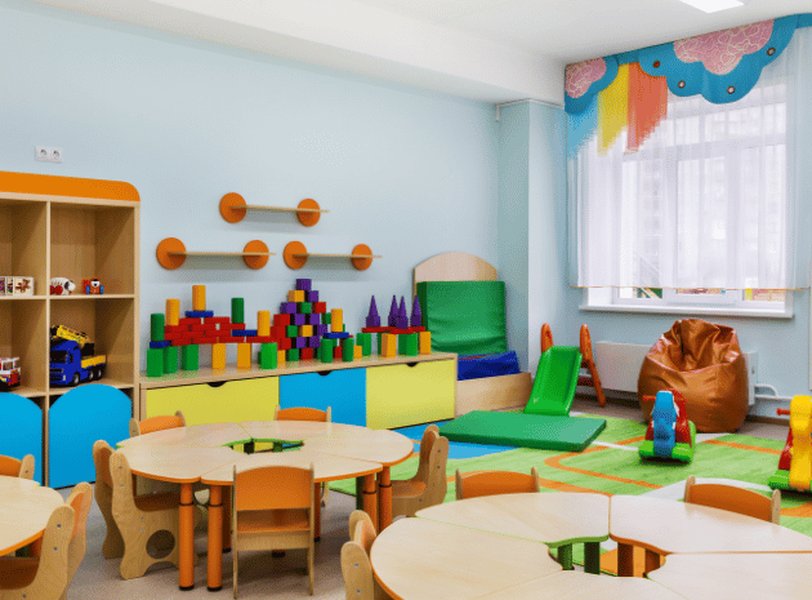
A well-organised space promoting learning through play, aligning with EYFS principles.
Is Childminding Right for You?
Before diving in, consider if this path aligns with your skills and lifestyle. You'll need:
- Patience and a genuine enjoyment of working with children.
- Good communication skills for interacting with children and parents.
- Organisational skills to manage schedules, activities, and paperwork.
- An understanding of child development and safety.
- The ability to create a stimulating and safe environment.
- Willingness to undertake ongoing professional development.
Step 1: Eligibility and Initial Preparation
Meeting Basic Requirements
To become a childminder in the UK, you generally must:
- Be at least 18 years old.
- Have the right to work in the UK.
- Pass criminal record checks (DBS) and demonstrate suitability to work with children. This includes anyone aged 16 or over who lives or works in your home.
- Complete a health declaration form to confirm you are fit to care for children.
Initial Research and Briefings
Many local authorities or organisations like PACEY (Professional Association for Childcare and Early Years) offer pre-registration briefings. These sessions provide an overview of the childminding role, responsibilities, and the registration process. It's a valuable first step to understand the commitment involved.
Step 2: Essential Training and Qualifications
Comprehensive training is the bedrock of a quality childminding service. You must complete specific courses before you can register.
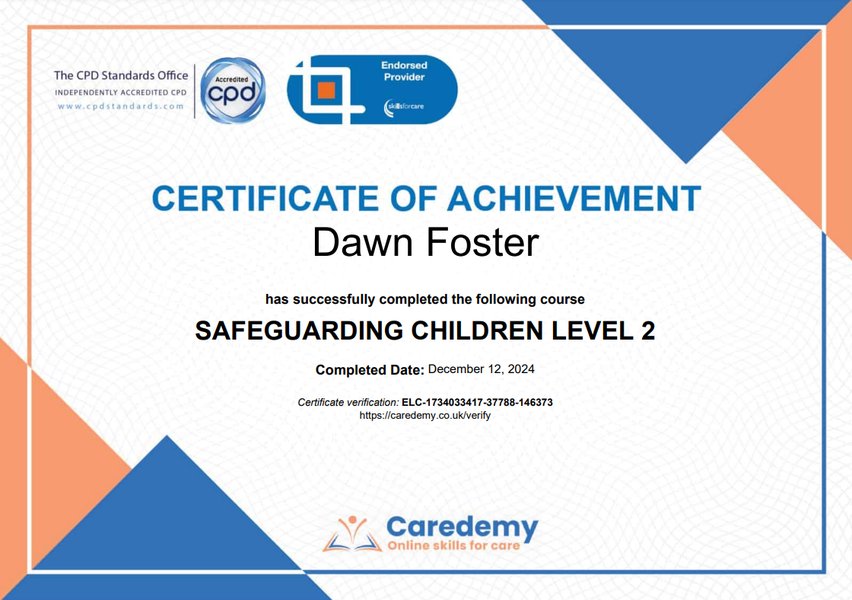
An example of a certificate for safeguarding training, a key requirement for childminders.
Core Training Requirements
Introductory Childminding Course
This course typically covers the Early Years Foundation Stage (EYFS) framework, which sets the standards for learning, development, and care of children from birth to five years old. It will equip you with knowledge on how to implement statutory requirements and foster a positive learning environment.
Paediatric First Aid Course
A 12-hour Paediatric First Aid course is mandatory. This must be completed before registration and renewed every three years to ensure you can respond effectively to any medical emergencies.
Safeguarding and Child Protection Training
Understanding child protection procedures is crucial. This training, often part of the introductory course, ensures you can identify signs of abuse or neglect and know how to report concerns.
Recommended Additional Training
While not always mandatory for initial registration, courses in the following areas can enhance your skills and service offering:
- Food Hygiene
- Special Educational Needs and Disabilities (SEND)
- Behaviour Management
- Business and Administration Skills
Step 3: The Registration Process
Registering as a childminder is a legal requirement. You have two main routes: registering directly with Ofsted or via an Ofsted-registered Childminder Agency (CMA).
Choosing Your Registration Path: Ofsted vs. Childminder Agency
The table below outlines some key differences between these two registration routes to help you decide which best suits your needs.
| Feature | Ofsted Direct Registration | Childminder Agency (CMA) Registration |
|---|---|---|
| Support Level | Primarily self-guided; Ofsted provides regulatory oversight. | Often provides comprehensive support, including training, business advice, and sometimes peer networks. |
| Speed of Setup | Average 12 weeks, can vary depending on DBS checks and application processing. | Can sometimes be quicker (e.g., 2-3 months) due to streamlined support, but still reliant on DBS. |
| Cost | Annual registration fee payable to Ofsted. Initial DBS check costs. | May involve agency fees or a commission structure, but can include training and other services. Annual registration fee might be covered by agency. |
| Autonomy | Full autonomy over your business operations within Ofsted guidelines. | May need to adhere to agency-specific policies and quality standards in addition to Ofsted's. |
| Inspection Process | Inspected by Ofsted directly (at least every 6 years for Early Years Register). | Quality assured by the agency; Ofsted inspects the agency itself. Agencies conduct their own regular checks. |
| Ongoing Support | Access to Ofsted guidance; support often sought from independent organisations (e.g., PACEY, Childminding UK). | Typically includes ongoing mentoring, professional development opportunities, and administrative support. |
Consider factors like the level of support you desire, cost implications, and the degree of autonomy you prefer when making your choice.
Understanding Ofsted Registers
When registering with Ofsted, you'll apply to one or both of these registers:
- Early Years Register: Compulsory if you care for children from birth up to the 31st of August following their fifth birthday. You must follow the EYFS framework.
- Childcare Register: For children from the 1st of September after their fifth birthday up to the age of eight. This has two parts:
- Compulsory part: If you care for children aged 5-7.
- Voluntary part: If you care for children aged 8 and over, or if you meet specific exemption criteria for younger children (e.g., activity-based care).
Disclosure and Barring Service (DBS) Checks
An enhanced DBS check with a check of the barred lists is mandatory for you and anyone aged 16 or over who lives in your home or works on the premises during childminding hours. This is a critical safeguarding measure. You will need to pay for these checks, and the application process can take several weeks.
The Application and Inspection
The Ofsted application process involves submitting detailed forms, your DBS certificates, health declaration, and proof of training. Once your application is processed, Ofsted (or the agency) will arrange a pre-registration visit or inspection to assess your suitability and the safety of your premises. For Ofsted direct registration, this can take up to 12 weeks on average. If successful, you'll receive a certificate of registration.
Step 4: Preparing Your Childminding Setting
Ensuring a Safe and Suitable Environment
Your home (or approved non-domestic premises) must be a safe, secure, and stimulating environment for children. This involves:
- Risk Assessments: Identifying and mitigating potential hazards indoors and outdoors.
- Hygiene Standards: Maintaining cleanliness, especially in food preparation and toilet areas.
- Safety Equipment: Installing items like smoke alarms, carbon monoxide detectors, fireguards, and stair gates where necessary.
- Adequate Space: Ensuring enough indoor and outdoor space for children to play and learn, meeting EYFS requirements.
- Resources and Equipment: Providing age-appropriate toys, books, and learning materials.
If you rent your property, you must obtain written permission from your landlord or housing association to run a childminding business from the premises. Similarly, check your mortgage agreement if you own your home.
Child-to-Adult Ratios
In England, specific ratios must be adhered to:
- A childminder can care for a maximum of six children under the age of eight at any one time.
- Of these six, no more than three may be "young children" (under the age of five).
- Of these young children, normally no more than one may be a baby under the age of one.
Your own children count towards these ratios. Exceptions can apply in certain circumstances (e.g., sibling groups), but these must be justifiable and ensure children's safety and welfare are not compromised.
Visualizing Your Childminding Journey: Key Factors
Starting a childminding business involves balancing various factors. The radar chart below offers a visual representation of these considerations, comparing different approaches or priorities. For instance, 'High Support Model' might represent joining an agency offering extensive services, while 'Lean Startup Model' could be a more independent, cost-conscious approach with Ofsted direct registration.
This chart conceptualizes aspects on a scale (e.g., 3-10, where higher is generally more favorable or represents a greater degree of that factor). It illustrates how different paths might trade off, for example, higher initial costs or less flexibility for more support and potentially faster setup.
Step 5: Legal, Business, and Administrative Setup
Essential Insurance
Public Liability Insurance is a must-have. This covers you if a child is injured in your care, or if property is damaged. Providers like Morton Michel, PACEY, and Childcare.co.uk offer specialist childminder insurance. If you use your car for childminding purposes, ensure your car insurance includes business use. If you employ an assistant, you'll also need Employer's Liability Insurance.
HMRC Registration and Finances
As a self-employed childminder, you must register with HM Revenue & Customs (HMRC) within three months of starting your business. You'll be responsible for keeping accurate financial records (income and expenses) and filing an annual Self Assessment tax return. Consider National Insurance contributions, typically Class 2 and Class 4 for self-employed individuals.
Data Protection (ICO Registration)
If you store personal data about children and their families electronically (e.g., on a computer, tablet, or phone, including digital photos), you will likely need to register with the Information Commissioner's Office (ICO) as a data controller and comply with GDPR (General Data Protection Regulation) and the Data Protection Act 2018. There's an annual fee for this.
Business Plan, Policies, and Contracts
- Business Plan: While it doesn't need to be overly complex, a basic plan outlining your services, fees, target market, and financial projections is advisable.
- Policies and Procedures: You'll need written policies covering areas such as safeguarding, health and safety, complaints, behaviour management, emergency procedures, and equal opportunities. These must be shared with parents.
- Contracts: Use written contracts with parents detailing terms and conditions, hours, fees, payment schedules, holiday arrangements, and notice periods.
Step 6: Financial Considerations
Start-Up Costs
Initial expenses can include:
- Training course fees (introductory, first aid).
- DBS check fees for yourself and relevant others.
- Ofsted/Agency registration fees.
- Insurance premiums.
- Cost of safety equipment, toys, and learning resources.
- ICO registration fee (if applicable).
Childminding can have relatively low start-up costs compared to other businesses, potentially under £1,000, but this varies.
Childminder Start-Up Grant
The government has offered a start-up grant for new childminders. As of recent information (relevant up to March 31, 2025), new childminders who complete their registration between specified dates may be eligible for a £600 grant (£1200 for those registering with a childminder agency who meet certain criteria). Check the latest GOV.UK guidance for eligibility and application deadlines, as these schemes can change.
Setting Fees and Income
Your fees will depend on your location, the services you offer, and local market rates. Research what other childminders in your area charge. Income will vary based on the number of children you care for and your operating hours.
Funded Childcare Hours
Once registered, you may be able to offer government-funded childcare hours for eligible 2, 3, and 4-year-olds (and potentially younger children under new schemes). This can make your service more attractive to parents. Keep abreast of changes to childcare funding, such as the expansion of funded hours for working parents, which started rolling out from April 2024 and continues to expand into 2025.
Mindmap: Navigating the Path to Becoming a Childminder
The journey to becoming a registered childminder involves several interconnected stages. This mindmap provides a visual overview of the critical steps and considerations, from initial preparation through to launching and managing your business.
This mindmap highlights the comprehensive nature of setting up a childminding business, emphasizing the need for thorough preparation across various domains.
Step 7: Launching and Operating Your Business
Marketing Your Services
Once registered, you can start advertising. Consider:
- Word-of-mouth referrals.
- Local parent and toddler groups.
- Online childcare directories (e.g., Childcare.co.uk).
- Social media (with appropriate privacy settings).
- Your local council's Family Information Service.
Ongoing Requirements
Running a childminding business is an ongoing commitment:
- Continuous Professional Development (CPD): Keep your skills and knowledge up-to-date.
- Maintaining Standards: Adhere to the EYFS framework and all registration requirements.
- Record Keeping: Maintain records for attendance, accidents, medication, children's development, finances, etc.
- Inspections: Be prepared for regular inspections by Ofsted or your agency to ensure you continue to meet standards. Ofsted inspects those on the Early Years Register at least once every six years.
- Renewals: Keep your first aid certificate, insurance, and ICO registration (if applicable) current.
- Reporting Changes: Notify Ofsted/your agency of any significant changes (e.g., to your household, address, or serious incidents) within 14 days.
This video, "How to start a Home-Based Childcare Business 2023 | UK Process," offers a practical rundown of the steps involved in setting up your childcare business from home, providing valuable insights for aspiring childminders.
Frequently Asked Questions (FAQ)
How long does it take to become a registered childminder?
Do I need formal qualifications before starting?
Can I childmind if I have my own children?
What are the main ongoing responsibilities once registered?
Is there financial help available to start up?
Conclusion
Starting a childminding business in the UK is a significant undertaking that combines a passion for childcare with entrepreneurial spirit. By diligently following the steps for training, registration, and setting up a safe and stimulating environment, you can build a fulfilling career that provides vital support to families and contributes positively to children's early development. Remember that resources and support are available from organisations like PACEY, Childminding UK, and directly from Ofsted and childminder agencies. With careful planning and dedication, your childminding business can thrive.
Recommended Further Exploration
- What are the specific EYFS learning and development requirements I need to implement as a childminder?
- What are the most effective strategies for marketing my new childminding services to parents in my local area?
- How do I manage the financial aspects, including tax obligations and claiming expenses, as a self-employed childminder in the UK?
- Can I see a detailed comparison of different childminder agencies in the UK, looking at their support services, fees, and requirements?
Referenced Search Results
 assets.publishing.service.gov.uk