
Transform Your Startup: The Blueprint for Building Products Users Crave
Unlock the secrets to effective product development and iteration for startup success.
Highlights: Key Takeaways for Startup Product Builders
- Embrace User Obsession: Ground your product decisions in deep customer understanding, continuous feedback, and empathy to solve real problems.
- Iterate with Purpose (MVP First): Start with a Minimum Viable Product (MVP) and adopt agile, iterative cycles (Build-Measure-Learn) to validate ideas and adapt quickly.
- Leverage Data & Strategy: Define a clear product strategy, prioritize ruthlessly, and use analytics to measure performance and guide data-driven improvements.
The Startup Imperative: Why Product Excellence Matters
Setting the Stage for Success
For a startup, the journey from idea to a thriving business hinges critically on the ability to build and improve products effectively. Unlike established companies with vast resources, startups operate under constraints that demand efficiency, focus, and a deep connection to the market. Simply having a product isn't enough; it needs to solve a genuine problem, resonate with users, and adapt to evolving needs. Excelling at product development isn't just a goal—it's a fundamental requirement for survival and growth, enabling you to achieve product-market fit and build a sustainable competitive advantage.
Foundational Pillars of Startup Product Development
Deeply Understanding Your Users (Customer-Centricity)
The most successful products are built with the user at the core. This means moving beyond assumptions and actively seeking to understand your target audience's needs, pain points, motivations, and behaviors.
Gathering Actionable Feedback
Actively solicit feedback through multiple channels. Conduct customer interviews and surveys to uncover qualitative insights. Analyze usage data and analytics to understand how users interact with your product in real-world scenarios. Implement customer feedback systems to systematically collect, organize, and prioritize suggestions and complaints. Remember, even negative feedback is valuable; addressing complaints effectively can turn detractors into loyal advocates.
Cultivating Empathy
Empathy involves putting yourself in your users' shoes. Try to understand their context, challenges, and desired outcomes. Create user personas and map out customer journeys to visualize their experience. This empathetic approach ensures you're solving problems that truly matter to your audience, leading to more intuitive and valuable product features.
Crafting a Clear Product Strategy
A well-defined product strategy acts as your roadmap, guiding development efforts and ensuring alignment across your team. It prevents wasted effort on features that don't contribute to core goals.
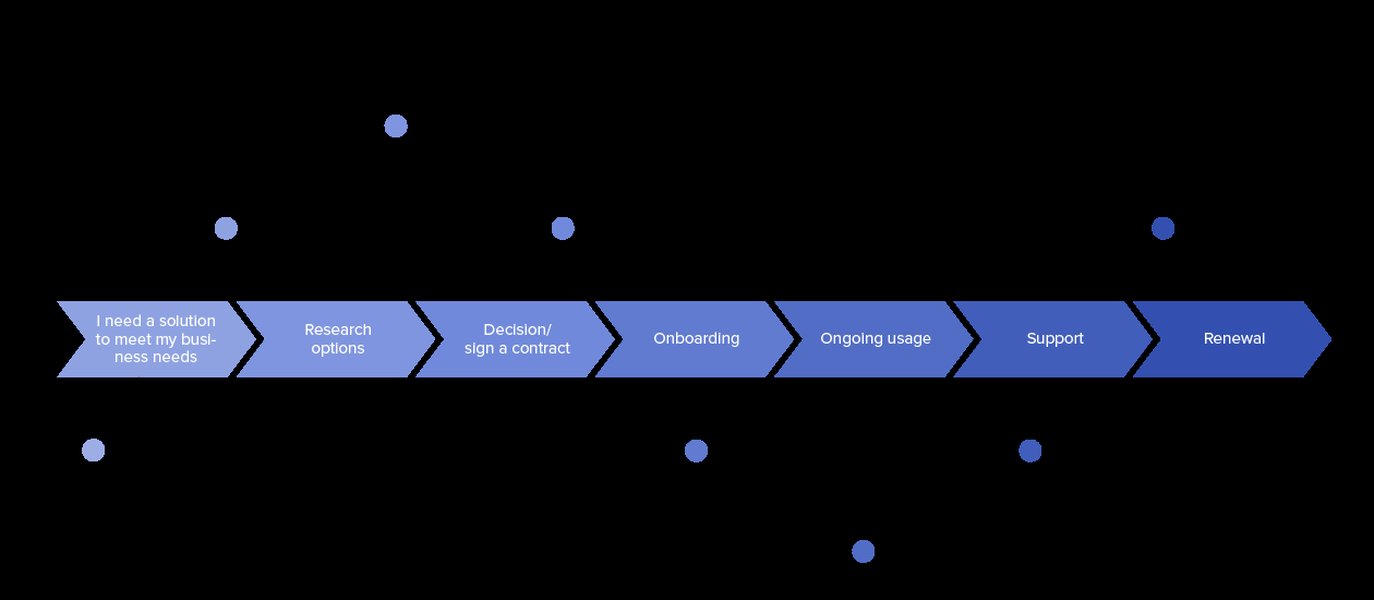
Visualizing the key steps involved in strategic product design for startups.
Defining Your Unique Value Proposition
Clearly articulate what problem your product solves, who it solves it for, and how it differs from competitors. What unique value does it offer? This core message should inform all product decisions and communication.
Prioritizing Ruthlessly
Startups invariably have more ideas than resources. Effective prioritization is crucial. Focus on features and improvements that deliver the highest value to users and align most closely with your strategic business objectives. Frameworks like RICE (Reach, Impact, Confidence, Effort) can help objectively score potential initiatives. Avoid trying to solve too many problems at once; concentrate on excelling at the core functionality first.
Embracing Agile and Iterative Methodologies
Static product plans quickly become outdated. Startups thrive by embracing flexibility and continuous learning through agile and iterative development approaches.
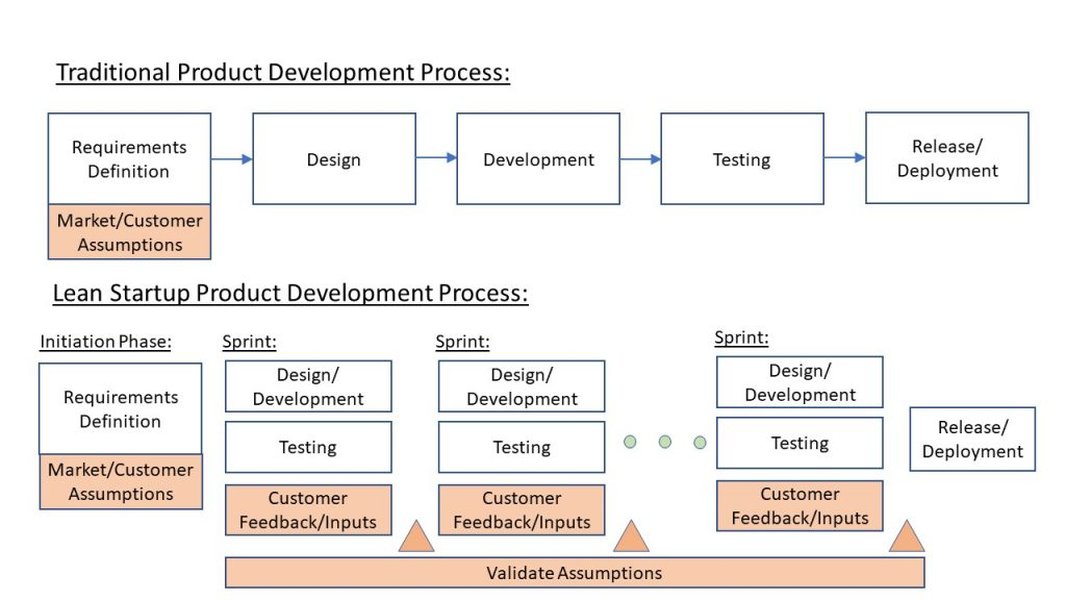
The Lean Startup methodology emphasizes iterative cycles of building, measuring, and learning.
The Power of the Minimum Viable Product (MVP)
Instead of aiming for a perfect, feature-complete product from day one, start with an MVP. An MVP is the simplest version of your product that includes the core features necessary to solve the primary user problem and deliver initial value. The goal of an MVP is not to be minimal in quality, but minimal in scope, allowing you to launch quickly, gather real-world user feedback, and validate your core assumptions with the least amount of effort and investment.
The Build-Measure-Learn Loop
Iterative development, often associated with Lean Startup and Agile methodologies, revolves around cycles of building, measuring, and learning. You build a feature or product version (like an MVP), measure its performance and gather user feedback using analytics and direct interaction, and then learn from that data to inform the next iteration. This continuous loop allows you to systematically de-risk development, adapt to market feedback, and consistently improve your product based on evidence rather than guesswork.
Visualizing the Iterative Process
The following mindmap illustrates the core concepts of an iterative approach to startup product improvement, emphasizing the cycle from idea generation through user feedback and refinement.
Leveraging Data and Design for Superior Products
Data-Driven Decision Making
Intuition has its place, but data provides objective insights into how your product is performing and where improvements are needed. Integrating analytics into your product development lifecycle is essential.
Key Performance Indicators (KPIs) that Matter
Identify and track KPIs aligned with your product goals. Common startup metrics include user acquisition cost (CAC), customer lifetime value (CLTV), retention rate, churn rate, daily/monthly active users (DAU/MAU), feature adoption rates, and Net Promoter Score (NPS) or customer satisfaction (CSAT). Regularly monitor these metrics to gauge progress and identify areas needing attention.
Utilizing Analytics Tools
Implement product analytics tools (e.g., Mixpanel, Amplitude, Heap, Google Analytics) to understand user flows, identify drop-off points, segment users, and measure the impact of changes. Leverage data to personalize user experiences, such as tailoring content or recommendations based on behavior, which can significantly improve engagement and retention.
The Crucial Role of User Experience (UX) and Design
A technically functional product isn't enough; it must also be usable, intuitive, and ideally, enjoyable. Investing in UX design is investing in user satisfaction, adoption, and retention.

Prototyping and collaborative design sessions are key to refining user experience.
Prototyping and Usability Testing
Before committing extensive development resources, create prototypes – from simple wireframes to interactive mockups. Test these prototypes with real users to gather feedback on workflows, navigation, and overall ease of use. Usability testing helps uncover friction points and design flaws early, saving significant rework later.
Designing for Delight and Retention
Focus on creating clean, intuitive interfaces that guide users effortlessly. Pay attention to details, micro-interactions, and performance to create a polished feel. A positive user experience is a major driver of retention; users who find long-term value and ease of use in your product are far more likely to stick around. Remember, studies show that even a small increase (e.g., 5%) in retention can lead to substantial profit increases (25%-95%).
Optimizing Your Development Workflow
Fostering Cross-Functional Collaboration
Product development is a team sport. Break down silos between product management, design, engineering, marketing, and sales. Encourage regular communication, shared understanding of goals, and joint ownership of product success. Tools like Slack, Asana, or Jira can facilitate collaboration, but fostering a culture of transparency and mutual respect is paramount.
Implementing Effective Testing Strategies
Rigorous testing ensures product quality, stability, and performance.
From Alpha/Beta to Continuous Testing
Implement various testing phases, including internal alpha testing and external beta testing with target users, to identify bugs and gather qualitative feedback before a wider launch. Integrate automated testing into your development pipeline for continuous quality assurance.
Leveraging AI for Quality Assurance
Consider using AI-driven testing tools to automate repetitive QA tasks, detect bugs earlier in the development cycle, predict potential issues, and improve overall test coverage and efficiency, especially as your product grows in complexity.
Maintaining Momentum and Transparency
The Value of a Changelog
Keep a public or internal changelog – a chronological record of product updates, feature releases, bug fixes, and enhancements. This practice keeps users and internal stakeholders informed about progress, highlights the value you're continuously adding, and manages expectations.
Evaluating Startup Product Development Effectiveness
How does your startup's product development process stack up against best practices? The following radar chart provides an opinionated visualization comparing hypothetical startup archetypes across key dimensions of product development maturity. Use it as a conceptual tool to reflect on your own team's strengths and potential areas for improvement.
This chart highlights common patterns: ideal startups excel across most dimensions, typical startups show moderate capabilities with weaknesses in areas like data use, while struggling startups lag significantly, often lacking strategic focus and robust processes.
Essential Tools and Technologies for Startups in 2025
Leveraging the right tools can significantly streamline your product development process. Here’s a look at key categories and their purpose:
| Tool Category | Purpose | Examples / Techniques |
|---|---|---|
| Feedback Collection | Gathering qualitative and quantitative insights from users. | Survey tools (Typeform, SurveyMonkey), In-app feedback widgets (Hotjar, UserVoice), Interview scheduling tools. |
| Product Analytics | Tracking user behavior, measuring KPIs, understanding product usage. | Mixpanel, Amplitude, Heap, Google Analytics, FullStory (session replay). |
| Prototyping & Design | Creating wireframes, mockups, and interactive prototypes for testing and iteration. | Figma, Sketch, Adobe XD, InVision, Balsamiq (low-fidelity). |
| Project Management & Collaboration | Organizing tasks, tracking progress, facilitating team communication. | Jira, Asana, Trello, Monday.com, Slack, Microsoft Teams. |
| QA & Testing | Ensuring product quality, identifying bugs, automating testing processes. | Test management tools (TestRail), Automated testing frameworks (Selenium, Cypress), AI-driven testing platforms, Beta testing platforms (TestFairy). |
| Version Control | Managing code changes, facilitating collaboration among developers. | Git (Platforms: GitHub, GitLab, Bitbucket). |
Choosing the right stack depends on your specific needs, team size, and budget, but integrating tools across these categories creates a more efficient and data-informed workflow.
From Concept to Market: A Guiding Video
Understanding the end-to-end process of bringing a product to life is crucial. This video provides a practical overview of the journey from initial concept through to market launch, touching upon key stages relevant to any startup founder looking to build and refine their product development approach.
The video covers essential steps like idea validation, prototyping, sourcing, manufacturing (if applicable), and launch strategies. While every startup's path is unique, the fundamental principles discussed offer valuable context for structuring your own product development efforts and avoiding common missteps.
Avoiding Common Startup Product Pitfalls
Many promising startups falter due to avoidable product development mistakes. Being aware of these common pitfalls can help you navigate the challenges more effectively:
Building Without Validation
Falling in love with an idea without rigorously testing whether customers actually need or want it is a classic mistake. Always validate assumptions with real users before investing significant resources.
Solving Too Many Problems at Once
Trying to be everything to everyone often results in a product that excels at nothing. Focus on solving one core problem exceptionally well before expanding scope.
Ignoring User Feedback
Dismissing or failing to systematically collect and act upon user feedback leads to products that drift away from market needs. Feedback is a gift – use it to guide iteration.
Premature Scaling or Over-engineering
Building complex, highly scalable architecture before validating product-market fit can be a waste of resources. Similarly, over-engineering features based on assumptions rather than evidence adds unnecessary complexity and slows down iteration.
Frequently Asked Questions (FAQ)
What is an MVP and why is it important for startups?
An MVP, or Minimum Viable Product, is the version of a new product that allows a team to collect the maximum amount of validated learning about customers with the least effort. It includes only the core features needed to solve the primary user problem and deliver initial value. It's crucial for startups because it allows them to test hypotheses, gather real-world feedback, reduce development costs and time, and iterate faster based on market response, minimizing the risk of building something nobody wants.
How often should a startup iterate on its product?
There's no single answer, but the principle is "as quickly as feasible while delivering meaningful value." Many successful startups use Agile methodologies with sprint cycles typically lasting 1-4 weeks. The goal is to maintain a continuous Build-Measure-Learn loop. The frequency depends on factors like team size, product complexity, the significance of the changes, and the ability to gather and analyze feedback effectively. The key is consistency and learning from each cycle.
What are the best ways to gather user feedback?
A multi-channel approach is best:
- Direct Interviews: Deep qualitative insights into needs and pain points.
- Surveys: Gather structured feedback at scale (NPS, CSAT, feature requests).
- In-App Feedback Tools: Allow users to provide context-specific feedback easily.
- Usability Testing: Observe users interacting with prototypes or the product.
- Analytics Data: Understand user behavior, feature usage, and drop-off points.
- Social Media & Community Forums: Monitor discussions about your product.
- Customer Support Interactions: Analyze support tickets for common issues and requests.
How can data analytics improve product decisions?
Data analytics provides objective evidence to complement intuition. It helps startups:
- Identify User Behavior Patterns: Understand how users navigate the product, which features they use most/least, and where they encounter friction.
- Measure Feature Impact: Quantify the success of new features or changes through A/B testing and KPI tracking.
- Segment Users: Analyze different user groups (e.g., power users vs. new users) to tailor experiences or identify target segments.
- Prioritize Development: Focus resources on improvements likely to have the biggest impact on key metrics like retention or conversion.
- Track Product Health: Monitor KPIs over time to understand growth, engagement, and potential issues.
What is Product-Market Fit?
Product-Market Fit (PMF) means being in a good market with a product that can satisfy that market. Coined by Marc Andreessen, it's the point where a startup has found a significant group of target customers whose needs are met by the product, leading to strong demand, usage, and often organic growth. Achieving PMF is a critical milestone, indicating the product resonates and has potential for sustainable growth. Before PMF, startups focus on iterating and validating; after PMF, the focus often shifts to scaling.
Recommended Reading & Further Exploration
- Explore specific techniques for validating product ideas with a minimal budget.
- Learn how to build an effective MVP specifically for a SaaS product.
- Discover best practices for user retention strategies tailored to early-stage startups.
- Find out how to accurately measure product-market fit for your startup.
References

Last updated May 5, 2025