
Unlocking STEM Futures: Groundbreaking Research and Initiatives from Leading Education Institutions
Discover how Columbia's Teachers College, Harvard Graduate School of Education, and Bank Street College of Education are shaping the landscape of STEM learning.
The fields of Science, Technology, Engineering, and Mathematics (STEM) are paramount for fostering critical 21st-century skills and addressing global challenges. Esteemed institutions like Columbia's Teachers College, Harvard Graduate School of Education, and Bank Street College of Education are at the forefront of advancing STEM education through innovative research, comprehensive programs, and impactful outreach. This overview synthesizes their key contributions, highlighting significant articles, research papers, and documentation that showcase their commitment to enhancing STEM learning for all.
Key Highlights in STEM Education Advancement
- Equity and Inclusivity as Core Pillars: These institutions champion initiatives to broaden participation in STEM, particularly for underrepresented groups, by fostering inclusive learning environments and addressing systemic barriers.
- Revolutionizing Teacher Preparation: A strong emphasis is placed on developing highly effective STEM educators through cutting-edge training programs, peer support models, and research-backed pedagogical strategies.
- Fostering Early Engagement and Real-World Connections: Efforts are dedicated to igniting and sustaining student interest in STEM from an early age through engaging curricula, hands-on experiences, and by demonstrating the real-world applications and societal impact of STEM fields.
Columbia's Teachers College: Cultivating STEM Excellence
Pioneering Teacher Preparation and Interdisciplinary Research
Columbia University's Teachers College has a long-standing tradition of excellence in education, with significant contributions to STEM learning and teacher development. Their approach is characterized by rigorous research, interdisciplinary collaboration, and a commitment to improving educational practices.
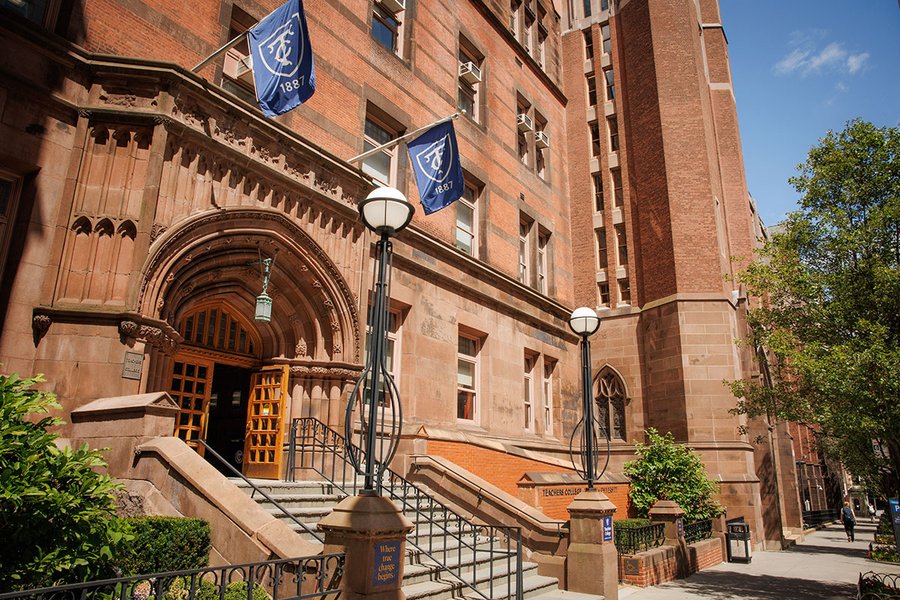
Campus of Teachers College, Columbia University.
Innovations in STEM Teacher Education
A cornerstone of Teachers College's STEM efforts is the enhancement of teacher preparedness. A recent project focuses on exploring effective strategies for STEM teacher preparation, utilizing a peer support model and video analysis to develop equitable noticing skills among teacher candidates. This initiative aims to create a replicable model that can be adopted by other programs to address the challenges faced by STEM educators.
The Math, Science, Technology (MST) program at Teachers College is renowned for its interdisciplinary research and practice. It focuses on improving curriculum and instruction across STEM disciplines, fostering a deep understanding of how these subjects interconnect and can be taught effectively.
Research and Resources for Diverse Learners
Teachers College is also engaged in research exploring how students from diverse cultural and socio-economic backgrounds, and with varying academic performance levels, engage with STEM education. This research is crucial for developing inclusive and equitable STEM learning experiences. The Community College Research Center (CCRC) at Teachers College has conducted studies on STEM transfer program momentum metrics, identifying key indicators like early completion of calculus to support student success in STEM pathways.
Furthermore, Teachers College provides valuable online learning resources for families and educators, offering practical ways to engage children in STEM-related activities at home. These resources often emphasize experiential learning, discussion, and play. The Teachers College Record, a journal published continuously since 1900, frequently includes cutting-edge research and analysis relevant to STEM education.
Harvard Graduate School of Education (HGSE): Championing Equity and Innovation in STEM
Driving Systemic Change and Expanding Access
Harvard Graduate School of Education (HGSE) is a leading voice in education reform, with a strong focus on preparing leaders and innovators who can expand opportunities and improve outcomes for learners worldwide. Their work in STEM is characterized by a commitment to evidence-based practices, equity, and the integration of technology.
Harvard's Science and Engineering Complex (SEC) in Allston, a hub for STEM innovation.
Fostering Inclusive STEM Environments
HGSE actively works to promote STEM education and address underrepresentation. The "YOU Belong in STEM" initiative, supported by the Biden-Harris administration, aims to dismantle the perception that STEM is not for everyone. This initiative provides communities with blueprints to support STEM education for all students, emphasizing belonging from early education through higher learning. HGSE also hosts critical discussions and publishes research on the factors contributing to the underrepresentation of women and people of color in computer science and other STEM fields, featuring insights from leaders like Reshma Saujani, founder of Girls Who Code.
Advancing Pedagogical Frontiers
Innovation in teaching and learning is a hallmark of HGSE's STEM efforts. Research explores how technologies like augmented reality (AR) and virtual ecosystems can lead to a deeper understanding of complex scientific concepts, such as ecosystem science, thereby building scientific literacy in middle schoolers. The rise of data science is also examined for its potential to transform our understanding of learning, teaching, and schooling. Curriculum development initiatives at HGSE focus on expanding computer science education to include crucial connections to social and ethical issues, and on making science accessible through real-life applications like agriculture and food sustainability.
The Learning Design, Innovation, and Technology (LDIT) Master’s program at HGSE is STEM-eligible and focuses on applying technology and innovative pedagogy to enhance STEM learning outcomes. Further demonstrating Harvard's commitment to STEM, the Harvard Business School MBA program is now STEM-designated, highlighting the growing importance of STEM skills in business leadership.
Bank Street College of Education: Nurturing Lifelong STEM Learners
Progressive Education and Early STEM Engagement
Bank Street College of Education is a distinguished leader in progressive education, known for its dedication to experiential learning, equity, and fostering an inclusive educational environment. While their broader focus is on progressive pedagogy and teacher preparation, Bank Street significantly contributes to STEM education, particularly in early childhood and elementary grades.
Cultivating Early STEM Literacy
A flagship initiative at Bank Street is the annual **Cook Prize**, awarded to outstanding STEM-focused picture books for children aged 8-10. Named in memory of two influential educators, Donalia Cook and Michael Cook, the prize encourages excellence in informational book publishing and underscores Bank Street's commitment to fostering STEM literacy from a young age. This initiative provides invaluable resources for educators and families seeking to engage young learners with STEM concepts in accessible and captivating ways.
Research, Resources, and Equitable Practices
Bank Street's "EDUCATE" platform serves as a repository for the intellectual work of its community, including research papers, reports, and dialogues on progressive STEM education approached through an equity lens. The Bank Street Education Center actively publishes materials focusing on learner-centered approaches to strengthen instructional practice and promote systemic change in STEM education.
The **Tiorati Science Program for Schools** is another notable Bank Street initiative, offering professional development that connects classroom STEM learning with hands-on experiences in natural environments, thereby promoting a deeper understanding of environmental science. Their "Occasional Paper Series" often features work that explores contemporary issues in education, including contributions related to STEM, such as Tia C. Madkins' work on "#BlackGirlMagic" and its implications for creating joyful and just STEM learning experiences for Black girls.
Bank Street's teacher preparation programs consistently emphasize diversity, equity, and inclusion within STEM fields. Initiatives like "Prepared To Teach" re-envision higher education partnerships with public schools through integrated teacher preparation programs that include extended clinical practice, supporting the broader educational ecosystem that underpins robust STEM learning.
Comparative Focus Areas in STEM Education
The following chart offers a visual comparison of the general emphasis these three institutions place on various dimensions of STEM education, based on their documented initiatives and research focus. The scores are indicative and aim to highlight relative strengths and priorities.
This chart visualizes how each institution contributes uniquely to the multifaceted domain of STEM education, reflecting their distinct missions and areas of expertise. Columbia's Teachers College shows strong emphasis on teacher preparation and research output. Harvard GSE stands out in equity focus, policy influence, and innovative pedagogy. Bank Street College leads in early childhood education and maintains a strong equity focus through its progressive education model.
Interconnected STEM Education Efforts
The mindmap below illustrates the primary STEM education focus areas and key initiatives within Columbia's Teachers College, Harvard Graduate School of Education, and Bank Street College of Education. It highlights how these institutions contribute to the broader goal of advancing STEM learning through distinct yet complementary approaches.
Professional Development"] PeerSupport["Peer Support Models"] VideoAnalysis["Video Analysis"] CrossCultural["Cross-Cultural Research"] OnlineResources["Online Learning Resources"] CCRC["CCRC: STEM Transfer
Momentum Metrics"] HarvardGSE["Harvard Graduate School of Education"] EquityInSTEM["Equity & Inclusion Focus"] YouBelong["'YOU Belong in STEM' Initiative"] Underrepresentation["Addressing Underrepresentation
(Gender, Race)"] InnovativePedagogy["Innovative Pedagogy"] ARVR["Augmented/Virtual Reality"] DataScience["Data Science in Education"] EthicalCS["Computer Science &
Social/Ethical Issues"] LDIT["LDIT Program"] STEMMBA["STEM-Designated MBA"] BankStreet["Bank Street College of Education"] EarlySTEM["Early Childhood STEM Focus"] CookPrize["Cook Prize for STEM
Picture Books"] ProgressiveEd["Progressive Education Approach"] ExperientialLearning["Experiential Learning"] TioratiProgram["Tiorati Science Program"] EducateRepo["'EDUCATE' Repository"] EquityFocusOPS["Equity-Driven Research
(Occasional Paper Series)"]
This mindmap showcases the diverse strategies employed by these leading institutions. Columbia's Teachers College emphasizes robust teacher training and foundational research. Harvard GSE champions large-scale equity initiatives and cutting-edge pedagogical innovations. Bank Street College focuses on early engagement and progressive, equitable educational practices, particularly through literacy and hands-on learning.
Institutional Initiatives at a Glance
The following table summarizes some of the key STEM-related programs, focus areas, and notable resources from each institution, providing a quick overview of their distinct contributions to the field.
| Institution | Key STEM Initiatives/Focus Areas | Notable Publications/Resources |
|---|---|---|
| Columbia's Teachers College | Teacher Preparation (peer support, video analysis), MST (Math, Science, Technology) Program, Cross-cultural STEM research, STEM Transfer Momentum Metrics (CCRC), Online learning resources for families. | Teachers College Record, "New STEM Project Explores Effective Strategies for Teacher Preparation" article, CCRC research reports. |
| Harvard Graduate School of Education | "YOU Belong in STEM" initiative, Equity & Inclusion in STEM, Innovative Pedagogy (AR/VR, Data Science), Learning Design, Innovation, and Technology (LDIT) Program, STEM-designated MBA, Connecting CS to social/ethical issues. | Ed. Magazine articles, "Increasing access and opportunity in STEM crucial, say experts" report, Research on underrepresentation in STEM. |
| Bank Street College of Education | Cook Prize for STEM Picture Books, Early Childhood STEM Literacy, Tiorati Science Program for Schools, Progressive & Equitable Education, Experiential Learning. | "EDUCATE" repository, Occasional Paper Series (e.g., Tia C. Madkins on #BlackGirlMagic), Cook Prize winners and finalist lists, Bank Street Education Center policy publications. |
Addressing Racialized STEM Education: A Harvard Perspective
A critical aspect of improving STEM education involves understanding and dismantling systemic inequities. Harvard Graduate School of Education frequently engages with these complex issues. The following video, "Black, Brown, Bruised: How Racialized STEM Education Stifles Innovation," features a discussion on the impact of racialized experiences on students in STEM and explores pathways toward more equitable and inclusive learning environments. This exemplifies the type of critical discourse fostered at HGSE to drive meaningful change in STEM fields.
This discussion highlights the urgent need to address how educational experiences can differ significantly based on race and ethnicity, and how these differences can impact students' persistence and success in STEM. It underscores the importance of creating learning spaces where all students feel valued, supported, and empowered to contribute their unique perspectives to scientific and technological advancement.
Frequently Asked Questions (FAQ)
What is a primary STEM education focus at Columbia's Teachers College?
How is Harvard Graduate School of Education working to improve equity in STEM?
What is the significance of the Cook Prize awarded by Bank Street College of Education?
Are there common themes in how these three institutions approach STEM education?
Conclusion
Columbia's Teachers College, Harvard Graduate School of Education, and Bank Street College of Education are making invaluable contributions to the advancement of STEM education. Through rigorous research, innovative program development, a commitment to equity, and dedicated teacher preparation, these institutions are shaping how STEM is taught and learned. Their collective efforts not only enhance academic outcomes but also strive to cultivate a diverse and skilled generation equipped to tackle complex global challenges and drive future innovation. The wealth of articles, research papers, and documentation they produce serves as a vital resource for educators, policymakers, and researchers worldwide, pushing the boundaries of STEM knowledge and practice.
Recommended Further Exploration
- Investigate how these institutions partner with K-12 schools to implement and enhance STEM programs.
- Discover the cutting-edge technologies these colleges are incorporating into STEM teaching methodologies.
- Delve into the diverse research methodologies employed in STEM education studies at these institutions.
- Examine the influence of policy recommendations from these colleges on national STEM education policies and strategies.
References
Last updated May 21, 2025