
Microbial Steroid Biotransformation
Exploring the Microbial Conversion Routes to Novel Steroid Derivatives
Key Takeaways
- Precision and Selectivity: Microorganisms catalyze highly regio- and stereospecific reactions that modify steroid molecules in ways that are challenging with traditional chemistry.
- Green and Economical Process: The biotransformation approach uses mild conditions, aqueous media, and eco-friendly processes, providing substantial advantages over conventional chemical synthesis.
- Industrial Relevance and Future Prospects: Advanced microbial strategies, including metabolic engineering and synthetic biology, are continuously enhancing production yields and expanding the portfolio of steroid-based pharmaceuticals.
Overview and Fundamental Concepts
Microbial steroid biotransformation is a process in which a variety of microorganisms—primarily bacteria, fungi, and occasionally yeast—are harnessed to transform steroid molecules by introducing, removing, or rearranging chemical functional groups. The procedure leverages the natural enzymatic machinery of microbes, facilitating chemical modifications that are pivotal in developing steroid hormones, anti-inflammatory agents, contraceptives, and immunosuppressants.
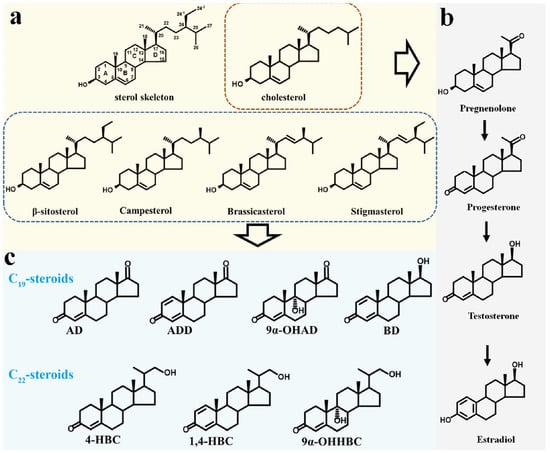
Steroids, known for their rigid polycyclic structure derived from the gonane nucleus (four fused rings), perform key biological roles such as membrane stabilization, regulation of cellular functions, and acting as signaling molecules. Microbial biotransformation specifically focuses on altering the oxidation state, adding or removing substituents, and even cleaving carbon chains to generate novel compounds or intermediates that serve as the foundation for the synthesis of active pharmaceutical ingredients (APIs).
Historical Background and Industrial Impact
The utilization of microbes for steroid transformation traces back several decades. Initially, microbial processes were employed to modify simple steroid molecules extracted from natural sterols, such as cholesterol and phytosterols. Historically, the multi-step chemical synthesis routes for corticosteroids and other steroid hormones involved harsh conditions, low yields, and an extensive use of reagents. As the limitations of chemical methods became apparent, biotechnologists began investigating the enzymatic capabilities of microorganisms that uniquely perform modifications like hydroxylation, oxidation, reduction, and side-chain cleavage.
Industries soon recognized that microbial biotransformation offered the potential to reduce the number of synthetic steps. For example, the production of cortisone, traditionally synthesized using more than 30 chemical reactions, was dramatically simplified by integrating microbial fermentation steps. The benefits—such as lower economic costs, fewer hazardous by-products, and improved overall yields—propelled this field into a separate niche of industrial biotechnology.
Mechanistic Insights and Reaction Types
The transformative power of microbial steroid biotransformation lies in the enzymes produced by microorganisms. These enzymes are capable of catalyzing a broad spectrum of reactions, including:
Oxidation and Hydroxylation
Oxidation processes, often mediated by cytochrome P450 enzymes and monooxygenases, introduce hydroxyl groups into the steroid backbone. Hydroxylation is especially valued for its regioselectivity, as these enzymes can target specific carbon atoms (such as the C-11, C-17, or C-7 positions) leading to compounds with altered pharmacological properties. In many cases, the introduction of a hydroxyl group enhances solubility or alters receptor binding, thereby modulating the therapeutic action of the final steroid product.
Reduction Reactions
The reduction of specific carbonyl groups within steroid molecules results in the formation of hydroxysteroids. Reduction reactions are often essential to transform steroids into biologically active forms. For instance, the conversion of ketone intermediates into secondary alcohols can be pivotal in setting the stage for further chemical modifications.
Side-Chain Cleavage and Esterification
Microbial enzymes facilitate the fragmentation of side chains attached to the steroid nucleus. This cleavage is a crucial step in producing steroidal intermediates that can be chemically or enzymatically modified further to yield hormone analogs. Additionally, esterification reactions, involving the addition of acetyl or other ester groups, are used to fine-tune the stability and activity of the steroid compounds.
Isomerization and Ring Modification
Some microorganisms are capable of catalyzing isomerization reactions, leading to shifts in the stereochemical configuration of the steroid skeleton. This process can yield isomers with significantly different biological activities. In certain cases, enzymes may even promote the cleavage or reconstruction of the steroid ring structure, although such transformations require exceptionally controlled conditions due to the inherent stability of the gonane nucleus.
Biocatalysts and Microbial Platforms
The success of microbial steroid biotransformation depends greatly on the type of microorganisms employed and the engineering approaches applied to optimize their enzymatic profiles. Key microorganisms include:
Bacterial Systems
Bacteria, particularly actinobacteria such as Mycobacterium, Gordonia, and Rhodococcus species, have been extensively studied for their capacity to degrade and modify steroids. These organisms produce a diverse array of enzymes capable of effective oxidation, reduction, and dehydrogenation reactions on the steroid nucleus. Many industrial processes utilize these bacterial strains to convert natural sterols into steroids that serve as intermediates for subsequent chemical synthesis steps.
Fungal Systems
Filamentous fungi, including species from Aspergillus, Rhizopus, and Cunninghamella, are known for their robust hydroxylation activity. Fungi have the advantage of producing high amounts of cytochrome P450 enzymes, which are critical for introducing hydroxyl groups into complex steroid substrates. Their ability to operate under relatively mild conditions makes them attractive for industrial biotransformation processes.
Yeast Systems and Recombinant Approaches
In recent years, yeast systems, particularly Saccharomyces cerevisiae, have emerged as promising hosts for steroid biotransformation. Advances in genetic engineering allow these organisms to express heterologous enzymes, including those not natively present in yeast. The application of recombinant DNA technology enables the reconstitution of entire steroid biosynthetic pathways, paving the way for de novo synthesis of steroid hormones directly from simple carbon sources.
Process Integration and Reaction Optimization
The integration of microbial biotransformation steps within industrial processes has facilitated the production of steroid drugs through multi-step procedures that combine both biological and chemical synthesis. A typical process involves the initial microbial conversion of natural sterols into simpler steroidal intermediates, followed by chemical modifications to tailor these intermediates into the final active pharmaceutical ingredients.
Optimization of the microbial process involves rigorous control of environmental conditions such as pH, temperature, substrate concentration, and cofactor availability. Efforts to improve the efficiency of biotransformation reactions also focus on the expression levels of specific steroid-modifying enzymes. Traditional screening methods and modern techniques, such as adaptive laboratory evolution (ALE) and CRISPR-based genome editing, have been instrumental in constructing robust microbial cell factories with enhanced transformation yields.
Challenges in Biotransformation
Although microbial steroid biotransformation presents numerous advantages, several challenges must be addressed to fully realize its potential:
- Substrate Solubility: Many steroid substrates exhibit low solubility in aqueous media, necessitating the use of solubilizing agents or alternative reaction systems (e.g., biphasic or emulsification techniques) to enhance bioavailability.
- Product Toxicity: Some steroids and their intermediates can be toxic to microbial cells, which affects growth and transformation efficiency. Strategies such as immobilization of cells or fed-batch fermentation are employed to mitigate these issues.
- Yield and Selectivity: Achieving high yields and product selectivity is often challenging, as microbial processes can generate mixtures of steroid isomers and intermediates. Selectivity can be improved by genetic modification of the expression profiles of critical enzymes and disruption of unwanted metabolic pathways.
- Scale-Up Limitations: The transition from laboratory-scale experiments to industrial production requires robust process control to maintain enzyme activity, mass transfer, and overall process efficiency.
Technological Advances and Future Perspectives
The future of microbial steroid biotransformation is closely linked to technological innovation in genetic engineering, metabolic pathway optimization, and process engineering. Researchers are now exploring various approaches to streamline and enhance biotransformation procedures:
Metabolic Engineering and Synthetic Biology
Metabolic engineering plays a pivotal role in modifying microbial strains to achieve higher product yields and improved selectivity. Techniques such as gene knockout, overexpression of rate-limiting enzymes, and the introduction of heterologous genes are used to redirect metabolic fluxes toward desired steroid intermediates. The rising field of synthetic biology offers tools for constructing custom microbial platforms that can perform multi-step conversions in a single fermentation process.
Whole-Cell and Enzyme Biocatalysis
Both whole-cell biocatalysis and isolated enzyme systems have been developed to tackle steroid modifications. Whole-cell systems offer the advantage of self-contained cofactor recycling and compatibility with complex multi-step reactions, whereas isolated enzymes provide the possibility for fine control over reaction conditions and catalyst purity. Researchers are actively exploring strategies to fuse these approaches for optimum performance.
Two-Phase and Immobilized Systems
To circumvent issues of solubility and toxicity, modern research employs two-phase reaction systems where an organic solvent is paired with the aqueous phase to enhance substrate availability while protecting the microbial cells. In addition, immobilization techniques, where cells are entrapped within a matrix, have been shown to improve the stability of biocatalysts during long-term operations.
Process Optimization and Continuous Fermentation
Innovations in reactor design, including continuous fermentation and in situ product removal strategies, can substantially raise volumetric productivity. Coupled with advancements in process automation and real-time monitoring, these strategies allow sustained operation under optimal conditions while minimizing downtime associated with batch processes.
Case Study: Reaction Types and Enzymatic Roles
The following table provides a summary of key reactions in microbial steroid biotransformation, the enzymes involved, and typical steroid targets:
| Reaction Type | Enzymatic Role | Common Steroid Targets |
|---|---|---|
| Hydroxylation | Cytochrome P450 monooxygenases, monooxygenases | Progesterone, testosterone, cortisone |
| Oxidation/Reduction | Dehydrogenases, reductases | Conversion of ketones to alcohols and vice versa |
| Side-Chain Cleavage | Specific oxygenases and lyases | Cholesterol, phytosterols |
| Esterification | Acetyltransferases | Modified steroid intermediates for improved stability |
| Isomerization | Isomerases | Rearrangement of steroid configurations |
This table illustrates that microbial enzymatic systems are remarkably versatile, capable of performing sequential and sometimes simultaneous reactions to generate highly specific steroid derivatives. The combination of these reaction pathways with advanced genetic modifications enhances both the efficiency and the commercial viability of the process.
Environmental and Economic Benefits
One of the major driving forces behind the shift toward microbial steroid biotransformation is the alignment with green chemistry principles. Unlike traditional chemical synthesis routes that often require hazardous chemicals and high energy input, microbial processes operate under mild and environmentally benign conditions. This approach minimizes the generation of toxic by-products and reduces energy consumption during fermentation and downstream processing.
Economically, microbial biotransformation can significantly lower production costs. For example, processes that combine microbial conversion with fewer downstream chemical modifications have led to drastic reductions in the number of synthetic steps, which in turn results in lower capital and operational expenditures. In addition, the capability to use renewable feedstocks such as phytosterols further adds to the cost-effectiveness and sustainability of these methods.
Current Research Trends and Perspectives
The field of microbial steroid biotransformation is continually evolving due to persistent research efforts aimed at overcoming its inherent limitations. Researchers are focusing on several cutting-edge approaches to improve yields, product purity, and process sustainability:
Genetic Modification and Strain Engineering
The advent of CRISPR-Cas systems and advanced recombineering techniques has revolutionized the construction of microbial strains with tailored biotransformation capabilities. By deleting competing metabolic pathways, overexpressing key enzymes, or even introducing heterologous genes from other organisms, scientists have succeeded in redirecting metabolic flux to favor the accumulation of steroid intermediates.
The design of second-generation microbial cell factories often involves comprehensive genomic and proteomic analyses. These studies have revealed that even slight modifications in the expression of steroid-transforming enzymes can substantially impact overall conversion yields and selectivity. Adaptive laboratory evolution (ALE) experiments further refine these modifications by selecting for strains that exhibit enhanced tolerance to high substrate concentrations and by-product inhibition.
Integration of In Vitro Enzymatic Processes
Alongside whole-cell systems, in vitro biocatalytic processes that use purified enzymes are gaining traction. These systems allow for highly controlled reactions with minimal interference from cellular metabolism. A critical aspect of this approach lies in the regeneration of cofactors such as NAD(P)H, which is essential for maintaining sustained enzymatic activity. Although in vitro systems are currently challenged by high production costs, ongoing improvements in enzyme immobilization and recycling methods are paving the way toward their industrial application.
De Novo Biosynthesis of Steroids
Beyond modifying existing steroid substrates, research has also delved into de novo biosynthesis, where microorganisms are engineered to produce steroid molecules directly from simple carbon sources such as glucose. This ambitious strategy requires the reconstruction of entire biosynthetic pathways, often borrowing enzymes from higher eukaryotes, to mimic the natural synthesis of steroids. Success in this area would not only reduce dependence on natural sterols but also open up new avenues for producing novel steroid derivates on-demand.
Process Intensification and Reactor Engineering
Modern bioreactor designs emphasize continuous processing and in situ product separation to maximize productivity and process stability. Innovations such as membrane bioreactors and integrated anaerobic–aerobic systems are being tested to address common issues of substrate inhibition and by-product accumulation. These process improvements, combined with real-time monitoring and automation, are critical for scaling laboratory successes to industrial applications.
Conclusion
Microbial steroid biotransformation represents a cornerstone of modern biotechnological innovation, combining the precision of enzymatic reactions with the environmentally friendly aspects of green chemistry. Over the past decades, extensive research and industrial application have demonstrated that this process is not only economically viable but also strategically important for the production of steroid-based pharmaceuticals. The field offers several distinct advantages: the ability to achieve highly selective transformations, a reduction in the number of synthetic steps compared to traditional chemical methods, and the potential for substantial cost savings alongside reduced environmental impact.
With advances in metabolic engineering, synthetic biology, and reactor design, microorganisms can now be engineered to consistently yield high-quality steroid intermediates and final products. Despite ongoing challenges—such as substrate solubility, product toxicity, and process scale-up—the integration of modern genetic tools and process optimization has laid a promising foundation for the future. Researchers continue to explore innovative approaches, including in vitro enzymatic systems and de novo biosynthesis pathways, ensuring that microbial steroid biotransformation remains at the forefront of sustainable pharmaceutical manufacturing.
References
-
Article on Microbial Biotransformation - ScienceDirect
- Chapter on Steroid Biotransformation - Springer
- Steroids Biotransformation PDF - CSJMU
- PubMed Article on Steroid Transformations - PubMed
- IntechOpen Steroid Biotransformation - IntechOpen
-
Steroid Biotransformation Process - ScienceDirect
-
PMC Article on Biotransformation - PMC
- PubMed Steroid Transformation - PubMed
- Microbial Cell Factories Article - BioMed Central
- Frontiers in Microbiology - Steroid Bioconversion
More
Last updated February 18, 2025