
Understanding the Representativeness of Scanning Tunneling Microscopy in Assessing Bulk Superconductivity
Bridging Nanoscopic Measurements with Macroscopic Properties in Superconducting Materials
Key Takeaways
- Statistical Sampling is Essential: Conducting multiple measurements across various regions ensures that local observations are representative of the bulk material.
- Complementary Techniques Validate Findings: Utilizing other bulk-sensitive methods corroborates STM data, reinforcing conclusions about superconductivity.
- Surface-Bulk Correlation: In many superconductors, surface properties closely mirror bulk characteristics, allowing STM to effectively probe bulk behavior.
Introduction
The Scanning Tunneling Microscope (STM) is renowned for its unparalleled ability to probe the electronic properties of materials at the atomic scale. Its application in studying superconductors has been particularly transformative, allowing researchers to visualize and analyze the superconducting gap and other vital phenomena. However, a fundamental question arises: how can STM, with its inherently local measurement capabilities, provide insights into the bulk properties of a crystal, especially concerning superconductivity?
Local vs. Bulk Properties
1. Local Measurements
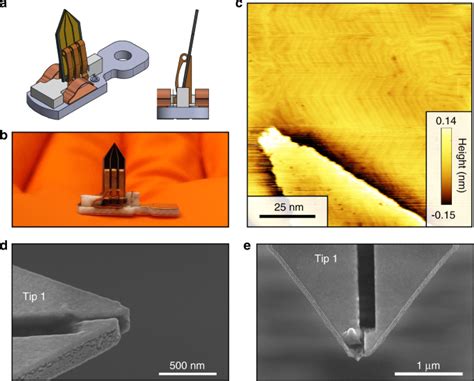
STM operates by scanning a sharp metallic tip over the surface of a material, achieving nanometer-scale resolution. This process primarily measures the local density of states (DOS), revealing features such as the superconducting gap. While these measurements are localized, they offer granular insights into the material's electronic landscape.
2. Bulk Representation Through Statistical Sampling
To extrapolate local measurements to bulk properties, statistical sampling is employed. By conducting STM measurements at numerous points across the sample's surface, consistent patterns emerge that are indicative of the material's overall behavior. For instance, the uniform observation of the superconducting gap across multiple locations suggests that superconductivity is a bulk property rather than a surface anomaly.
Mechanisms Ensuring Bulk Representativeness
1. Superconducting Coherence Length
Superconductivity is a collective phenomenon characterized by the formation of Cooper pairs and a coherence length that can extend over several nanometers. This coherence bridges the gap between local and bulk measurements, allowing STM to capture essential superconducting properties that are inherently tied to the material's bulk behavior.
2. Uniformity of Superconducting Properties
Consistency in the superconducting gap and other electronic features across different regions of the sample surface implies that the bulk material maintains uniform superconducting properties. This uniformity is crucial for validating that STM measurements reflect the true bulk characteristics.
3. Imaging Superconducting Vortices
In type-II superconductors, the application of an external magnetic field leads to the formation of quantized magnetic vortices. STM can image these vortices, providing direct evidence of bulk superconducting behavior. The arrangement, density, and dynamics of these vortices offer insights into the coherence length, critical fields, and overall superconducting state of the material.
Methodologies for Bridging STM Measurements with Bulk Properties
1. Extensive Statistical Sampling
Performing STM measurements across large surface areas and multiple samples ensures that the data collected is statistically significant. This approach mitigates the influence of local defects, impurities, or surface irregularities that might otherwise skew the interpretation of superconducting properties.
2. Cross-Validation with Complementary Techniques
To reinforce the conclusions drawn from STM data, it is imperative to employ other bulk-sensitive techniques such as resistivity measurements, magnetization studies, angle-resolved photoemission spectroscopy (ARPES), and specific heat analyses. These methods provide macroscopic perspectives that can validate and contextualize the local findings from STM.
3. Surface-Bulk Relationship Analysis
Understanding the relationship between surface and bulk properties is vital. In many superconductors, especially layered materials, the surface electronic structure closely mirrors the bulk, enabling STM to serve as an effective probe for bulk superconductivity. Theoretical models further aid in correlating surface measurements with bulk phenomena.
Practical Considerations and Best Practices
1. Sample Preparation
High-quality sample preparation is fundamental to obtaining reliable STM measurements. Techniques such as in situ cleaving under ultra-high vacuum conditions minimize surface contamination and disorder, ensuring that the measured properties are intrinsic to the material and reflective of its bulk state.
2. Low-Temperature Operations
STM experiments on superconductors are typically conducted at temperatures well below the critical temperature (Tc). This ensures that thermal fluctuations do not obscure or alter the superconducting state, allowing for accurate probing of the superconducting gap and related features.
3. Magnetic Field Application
Applying an external magnetic field during STM measurements can induce superconducting vortices in type-II superconductors. Observing and analyzing these vortices provides direct evidence of bulk superconductivity and offers insights into the material's critical magnetic fields and coherence length.
4. Data Analysis and Interpretation
Robust data analysis techniques, including statistical analyses and correlation studies, are essential for distinguishing between genuine bulk properties and local anomalies. Identifying consistent patterns across extensive datasets strengthens the validity of the conclusions regarding superconductivity.
Challenges and Limitations
1. Surface Sensitivity
STM's sensitivity to surface states means that surface reconstructions, contaminants, or defects can influence measurements. It is imperative to ensure that the surface being probed accurately represents the bulk material.
2. Inherent Inhomogeneities
In materials with intrinsic inhomogeneities, such as high-temperature superconductors, spatial variations in the superconducting gap can complicate interpretations. Combining STM with other techniques is crucial in such scenarios to achieve a comprehensive understanding.
Integration with Theoretical Models
Theoretical Frameworks
The synergy between experimental STM data and theoretical models enhances the ability to interpret local measurements in the context of bulk properties. Models like BCS theory provide a foundational understanding of superconductivity, facilitating the correlation of observed local features with global superconducting behavior.
Predictive Analysis
Theoretical models aid in predicting how local electronic structures should behave in a bulk superconducting state. By comparing STM observations with these predictions, researchers can validate the extent to which local measurements reflect bulk properties.
Case Studies and Practical Applications
1. High-Temperature Superconductors
In high-temperature superconductors, STM has been instrumental in visualizing the superconducting gap and its spatial variations. Studies have shown that despite local inhomogeneities, the overall superconducting properties align with bulk measurements, underscoring the representativeness of STM in these materials.
2. Topological Superconductors
STM has been pivotal in investigating topological superconductors, where the surface states play a crucial role in the material's topological nature. By studying these surface states, researchers can infer bulk topological properties, facilitating the discovery and characterization of new topological superconducting phases.
3. Conventional Superconductors
Even in conventional superconductors, STM provides invaluable insights into the uniformity of the superconducting gap and the presence of defects or impurities. These local observations correlate well with bulk properties like superconducting transition temperature and critical fields.
Comparison with Other Measurement Techniques
| Technique | Scale | Primary Measurement | Advantages | Limitations |
|---|---|---|---|---|
| Scanning Tunneling Microscopy (STM) | Nanometer | Local Density of States (DOS) | Atomic resolution, detailed local electronic properties | Surface sensitivity, limited to conductive materials |
| Angle-Resolved Photoemission Spectroscopy (ARPES) | Micron to bulk | Electronic band structure | Bulk-sensitive, excellent for band mapping | Requires high-quality surfaces, complex interpretation |
| Magnetization Measurements | Bulk | Magnetic properties, critical fields | Direct measure of bulk magnetic properties | Less spatial resolution, macroscopic interpretations |
| Resistivity Measurements | Bulk | Electrical transport properties | Simplicity, direct relation to superconducting transitions | No spatial resolution, averaged over the entire sample |
Conclusion
While the Scanning Tunneling Microscope operates on a local, nanometer scale, its application in studying superconductivity effectively bridges the gap between local measurements and bulk properties. Through extensive statistical sampling, meticulous sample preparation, and the integration of complementary bulk-sensitive techniques, STM enables researchers to make definitive statements about the superconducting nature and the superconducting gap of materials. Understanding the interplay between surface measurements and bulk behavior, coupled with robust theoretical frameworks, ensures that STM remains an indispensable tool in the exploration of superconducting phenomena.
References
- Imaging superconducting vortex cores and lattices with a scanning tunneling microscope
- Scanning tunneling spectroscopy of high-temperature superconductors
- Scanning tunneling microscope studies of the superconductor
- Why scanning tunneling spectroscopy of Sr
- Scanning tunneling spectroscopy of high-temperature superconductors
- Scanning tunneling microscopy study of superconducting properties
- Scanning tunnelling spectroscopy of superconductivity on surfaces of LiTi2O4
- Observation of Two-Dimensional Type-II Superconductivity in Bulk 3R-TaSe2
- Investigating Bulk Superconductivity with STM
- Scanning Tunneling Microscopy
- Scanning Tunneling Spectroscopy
Last updated January 18, 2025