
Understanding Stochastic Processes in Inflation
A Comprehensive Exploration of Economic and Cosmological Perspectives
Key Takeaways
- Integration of Randomness: Stochastic processes incorporate inherent uncertainties, enhancing the accuracy of inflation models in both economics and cosmology.
- Diverse Modeling Techniques: Various models like ARIMA, GARCH, and stochastic differential equations are employed to capture the dynamic nature of inflation.
- Significant Applications: These processes are pivotal in economic policy formulation, financial planning, and understanding the early universe's structure.
Stochastic Processes in Economic Inflation
Introduction to Economic Inflation
Economic inflation refers to the general increase in prices of goods and services over time, which erodes purchasing power. Modeling inflation is crucial for policymakers, financial analysts, and businesses to make informed decisions. Stochastic processes play a vital role in capturing the randomness and unpredictability inherent in economic systems, thereby providing a more nuanced understanding of inflation dynamics.
Mathematical Framework
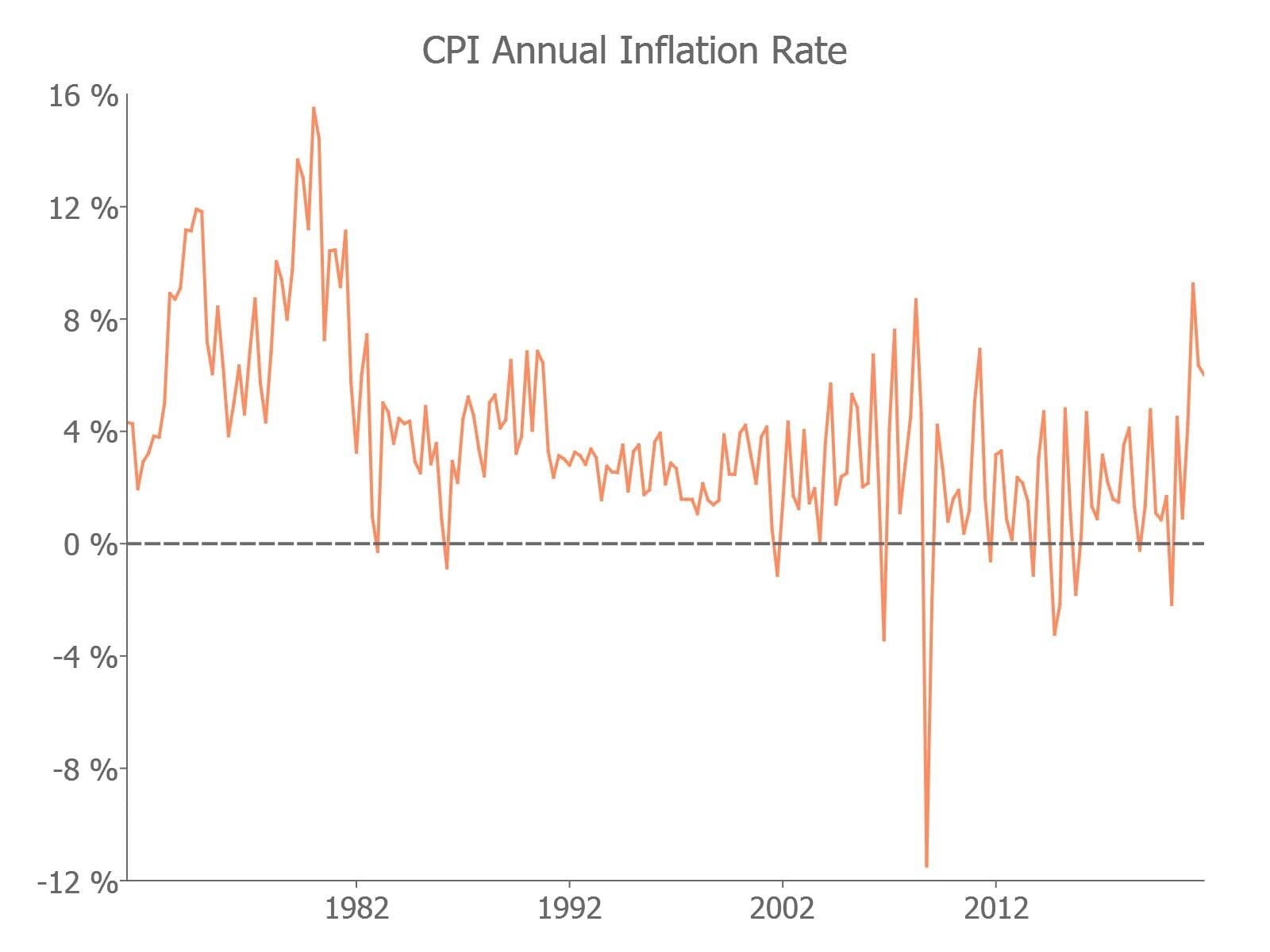
Stochastic processes in economic inflation model inflation rates as a series of random variables, reflecting the uncertainty and variability in economic indicators like the Consumer Price Index (CPI). These models utilize differential equations and probability theory to simulate various inflation scenarios, enabling better forecasting and risk assessment.
Types of Stochastic Models
Autoregressive (AR) and Moving Average (MA) Processes
AR and MA models are foundational in time series analysis. Autoregressive models regress the current inflation rate on its past values, capturing momentum and trend effects. Moving Average models incorporate past forecast errors, accounting for shocks and unexpected events that influence inflation.
Generalized Autoregressive Conditional Heteroskedasticity (GARCH) Models
GARCH models extend AR and MA frameworks by modeling the volatility of inflation rates. They allow for time-varying volatility, meaning that periods of high uncertainty can lead to larger fluctuations in inflation rates. This adaptability makes GARCH models particularly useful during economic instability.
Stochastic Volatility (SV) Models
SV models allow the volatility of inflation to change over time, offering a more flexible approach to capturing economic fluctuations. Unlike GARCH models, SV models treat volatility as an unobserved stochastic process, providing a different perspective on uncertainty and variability.
Continuous-Time Stochastic Models
These models, often employing stochastic differential equations (SDEs), are used for long-term forecasting of inflation. They can incorporate elements like fractional Brownian motion to model the long-memory properties of inflation, capturing persistent trends and cycles over extended periods.
Key Characteristics of Stochastic Inflation Models
| Model Type | Key Features | Applications |
|---|---|---|
| Autoregressive (AR) | Depends on its own past values | Short-term forecasting, trend analysis |
| Moving Average (MA) | Incorporates past forecast errors | Capturing shocks, modeling unpredictability |
| GARCH | Models time-varying volatility | Assessing economic instability, risk management |
| Stochastic Volatility (SV) | Volatility as an unobserved process | Flexible volatility modeling, advanced forecasting |
| Continuous-Time Models | Employs stochastic differential equations | Long-term forecasting, understanding persistent trends |
Applications of Stochastic Inflation Models
Economic Forecasting and Policy Making
Stochastic models provide policymakers with tools to predict future inflation rates under various economic scenarios. By accounting for randomness and uncertainty, these models help in designing effective monetary policies, such as setting interest rates and controlling money supply, to stabilize the economy.
Financial Risk Management
For financial institutions and investors, understanding the stochastic nature of inflation is essential for risk assessment and investment strategy formulation. Models like GARCH and SV help in evaluating the volatility of inflation, enabling better hedging strategies and portfolio diversification.
Insurance and Actuarial Modeling
Insurers rely on stochastic inflation models to set premiums and reserves. By forecasting future inflation rates, insurers can better estimate the costs associated with claims and ensure financial stability.
Advanced Techniques in Stochastic Inflation Modeling
Recent advancements in stochastic inflation modeling incorporate machine learning algorithms and fractional Brownian motion to enhance predictive accuracy. Machine learning approaches allow for the integration of complex economic indicators and non-linear dynamics, while fractional Brownian motion captures long-term dependencies and memory effects in inflation data.
Stochastic Processes in Cosmological Inflation
Introduction to Cosmological Inflation
Cosmological inflation refers to the rapid exponential expansion of the universe shortly after the Big Bang. Stochastic processes in this context are crucial for understanding quantum fluctuations that gave rise to large-scale structures like galaxies and clusters observed today.
Key Concepts in Stochastic Cosmological Inflation
The Inflaton Field
The inflaton is a hypothetical scalar field responsible for driving cosmic inflation. Quantum fluctuations in the inflaton field are modeled as stochastic processes, which seed the initial perturbations leading to the formation of cosmic structures.
Stochastic Inflation Formalism
This formalism describes the evolution of the inflaton field by incorporating both deterministic slow-roll dynamics and random quantum noise. The resulting Langevin-like equations capture the interplay between the classical motion of the inflaton and its quantum-induced fluctuations.
Eternal Inflation
Eternal inflation is a scenario where stochastic fluctuations in the inflaton field are strong enough to sustain inflation in certain regions of the universe indefinitely. This leads to a multiverse concept, where different regions undergo inflationary expansion at different rates.
Fokker–Planck Equation
The Fokker–Planck equation governs the probability distribution of the inflaton field over time, accounting for both the deterministic drift and stochastic diffusion. This equation is fundamental in predicting the statistical properties of the universe's initial conditions.
Applications of Stochastic Cosmological Inflation Models
Formation of Cosmic Structures
Stochastic processes during inflation lead to quantum fluctuations that are magnified to macroscopic scales, providing the initial density perturbations necessary for galaxy and cluster formation.
Cosmic Microwave Background (CMB) Analysis
Stochastic inflation models help in interpreting CMB observations by predicting the spectrum of temperature fluctuations, which are direct imprints of the early universe's quantum fluctuations.
Primordial Black Holes
Quantum fluctuations during inflation can lead to regions of high density that collapse into primordial black holes. Studying these processes provides insights into dark matter and the universe's structure.
Comparative Analysis of Economic and Cosmological Inflation Models
Similarities
Both economic and cosmological inflation models utilize stochastic processes to account for inherent uncertainties and fluctuations. Whether it's the unpredictability of economic indicators or quantum fluctuations in the early universe, randomness plays a crucial role in shaping outcomes.
Differences
While economic inflation models focus on price levels and market dynamics influenced by human behavior and policy decisions, cosmological inflation models deal with fundamental physical processes occurring in the universe's infancy. The mathematical frameworks and applications, though similar in their stochastic nature, address vastly different phenomena.
Applications and Implications of Stochastic Inflation Models
Economic Implications
Monetary Policy and Regulation
Central banks utilize stochastic inflation models to forecast future inflation trends, enabling them to set appropriate interest rates and implement policies that stabilize the economy. Understanding the stochastic behavior of inflation helps in mitigating the effects of economic shocks and maintaining price stability.
Investment Strategies
Investors and financial analysts employ these models to assess inflation risks, optimize portfolio allocations, and develop hedging strategies. Accurate inflation forecasting is essential for managing investment risks and achieving desired returns.
Cosmological Implications
Understanding the Universe's Structure
Stochastic inflation models provide a theoretical foundation for the large-scale structure of the universe. By modeling quantum fluctuations, scientists can trace the origins of galaxies, clusters, and voids, enhancing our comprehension of cosmic evolution.
Testing Fundamental Physics
These models offer a testing ground for theories in quantum mechanics and general relativity. Observations of the CMB and cosmic structures serve as empirical data to validate or refute various inflationary models, contributing to our understanding of fundamental physics.
Conclusion
Stochastic processes are integral to both economic and cosmological inflation models, providing a framework to account for randomness and uncertainty in complex systems. In economics, these models enhance the accuracy of inflation forecasting, inform monetary policy, and guide financial decision-making. In cosmology, they illuminate the quantum-driven processes that shaped the early universe and led to its current large-scale structure. The interdisciplinary applications of stochastic processes underscore their significance in advancing our understanding of both economic phenomena and the fundamental workings of the cosmos.
References
Last updated February 11, 2025