
Strategic Benefits of Distributed Lethality in Modern Navies
Exploring how a dispersed offensive approach enhances deterrence and operational flexibility
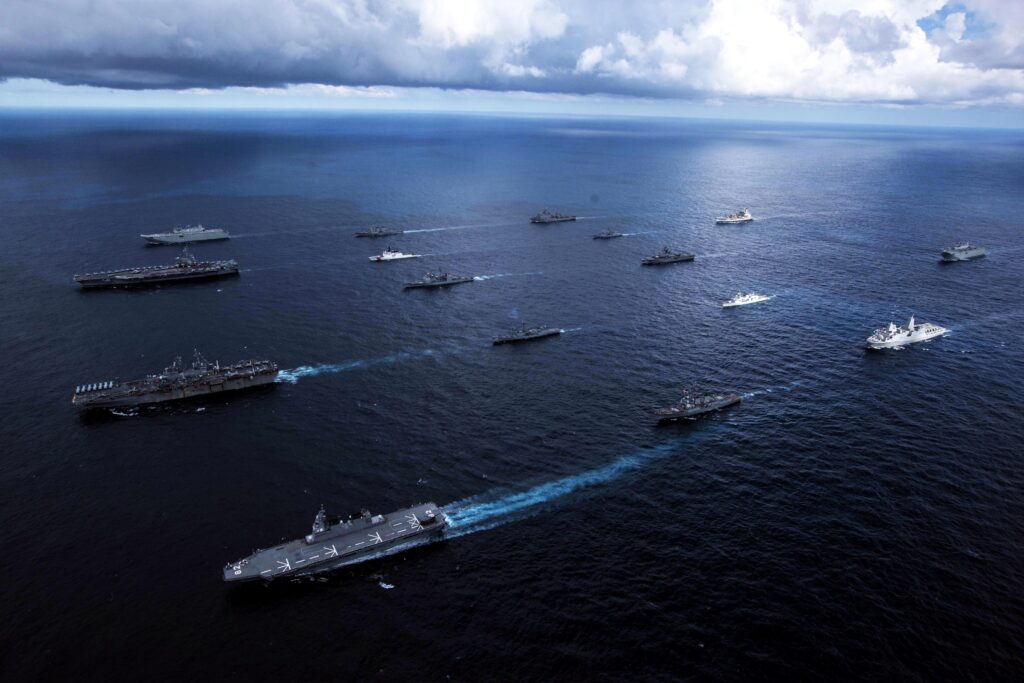
Key Highlights
- Enhanced Deterrence: Expands offensive capabilities, making adversaries reconsider hostilities.
- Operational Flexibility: Increases fleet responsiveness through distributed assets.
- Complicated Adversary Targeting: Forces opponents to spread their resources thin.
Introduction to Distributed Lethality
Distributed lethality represents a significant shift in naval doctrine that moves away from centralized, high-value platforms and towards a dispersed system where offensive capabilities are embedded across a wide array of surface combatants. In this strategy, naval forces are structured to maximize both deterrence and sea control through the dispersal of firepower, which not only magnifies the offensive potential but also complicates an adversary's targeting efforts.
Modern navies are increasingly adopting this approach in response to evolving threats in a multidomain environment. By enhancing operational flexibility and expanding their offensive reach, navies can ensure a more resilient and adaptive posture when confronted with challenges such as anti-access/area denial (A2/AD) strategies. Additionally, by integrating existing assets with modern weaponry, distributed lethality presents a cost-effective pathway to upgrading fleet capabilities.
Core Strategic Benefits
1. Enhanced Deterrence and Offensive Capacity
One of the foremost advantages of distributed lethality is the significant boost it provides in deterrence. In a traditional naval force composition, a few high-value assets such as aircraft carriers were the primary offensive tools. Under a distributed model, however, offensive capabilities are spread across multiple vessels—ranging from frigates and destroyers to even some ships previously considered non-combatant.
Deterrence Through Multiplicity
A scattered and widely capable force sends out a strong message: potential adversaries are faced with multiple potential strike platforms. This multiplicity of targets increases the complexity for enemy intelligence, surveillance, and reconnaissance (ISR) efforts. As a result, adversaries are compelled to allocate more resources to monitor these dispersed assets, thus diluting their focus and operational efficiency.
Furthermore, in a crisis or conflict situation, the distributed approach ensures that even if one segment of the fleet is compromised, the overall offensive capability of the navy remains intact. The enhanced deterrence provided by this strategy effectively raises the stakes for any potential aggressor, deterring hostile actions by emphasizing the navy’s ability to quickly mount a comprehensive retaliatory response.
2. Operational Flexibility and Adaptability
Distributed lethality fosters an environment where naval operations are fluid and reactive to dynamic threats. Rather than depending solely on a few heavily armed vessels, this strategy empowers a larger number of platforms to contribute meaningfully to offensive operations. The result is a more versatile and adaptable navy, capable of adjusting to a wide range of scenarios.
Decentralized Command and Deployment
By decentralizing offensive capabilities, naval commanders gain increased flexibility in force deployment. Assets can be re-tasked quickly based on operational requirements, facilitating rapid response to emerging threats. This agility is crucial in modern naval theaters where situations can evolve rapidly.
Mitigating Vulnerabilities
Furthermore, the distributed model minimizes risk by ensuring no single point of failure compromises the entire fleet. When high-value assets are no longer concentrated in specific areas, adversaries find it more challenging to execute coordinated strikes aimed at crippling naval power. This widespread distribution enhances survivability during conflict.
3. Complex Adversary Targeting and Enhanced Survivability
One of the critical challenges for any modern adversary is the effective targeting of dispersed naval forces. Traditional naval formations allowed adversaries to focus on a few select assets. With distributed lethality, however, the enemy is confronted with the formidable task of tracking and identifying a larger number of offensive platforms. This not only increases the adversary’s workload but also introduces significant uncertainty into their operational planning.
Increased Complexity in Targeting
The enlarged set of potential targets forces adversaries to deploy more sophisticated and resource-intensive ISR systems. Such dispersion dilutes enemy firepower and complicates decision-making in real-time conflict situations. This strategic complexity is advantageous for modern navies by ensuring that even with significant enemy tracking capabilities, the probability of any single asset being effectively targeted is reduced.
Improved Survivability and Resilience
Additionally, by dispersing offensive power, navies can better protect against counterstrikes and emerging threats. Physical dispersion of assets across a broader geographical area minimizes the risk of mass attrition during an adversary's coordinated attack, enhancing overall fleet survivability.
4. Cost Effectiveness and Maximizing Existing Assets
In an era of constrained budgets and evolving geopolitical challenges, making the most of current investments is paramount. Distributed lethality leverages existing platforms by integrating modern weaponry and technology, thereby enhancing their offensive capabilities without incurring the cost of entirely new vessel designs.
Such cost efficiency is achieved by updating and refitting current ships with advanced missile systems and sensor suites. By transforming platforms that were traditionally viewed as defensive, navies can bolster their offensive posture in a fiscally responsible manner.
Budget Sensitivity and Incremental Investments
Instead of a radical overhaul involving significant expenditures on new platforms, distributed lethality promotes incremental investments. This approach allows naval forces to adapt in a stepwise fashion, ensuring financial resources are used judiciously while still maintaining a competitive edge in modern warfare.
5. Countering Anti-Access/Area Denial (A2/AD) Strategies
Distributed lethality is particularly effective in mitigating the challenges posed by A2/AD environments. Enemies employing A2/AD strategies aim to restrict the deployment and maneuverability of opposing naval forces by controlling key maritime areas or choke points. The decentralized nature of distributed lethality directly counters these tactics.
Multiple Entry Points into Theater Operations
With capabilities spread over numerous ships, modern navies can create multiple, simultaneous engagement zones, complicating the enemy's ability to secure effective area denial. This multiplicity of entry points forces adversaries to contend with a wider and more unpredictable range of threats, hence countering their A2/AD measures.
Psychological and Tactical Impact
In addition to the tangible tactical benefits, the sheer complexity of tracking a dispersed offensive force has a significant psychological impact on potential aggressors. Knowing that any concentrated effort can be met with rapid and widespread countermeasures acts as a deterrent in itself.
Operational and Tactical Applications
Beyond strategic deterrence, the concept of distributed lethality translates into distinct operational advantages during conflict. By leveraging a dispersed formation, naval commanders are afforded several tactical plus points that further solidify the benefits of this doctrine.
Integration of Platforms and Weapon Systems
Modern surface combatants are increasingly being equipped with versatile and modular weapon systems. This modularity allows for rapid adaptation to varied threat environments. Ships originally designed for defensive roles are now capable of multi-role operations, effectively becoming platforms that can launch offensive actions if required.
The integration of high-mobility missile systems and advanced sensors across a distributed network of vessels creates a formidable strike capability that is both dynamic and scalable. This integration ensures that anywhere in a theater there exists a maintained capability to project power, conduct strikes, and support joint-force operations.
Enhanced Command and Control
Distributed lethality also prompts changes in command and control (C2) structures. Modern communication systems and networked warfare allow naval forces to coordinate such a dispersed formation effectively. In essence, enhanced C2 systems ensure that a distributed force is not a disjointed collection of ships but a coherently orchestrated network capable of rapid decision-making and operational synchronization.
Effective C2 is essential for maintaining situational awareness across a distributed fleet and optimizing the deployment of offensive assets. This technological and doctrinal synergy ensures that distributed lethality is as much about information superiority as it is about firepower distribution.
Comparative Analysis with Traditional Naval Strategies
Traditional naval doctrines often emphasize the value of concentrated, high-value assets such as aircraft carriers and amphibious assault ships. While these platforms offer undeniable capabilities, they are also high-risk targets. In concentrating firepower, traditional strategies can inadvertently create vulnerabilities by offering adversaries singular, high-value targets to neutralize.
In contrast, distributed lethality transforms nearly every surface combatant into a potential offensive tool, thereby dispersing risk. This strategic dispersal requires adversaries to invest in more extensive ISR and targeting efforts simply to identify vulnerable nodes in the network.
| Aspect | Traditional Strategy | Distributed Lethality |
|---|---|---|
| Asset Concentration | High concentration of firepower on few assets | Broad distribution across many platforms |
| Deterrence Impact | Reliant on a few high-profile targets | Enhanced deterrence through multiplicity of offensive options |
| Operational Flexibility | Limited by centralized command | High adaptability due to decentralized execution |
| Cost Efficiency | High new-build costs and concentrated investments | Incremental upgrades and maximized use of existing platforms |
This comparison highlights how distributed lethality offers a more resilient and flexible foundation for modern naval operations.
Implications for Future Naval Warfare
As geopolitical landscapes evolve, the necessity for navies to be agile and responsive becomes more pronounced. Distributed lethality reflects an understanding that modern warfare is as much about information, speed, and adaptability as it is about raw firepower. This paradigm shift not only redefines the tactical engagement processes but also influences strategic planning and resource allocation.
In the future, technological advancements—such as unmanned systems and artificial intelligence—are likely to further integrate with the distributed lethality model. Enhanced networked capabilities will allow disparate platforms to operate in near-continuous coordination, continually adapting to real-time intelligence and shifting threats.
Adapting to Emerging Challenges
The changes brought by distributed lethality are not solely confined to hardware. They necessitate doctrinal and organizational transformations within naval commands. Training regimes, simulation exercises, and joint operational protocols are all evolving to accommodate a more dispersed force structure.
Ultimately, the shift towards distributed lethality is as much a cultural evolution as it is a tactical strategy. It reflects a commitment to innovation and a recognition that the future of naval warfare depends on versatility, rapid decision-making, and the capacity to operate in contested environments.
References
- CSBA Sees Strategic Benefits to Distributive Lethality - CSBAOnline
- Surface Forces Strategy: Return to Sea Control - Defense.gov
-
Distributed Lethality - EastWest NGO
- US Navy’s Distributed Lethality Strategy Explained - National Interest
- Tactical Doctrine: Distributed Lethality - CIMSEC
- What Distributed Lethality Means for Future Sea Control - Defense One
- How Distributed Lethality Could Transform Naval Warfare - Military.com
-
Strategy Behind Distributed Lethality - Navy Times
- Naval Strategy and Distributed Lethality - Strategy Page
-
Distributed Lethality and Modern Warfare - Air Force Magazine
Related Queries
 navy-matters.blogspot.com
 media.defense.gov
Last updated March 2, 2025