
Strategic Problem-Solving Approaches in Education
Exploring collaborative methods for overcoming academic challenges
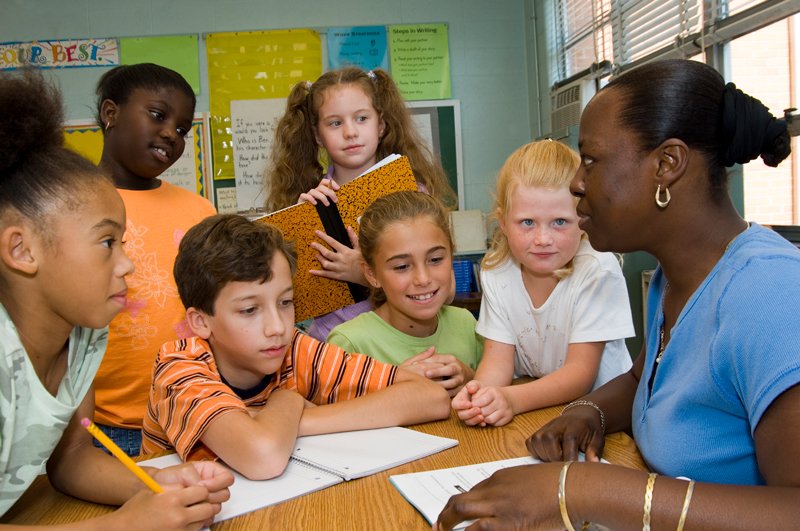
Key Highlights
- Collaboration Enhances Critical Thinking: Peer discussions and group inquiry empower students to view challenges from multiple perspectives.
- Teacher Guidance and Structured Protocols: Structured methods like the "3 Before Me" rule and wonder boards encourage autonomous problem-solving.
- Supportive Environments Reduce Anxiety: Normalizing help-seeking behaviors creates better learning atmospheres and improved academic outcomes.
Introduction to Strategic Problem-Solving in Educational Settings
In today’s dynamic educational environments, fostering strategic problem-solving skills has become vital. One of the prominent themes in the academic literature today focuses on the role of collaborative approaches—specifically, the act of seeking help from teachers, classmates, or peers—to address and overcome challenges in problem-solving skills among students.
Understanding the Challenge
Students often encounter barriers when it comes to effectively solving problems independently. A significant challenge is their reluctance to seek help, whether due to a fear of judgment, over-emphasis on independence, or uncertainties about who and when to approach for assistance. This hesitancy can impede the development of comprehensive problem-solving strategies that are essential in academic and real-world settings.
The literature from 2020 to 2025 emphasizes a dual benefit in structured collaboration. On one hand, it fosters autonomy by encouraging students to first explore peer-driven solutions. On the other, it also underlines the importance of teacher input when collaborative efforts reach an impasse. Notably, several modern approaches rely on structured protocols such as the "3 Before Me" rule, which guides students to seek help from three classmates before consulting their teacher. This technique not only bolsters collaborative learning but also builds critical communication and resourcefulness skills.
Peer Collaboration and Its Impact
Collaboration among peers plays a crucial role in the development of problem-solving abilities. Students engaging in peer-to-peer interactions benefit from exposure to diverse viewpoints and methods for approaching complex challenges. This diversity of thought often sparks innovative solutions that would not have been conceived in isolation.
Research from sources such as TeachHUB (2024) and Everyday Speech (2020) detail these benefits, highlighting how structured peer collaboration helps students navigate obstacles by drawing on the unique strengths each member brings to a discussion. This approach supports deeper conceptual understanding and assists students in recognizing that problem-solving is an iterative process involving both independent inquiry and collective insight.
The Role of Teachers in Facilitating Problem-Solving
Teacher Facilitation and Structured Support
In addition to fostering peer-to-peer collaboration, teachers occupy a central role in creating environments where problem-solving thrives. According to various studies, including those referenced by Learning Accelerator (2020), instructors can implement several strategies that encourage students to proactively seek help while building resilience and self-regulation.
One common approach is to implement clear problem-solving protocols. For instance, the "wonder board" or "curiosity corner" strategy encourages students to post questions publicly. This not only allows classmates to provide potential solutions but also normalizes help-seeking behavior as a regular component of the learning process. By integrating such protocols into daily classroom routines, teachers demystify the process of asking for help and reinforce the notion that reaching out is a constructive and valued part of academic development.
Integrating Structured Protocols
Structured protocols, like the "3 Before Me" rule, facilitate a gradual mentoring process. Initially, students are motivated to exhaust their immediate peer network before escalating their questions to the teacher. This method:
- Encourages independence while promoting resourcefulness,
- Reduces immediate dependence on teacher intervention, and
- Enhances classroom communication and mutual support.
With such protocols in place, teachers can focus on presenting more complex issues and ensure that the foundation of reasoning and inquiry is thoroughly built among the students.
Benefits of Collaborative Problem-Solving
Enhancing Cognitive Flexibility
The interconnected nature of modern educational challenges necessitates a flexible approach to problem-solving. Collaborative approaches, where help is sought from both teachers and peers, significantly contribute to cognitive flexibility. Students are exposed to varying methodologies and different ways to structure a problem, which in turn stimulates their capacity to adopt innovative thinking patterns.
Social and Emotional Growth
Apart from the academic advantages, such environments help develop social and emotional skills. Engaging in healthy peer discussions often diminishes the stigma associated with not having an immediate answer. Inclusive strategies that normalize the act of asking for help build students’ confidence and reduce the stress associated with academic pressures.
Consequently, these collaborative and supportive environments encourage mental well-being by fostering respectful communication and empathetic awareness—all of which are essential traits in academic and real-life problem-solving.
Adaptive Strategies for Future Challenges
The educational world today is fast-paced and ever-changing. To prepare students for the complexity of future problem-solving scenarios, educators encourage adaptability. This includes not only the willingness to explore innovative approaches but also the readiness to seek appropriate help based on situational demands.
When students learn to integrate assistance from both peers and teachers, they develop a comprehensive toolkit that enhances both autonomous and collaborative problem-solving skills. This toolkit is vital as they progress academically and eventually transition into professional environments where teamwork is often essential.
Comparative Analysis: Structured Help-Seeking Techniques
Comparing Established Protocols
Educators and researchers have evaluated several structured help-seeking techniques to determine their efficacy in enhancing problem-solving skills. The "3 Before Me" rule is extensively discussed in literature as a prime example of a structured method that fosters collaborative learning. Conversely, the public display of questions through "wonder boards" provides a community-centric approach, emphasizing transparency and collective problem-solving.
Summary Table of Strategies
| Strategy | Description | Primary Benefit |
|---|---|---|
| "3 Before Me" Rule | Students seek help from three peers before approaching the teacher. | Fosters autonomy and peer resourcefulness. |
| Wonder Board / Curiosity Corner | Students post questions publicly to generate collective inquiry. | Normalizes help-seeking and broadens exposure to diverse ideas. |
| Teacher-Facilitated Problem-Solving Protocols | Structured frameworks and gradual escalation of assistance. | Builds incrementally on student confidence and resolution skills. |
| Group Discussions and Cooperative Learning | Encourages group dialogue and shared problem-solving tasks. | Enhances communication, critical thinking, and collective creativity. |
Analysis of Supporting Literature (2020-2025)
Insights from Recent Studies
Multiple studies conducted between 2020 and 2025 have highlighted the multifaceted benefits of structured help-seeking approaches in educational settings:
- TeachHUB (2024): Emphasizes the need for empowering students to become problem-solving champions by encouraging them to engage collaboratively before relying solely on teacher intervention.
- Everyday Speech (2020): Discusses the benefits of breaking down complex problem-solving into manageable parts with stepwise guidance and the role of peer assistance.
- Learning Accelerator (2020/2023): Stresses intentional problem-solving protocols that support student development while ensuring that the natural hesitancy to ask for help is addressed through structured classroom strategies.
- Mastermind Behavior (2022): Presents the success of protocols like "3 Before Me" in promoting autonomy while also ensuring students have the necessary safety net provided by teacher assistance.
- Pardesschool (2023): Outlines how collaborative strategies prepare students for real-life challenges, emphasizing flexibility and adaptive problem-solving in rapidly changing contexts.
Theoretical Foundations
The theoretical foundation for these collaborative strategies draws from social constructivist theories that assert learning is most effective when it is a shared, interactive process. This schema underlines that the development of problem-solving skills is not solely an individual pursuit but one that benefits significantly from diverse interactions—ones that simulate real-world environments where challenges are rarely solved in isolation.
Implementation in Educational Practices
Practical Applications for Classrooms
Practical implementation of these strategies involves creating a classroom culture where asking for help is not a sign of weakness but an essential stepping stone toward mastering complex concepts. Teachers can integrate these practices into lesson plans through interactive projects, group work, and dynamic problem-solving challenges that stimulate real-life scenarios.
These implementations require teacher training and support, so educators are comfortable with establishing guidelines and reinforcing protocols that promote both independent inquiry and collaborative problem-solving. For instance, teachers might set up dedicated periods during the school day where students work in small groups, followed by a debrief session where they share and compare problem-solving approaches. The outcome is two-fold: students not only learn to think outside the box, but they also develop effective communication and teamwork skills—traits that are invaluable beyond the classroom.
Case Example: Integrated Protocols in Action
Consider a classroom that has implemented a structured protocol involving a "war room" or inquiry board. During group activities, students are encouraged to record their questions, possible solutions, and any confusing points. Later, the teacher facilitates a session where groups present their findings and additional insights are exchanged. This process effectively transforms the classroom into a living laboratory for problem-solving where every student’s input is valued, and collaborative learning is institutionalized.
Supporting References and APA Citations
APA Format References (2020-2025)
The following references from the literature provide a solid basis for understanding the importance of strategic problem-solving approaches involving help-seeking behaviors among students:
- https://www.teachhub.com/teaching-strategies/2024/07/empowering-students-to-become-problem-solving-champions/
- https://everydayspeech.com/sel-implementation/navigating-challenges-teaching-problem-solving-to-middle-school-students/
- https://practices.learningaccelerator.org/strategies/intentional-problem-solving-to-support-student-development
- https://www.mastermindbehavior.com/post/strategies-for-teaching-problem-solving-skills
- https://www.pardesschool.org/7-ways-problem-solving-prepares-students-for-life/
Recommended Further Queries
To further explore the topic of strategic problem-solving approaches in education, consider these related inquiries:
Last updated March 16, 2025