
Exploring the Impact of Student Movements in Pakistan
A Historical Overview of Activism and Its Influence
Key Highlights
- Student movements have played a pivotal role in shaping Pakistan's political landscape, influencing significant events such as the 1968-69 revolution.
- Despite facing bans and crackdowns, student activism persists in Pakistan, adapting to contemporary challenges through methods like the Students Solidarity March and utilizing social media.
- The demands of student movements have evolved from challenging dictatorial regimes and advocating for democracy to addressing issues like education quality, campus safety, and the restoration of student unions.
Student movements in Pakistan have a rich and complex history, marked by periods of intense activism and significant influence on the nation's political and social trajectory. From challenging authoritarian rule to advocating for fundamental rights and educational reforms, students have consistently been at the forefront of various protest movements. This exploration delves into several key case studies that highlight the diverse nature and enduring impact of student activism in Pakistan.
Early Waves of Student Activism: Challenging Authority
Student activism in Pakistan predates the country's independence, with students playing a role in the Pakistan Movement itself. However, the post-independence era saw students emerge as a significant force challenging governmental policies and authoritarian regimes.
The 1962 Education Movement
One of the early notable instances of student protest was the 1962 East Pakistan Education movement. This movement was a direct response to the education policy recommended by the Sharif Commission to President Ayub Khan. The proposed policy included making English and Urdu mandatory subjects, which was met with strong opposition from students in East Pakistan who advocated for the importance of their own language, Bengali. The protests, led by students from Dhaka College, escalated, with demonstrations, burning of vehicles, and clashes with the police. This movement underscored the linguistic and cultural sensitivities prevalent in East Pakistan and the students' willingness to agitate against policies perceived as imposition.
The government's response included arrests of student leaders and the deployment of force to suppress the protests. However, the sustained agitation eventually led to the government pausing the implementation of some of the commission's recommendations, demonstrating the potential for student action to influence policy decisions.
The 1968-69 Revolution: Students as Catalysts for Change
Perhaps the most impactful period of student activism in Pakistan's history was the 1968-69 mass uprising against the dictatorial regime of Ayub Khan. This movement, often referred to as the 1968-69 Pakistan Revolution, saw students at the forefront of widespread protests that ultimately led to Ayub Khan's resignation.
The protests were ignited by a variety of grievances, including economic hardships, political repression, and the authoritarian nature of Ayub Khan's rule. Students, particularly those associated with groups like the National Student Federation (NSF), a left-leaning organization, played a crucial role in mobilizing the public. The movement spread across major cities like Karachi, Rawalpindi, and Peshawar.
A pivotal moment occurred in November 1968 in Rawalpindi, where police opened fire on a student rally, killing several students. This act of repression fueled nationwide condemnation and intensified the protests. The movement evolved into a broader uprising involving workers, peasants, and intellectuals, all demanding a change in the system.
The scale of participation in the 1968-69 revolution was immense, with estimates suggesting 10 to 15 million people participated. This period demonstrated the power of student-led movements to galvanize broader societal discontent and bring about significant political change, even in the face of a military dictatorship.
Key Aspects of the 1968-69 Movement:
- Initial student protests against government policies and repression.
- Brutal police crackdown in Rawalpindi serving as a catalyst for wider protests.
- Alliance between students, workers, peasants, and intellectuals.
- Demands for democratic rights and an end to dictatorial rule.
- The movement's success in forcing Ayub Khan's resignation.
Student Activism Under Military Regimes and Bans
The imposition of military rule in Pakistan has often been accompanied by crackdowns on political dissent, including student activism. The ban on student unions in 1984 by General Zia ul Haq marked a significant attempt to curtail student political activity.
Student Response to the Ban on Unions
Despite the official ban, student activism did not disappear entirely. Students continued to find ways to articulate their grievances and organize, albeit facing significant challenges and risks. The period under Zia ul Haq saw left-leaning student groups continue to lead demonstrations against the military regime, highlighting the enduring commitment of some student factions to political resistance.
The ban on student unions has been a contentious issue for decades. Many argue that it has depoliticized the youth and stifled democratic development on campuses. The demand for the restoration of student unions has been a recurring theme in subsequent student movements.
The Role of Student Unions: Before the Ban
Prior to the 1984 ban, student unions played a vital role in campus life and national politics. They served as platforms for students to voice their concerns, organize cultural and political activities, and engage with broader societal issues. These unions often had affiliations with political parties, which further amplified their influence in the national political landscape.
Contemporary Student Movements and Evolving Demands
In recent years, there has been a resurgence of student activism in Pakistan, marked by new forms of organization and a broader range of demands. The Students Solidarity March is a notable example of this renewed energy.
The Students Solidarity March
The Students Solidarity March, which began in 2018, represents a significant contemporary student movement. These marches have taken place in multiple cities across Pakistan, bringing together students from various backgrounds and universities, including private institutions. The core demands of the Students Solidarity March include the restoration of student unions, increased funding for education, improved campus facilities, and an end to harassment and discrimination on campuses.
These marches have utilized social media and other digital platforms to mobilize support and raise awareness about their issues, adapting to the contemporary media landscape. The movement has highlighted systemic problems within the education sector and university administrations, including issues of sexual harassment and discrimination against students from marginalized communities.
The Students Solidarity March demonstrates that despite the ban on student unions, students remain committed to collective action to address their concerns and advocate for a better educational environment and greater rights.
Contemporary Issues Driving Student Activism:
- Demand for the restoration of student unions.
- Concerns about fee hikes and affordability of education.
- Issues of campus safety and sexual harassment.
- Discrimination against students from ethnic minorities.
- The need for academic freedom and critical thinking.
Diversity within the Student Movement
It is important to note the diversity within the student movement in Pakistan. While progressive and left-leaning groups have historically been prominent, various other ideologies and affiliations are also present.
Ideological Spectrum of Student Organizations
The student political landscape in Pakistan has included organizations inspired by Marxism and socialism, such as the National Student Federation (NSF) and the Peoples Student Federation (PSF). Alongside these, Islamic student unions like the Islami Jamiat-e-Talaba (IJT) have also been active, often with different ideological perspectives and demands. Additionally, nationalist student unions representing ethnic minorities, such as the Baloch Student Organization (BSO) and Pashtun Student Organization (PSO), have campaigned for equal rights and provincial autonomy.
This ideological diversity has sometimes led to conflicts and fragmentation within the student movement, but it also reflects the broader political and social divisions within Pakistani society.
Notable Student Organizations:
-
National Student Federation (NSF)
-
Peoples Student Federation (PSF)
-
Islami Jamiat-e-Talaba (IJT)
-
Baloch Student Organization (BSO)
-
Pashtun Student Organization (PSO)
-
Mustafavi Students Movement (MSM)
-
Progressive Students Collective (PSC)
Impact and Challenges
Student movements in Pakistan have had a tangible impact on the country's political and social development, but they have also faced significant challenges.
Influence on Political Change
As demonstrated by the 1968-69 revolution, student movements have at times been instrumental in bringing about political change and challenging authoritarian rule. Students have also played a role in movements for the restoration of democracy and the independence of the judiciary.
Government Crackdowns and Repression
Throughout history, student activists in Pakistan have faced government crackdowns, arrests, harassment, and even violence. Military regimes, in particular, have been known for their harsh response to student dissent. This repression has at times limited the effectiveness and scope of student movements.
Internal Divisions and External Influence
Internal divisions based on ideology, ethnicity, and political affiliations have sometimes weakened the student movement. Furthermore, allegations of external influence or manipulation by political parties and other actors have also surfaced, raising concerns about the autonomy of student activism.
Adapting to the Digital Age
Contemporary student activism in Pakistan has increasingly utilized social media and online platforms for mobilization, awareness-raising, and organizing. This has allowed students to connect with a wider audience and bypass traditional media controls, but it also presents challenges related to online surveillance and disinformation.
Analyzing the Dynamics of Student Activism
Understanding student movements in Pakistan requires considering various factors that influence their emergence, trajectory, and impact. These include the political context, socio-economic conditions, ideological currents, and the role of external actors.
The Role of Education Policy
Education policies have often been a direct trigger for student protests, as seen in the 1962 movement. Issues related to curriculum, access to education, fees, and the quality of education continue to be major concerns for students and a driving force behind their activism.
Connecting with Broader Social Movements
Historically, student movements in Pakistan have often intersected with and supported broader social and political movements, such as labor movements and movements for democratic rights. The alliance of students, workers, and peasants during the 1968-69 revolution is a prime example of this synergy.
The Impact of Global Trends
Student activism in Pakistan has also been influenced by global trends and movements. The 1960s, for instance, was a period of widespread student unrest globally, and the Pakistani student movement of that era shared some common characteristics with its counterparts in other parts of the world.
Below is a table summarizing some key aspects of prominent student movements in Pakistan:
| Movement/Period | Key Demands/Issues | Notable Outcomes | Key Student Organizations |
|---|---|---|---|
| 1962 Education Movement | Opposition to mandatory Urdu and English, linguistic rights | Government paused policy implementation | Dhaka College students, various East Pakistani student bodies |
| 1968-69 Revolution | End of Ayub Khan's dictatorship, democratic rights, economic justice | Ayub Khan's resignation | National Student Federation (NSF) |
| Under Zia ul Haq (Post-1984 Ban) | Resistance against military rule, restoration of democracy | Continued, though suppressed, activism | Left-leaning groups |
| Students Solidarity March (2018 onwards) | Restoration of student unions, education reforms, campus safety | Raised awareness, continued advocacy | Student Action Committee (SAC), Progressive Students Collective (PSC) |
Visualizing Student Activism
Images can offer a powerful glimpse into the energy and scale of student protests in Pakistan.
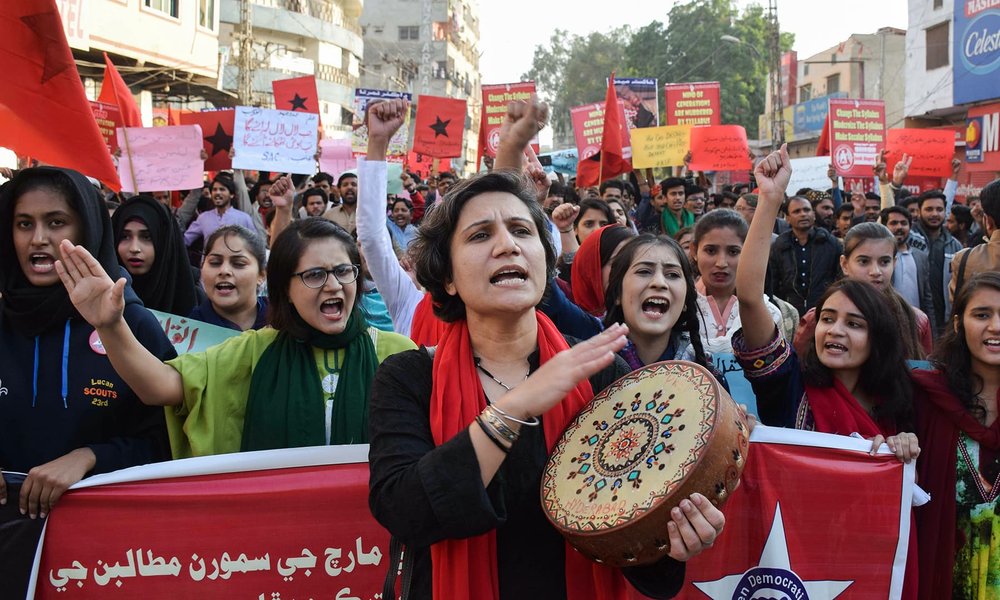
Students participating in a solidarity march in Pakistan.
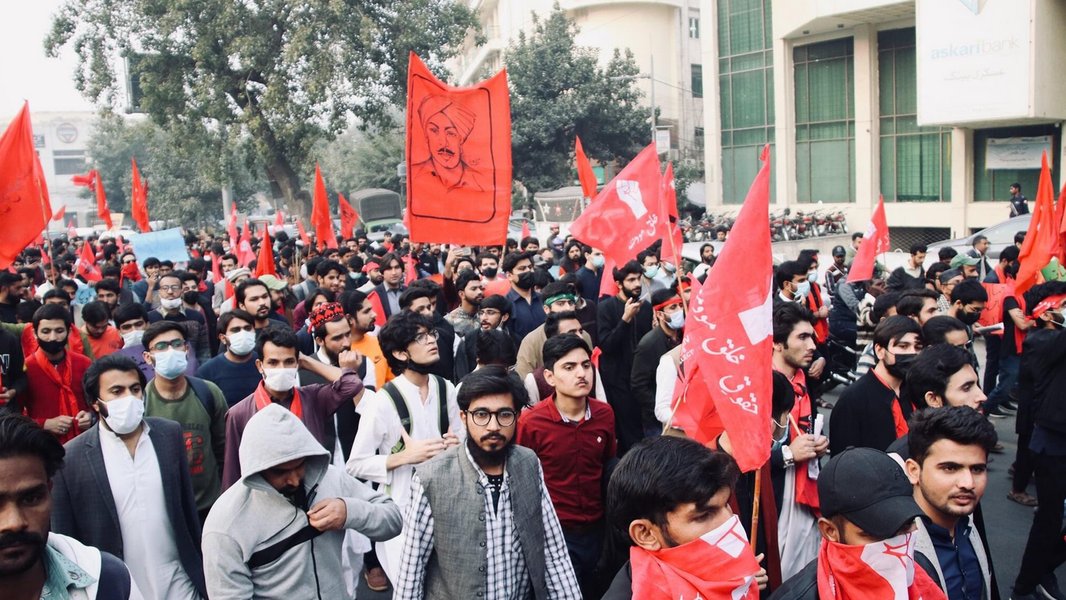
Protesters at the Students Solidarity March in Lahore.
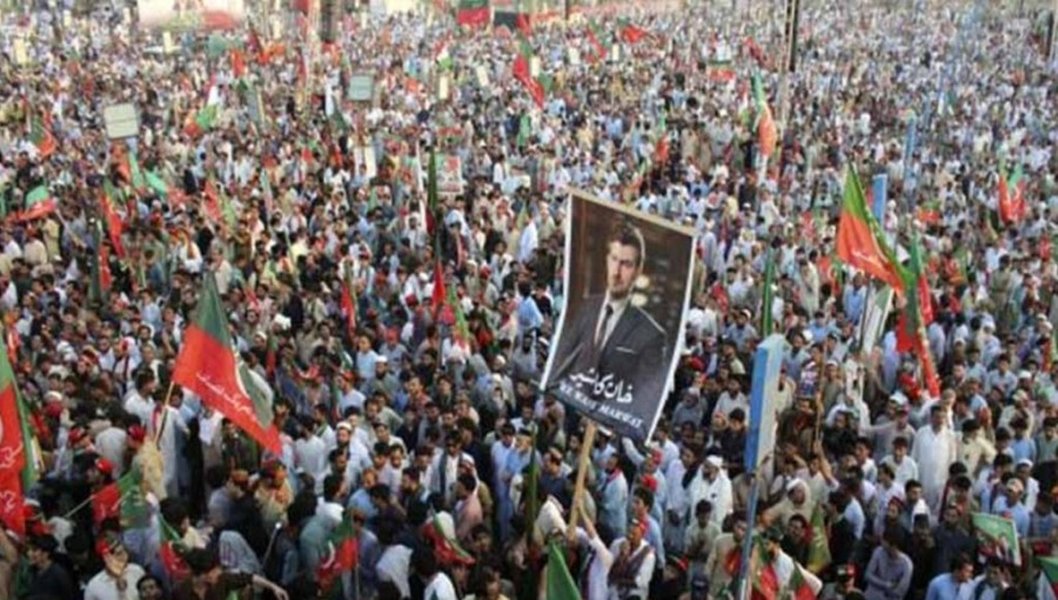
Students protesting in Pakistan.
Contemporary Issues and Future of Student Activism
Student activism in Pakistan continues to evolve in response to the prevailing socio-political and economic conditions. Contemporary issues such as climate change, online learning challenges exacerbated by the COVID-19 pandemic, and broader issues of social justice are increasingly becoming part of the student agenda.
The use of digital platforms remains crucial for organizing and disseminating information, especially in the context of restrictions on traditional forms of protest and the ban on student unions. However, the long-term impact of online activism compared to on-the-ground mobilization is still being debated.
The demand for the restoration of student unions remains a central focus for many student groups, viewed as essential for fostering democratic values and providing students with a legitimate platform to voice their concerns and negotiate with university administrations and the government.
Challenges and Opportunities
Student activists in Pakistan face the ongoing challenge of repression and attempts to curb their activities. However, the persistent nature of their demands and their ability to adapt to changing circumstances suggest that student movements will likely continue to play a role in shaping Pakistan's future.
The increased participation of students from private institutions in recent movements also indicates a broadening base for activism, potentially bringing new perspectives and strategies to the forefront.
Frequently Asked Questions about Student Movements in Pakistan
When did significant student movements occur in Pakistan?
Significant student movements in Pakistan have occurred at various points in history, including the 1962 Education Movement, the 1968-69 Revolution, periods under military rule, and the recent Students Solidarity Marches starting in 2018.
What were the main goals of the 1968-69 student movement?
The main goals of the 1968-69 student movement were to protest against the dictatorial regime of Ayub Khan, demand democratic rights, and address economic grievances.
Why were student unions banned in Pakistan?
Student unions were banned in Pakistan by General Zia ul Haq in 1984 during his military rule, as part of a broader effort to suppress political activity and dissent on campuses.
What are the current demands of student activists in Pakistan?
Current demands of student activists include the restoration of student unions, increased education funding, improved campus facilities and safety, and an end to harassment and discrimination.
How has technology impacted student activism in Pakistan?
Technology, particularly social media, has become an important tool for contemporary student movements in Pakistan for organizing, mobilizing support, and raising awareness about their issues.
References
Last updated May 12, 2025