

In the vast landscape of language, the way we connect ideas within sentences significantly impacts meaning, emphasis, and overall flow. Three fundamental grammatical concepts—subordination, coordination, and ellipsis—serve as powerful tools for achieving these linguistic goals. While seemingly distinct, they are interconnected strategies that writers and speakers employ to construct complex thoughts and convey information effectively. Understanding their nuances allows for greater precision and artistry in communication.
Key Insights into Sentence Construction
- Subordination establishes a hierarchy by linking a main idea with a less important, dependent one, often using subordinating conjunctions to show relationships like cause or time.
- Coordination connects ideas of equal weight, using coordinating conjunctions or punctuation to present them as balanced and equally significant.
- Ellipsis promotes conciseness by omitting words or phrases that can be easily inferred from the surrounding context, avoiding redundancy while maintaining clarity.
These techniques are not merely rules to be followed but rather instruments for shaping the reader's perception and guiding their understanding of the presented information. By strategically employing subordination, coordination, and ellipsis, authors can add depth, variety, and impact to their writing.
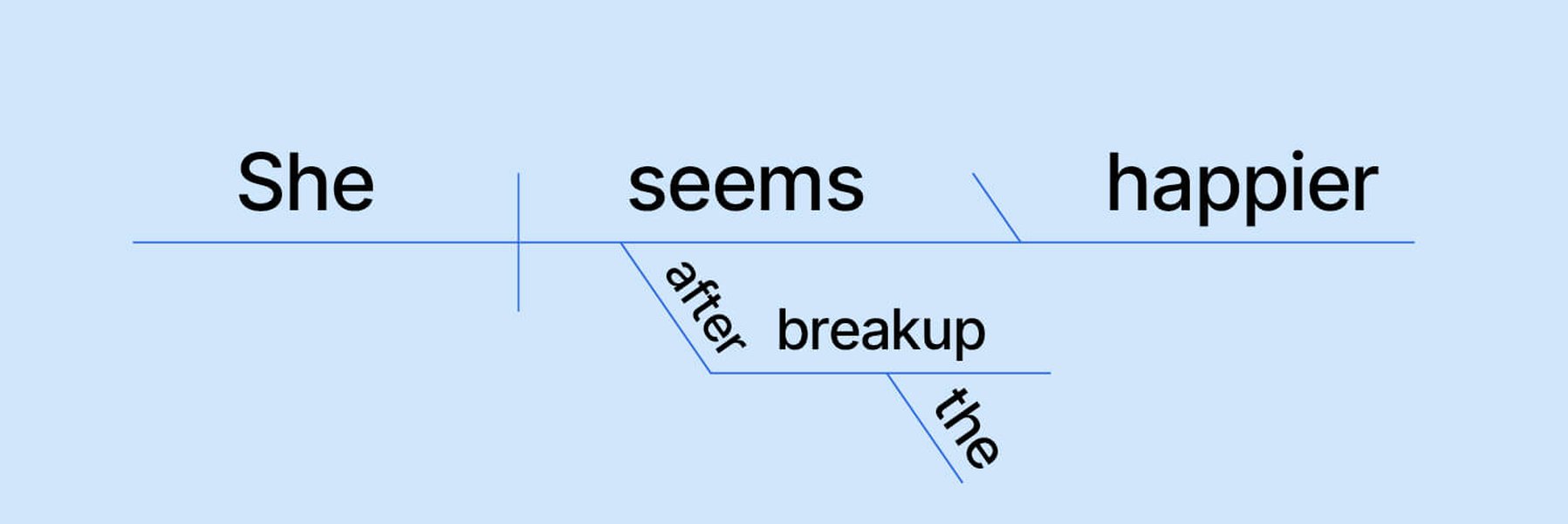
Visual representation of sentence structure elements, highlighting how different components connect.
Subordination: Crafting Hierarchical Relationships
Subordination is a grammatical technique that connects two clauses in such a way that one clause, known as the dependent or subordinate clause, provides additional information that is secondary in importance to the other, the main or independent clause. The dependent clause cannot stand alone as a complete thought and relies on the main clause for its full meaning. This relationship creates a hierarchy of ideas, allowing writers to emphasize certain aspects over others.
The Mechanics of Subordination
Subordination is typically achieved through the use of subordinating conjunctions (e.g., because, although, even though, since, when, while, if, unless, wherever) or relative pronouns (e.g., who, whom, whose, which, that). These words introduce the dependent clause and signal its relationship to the main clause.
Examples of Subordination in Action
- Cause and Effect: "Because she studied diligently, she excelled on the exam." (The reason for her excellence is subordinated.)
- Time: "When the bell rang, students rushed out of the classroom." (The timing of the action is subordinated.)
- Contrast: "Although he was tired, he continued to work on the project." (His tiredness is presented as secondary to his persistence.)
- Condition: "If you complete your tasks on time, you will be rewarded." (The condition for the reward is subordinated.)
Subordination is a powerful tool for reflecting complex relationships between ideas, adding nuance and sophistication to sentences. It allows for a more precise expression of logical connections, making writing more informative and engaging.
Coordination: Balancing Ideas of Equal Importance
Coordination involves linking two or more clauses, phrases, or words that hold equal grammatical rank and semantic importance. Unlike subordination, coordination presents ideas as parallel and equally significant, creating a sense of balance and rhythm in writing. This technique is essential for joining related ideas without implying a hierarchical relationship between them.
Mechanisms of Coordination
The primary method for coordination is the use of coordinating conjunctions, often remembered by the acronym FANBOYS: for, and, nor, but, or, yet, so. Additionally, conjunctive adverbs (e.g., however, therefore, moreover) and punctuation like semicolons can also be used to connect equally important elements.
Examples of Coordination in Action
- Addition: "She enjoys reading, and she also loves writing." (Two equally important hobbies are linked.)
- Contrast: "He wanted to go, but he was too busy." (Two opposing ideas are presented with equal weight.)
- Choice: "You can study now, or you can watch a movie." (Two equally viable options are offered.)
- Result: "The weather was terrible, so we stayed indoors." (A cause and its direct, equally weighted result are connected.)
Coordination is particularly effective for creating compound sentences and lists, offering a clear and straightforward way to present multiple pieces of information that share similar significance. While it can lead to simpler sentence structures, overuse can sometimes result in a less sophisticated style.
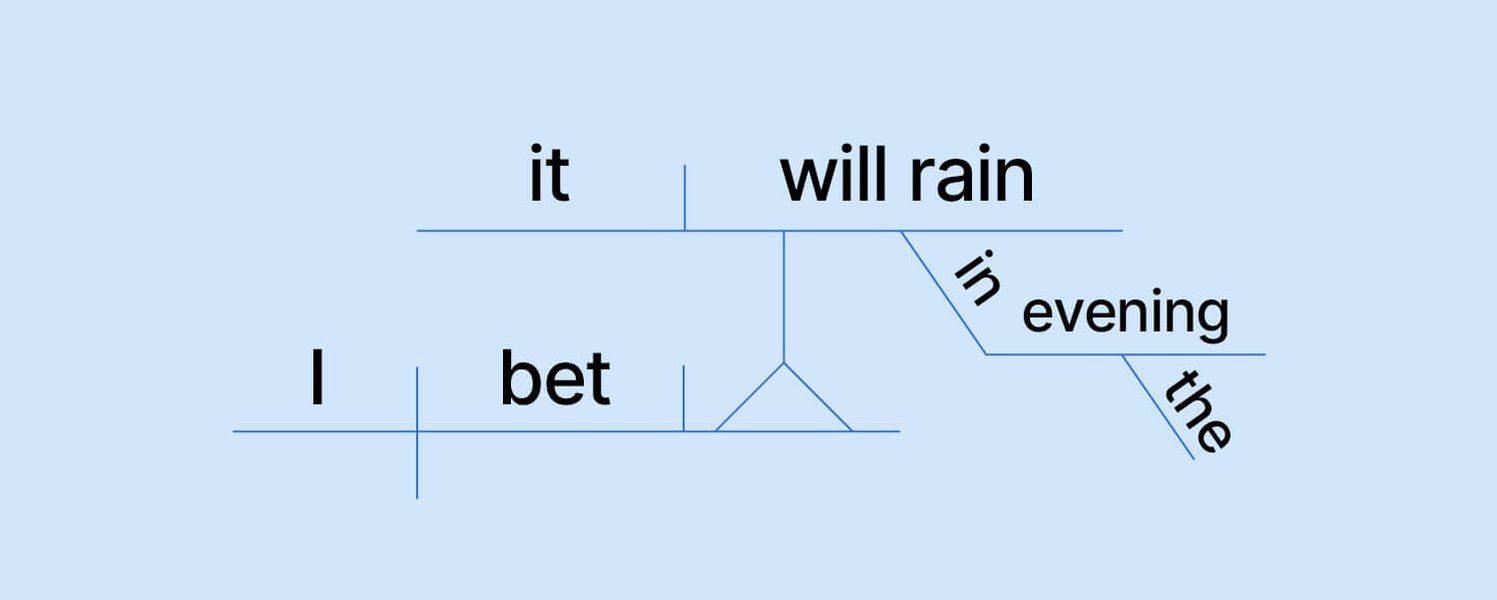
An illustration depicting the coordination of two independent clauses with a conjunction, symbolizing balance.
Ellipsis: The Art of Omission for Conciseness
Ellipsis, in grammar, refers to the deliberate omission of words or phrases from a sentence when their meaning can be clearly understood from the context. This technique serves to avoid repetition, enhance conciseness, and improve the flow of writing without sacrificing clarity. While often marked by three dots (...) in written form to indicate omitted text in quotations, ellipsis also functions as a grammatical device in sentence construction.
Forms and Functions of Ellipsis
Ellipsis can occur in various grammatical structures, contributing to more natural and efficient communication. The omitted elements are recoverable from the preceding linguistic context or general knowledge.
Key Types of Grammatical Ellipsis
- Verb Phrase Ellipsis (VP Ellipsis): This occurs when a verb phrase is omitted because it is identical or similar to a verb phrase in a preceding clause. For example: "John can play the guitar, and Mary can too." (The phrase "play the guitar" is omitted after "can too").
- Noun Ellipsis: Omission of a noun or noun phrase. For example: "I prefer the red car over the blue [car]."
- Gapping: Omission of a repeated verb in a coordinate structure. For example: "Sue likes pasta, and Peter [likes] pizza."
- Sluicing: Omission of a clause following a wh-word. For example: "He said he would call, but I don't know when [he would call]."
Ellipsis is a sophisticated linguistic tool that allows for brevity and elegance in expression. It is particularly common in casual speech and can make written language feel more natural and less redundant. However, it must be used carefully to ensure that the omitted information remains easily inferable, preventing ambiguity.
This mindmap illustrates the core components and purposes of subordination, coordination, and ellipsis as fundamental techniques in constructing sentences.
Comparative Analysis of Subordination, Coordination, and Ellipsis
To further understand the distinct roles of these grammatical tools, a comparative overview can be helpful. While all three contribute to effective sentence construction, they achieve different communicative goals.
| Feature | Subordination | Coordination | Ellipsis |
|---|---|---|---|
| Relationship Between Ideas | Hierarchical (one idea dependent/less important) | Equal (ideas of equal grammatical weight) | Implicit (omitted words understood from context) |
| Primary Connectors | Subordinating conjunctions, relative pronouns | Coordinating conjunctions (FANBOYS), semicolons, conjunctive adverbs | Contextual inference; sometimes punctuation (...) |
| Sentence Structure Created | Complex sentences (main + dependent clause) | Compound sentences (two or more independent clauses), lists | Varied, often simplified or more concise structures |
| Impact on Meaning/Emphasis | Emphasizes the main clause, shows complex logical relations | Balances ideas, presents them as equally significant | Avoids redundancy, promotes conciseness, creates natural flow |
| Common Use Cases | Cause/effect, time, condition, contrast, detailed descriptions | Listing items, showing equal alternatives, combining simple statements | Dialogue, avoiding repetition, streamlining text |
A comparative table highlighting the distinct characteristics and functions of subordination, coordination, and ellipsis in sentence construction.
The Synergy of Grammatical Tools for Impactful Writing
Mastering the judicious use of subordination, coordination, and ellipsis empowers writers to convey their message with clarity, precision, and style. These tools are not mutually exclusive; rather, they can be used in combination to create richly textured and engaging prose. For instance, a complex sentence might employ subordination to highlight a critical condition, coordination to list supporting evidence, and ellipsis to streamline a repetitive phrase. The interplay of these elements allows for a dynamic and adaptable approach to writing, catering to various rhetorical purposes and audiences.
Consider the impact on readability and comprehension. Sentences relying solely on coordination might become monotonous, while an overreliance on subordination could lead to overly dense or convoluted prose. Ellipsis, when used appropriately, acts as a subtle enhancer, stripping away excess without losing vital information. The goal is to achieve a balance that makes the writing both sophisticated and accessible.
This video, "Coordination & Subordination," provides a clear and concise explanation of these two grammatical concepts, helping to differentiate their uses and effects in sentence construction. It's particularly useful for visual learners seeking to untangle common confusions.
FAQ on Sentence Structure and Grammar
What is the main difference between subordination and coordination?
When should I use ellipsis in writing?
Can "for" and "so" function as both coordinating and subordinating conjunctions?
Do these concepts apply only to written English?
Conclusion: The Pillars of Effective Communication
Subordination, coordination, and ellipsis are not just abstract grammatical terms; they are the fundamental building blocks that empower us to construct meaningful, clear, and engaging sentences. By strategically employing subordination, writers can illuminate complex relationships and establish clear hierarchies of information. Coordination offers a means to present balanced ideas with equal weight, fostering a sense of flow and parallelism. Ellipsis, the art of strategic omission, refines prose by eliminating redundancy, leading to greater conciseness and a more natural rhythm.
Together, these three tools form a powerful toolkit for anyone seeking to master the intricacies of language. Understanding their individual strengths and how they can be combined allows for greater control over emphasis, readability, and overall communicative impact. Ultimately, proficiency in these grammatical concepts elevates ordinary sentences into sophisticated expressions of thought, enabling more effective and persuasive communication across all domains.
Recommended Further Reading
- Advanced sentence combining techniques
- How to improve writing clarity and conciseness
- Using rhetorical devices in sentence structure
- Grammar for professional writing