

Key Insights into Substrate Activation Mechanisms
- Substrate Activation is Multifaceted: Enzymes and catalysts utilize a diverse array of strategies, including precise binding, conformational changes, and the transfer of electrons or hydrogen atoms, to render substrates reactive.
- Electron Transfer (ET) and Hydrogen Atom Transfer (HAT) are Distinct yet Interconnected: While ET involves the movement of electrons, and HAT entails the concerted transfer of a proton and an electron (a hydrogen atom), both are crucial for initiating radical chemistry and redox transformations, often co-occurring within the broader framework of Proton-Coupled Electron Transfer (PCET).
- Beyond Simple Binding: Activation extends beyond mere substrate binding, encompassing sophisticated allosteric regulation, the involvement of cofactors and metal ions, and the strategic positioning of reactive intermediates within the active site to optimize reaction pathways.
The intricate world of enzymatic and catalytic reactions hinges on a critical initial step: substrate activation. This fundamental process transforms relatively stable molecules into highly reactive species, ready to undergo chemical transformations. At its core, substrate activation involves modifying a substrate to enhance its reactivity, often by lowering the activation energy required for a particular reaction. This can be achieved through various sophisticated mechanisms, including precise binding within an enzyme's active site, inducing conformational changes, and orchestrating the transfer of electrons or hydrogen atoms. These processes are not mutually exclusive; rather, they often work in concert to achieve remarkable catalytic efficiency and specificity in biological systems and synthetic chemistry.
How Catalysts Prime Molecules for Transformation
Substrate activation refers to the set of processes that prepare a substrate molecule for a specific chemical reaction. This preparation often involves increasing the substrate's intrinsic reactivity or orienting it optimally within the catalytic environment. Enzymes, as biological catalysts, have evolved highly refined methods to achieve this, making them indispensable for nearly all biochemical reactions.
Precision Binding and Active Site Dynamics
A primary mode of substrate activation involves the precise binding of the substrate within the enzyme's active site. This binding isn't merely passive; it serves several crucial functions:
- Increased Effective Concentration: By confining the substrate and catalytic residues in a small volume, the effective concentration of reactants is dramatically increased, accelerating the reaction rate.
- Optimal Orientation: The active site positions the substrate in the perfect orientation relative to catalytic groups, facilitating the correct bond-breaking and bond-forming events.
- Exclusion of Solvent: The active site can exclude water molecules, minimizing side reactions and creating a microenvironment conducive to the desired chemistry.
Beyond simple binding, enzymes often undergo conformational changes upon substrate recognition, a concept known as the induced-fit model. This dynamic interaction ensures a tight and specific fit, further optimizing the catalytic environment. For instance, in thiamine diphosphate (ThDP)-dependent enzymes, substrate binding can trigger specific changes that activate the cofactor and position it for catalysis.
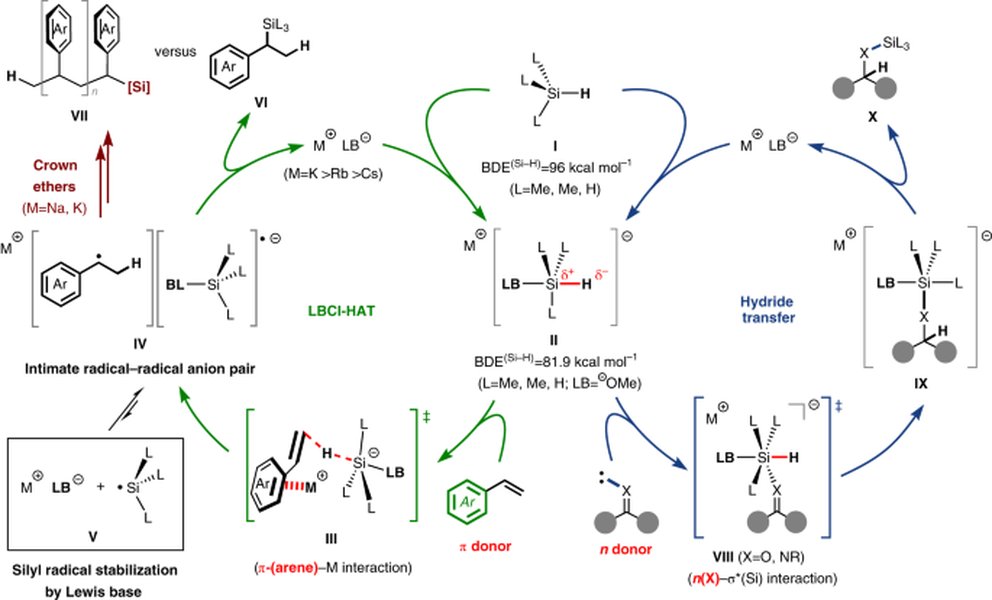
Conceptual diagram illustrating catalytic hydrogen atom transfer in a complex system.
Allosteric Regulation: Activation from Afar
Another sophisticated mechanism is allosteric activation, where the binding of a molecule to a regulatory site, distinct from the active site, induces conformational changes that influence the active site's activity. This "activation from afar" can enhance substrate binding, improve catalytic efficiency, or even switch on enzyme activity entirely. In multi-enzyme systems, allosteric coupling can lead to the channeling of intermediates between active sites, preventing diffusion losses and ensuring coordinated reaction pathways, as seen in metabolic enzymes like phosphofructokinase.
Cofactors and Metal Ions: Essential Catalytic Partners
Many enzymes rely on cofactors and metal ions for substrate activation. These non-protein components can directly participate in the catalytic mechanism, often by stabilizing reactive intermediates or by providing redox capabilities. Examples include:
- Thiamine Diphosphate (ThDP): Essential in decarboxylases, where it facilitates the activation of the substrate's carbonyl carbon.
- Tetrahydrobiopterin (BH4) and Iron Centers: Crucial in enzymes like tryptophan hydroxylase, where they are involved in oxygen atom transfer and substrate activation.
- Metal Ions (e.g., Calcium): Can act as enzyme activators, enhancing the hydrolysis of substrates.
Initiating Redox Transformations
Electron Transfer (ET) is a fundamental process in catalysis where one or more electrons move from one chemical species to another. This transfer can significantly alter the electronic structure of a substrate, generating radical ions or other reactive intermediates that are primed for further reactions. ET is pervasive in biological systems, playing a vital role in processes such as respiration, photosynthesis, and drug metabolism.
Modes of Electron Transfer
ET can occur through distinct mechanisms, each with its own characteristics:
- Inner-Sphere ET: Involves a temporary or permanent covalent linkage between the redox centers. This often occurs when a metal ion coordinates with the substrate, forming a bridging ligand that facilitates electron movement.
- Outer-Sphere ET: The electron "hops" through space between redox centers without direct covalent linkage. This mechanism is common in systems where the electron donor and acceptor are relatively far apart.
- Intermolecular ET: Occurs between different chemical species.
- Intramolecular ET: Occurs within the same molecule.
The Role of ET in Substrate Activation
In substrate activation, ET can lead to the formation of radical cations or anions, making the substrate much more reactive. For instance, in intradiol dioxygenases, ET to the substrate can activate catechols for subsequent oxygen insertion. Electrochemical catalysis leverages heterogeneous electron transfer to inject electrons or holes into reactants, enabling redox-neutral transformations under mild conditions. Furthermore, in enzymes involved in plastic degradation, ET plays a crucial role in activating waste substrates, offering sustainable solutions for environmental challenges.
Unlocking Reactivity through Hydrogen Radical Formation
Hydrogen Atom Transfer (HAT) involves the concerted movement of a proton and an electron—essentially, a hydrogen atom (H•). This process is distinct from pure ET (which involves only electron movement) and pure proton transfer (which involves only proton movement). HAT is a powerful strategy for substrate activation, particularly in radical chemistry, where it can convert stable molecules into highly reactive radical species.
The Mechanism of HAT
In HAT, a hydrogen atom is abstracted from a substrate by an acceptor, creating a substrate radical and a reduced acceptor. This mechanism is crucial for initiating and propagating free-radical reactions without requiring prior functionalization of the substrate. For example, in non-heme iron enzymes like lipoxygenases, a metal-hydroxide center abstracts a hydrogen atom from the substrate, forming a substrate radical that then reacts with molecular oxygen.
Types and Applications of HAT
- Homolytic HAT: The most common form in enzyme catalysis, where bonds are cleaved evenly, leading to radical formation.
- Metal-Hydride HAT (MHAT): A specific type where a metal hydride transfers a hydrogen atom, often to alkenes, forming carbon radicals.
- Catalytic HAT: Utilized in synthetic chemistry, often light- or transition-metal-induced, for C–H functionalization. For instance, certain ketones can mediate HAT to selectively transform carboxylic acids into radicals.
- Biocatalytic HAT: Enzymes like P450s use HAT for free-radical initiation in natural product synthesis, offering mild and selective reaction conditions.
HAT is particularly effective for activating unactivated C–H bonds, bridging the fields of biology and synthetic chemistry. The diagram below provides a visual representation of how these concepts intertwine:
Mindmap illustrating the multifaceted nature of substrate activation, detailing its key mechanisms, impact on the energy landscape, and the types of reactive species generated.
Distinguishing the Diverse Strategies
To further clarify the distinctions and overlaps between these crucial mechanisms, the following table provides a comparative overview:
| Mechanism | Primary Action | Transfer Unit | Impact on Substrate | Key Examples |
|---|---|---|---|---|
| Hydrogen Atom Transfer (HAT) | Direct abstraction of H• from substrate | H• (Proton + Electron) | Generates neutral radical species, initiates radical chemistry, activates C-H bonds | Lipoxygenases, P450s, Metal-Hydride HAT |
| Electron Transfer (ET) | Movement of electrons between species | e⁻ (Electron only) | Forms radical cations/anions, modulates redox state, enables redox-neutral reactions | Intradiol dioxygenases, Multicopper oxidases, Photosynthesis, Electrochemical catalysis |
| Active Site Binding & Conformational Changes | Physical interaction and structural adjustments | None (Physical interaction) | Optimal orientation, increased effective concentration, strain induction, solvent exclusion | Most enzymes (e.g., Michaelis-Menten kinetics), Induced-fit model |
| Allosteric Activation | Binding at regulatory site, inducing distant conformational changes | None (Signal transduction) | Alters active site conformation/activity, coordinated pathway regulation | Thiamine diphosphate-dependent decarboxylases, Phosphofructokinase |
| Cofactor & Metal Ion Involvement | Direct participation of non-protein components | Varied (e.g., redox equivalent, structural stabilizer) | Stabilizes intermediates, provides redox capability, enhances reactivity | Tryptophan hydroxylase (Iron centers, BH4), various metalloenzymes |
| Proton-Coupled Electron Transfer (PCET) | Concerted or stepwise transfer of proton and electron | H⁺ + e⁻ | Controls radical reactions, fine-tunes reactivity in redox systems | Many biological redox reactions, certain HAT processes |
This table highlights that while HAT and ET are distinct in their primary transfer units, they are often intertwined within the broader context of enzyme catalysis, particularly through PCET mechanisms. The overarching goal of all these strategies is to achieve the highly selective and efficient transformation of substrates into desired products, a hallmark of both biological and advanced synthetic catalysts.
Driving Biological and Synthetic Innovations
The understanding and classification of substrate activation, electron transfer, and hydrogen atom transfer mechanisms are not merely academic exercises. They have profound implications for a wide range of fields:
- Biochemistry and Medicine: Deciphering these mechanisms in enzymes is crucial for understanding metabolic pathways, disease mechanisms, and for rational drug design. Targeting specific activation steps can lead to novel therapeutic strategies.
- Bioengineering and Biotechnology: Knowledge of how enzymes activate substrates allows for the engineering of enzymes with enhanced or altered catalytic properties, facilitating the production of valuable chemicals, biofuels, and pharmaceuticals.
- Materials Science: The principles of ET and HAT are applied in designing new materials for energy storage (batteries, fuel cells), sensors, and photocatalysis.
- Synthetic Chemistry: Chemists leverage these mechanisms to develop innovative catalytic reactions for organic synthesis, enabling the creation of complex molecules under mild and sustainable conditions, often avoiding harsh reagents or high temperatures.
One compelling area where these principles converge is in the design of catalysts for challenging reactions, such as the selective functionalization of inert C-H bonds or the efficient conversion of atmospheric gases into useful products. The elegance with which biological systems orchestrate these transfers continues to inspire new frontiers in chemical research.
This video provides an excellent overview of enzymes and how they function, including their role in lowering activation energy. While not exclusively focused on ET or HAT, it lays the foundational understanding of enzyme catalysis relevant to substrate activation.
Frequently Asked Questions (FAQ)
What is the main difference between electron transfer (ET) and hydrogen atom transfer (HAT)?
How do enzymes activate substrates without directly involving ET or HAT?
What is Proton-Coupled Electron Transfer (PCET) and how does it relate to ET and HAT?
Why is substrate activation important in biological systems?
Can HAT and ET mechanisms occur in synthetic catalysis, or are they exclusive to enzymes?
Conclusion
The classification of substrate activation, electron transfer, and hydrogen atom transfer mechanisms reveals a sophisticated toolkit employed by both biological and synthetic catalysts to initiate and control chemical reactions. From the precise choreography of active site interactions and allosteric regulation to the dynamic movement of electrons and hydrogen atoms, these fundamental processes collectively ensure the remarkable efficiency and specificity observed in catalysis. Understanding their nuances is not only critical for advancing our knowledge of basic chemical principles but also for driving innovations in medicine, biotechnology, and materials science, ultimately shaping our ability to manipulate matter at the molecular level for the betterment of society.
Recommended Further Reading
- Explore the detailed mechanisms by which enzyme active sites facilitate substrate activation.
- Investigate the practical applications of proton-coupled electron transfer in energy conversion technologies.
- Discover advanced biocatalytic strategies that leverage hydrogen atom transfer for selective C-H bond functionalization.
- Understand the broader impact of allosteric regulation on substrate activation within complex metabolic pathways.