
The Weaver and the Whispers of the Wind: A Sufi Fable on Mindfulness
Unraveling the Threads of Presence in a Distracted World
In the mystical tradition of Sufism, stories are not merely tales but profound vessels of wisdom, carrying metaphysical insights and life lessons that transcend time and culture. These fables, often deceptively simple, aim to awaken the heart and intellect, encouraging deep self-reflection and contemplation. They serve as a calming refuge for mental well-being and moral upliftment, providing solace from the ceaseless demands of modern life. Just as ancient Sufi masters conveyed profound wisdom in a few paragraphs, these stories offer a direct path to understanding complex spiritual truths, guiding individuals towards a deeper connection with their inner selves and the divine.
Key Insights into Sufi Mindfulness
- Mindfulness as Remembrance of God: At its core, Sufi meditation and mindfulness, known as muraqaba or dhikr, is the constant remembrance of the Divine, allowing for profound communion and spiritual growth.
- Holistic Well-being: Sufi stories and practices offer a holistic approach to mental well-being, fostering inner peace, emotional healing, and resilience amidst life's challenges.
- Universal Wisdom: The lessons embedded within Sufi fables, often presented with humor and playful jest, impart universal moral values and guidance applicable to all, regardless of religious background.
The Fable of Farid and the Flowing Loom
A Tale of Distraction and Divine Presence
In a serene valley, nestled beside a whispering river, lived Farid, a weaver of exquisite carpets. His hands, though skilled, were often guided by a mind that wandered like a stray goat in the mountains. Farid’s carpets were known for their intricate patterns and vibrant colors, but lately, a subtle disarray had crept into his work. Threads would occasionally tangle, knots would appear where none should be, and the once harmonious flow of his loom seemed to falter.
Farid’s master, an old Sufi called Hakim, observed this change with a knowing gaze. One morning, as Farid sat at his loom, his mind busy with tomorrow’s market, yesterday’s worries, and the half-heard gossip from the village square, Hakim approached. “Farid,” he said softly, “your hands move with grace, but where is your mind?”
Farid, startled, paused his weaving. “Master,” he replied, “my mind is everywhere and nowhere. It is thinking of the dyes, the warp and weft, and the time I have left before sunset.”
Hakim smiled, a gentle warmth in his eyes. “Indeed,” he mused, “the mind is a restless river. But a weaver who does not listen to the whisper of each thread, who does not feel the tension of the loom, and who does not behold the beauty unfolding before him, will find his creation lacking in true spirit. How can the divine pattern reveal itself if your gaze is fixed on the distant horizon?”
He continued, “Each thread, Farid, is a moment. Each knot, a choice. And the entire carpet, your life. If you are not fully present with the single thread in your hand, how can the tapestry of your days be woven with intention and beauty? True presence, my son, is the remembrance that the Divine is in every breath, every movement, and every thread.”
A Sufi in deep contemplation, reflecting the inner journey of mindfulness.
Farid pondered his master’s words. He had always thought of mindfulness as a rigid discipline, a forced stillness. But Hakim spoke of listening, feeling, and beholding, as if mindfulness were a dance with reality itself. He realized his distraction wasn’t merely about lost time or imperfect carpets; it was about missing the sacred in the mundane, the Divine presence in the act of creation.
The Path to Presence
From that day forward, Farid began to practice. He started each morning by focusing on the first thread, feeling its texture, observing its color. He listened to the rhythmic clatter of the loom, not as a monotonous sound, but as a silent symphony of creation. When his mind began to wander, he gently brought it back, like a shepherd guiding a lost lamb. He breathed with intention, each inhale a connection to the present, each exhale a release of distraction. He learned that mindfulness wasn't about emptying the mind, but about filling it with the 'remembrance of God' (dhikr), seeing the divine in every aspect of his work.
The Transformation of Farid’s Work
Slowly, imperceptibly at first, a transformation occurred. His movements became more fluid, his knots more precise. The colors in his carpets seemed to sing with a new vibrancy, and the patterns flowed with an effortless grace. The subtle disarray vanished, replaced by a profound harmony. People from distant lands came to admire Farid’s carpets, marveling at their beauty and the subtle, almost luminous, quality of their weave.
One day, a merchant asked Farid, “What magic have you woven into these carpets? They seem to emanate a sense of peace.”
Farid smiled, looking at his hands, then at the river outside his window. “No magic, good sir,” he replied. “Only presence. I learned to weave not just with my hands, but with my heart and mind, remembering that every thread is a blessing, and every moment an opportunity to connect with the Beloved. The peace you feel is but the echo of my own inner stillness.”
The merchant, though not fully understanding, felt a profound resonance. And so, Farid continued to weave, each carpet a testament to the power of mindfulness, each thread a whisper of the Divine, woven into the fabric of his life and the lives of those who cherished his creations.
Sufi Mindfulness and Meditation Practices
Sufism, as a mystical branch of Islam, offers various pathways to cultivate mindfulness and spiritual awareness, often referred to as muraqaba (mindfulness/contemplation) and dhikr (remembrance). These practices are designed to foster inner tranquility, self-awareness, and a profound connection with the Divine. Unlike some Western interpretations of meditation that emphasize emptying the mind, Sufi practices often focus on filling the mind with the remembrance of God.
Core Principles of Sufi Mindfulness
Sufi teachings emphasize that mindfulness is not a mere technique but a continuous state of awareness. This involves being attentive to one's thoughts, actions, and the external world, all while maintaining an underlying awareness of God’s presence. Key practices include:
Dhikr (Remembrance)
Dhikr involves the repetitive recitation of divine names or phrases (e.g., "La illaha illallah" - There is no god but God, or "Subhan Allah" - Glory be to God). This chanting can be spoken aloud or silently repeated in the mind. It serves to focus the mental and physical faculties, enabling an uninterrupted communion with God. Dhikr is seen as the highest form of mindfulness, constantly bringing the practitioner back to the awareness of the Divine.
Muraqaba (Contemplation/Observation)
Muraqaba is a meditative practice where one observes their inner states and thoughts without judgment, fostering self-examination and insight. It can involve focusing on the heart, breath, or specific divine attributes. Sufi masters like al-Ghazali distinguished different types of mindfulness, including mindfulness of religious service, self-examination, and maintaining states of spiritual proximity to God.
Breath Awareness
Many Sufi traditions incorporate breath-focused meditation. Practices like walking meditation, where attention is centered on the feet and breathing into them, are common. The breath is considered a universal connection to the human experience and a direct path to calming the spirit and enhancing self-awareness.

A group practicing meditation, echoing the universal quest for inner peace and mindfulness.
The Transformative Power of Sufi Stories in Practice
Sufi stories are integral to the teaching of mindfulness and spiritual principles. They serve as multi-dimensional symbols for the education of the soul, providing profound lessons that are easily absorbed and remembered. These tales often feature characters like Mullah Nasruddin, whose humorous anecdotes subtly reveal deeper truths about human nature and the spiritual path. By engaging with these stories, listeners and readers are invited to self-reflect and gain insights into their own lives.
Here is a table outlining the key aspects of Sufi stories and meditation:
| Aspect | Sufi Stories | Sufi Meditation (Muraqaba/Dhikr) |
|---|---|---|
| Primary Goal | Awaken heart and intellect, encourage self-reflection, impart wisdom. | Cultivate inner peace, connect with the Divine, purify the heart. |
| Methodology | Parables, fables, anecdotes; often humorous or paradoxical. | Repetitive recitation (dhikr), focused attention (muraqaba), breath work. |
| Key Themes | Love, compassion, truth, justice, overcoming ego, universal wisdom. | Remembrance of God, spiritual presence, inner stillness, unity. |
| Impact on Mind | Challenges conditioned thinking, encourages contemplation, provides refuge. | Calms the mind, enhances self-awareness, fosters concentration. |
| Accessibility | Accessible to all ages and backgrounds, often used for moral guidance. | Requires guidance, but fundamental practices can be adapted for daily life. |
The Inner Dimensions of Sufi Practice: A Radar Chart Analysis
To further illustrate the multifaceted nature of Sufi spiritual practices, particularly as they relate to mindfulness and personal development, let's visualize their impact through a radar chart. This chart will highlight various dimensions of growth and well-being influenced by engaging with Sufi stories and meditative practices. The scores are opinion-based, reflecting the profound and holistic benefits often associated with Sufi traditions.
This radar chart illustrates that while both Sufi stories and meditation profoundly contribute to personal growth, their strengths vary across different dimensions. Sufi stories excel in imparting moral guidance and fostering compassion, often through engaging narratives. Sufi meditation, on the other hand, shows a stronger influence on direct spiritual connection, inner peace, and self-awareness due to its direct engagement with contemplative practices. Together, they form a comprehensive system for holistic well-being.
Exploring Sufi Wisdom Through Visuals and Teachings
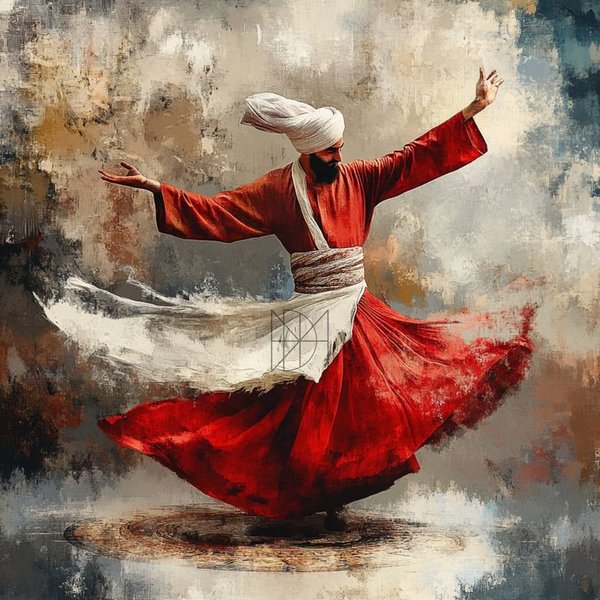
Sufism communicates its profound wisdom not only through fables and meditative practices but also through captivating visual expressions and the spoken word. The Whirling Dervishes, for instance, embody a moving meditation that signifies a spiritual journey, reflecting the Sufi path of love and remembrance.

A Whirling Dervish, emblematic of Sufi meditative dance and spiritual seeking.
The Universal Message of Sufi Spirituality
The essence of Sufism—its emphasis on love, compassion, and the pursuit of truth—resonates universally. Many contemporary thinkers and spiritual seekers find parallels between Sufi mindfulness and other contemplative traditions, recognizing the shared human desire for inner peace and meaningful existence. This universal appeal is often conveyed through accessible formats, including engaging lectures and discussions.
Here is a video from Shaykh Muhammad Adeyinka Mendes that provides an insightful introduction to mindful spirituality and contemplative practices within the Islamic Sufi tradition. This resource further illustrates how Sufi teachings contribute to mental health and well-being by offering practical approaches to mindfulness and presence.
Shaykh Muhammad Adeyinka Mendes discussing mindful spirituality in Islam's Sufi tradition.
Shaykh Mendes's explanation delves into how Sufism, through practices like muraqaba (mindfulness/contemplation), offers a framework for understanding and enhancing mental health. He highlights that while Buddhist practices are widely recognized in the West for their mindfulness benefits, Islamic practices, particularly Sufism, offer equally profound and universally applicable elements for self-care and inner connection. This video underscores the importance of looking beyond societal biases to discover diverse spiritual traditions that can enrich our understanding of mindfulness.
Frequently Asked Questions (FAQ)
What is the core essence of Sufi stories?
How do Sufi stories contribute to mental well-being?
Is Sufi meditation similar to other forms of meditation?
Who was Idries Shah and what was his contribution to Sufi stories?
Can Sufi practices be integrated into modern daily life?
Conclusion: The Ever-Woven Tapestry of Presence
The fable of Farid, the weaver, beautifully illustrates the Sufi understanding of mindfulness: not as an arduous task, but as a loving engagement with each moment, recognizing the divine presence in every detail of life. Sufi stories, with their profound insights and gentle humor, serve as timeless guides, inviting us to cultivate inner peace, self-awareness, and a deeper connection to the spiritual dimensions of existence. Through practices like dhikr and muraqaba, and the wisdom embedded in their fables, Sufism offers a comprehensive path to a life woven with intention, beauty, and unwavering presence.
Recommended Further Exploration
- How do Sufi breathing techniques enhance mindfulness?
- What are the teachings of Mullah Nasruddin in Sufi stories?
- Explore the concept of Dhikr in Sufism and its benefits.
- What is the Sufi path of love and how does it relate to meditation?
References

 oshostories.wordpress.com
Last updated May 21, 2025