
Industrial Production of Sulfuric Acid
A Comprehensive Step-by-Step Guide to the Contact Process
Highlights
- Step-by-step process: The procedure begins with raw material combustion and ends with the formation and dilution of oleum into sulfuric acid.
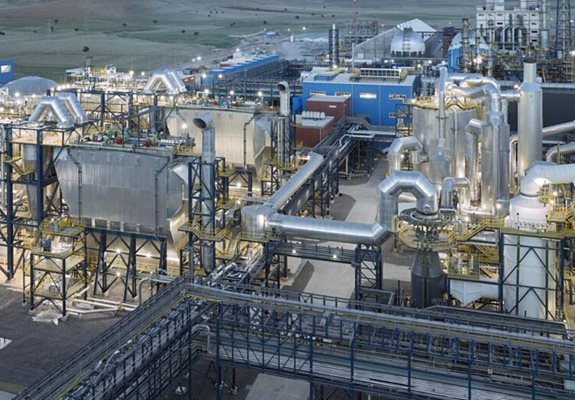
- Key components: Multiple chambers such as furnaces, purification towers, catalytic converters, absorption towers, and dilution tanks are involved.
- Catalytic efficiency: The use of catalysts, particularly vanadium(V) oxide, is critical in converting sulfur dioxide to sulfur trioxide efficiently.
The contact process is the modern industrial method for producing high concentrations of sulfuric acid (\( \text{H}_2\text{SO}_4 \)). It evolved from earlier methods such as the lead chamber process and is now favored due to its high efficiency and purity, as well as its ability to scale production. The process primarily involves the oxidation of sulfur dioxide (\( \text{SO}_2 \)) to sulfur trioxide (\( \text{SO}_3 \)), which is then converted into oleum (\( \text{H}_2\text{S}_2\text{O}_7 \)) before finally being diluted into concentrated sulfuric acid. The following sections provide a detailed step-by-step explanation along with the components or chambers that are traditionally utilized within the process.
Detailed Step-by-Step Explanation
Step 1: Production of Sulfur Dioxide
Raw Materials and Initial Reaction
Sulfur dioxide (\( \text{SO}_2 \)) is produced by the combustion of elemental sulfur or by roasting sulfur-containing materials, such as pyrite (FeS\(_2\)). In a typical furnace or combustion chamber, elemental sulfur reacts with oxygen in the air:
\( \displaystyle \text{S} + \text{O}_2 \rightarrow \text{SO}_2 \)
Alternatively, when processing sulfide ores like pyrite, the following reaction occurs:
\( \displaystyle 4\;\text{FeS}_2 + 11\;\text{O}_2 \rightarrow 2\;\text{Fe}_2\text{O}_3 + 8\;\text{SO}_2 \)
This step occurs in a high-temperature environment (approximately 1000 °C when burning sulfur) and is critical for providing the needed \( \text{SO}_2 \) which will subsequently be purified and utilized in further reactions.
Step 2: Purification of Sulfur Dioxide
Removal of Impurities
Once produced, the \( \text{SO}_2 \) gas is often laden with impurities such as particulates and other gases that may adversely affect the catalytic conversion in later steps. Hence, the gas undergoes a thorough purification process that can include several chambers and treatments:
- Dusting Tower: Removes larger dust particles.
- Scrubbing Tower: Sprays water or alkaline solutions to trap fine particles.
- Cooling Tower: Lowers the gas temperature to ensure better efficiency in the subsequent catalytic step.
- Mist Precipitators: Remove residual moisture and aerosols.
- Drying Tower: Uses concentrated sulfuric acid to absorb traces of water from the \( \text{SO}_2 \) gas.
- Arsenic Purifier: Eliminates arsenic oxide (if present), which could poison the catalyst.
Step 3: Conversion of Sulfur Dioxide to Sulfur Trioxide
Catalytic Oxidation in the Contact Tower
This is the pivotal chemical reaction in the contact process. The purified sulfur dioxide is mixed with oxygen from the air in the presence of a catalyst. The most commonly used catalyst today is vanadium pentoxide (\( \text{V}_2\text{O}_5 \)), which significantly increases the reaction rate:
\( \displaystyle 2\;\text{SO}_2 (g) + \text{O}_2 (g) \xrightarrow{\text{V}_2\text{O}_5,\;450-600^\circ\text{C}} 2\;\text{SO}_3 (g) \)
The reaction is exothermic (releasing heat) and reversible. Temperature control is essential to maintain an equilibrium that favors the production of \( \text{SO}_3 \). This step is typically executed in a specific component known as the "contact tower" or oxidation chamber, where controlled environmental conditions (temperature, pressure, and catalyst concentration) ensure high conversion efficiency.
Step 4: Formation of Oleum (Fuming Sulfuric Acid)
Absorption of Sulfur Trioxide
Directly combining \( \text{SO}_3 \) with water is not feasible for industrial production because the reaction is extremely exothermic. Instead, the sulfur trioxide is absorbed into pre-existing concentrated sulfuric acid to form oleum:
\( \displaystyle \text{SO}_3 + \text{H}_2\text{SO}_4 \rightarrow \text{H}_2\text{S}_2\text{O}_7 \)
This step involves the use of absorption towers, which are specialized chambers designed to maximize the contact between \( \text{SO}_3 \) gas and liquid sulfuric acid. Multiple towers might be used sequentially, ensuring that nearly all the \( \text{SO}_3 \) is effectively absorbed.
Step 5: Dilution of Oleum to Form Concentrated Sulfuric Acid
Controlled Addition of Water
The oleum produced in the previous step is highly concentrated and must be diluted to achieve the desired level of sulfuric acid, typically ranging from about 93% to 98% concentration. In this dilution process, water is carefully added to oleum:
\( \displaystyle \text{H}_2\text{S}_2\text{O}_7 + \text{H}_2\text{O} \rightarrow 2\;\text{H}_2\text{SO}_4 \)
This dilution is performed in dilution tanks, where precise control of the mixing process is critical. The proper ratio of water to oleum is maintained to prevent localized overheating or the production of acidic mists.
Step 6: Cooling and Storage
Final Processing
Once the desired concentration of sulfuric acid has been achieved, the acid is cooled down before it is stored. Cooling plants or systems are used to reduce the temperature of the acid, making it safe for storage and subsequent transport. The final sulfuric acid is then stored in highly specialized tanks made of materials resistant to heavy corrosion.
These storage tanks are designed to handle the aggressive nature of sulfuric acid, ensuring safety during long-term storage and distribution to various industrial applications (such as fertilizer manufacturing, chemical processing, and battery production).
Overview of Process Components
Comprehensive Table of Chambers and Components
| Component/Chamber | Function | Details |
|---|---|---|
| Furnace/Combustion Chamber | Production of \( \text{SO}_2 \) | Burning of elemental sulfur or pyrite in an oxidizing environment |
| Purification Chambers | Gas Cleaning | Dusting, scrubbing, cooling, mist precipitation, and drying with sulfuric acid; use of arsenic purifiers |
| Contact Tower / Oxidation Chamber | Catalytic Conversion | Conversion of \( \text{SO}_2 \) to \( \text{SO}_3 \) using a vanadium pentoxide (\( \text{V}_2\text{O}_5 \)) catalyst |
| Absorption Towers | Formation of Oleum | Absorption of \( \text{SO}_3 \) into concentrated \( \text{H}_2\text{SO}_4 \) producing oleum |
| Dilution Tanks | Final Conversion to Sulfuric Acid | Dilution of oleum with controlled addition of water to yield concentrated \( \text{H}_2\text{SO}_4 \) |
| Cooling Systems & Storage Tanks | Product Handling | Cooling down the acid and safely storing it in corrosion-resistant tanks |
Technical Considerations in the Contact Process
Temperature and Pressure Control
Temperature and pressure control are vital in achieving maximal conversion efficiency. The catalytic oxidation of \( \text{SO}_2 \) is an equilibrium reaction. Operating at approximately 450–600 °C and 1–2 atm pressure ensures that the reaction favors the formation of \( \text{SO}_3 \) while allowing sufficient throughput of gases. Precise monitoring and control in the contact tower are necessary to prevent undesirable side reactions and excessive heat release.
Catalyst Role and Efficiency
The catalyst, typically vanadium(V) oxide (\( \text{V}_2\text{O}_5 \)), plays a crucial role in this process. It reduces the activation energy required for the reaction:
\( \displaystyle 2\;\text{SO}_2 + \text{O}_2 \rightarrow 2\;\text{SO}_3 \)
Due to its effectiveness, even small quantities of the catalyst are sufficient to drive the reaction at industrial scales. The catalyst is carefully managed to avoid deactivation from impurities which is why the preceding purification step is essential.
Environmental and Safety Measures
Sulfuric acid production requires strict safety protocols. The handling of raw gases, high-temperature reactions, and corrosive substances demands rigorous safety and environmental control measures. Clean-up systems, continuous monitoring, and proper maintenance of equipment ensure that emissions are minimized and that the process adheres to environmental regulations.
References
- ChemGuide - Contact Process
- BYJU'S - Contact Process Overview
- Wikipedia - Contact Process
- LibreTexts - The Contact Process
- Britannica - Contact Process
Recommended Queries for Further Exploration
Last updated March 19, 2025