
Understanding the Supply Chain
A Comprehensive Exploration of Its Structure, Functions, and Strategic Importance
Highlights
- Integrated Processes: Supply chain management unifies suppliers, manufacturers, logistics, and retailers for efficient product flow.
- Technological Innovations: Modern SCM leverages digital tools to optimize operations and ensure real-time visibility.
- Strategic Resilience: Emphasis on sustainability, risk management, and agile strategies prepares supply chains for global disruptions.
Introduction to the Supply Chain
The term “supply chain” refers to the expansive network of entities, activities, information, and resources involved in the process of delivering a product or service to the end customer. At its core, supply chain management (SCM) strives to ensure that every component – from the procurement of raw materials to the final delivery of products – operates harmoniously. The ability of an organization to manage its supply chain effectively can profoundly influence its operational efficiency, cost structure, and competitive position in the global market.
Definition and Overview
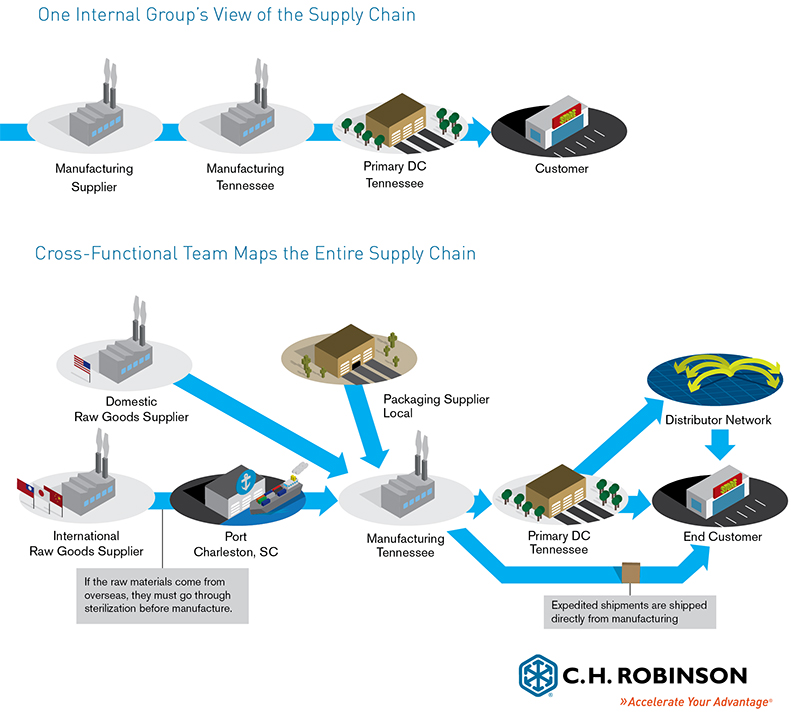
A supply chain is not a single linear process but rather a complex, integrated network that spans multiple stages and involves numerous stakeholders. It encompasses:
- Sources of raw materials and initial production inputs.
- Manufacturing and assembly lines where raw inputs are transformed into finished products.
- Logistics and distribution channels that ensure efficient transportation and storage.
- Retail and end-user delivery methods that govern market access and customer satisfaction.
SCM oversees this entire flow, working to integrate these components into a cohesive system. By streamlining operations and managing each link of the chain with precision, companies can reduce costs, improve quality control, and enhance overall customer value.
Key Components of Supply Chain Management
1. Planning and Forecasting
Demand Forecasting and Resource Allocation
Planning is the foundational stage of SCM. It involves forecasting demand accurately, which determines how much product should be produced and when. This includes:
- In-depth market analysis to predict consumer demand.
- Identification of peak periods and potential slowdowns.
- Resource planning to align production with the forecasted demand.
Successful forecasting guides inventory management, minimizes waste, and prevents overproduction. Organizations often rely on sophisticated analytics and software, such as enterprise resource planning (ERP) systems, to ensure smooth and effective planning.
2. Sourcing and Procurement
Supplier Management and Material Acquisition
Sourcing involves identifying, evaluating, and establishing reliable suppliers to provide raw materials or components necessary for production. Procurements not only refer to acquiring the needed materials but also include negotiating contracts, maintaining strong supplier relationships, and ensuring quality. Key functions include:
- Selecting suppliers based on reliability, cost, and quality standards.
- Negotiating favorable contracts that align with production needs.
- Collaborating with suppliers to foster innovation and quality improvements.
This stage is critical because delays or substandard materials can disrupt subsequent processes, affecting overall production timelines and increasing costs.
3. Manufacturing and Production
Conversion of Raw Materials into Finished Goods
Manufacturing is the core of the supply chain where raw inputs are transformed into finished products. This process involves various sub-stages:
- Assembly: Combining different components to produce the final product.
- Quality Control: Ensuring that the final product meets both the manufacturer’s specifications and regulatory standards.
- Production Scheduling: Organizing the sequence of operations to maximize efficiency and minimize downtime.
Efficiency in manufacturing not only impacts production costs but also determines the quality of the final product, thereby influencing customer satisfaction and brand reputation.
4. Logistics and Distribution
Transportation, Warehousing, and Delivery
Effective logistics are essential for moving products through the supply chain. This stage involves:
- Transportation: Coordinating the movement of goods from manufacturing facilities to distribution centers and eventually to retailers or end-users.
- Warehousing: Storing raw materials or finished goods strategically to ensure efficient order fulfillment and reduced lead times.
- Order Fulfillment: Managing the final steps of the product journey, including packaging, shipping, and timely delivery to customers.
Logistics requires careful planning with a focus on optimizing routes, reducing transit times, and mitigating potential disruptions. With advancements in technology, logistics solutions now include real-time tracking, automated warehousing, and integrated systems that improve communication between various stakeholders.
5. Retail and Customer Interface
Connecting with the End Consumer
The final step in the supply chain is the delivery of products to consumers. This stage involves:
- Retail distribution channels such as brick-and-mortar stores, e-commerce platforms, or direct sales models.
- Customer experience management, ensuring that the point of purchase is seamless and satisfying.
- Feedback loops from customers to manufacturers and suppliers which enable continuous improvement.
Smooth transitions from manufacturing to retail are vital for maintaining high levels of customer satisfaction and loyalty. Effective interface management bridges the gap between businesses and consumers, forming the critical link in the value delivery chain.
Strategic Approaches in Supply Chain Management
Lean Manufacturing
Eliminating Waste to Enhance Efficiency
Lean manufacturing is a systematic approach that focuses on minimizing waste within the supply chain. By streamlining operations and eliminating non-value-adding activities, companies can achieve higher levels of efficiency and reduce lead times. Key elements include:
- Identifying inefficiencies through continuous evaluation and using data-driven insights.
- Implementing just-in-time (JIT) inventory practices to reduce excess stock.
- Encouraging a culture of continuous improvement to boost productivity and product quality.
The lean approach has been popularized by manufacturing pioneers and remains indispensable for companies seeking to integrate cost-saving measures into their operational workflows.
Agile Supply Chain
Adapting to Market Dynamics Quickly
With market conditions frequently fluctuating, agility in the supply chain ensures that companies can respond rapidly to changes in demand and unexpected disruptions. An agile supply chain is characterized by:
- Short lead times and flexible production methods.
- Capability to pivot quickly based on customer demand or supply issues.
- Strong communication channels that facilitate rapid decision-making.
The agile approach is particularly useful in dynamic markets where product life cycles are short, and consumer preferences are continuously evolving. It also allows companies to maintain competitive advantage by swiftly adjusting operations to suit market conditions.
Six Sigma and Quality Control
Reducing Variability and Enhancing Product Consistency
Six Sigma is a set of tools and techniques designed to improve quality by minimizing variability and defects in processes. By using statistical methods and control systems, companies can achieve:
- Lower defect rates through rigorous testing and quality assurance protocols.
- Process consistency that meets both internal standards and regulatory requirements.
- Enhanced competitiveness by ensuring a high-quality product that meets customer expectations.
Implementing Six Sigma methodologies aids in maintaining product integrity through repeated assessments and corrective measures, ensuring that every stage of the supply chain contributes to the final product's excellence.
Sustainable and Resilient Supply Chain
Building Eco-Friendly and Disruption-Ready Systems
In today’s global environment, sustainability and resilience are not mere buzzwords but pivotal strategies. A sustainable supply chain aims to:
- Reduce environmental impact through responsible sourcing and manufacturing practices.
- Integrate renewable energy sources and green technologies into production and logistics.
- Ensure ethical labor practices throughout the network.
Resilience focuses on preparing for and mitigating the impacts of unexpected disruptions such as natural disasters, geopolitical tensions, or pandemics. Companies are increasingly investing in:
- Diversified supplier bases to lessen reliance on single sources.
- Advanced risk management strategies that include contingency planning and simulation exercises.
- Technology integration that allows for real-time monitoring and proactive intervention.
Technological Innovations in Supply Chain Management
Digital transformation has revolutionized how supply chain management is executed. Emerging technologies are enabling organizations to achieve enhanced efficiency and better visibility across the entire supply chain network. Notable digital innovations include:
- Enterprise Resource Planning (ERP) Systems: These systems unify various business processes and provide data centralization, which is crucial for effective supply chain management.
- Advanced Analytics and Big Data: Mining large volumes of data to forecast demand, optimize routes, and detect potential issues before they escalate.
- Internet of Things (IoT): Connecting devices throughout the supply chain to monitor conditions such as temperature, location, and humidity during transit.
- Blockchain Technology: Enhancing transparency and traceability, thereby building trust among supply chain stakeholders.
- Artificial Intelligence (AI) and Machine Learning: Automating decision-making processes and predictive maintenance to improve operational efficiency.
These technologies improve accuracy in forecasting and streamline operations by providing real-time data to decision-makers. As a result, businesses can respond more efficiently to demand fluctuations and supply chain disruptions.
Supply Chain Performance Metrics
Measuring the efficiency and resilience of a supply chain requires a set of well-defined performance metrics. Organizations monitor a range of key performance indicators (KPIs), which typically include:
| Metric | Description | Benefit |
|---|---|---|
| Inventory Turnover | Measures how many times inventory is sold and replaced over a period. | Indicates efficiency in managing stock levels. |
| Order Cycle Time | The average time taken from receiving an order to fulfilling it. | Reflects agility and responsiveness of the supply chain. |
| Delivery Performance | The percentage of orders delivered on time. | Impacts customer satisfaction and reliability perceptions. |
| Cost-to-Serve | Total cost associated with supplying a product or service. | Helps in identifying cost-saving opportunities. |
Monitoring these KPIs allows companies to identify bottlenecks, evaluate supplier performance, and continuously refine the production process. This data-driven approach underpins many SCM strategies and gives rise to continuous improvement initiatives.
Global Trends and Evolving Challenges
Market Globalization
Expanding Operations Beyond Borders
The evolution of global markets has led companies to form cross-border supply chains that tap into diverse customer bases and different resource pools. This globalization brings both opportunities and challenges:
- Access to a wider range of suppliers and markets.
- Exposure to diverse regulatory environments and cultural nuances.
- Increased complexity and risk associated with geopolitical instability.
In response, businesses are embracing risk management strategies that include geographical diversification and enhanced monitoring of international supply channels.
Changing Consumer Demands
Personalization and Instant Gratification
Modern consumers expect personalized products with rapid delivery times. As supply chains evolve, it becomes essential for businesses to adapt to these heightened expectations by:
- Shortening lead times to meet real-time customer demands.
- Adopting flexible manufacturing processes capable of customization.
- Implementing advanced tracking systems that provide consumers with real-time updates.
This shift towards customization and speed has spurred innovations in last-mile delivery, leading companies to explore novel distribution strategies such as micro-fulfillment centers and drone deliveries.
Sustainability and Environmental Concerns
Building an Eco-Efficient Supply Network
Sustainability has emerged as a critical pillar in supply chain strategies. Organizations are increasingly committed to reducing their carbon footprints and integrating eco-friendly practices throughout the supply chain. Strategies include:
- Utilizing renewable energy sources in manufacturing and logistics.
- Implementing recycling and waste reduction policies.
- Adopting sustainable procurement and ethical sourcing practices.
Such sustainability practices not only help protect the environment but also bolster consumer confidence and can lead to long-term cost savings by minimizing resource wastage.
Risk Management in the Supply Chain
A resilient supply chain anticipates potential risks and prepares contingencies to maintain seamless operations under adverse conditions. Core concerns and mitigation strategies include:
- Geopolitical Risks: Businesses diversify suppliers and geographic locations to mitigate disruption due to political instability.
- Natural Disasters: Advanced planning and the use of alternative routes/transportation methods prepare systems for unexpected events.
- Technological Disruptions: Implementing robust cyber-security measures and backup systems safeguards digital information flows.
- Economic Fluctuations: Continuous monitoring of market trends and flexible financial planning aid in navigating economic uncertainties.
Evaluating and managing risks is integral to the proactive management of the supply chain, ensuring continuity, and protecting profit margins even in times of crisis.
Future Outlook and Trends
Increased Digitization and Automation
Transforming Operations Through Technology
The future of supply chain management is inextricably linked to technological advances. Automation, robotics, and artificial intelligence are set to revolutionize how supply chains operate by reducing human error, increasing speed, and enhancing predictive capabilities. With increasing digitization, future supply chains will be characterized by:
- Real-time data integration for improved decision-making.
- More interconnected networks across global suppliers and customers.
- Greater transparency and accountability through blockchain and other tracking technologies.
These advancements will not only streamline operations but also enable proactive management of supply chain risks and inefficiencies.
Collaborative Networks
Strengthening Partnerships Across the Chain
The future vision of SCM emphasizes deeper collaboration among all stakeholders—from suppliers and manufacturers to logistics providers and end users. By sharing data and aligning objectives, these collaborative networks can:
- Enhance responsiveness to market changes.
- Facilitate innovation through shared research and development initiatives.
- Create more resilient systems that can swiftly adapt to disruptions.
Integrating Supply Chain Processes: A Holistic View
When viewed holistically, supply chain management is an orchestrated blend of planning, collaboration, and technology-driven execution. A well-integrated supply chain not only reduces operational costs but also enhances the quality of outputs, leading to a sustainable competitive advantage. In modern enterprises, digitalization has transformed this integration by ensuring that every node in the chain communicates in real time.
For example, a robust ERP system integrates data from procurement, manufacturing, and sales, thereby creating a unified ecosystem. This integration provides visibility into potential bottlenecks or quality issues, allowing companies to take corrective actions swiftly. Additionally, leveraging big data analytics facilitates the predictive maintenance of production equipment, ensuring that downtime is minimized and operational efficiency is maximized.
Case Studies and Real-World Applications
Numerous industries have demonstrated the benefits of effective supply chain management. For instance, the automotive industry relies on synchronized supply chains to ensure that components from multiple suppliers are delivered in time for just-in-time assembly. Likewise, the electronics sector leverages advanced forecasting methods and global logistics networks to maintain production agility and mitigate risks associated with volatile demand.
In retail, giants have invested significantly in technology-driven SCM to offer same-day or next-day delivery services, earning high levels of customer satisfaction and loyalty. These case studies underscore that regardless of industry, a meticulously managed supply chain is pivotal to operational success.
Conclusion
In summary, the supply chain is a comprehensive and multifaceted network that governs the creation, production, and delivery of goods and services. From the initial planning and forecasting stage to procurement, manufacturing, and logistics, every step is critical to ensuring a product meets the expected quality and reaches the customer efficiently. Embracing modern technologies like ERP systems, AI, IoT, and blockchain enhances real-time visibility and operational agility. Additionally, strategic approaches such as lean manufacturing, agile management, Six Sigma, and resilient, sustainable practices play a crucial role in reducing costs, managing risks, and meeting the fluctuating demands of global markets.
Businesses that invest in robust supply chain management not only streamline their operations but also build a competitive edge that prepares them for future challenges. The ongoing evolution in digital technologies and the increasing complexity of global markets ensure that effective SCM remains a cornerstone of operational and strategic success for organizations across all industries.
References
- Supply Chain Management (SCM) Explained: Basics & Importance - GPX
- The Supply Chain: From Raw Materials to Order Fulfillment - Investopedia
- Introduction to Supply Chain Management - GeeksforGeeks
- Supply Chain Management Key Concepts - Supply Chain Today
- What Is Supply Chain Management? - IBM
- What is SCM (Supply Chain Management) - Oracle
- What is supply chain management (SCM)? - SAP
Recommended
Last updated February 20, 2025