
System Development Life Cycle (SDLC)
A Comprehensive Guide to Planning, Designing, and Implementing Information Systems
Key Takeaways
- Structured Framework: SDLC provides a systematic approach to developing information systems, ensuring each phase is methodically executed.
- Enhanced Quality and Efficiency: By following SDLC phases, organizations can improve the quality of their systems while managing time and resources effectively.
- Risk Mitigation: SDLC incorporates risk assessment and management strategies throughout the development process, reducing potential project failures.
Introduction to SDLC
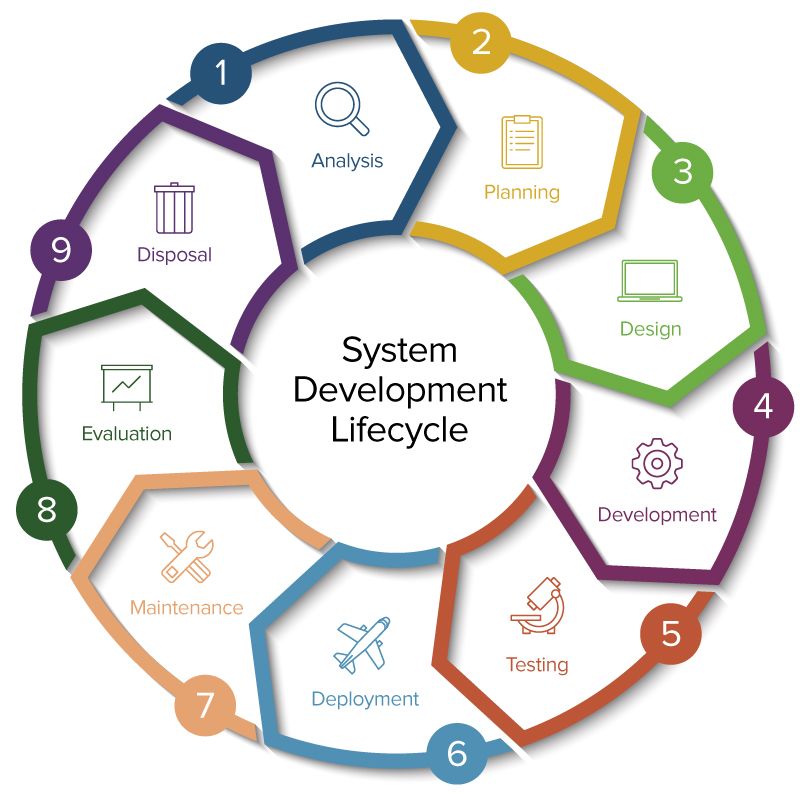
The System Development Life Cycle (SDLC) is a structured process employed in systems engineering, information systems, and software engineering to guide the development of information systems from inception to retirement. SDLC encompasses a series of well-defined stages that ensure the creation of high-quality systems that meet or exceed user expectations, are completed within time and budget constraints, and align with organizational goals.
Phases of the System Development Life Cycle
1. Planning and Feasibility
Objective and Scope Definition
In the initial phase, stakeholders identify the objectives and scope of the project. This involves understanding the business needs, defining project goals, and outlining deliverables. A clear scope helps prevent project overruns and ensures that all stakeholders have a unified understanding of the project's purpose.
Feasibility Study
A feasibility study assesses the economic, technical, operational, and legal viability of the proposed system. This analysis helps determine whether the project should proceed, be modified, or be abandoned. Key aspects evaluated include cost-benefit, resource availability, organizational readiness, and compliance with legal standards.
Project Planning
Comprehensive project planning involves resource allocation, timeline setting, and risk assessment. Detailed planning ensures that the project has a clear roadmap, defined milestones, and contingency strategies to handle potential challenges.
2. Requirements Analysis
Business Requirements Gathering
This phase focuses on collecting detailed functional and non-functional requirements from stakeholders. Methods such as interviews, surveys, and workshops are employed to understand user needs, system interactions, and performance expectations.
Stakeholder Identification
Identifying all relevant stakeholders is crucial for comprehensive requirements analysis. Engaging stakeholders ensures that the system addresses the needs of all user groups and aligns with organizational objectives.
Risk Assessment
Potential risks associated with the project are identified and evaluated. This proactive approach allows for the development of mitigation strategies to address risks before they escalate into significant issues.
3. System Design
Architectural Design
The system's architecture is developed, outlining the hardware, software, network infrastructure, and data storage solutions. Architectural design ensures that the system is scalable, secure, and capable of meeting performance requirements.
User Interface Design
User interfaces are designed to enhance usability and user experience. This includes creating wireframes, mockups, and prototypes that demonstrate how users will interact with the system.
Technical Specifications
Detailed technical specifications are documented, including system models, data flow diagrams, and database schemas. These specifications serve as a blueprint for developers during the implementation phase.
4. Development and Implementation
Coding and Development
In this phase, developers write the actual code based on design specifications. The development process may involve creating software modules, integrating system components, and adhering to coding standards and best practices to ensure maintainability and scalability.
System Integration
Different modules and components developed are integrated to form a complete system. Integration ensures that all parts of the system work together seamlessly and that data flows correctly between components.
Implementation Strategies
The implementation strategy outlines how the system will be deployed, including methods for transitioning from old systems to new ones. Strategies can vary from direct cutover to phased rollouts, depending on organizational needs and system complexity.
5. Testing
Quality Assurance
Comprehensive testing is conducted to ensure that the system meets all specified requirements. This includes unit testing, integration testing, system testing, and user acceptance testing (UAT). Each testing phase aims to identify and rectify defects, ensuring the system's reliability and functionality.
Bug Identification and Resolution
During testing, any detected bugs or issues are documented and prioritized for resolution. Effective bug tracking and resolution processes are essential for maintaining system quality and performance.
Performance Validation
Performance testing evaluates the system's responsiveness, stability, and scalability under various conditions. Ensuring optimal performance is critical for user satisfaction and system efficiency.
6. Deployment
Production Environment Setup
The system is deployed to the production environment, making it accessible to end-users. This involves configuring servers, databases, and network settings to ensure seamless operation.
User Training and Documentation
Comprehensive user training is provided to ensure that stakeholders can effectively utilize the new system. Additionally, detailed documentation is created to support users and facilitate future system maintenance.
Roll-out Planning
A well-defined roll-out plan outlines the steps for transitioning to the new system. This includes scheduling deployment activities, communicating with users, and establishing support mechanisms to address any immediate post-deployment issues.
7. Maintenance and Support
Ongoing System Monitoring
Post-deployment, the system is continuously monitored to ensure optimal performance. Monitoring tools track system metrics, enabling proactive identification and resolution of potential issues.
Updates and Enhancements
Regular updates and enhancements are implemented to address emerging needs, fix bugs, and incorporate new features. This ensures that the system remains relevant and continues to meet user requirements.
User Support
Dedicated support teams assist users with any system-related issues or queries. Effective support mechanisms enhance user satisfaction and contribute to the system's overall success.
8. Evaluation and Retirement
System Evaluation
Periodic evaluations assess the system's effectiveness in meeting its objectives. This involves reviewing performance metrics, user feedback, and alignment with organizational goals to identify areas for improvement.
System Retirement
When a system becomes obsolete or no longer serves its intended purpose, it is retired. This phase involves decommissioning the system, migrating data to new platforms, and ensuring that all residual data is securely disposed of or archived.
Phase-out and Disposal
The final steps in the retirement process include effectively phasing out the old system and disposing of hardware and software components in an environmentally responsible manner. Proper disposal ensures compliance with data protection regulations and minimizes environmental impact.
SDLC Methodologies
Waterfall Model
The Waterfall model is a linear and sequential approach where each phase must be completed before the next begins. This method is best suited for projects with well-defined requirements and minimal anticipated changes.
Agile Methodology
Agile emphasizes iterative development, flexibility, and customer collaboration. It allows for rapid adjustments based on user feedback and changing requirements, making it ideal for projects with dynamic environments.
Spiral Model
The Spiral model combines elements of both Waterfall and Agile methodologies, focusing on iterative risk analysis and development cycles. It is particularly effective for large, complex projects with significant risks.
V-Model
The V-Model is an extension of the Waterfall model, emphasizing the relationship between development stages and their corresponding testing phases. It ensures that validation and verification are integral parts of the development process.
DevOps
DevOps integrates software development (Dev) and IT operations (Ops) to enhance collaboration, automate processes, and increase deployment frequency. This approach aims to deliver high-quality software rapidly and efficiently.
Rapid Prototyping
Rapid Prototyping focuses on quickly developing prototypes to test and refine system concepts. This methodology allows for early user feedback and iterative improvements, reducing the risk of major design flaws.
Benefits of Implementing SDLC
Structured Approach
SDLC provides a clear and organized framework for system development, ensuring that all phases are systematically addressed. This structure promotes efficiency, accountability, and clarity throughout the project lifecycle.
Improved Project Management
By delineating specific phases and milestones, SDLC facilitates better project management. It enhances communication among team members, stakeholders, and customers, ensuring that everyone remains informed and aligned with project goals.
Quality Assurance
SDLC incorporates rigorous testing and evaluation processes, ensuring that the final system meets quality standards and user requirements. This focus on quality minimizes defects and enhances system reliability.
Risk Management
Through continuous risk assessment and mitigation strategies, SDLC helps identify potential issues early in the development process. Effective risk management reduces the likelihood of project delays, cost overruns, and system failures.
Cost and Time Efficiency
SDLC's structured methodology helps manage resources effectively, ensuring that projects are completed within budget and on schedule. By preventing scope creep and facilitating efficient resource allocation, SDLC contributes to overall project success.
Enhanced User Satisfaction
By involving users throughout the development process and addressing their needs, SDLC ensures that the final system aligns with user expectations. This focus on user satisfaction enhances system adoption and usability.
Comparative Analysis of SDLC Models
| SDLC Model | Key Characteristics | Advantages | Disadvantages |
|---|---|---|---|
| Waterfall | Linear and sequential phases. | Simplicity and ease of management. | Inflexible to changes; late testing phase. |
| Agile | Iterative and incremental development. | Flexibility and rapid delivery; high customer involvement. | Less documentation; can lead to scope creep. |
| Spiral | Iterative with a focus on risk analysis. | Risk mitigation; suitable for large projects. | Complex and costly; requires expertise. |
| V-Model | Emphasizes verification and validation. | Clear testing stages; high quality. | Rigid structure; not suited for complex projects. |
| DevOps | Integration of development and operations. | Continuous delivery; improved collaboration. | Requires cultural change; tool dependency. |
| Rapid Prototyping | Quick development of prototypes. | Early user feedback; flexible design. | Potential for inadequate system architecture. |
Best Practices in SDLC
Comprehensive Documentation
Maintaining detailed documentation throughout all phases of SDLC ensures clarity, facilitates communication, and serves as a reference for future maintenance and development activities.
Stakeholder Engagement
Active involvement of stakeholders, including end-users and management, is essential for accurately capturing requirements and ensuring the system meets their needs.
Iterative Development
Adopting an iterative approach allows for continuous improvement, enabling the incorporation of feedback and adaptation to changing requirements.
Effective Risk Management
Identifying and addressing potential risks early in the development process minimizes the impact of unforeseen challenges and enhances project stability.
Quality Assurance
Implementing rigorous testing and quality assurance practices ensures that the system is reliable, functional, and meets specified requirements.
Change Management
Establishing a structured change management process ensures that any alterations to the project scope or requirements are systematically evaluated and implemented without disrupting the project timeline.
Continuous Improvement
Regularly reviewing and refining the SDLC process fosters a culture of continuous improvement, enhancing efficiency and effectiveness in future projects.
Challenges and Solutions in SDLC Implementation
Scope Creep
Challenge: Uncontrolled changes or continuous growth in project scope can lead to delays and budget overruns.
Solution: Implement strict change control processes, clearly define project scope at the outset, and engage stakeholders to manage expectations effectively.
Communication Breakdown
Challenge: Poor communication among team members and stakeholders can result in misunderstandings and misaligned objectives.
Solution: Establish regular communication channels, conduct frequent meetings, and utilize collaborative tools to ensure transparency and alignment.
Inadequate Risk Management
Challenge: Failure to identify and address risks can lead to project failures and unforeseen obstacles.
Solution: Conduct comprehensive risk assessments, prioritize risks based on impact and likelihood, and develop mitigation strategies to manage potential threats.
Resource Constraints
Challenge: Limited availability of resources, such as budget, personnel, or technology, can hinder project progress.
Solution: Optimize resource allocation, prioritize critical tasks, and consider scalable solutions to adapt to resource limitations effectively.
Maintaining Quality Standards
Challenge: Ensuring consistent quality across all phases can be difficult, especially under tight deadlines.
Solution: Implement standardized quality assurance practices, conduct regular reviews and audits, and foster a culture of quality within the development team.
Conclusion
The System Development Life Cycle (SDLC) is an indispensable framework that provides a structured approach to developing robust, efficient, and high-quality information systems. By meticulously navigating through each phase—from planning and requirements analysis to design, development, testing, deployment, and maintenance—organizations can ensure that their systems not only meet current user needs but are also adaptable to future challenges and advancements.
Adopting appropriate SDLC methodologies, such as Waterfall, Agile, Spiral, V-Model, or DevOps, allows organizations to tailor their development processes to specific project requirements, enhancing flexibility, risk management, and overall project success. Moreover, adherence to best practices, effective communication, comprehensive documentation, and continuous improvement are critical to overcoming common challenges and achieving desired outcomes.
Ultimately, the SDLC serves as a roadmap for navigating the complexities of system development, fostering collaboration, mitigating risks, and delivering value-driven solutions that align with organizational goals and user expectations.
References
 aws.amazon.com
Last updated February 16, 2025