
TCA in Protein Characterization for Ocimum Papers
Exploring TCA Precipitation and Analysis Methods in Ocimum Research
Key Highlights
- Effective Protein Precipitation: TCA precipitation, often combined with acetone, is a key method to extract and concentrate proteins from Ocimum species.
- Proteomic Analysis Enhancement: The method minimizes degradation and contaminant interference, greatly enhancing downstream proteomic techniques.
- Method Limitations: TCA denatures proteins, making it unsuitable for analyses requiring the native structure.
Understanding TCA Precipitation
Trichloroacetic acid (TCA) is widely used as a protein precipitation agent, particularly for proteomic studies involving plant proteins from Ocimum species. The primary purpose of employing TCA is to concentrate protein samples and remove various contaminants such as salts, polyphenols, and other interfering compounds that may be present in plant extracts. This is achieved by denaturing proteins, rendering them insoluble so that they can be efficiently pelleted via centrifugation. The process not only purifies the sample but also stabilizes proteins for subsequent analytical procedures.
Mechanism and Methodology
TCA-induced protein precipitation works by lowering the pH drastically, which disrupts hydrogen bonding and promotes protein aggregation. A common enhancement in this method includes the addition of acetone, which further aids in protein precipitation by reducing solubility and removing lipids and other contaminants. This combined method—TCA/acetone precipitation—is especially useful for Ocimum species where the protein extracts might contain a variety of naturally occurring plant compounds that hinder accurate proteomic analysis.
Application to Ocimum Protein Characterization
In the context of Ocimum research, TCA precipitation is primarily applied to the advancement of protein characterization and subsequent proteomic techniques, including SDS-PAGE, two-dimensional gel electrophoresis (2-DE), and mass spectrometry (MS). Ocimum, a genus that includes species like Ocimum basilicum (basil) and Ocimum sanctum (holy basil), has been the subject of several studies where TCA is used to extract proteins from various tissues. The precipitation procedure enhances the clarity and resolution of protein profiles, which is crucial when analyzing the complex proteomes of these species.
Contaminant Removal and Sample Preparation
Proteins extracted from plant material are often accompanied by contaminants that may interfere with both separation and detection processes. The TCA/acetone precipitation method is designed to eliminate these impurities while preserving the essential protein components for reliable analyses. By removing interfering substances, the method ensures that downstream steps such as SDS-PAGE or 2-DE yield well-resolved protein bands, allowing for better comparative profiling and characterization.
Benefits and Limitations of TCA Precipitation
Advantages
The TCA precipitation technique is highly advantageous in several respects. Firstly, it is effective in concentrating proteins from dilute extracts, which is particularly beneficial when dealing with the often low protein content in Ocimum tissues. Additionally, the method significantly lowers the risk of protein degradation during the extraction process by rapidly precipitating and inactivating proteases. This is vital for ensuring that the protein samples maintain integrity for accurate analysis.
Another crucial benefit is the removal of contaminants such as salts and polyphenols. These substances can interfere with electrophoretic separation and mass spectrometry by masking true protein signals or causing smearing. The combined use of TCA and acetone not only clears the sample matrix but also helps standardize protein extraction protocols, leading to enhanced reproducibility in experiments.
Limitations
Despite its widespread utility, TCA precipitation has inherent limitations. The aggressive nature of TCA means that proteins are denatured during the procedure. Denaturation is useful for many types of proteomic analysis, but it renders the proteins unsuitable for studies that require the maintenance of their native conformation, such as enzymatic activity assays or structural-functional evaluations. Therefore, researchers must carefully consider whether the benefits of purification outweigh the potential loss of native function when planning their experiments.
Structural and Computational Analysis in Ocimum Research
Beyond the biochemical aspects of protein precipitation, Ocimum protein research has also embraced computational methods for structural prediction and functional characterization. Advanced software programs like Profunc and Expasy's Prot-param serve to analyze secondary structural features and physicochemical properties of proteins artificially precipitated using TCA methods. These computational methods complement the wet lab experiments by providing detailed insights into parameters such as:
- Isoelectric point (pI)
- Molecular weight
- Presence of positive and negative residues
- Extrinsic factors like extinction coefficient and instability index
- Aliphatic index and the grand average of hydropathy (GRAVY)
When combined with TCA precipitation, these computational techniques offer a comprehensive picture of protein characteristics. While TCA precipitation aids in preparing a relatively pure sample, further analysis using protein modeling can reveal structural motifs and potential functional domains, paving the way for applications in biotechnology and medicine.
Integrating Wet Lab and Computational Approaches
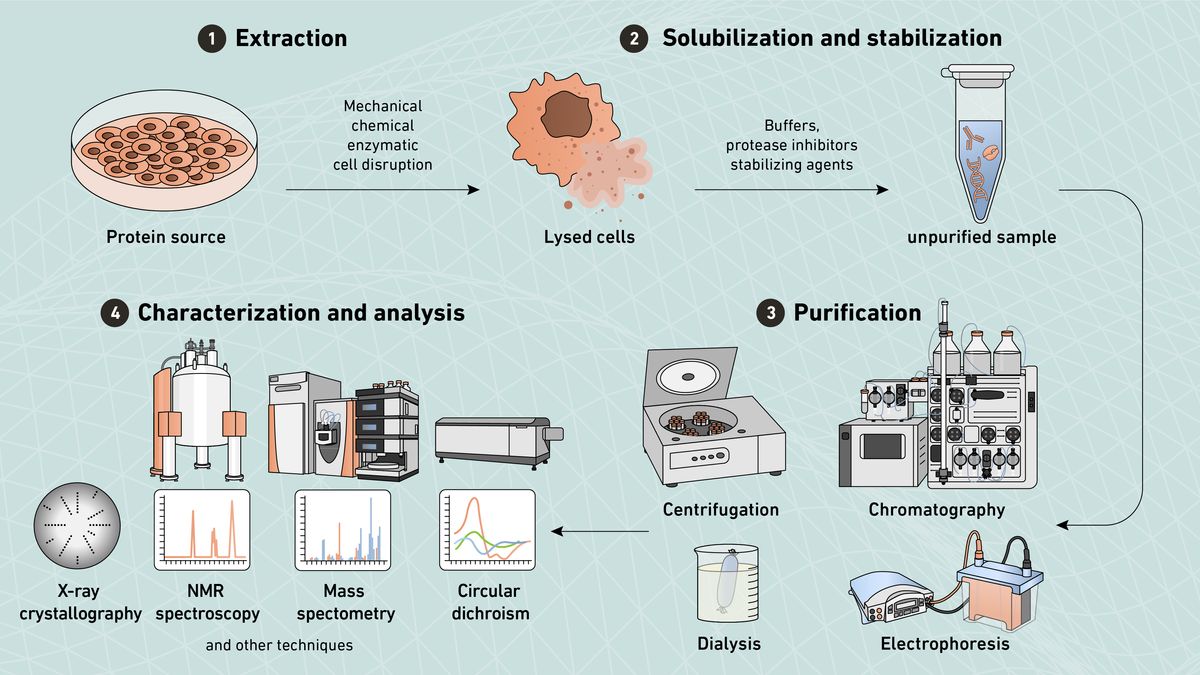
Advanced studies on Ocimum proteins now regularly incorporate techniques that pair both laboratory and in silico methods. Researchers initially extract proteins using methods like TCA/acetone precipitation to ensure a high-quality sample. These samples are then subjected to various forms of electrophoresis to separate proteins, followed by mass spectrometric analysis to identify the protein composition. The information gleaned from these steps is then fed into computational models to predict protein structure and functional characteristics.
This integrated approach is crucial, as it not only highlights the biochemical properties of proteins extracted from Ocimum species but also provides insights into their potential biological roles within the plant. For example, certain Ocimum proteins that are involved in secondary metabolism or stress responses can be better understood through their computed structural features and physiochemical properties.
A Comprehensive Table Overview
| Aspect | Description | Relevance to Ocimum |
|---|---|---|
| TCA Precipitation Mechanism | Denatures proteins and causes aggregation by lowering pH | Facilitates impurity removal in Ocimum extracts |
| TCA/Acetone Combination | Enhances precipitation efficiency and contaminant removal | Improves protein clarity for downstream applications such as 2-DE |
| Proteomic Techniques | SDS-PAGE, 2-DE, and mass spectrometry for protein profiling | Essential for analyzing the proteomic landscape of Ocimum species |
| Computational Methods | Tools like Prot-param for physicochemical characterization | Provide structural and functional insights into Ocimum proteins |
| Advantages | Concentrates and purifies proteins, reduces degradation | Ensures high quality samples for reliable analysis |
| Limitations | Denaturation precludes studies requiring native states | Not suitable when enzymatic activity or native folding is needed |
Literature and Research Insights
Several studies have illustrated the applicability of TCA precipitation in the realm of Ocimum research. These articles and papers underscore how the technique not only simplifies the extraction process but also improves the overall quality of the proteins extracted. High-resolution protein profiles are critical for comparing protein expression across different Ocimum species and investigating the metabolic pathways integral to their growth and bioactive compound production.
Research work investigating proteins in Ocimum sanctum, basil, and other related species often report modifications in the TCA/acetone precipitation protocol. These modifications are designed to optimize protein yield and maintain low levels of interfering substances. The focus on meticulous sample preparation stems from the need for high sensitivity in downstream applications, where even minor contaminants could impact the outcome of analyses such as mass spectrometry.
Impact on Downstream Applications
Post-TCA precipitation, proteins separated by techniques like SDS-PAGE and 2-DE have been instrumental in identifying and characterizing a wide array of proteins, including enzymes, structural proteins, and proteins involved in secondary metabolism in Ocimum species. The subsequent analysis helps in constructing detailed protein maps, thereby advancing our understanding of protein function in plant physiology. Furthermore, such studies allow for the identification of potential targets for enhancing the production of medicinally and commercially valuable compounds found in Ocimum.
Method Adaptation and Future Perspectives
While traditional TCA precipitation remains a staple in protein extraction protocols, continuous improvements and adaptations are being explored to overcome its limitations. Given that TCA denatures proteins, research is underway to develop methodologies that balance efficient contaminant removal with the preservation of native protein structure. These developments aim to foster the advancement of proteomics not only in Ocimum research but also in broader plant biology and biotechnology studies.
Future Integration with Bioinformatics
The future of Ocimum protein characterization lies in the seamless integration of robust biochemical methods with advanced computational bioinformatics tools. As detailed protein maps and structural models emerge, they will play a key role in predicting protein functionality and interactions, which are essential for both metabolic engineering and pharmaceutical research. Moreover, continued improvements in analytical techniques will likely lead to the discovery of novel proteins that contribute to the unique properties of Ocimum.
References
- Protein Characterisation in Ocimum aureus - NCBI PubMed
- Modified TCA/Acetone Precipitation - PLOS ONE
-
Effective Extraction of Plant Proteins - PMC
-
Mechanisms of TCA Precipitation in Plants - PMC
- Metabolic Modulation in Ocimum - SpringerOpen
Recommended Queries for Deeper Insights
Last updated March 15, 2025