
Understanding NDS 570 Teleprotection Equipment
An in-depth exploration of design, features, and networking in substations
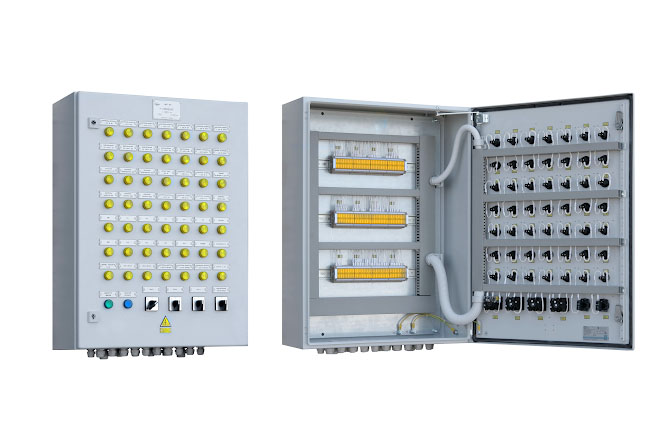
Key Highlights
- Robust Protection Capabilities: Rapidly isolates faults and secures substation operations.
- Versatile Communication Interfaces: Offers multiple interfaces with IEC 61850 support for modern and legacy systems.
- Specialized Networking Device: Functions as a host device for secured teleprotection communications.
Overview and Purpose
The NDS 570 Teleprotection equipment is a specialized device integral to controlling and managing high-voltage electrical substations. Its primary use is in the fast and secure transmission of protection commands across various communication media, thereby safeguarding critical electrical infrastructure. In situations where faults occur – such as short circuits or equipment malfunctions – the NDS 570 quickly isolates the affected section from the grid, maintaining system stability and minimizing damage or downtime.
This equipment is engineered to ensure that the integrity of power supply networks is not compromised by transient or severe faults. By transmitting precise commands efficiently, the system prevents cascading failures that could potentially lead to widespread outages or equipment damage. The device’s rapid response capabilities play a significant role in grid management and the overall safety of the electrical network.
High-Level Features
The design and functionality of the NDS 570 incorporate several advanced features aimed at addressing the demands of the modern power grid:
1. Reliable and Fast Command Transmission
One of the foremost advantages of the NDS 570 is its ability to swiftly transmit protection commands. This rapid transmission is crucial during fault conditions when every millisecond counts. The equipment employs robust communication protocols to ensure that the protection signals are not delayed, thereby facilitating the quick isolation of faulty components. This ensures that only the affected section is disconnected, avoiding undue disruption across the network.
2. Versatile Communication Interfaces
A major strength of the NDS 570 lies in its multiple communication interfaces, which render it highly adaptable for various substation environments. The device supports:
- Ethernet interfaces with standard 10/100Base-TX connectivity, often accompanied by optional optical ports (SFP) which provide enhanced data transmission capabilities.
- Connections to local station buses through RS-485, ensuring compatibility with existing legacy systems.
- Protocols enabling the exchange of GOOSE messages, particularly conforming to IEC 61850 standards, which are pivotal for modern substation automation.
These interfaces allow the NSD 570 to integrate seamlessly with both traditional and digital substations. The support for IEC 61850 is especially critical as the industry moves towards more standardized, interoperable systems, allowing clear communication between devices from different manufacturers.
3. Modular and Configurable Design
The NDS 570 is designed to be both compact and modular. This modular architecture means that operators can customize the equipment to meet specific system requirements. With up to 8 independent commands available, configuration options include:
- Blocking and Permissive Commands: These cater to different operational scenarios – whether it is to prevent a command from propagating or ensure that the protective action can pass through.
- Direct Tripping Commands: Allow direct action when a fault is detected, ensuring safety and system continuity.
Such flexibility not only reduces inventory complexity but also ensures that the system can be scaled or adjusted according to the dynamic needs of the power grid.
4. Remote Monitoring and User Management
The equipment is equipped with a browser-based Human Machine Interface (HMI), which allows for remote monitoring, configuration, and troubleshooting. This remote accessibility is crucial for modern grid management, where central control systems monitor multiple substations across wide geographical areas.
Moreover, the NDS 570 includes robust security features. Multi-level password protection – typically including administrative, modification, and viewing levels – restricts unauthorized access and secures the device against potential cyber threats. Such measures ensure that only by authorized personnel can any changes or operations be performed, thereby enhancing overall system security.
5. Compliance with Industry Standards
The device conforms to IEC 61850 standards, which is equally significant as it facilitates interoperability in heterogeneous environments. Compliance with such standards ensures that the equipment’s operation is predictable, reliable, and compatible with a wide range of devices, including both legacy systems and state‐of‐the‐art substation automation architectures.
Importance in the Substation Environment
The presence of the NDS 570 Teleprotection equipment within an electrical substation is not merely an enhancement but a necessity for several reasons:
Fault Isolation and System Reliability
In high-voltage transmission systems, faults must be isolated promptly to avoid cascading outages. The NDS 570’s design enables near-instantaneous command transmission, ensuring that only the affected segment of the grid is disconnected. This selective isolation minimizes the risk of broader system failures and protects investment in expensive high-voltage infrastructure.
Enhanced Safety and Operational Efficiency
By providing fast and precise protection commands, the NDS 570 plays a critical role in safeguarding both equipment and human life. Electrical faults can result in not only equipment damage but also dangerous conditions for personnel. The device’s rapid response improves operational safety while also contributing to reduced downtime in case of fault events.
Future-Proofing Grid Operations
With the ongoing evolution of power networks towards digital and smart grids, the equipment that is deployed today must be able to integrate with emerging technologies. The robust feature set of the NDS 570, especially its support for IEC 61850 and diverse communication protocols, ensures that substations remain adaptable to future technological advancements.
Networking Capabilities
A key inquiry about the NDS 570 Teleprotection equipment relates to its networking role and how it fits within the communication infrastructure of a substation. The device is not intended to replace primary networking devices such as gateways, switches, or routers. Instead, it serves as an intelligent host device that integrates into existing networks while performing vital teleprotection functions.
Role as a Host Device
The NDS 570 is designed to operate as a host device within the substation’s communications architecture. This means that:
- It connects to the substation’s local network, often interfacing via RS-485 on the station bus, and integrates with Ethernet networks via its built-in Ethernet interfaces.
- Rather than managing network traffic like a dedicated router or switch, it focuses on ensuring the reliable and secure transmission of teleprotection signals.
- It supports protocol conversion necessary for interfacing different communication standards, making it an indispensable intermediary between older systems and modern digital networks.
Its design enables connectivity and remote control without the additional layer of network traffic management typically found in routers or switches. The device is highly specialized and dedicated solely to teleprotection, ensuring that security and efficiency in signal transmission are maintained without interference from general data traffic.
Interface and Integration Details
The diverse communication interfaces of the NDS 570 allow it to establish secure and robust connections to various networks:
- Ethernet Interface: It supports both electrical (10/100Base-TX) and optical interfaces (through SFP modules), which enables reliable data exchange across the local area network (LAN) and even WAN if connected to broader infrastructure.
- RS-485 Connection: This allows integration with the station bus. The RS-485 protocol is well-established in industrial environments for its reliability and noise resistance, ensuring stable communication in harsh conditions.
- Remote Access Capabilities: The embedded HMI and browser-based configuration access provide secure, remote supervision and control, further integrating the equipment into the substation’s overall digital management system.
These networking capabilities do not transform the NDS 570 into a switch or router. Rather, its function is to enhance the overall communication reliability and operational effectiveness by acting as a dedicated teleprotection host within the substation’s network.
Networking Comparison Table
| Device Type | Primary Function | NDS 570 Capability | Role in Network |
|---|---|---|---|
| Router | Directs network traffic between subnetworks | No | Does not perform traffic routing |
| Switch | Connects multiple devices on a LAN | No | Not designed for switching network data |
| Gateway | Translates between different network protocols | Limited protocol conversion | Operates as an intermediary for teleprotection signals only |
| Host Device | Operates as an endpoint in a network | Yes | Dedicated to teleprotection command transmission |
The table above highlights that while the NDS 570 possesses some capabilities related to protocol conversion—helping different communication formats to work together—it firmly remains a specialized host rather than taking on the broader responsibilities of traffic management in a network.
Practical Applications and Operational Context
In the landscape of power distribution and transmission, the application of teleprotection devices like the NDS 570 is a foundational aspect of safeguarding high-voltage systems. Here are some practical insights into its operational role:
Critical Infrastructure Protection
Electrical substations are high-stakes environments where even minor faults can lead to major disruptions. The NDS 570’s capacity for rapid fault detection and isolation makes it indispensable for ensuring the stability of these critical infrastructures. By isolating faults, it prevents possible chain reactions that might otherwise lead to a grid-wide failure.
Enhanced Grid Management
Modern grid management relies on the quick and accurate reporting of system conditions. The remote monitoring capabilities enabled by the NSD 570 ensure that operators can configure, monitor, and even diagnose issues in real time from a centralized location. This remote accessibility not only improves response times but also contributes to a proactive approach in managing electrical networks.
Device Integration in Both Legacy and Modern Systems
Many substations still depend on legacy systems based on older communication protocols. However, as the industry evolves, digital substations adopting IEC 61850 are becoming more prevalent. The flexibility of the NDS 570, with its support for both conventional contact type interfaces and modern digital protocols, allows it to operate in diverse environments. Its interoperability is thus a key advantage in transitional infrastructures where upgrade paths are gradually implemented.
Summary of the NDS 570 Teleprotection Equipment
In summary, the NDS 570 Teleprotection equipment is a pivotal device within electrical substations designed to ensure the integrity and safety of high-voltage networks. Its core function is to transmit protection commands swiftly to isolate faults at the earliest opportunity, thus reducing the risk of widespread outages and damage. High-level features such as versatile communication interfaces, modular design with up to 8 independent commands, and robust remote monitoring contribute to its effectiveness.
In practical terms, operators deploy the NSD 570 when consistent, reliable, and fast fault management is crucial. Its networking role is specialized; rather than assuming the role of a conventional gateway, switch, or router, it integrates as a host device within the substation’s network. The device excels at ensuring secure, efficient communication of teleprotection signals while maintaining compatibility with both legacy systems and modern digital infrastructure.
References
- NSD Teleprotection - Hitachi Energy
- NSD570 Teleprotection Equipment - DirectIndustry
- ABB NSD 570 Teleprotection Equipment - Topbrands PLC
-
NDS 570 Teleprotection - ABB
- NSD570 Teleprotection Equipment - NQC Telecom
Recommended Related Queries
Last updated March 11, 2025