
Beyond Kings: Discover the Magnificent Temples Commissioned by Powerful Queens
Explore stunning architectural legacies left by female rulers across Egypt and India.
Highlights of Royal Female Patronage
- Architectural Marvels: Queens commissioned some of the most innovative and enduring temples and monuments, from Egypt's terraced wonders to India's intricate stone carvings.
- Expressions of Power & Piety: Temple building allowed queens to assert their authority, demonstrate religious devotion, commemorate victories, and leave a lasting cultural mark.
- Cross-Cultural Impact: Notable examples exist in diverse civilizations, including Ancient Egypt (Hatshepsut) and various dynasties in India (Chalukya, Chola, Solanki, Mughal), showcasing the universal role of royal women in shaping sacred landscapes.
Queens as Master Builders: An Introduction
History often highlights the architectural achievements of male rulers, yet countless queens and influential women have profoundly shaped the world's sacred spaces. Through their vision, resources, and authority, these female figures commissioned temples and monuments that stand today as testaments to their power, piety, and artistic patronage. From the grand mortuary temples of Egyptian pharaohs to the intricately carved shrines of Indian dynasties, the legacy of queen-built temples reveals fascinating stories of leadership, devotion, and cultural exchange.
Ancient Egypt: The Pharaoh Who Built Like a King
The Mortuary Temple of Hatshepsut
One of the most extraordinary examples of temple construction directed by a female ruler comes from Ancient Egypt. Queen Hatshepsut, who reigned as pharaoh during the 18th Dynasty (circa 1479–1458 BCE), was one of Egypt's most prolific builders. Her crowning achievement is the magnificent Mortuary Temple at Deir el-Bahri, located on the west bank of the Nile near Luxor.
Architectural Innovation and Purpose
Known as Djeser-Djeseru ("Holy of Holies"), Hatshepsut's temple is renowned for its unique terraced design, harmoniously integrated into the towering cliffs behind it. Unlike the more traditional pyramid structures of earlier pharaohs, this temple features three expansive colonnaded terraces connected by long ramps. It served multiple functions: as a mortuary temple dedicated to her posthumous cult, and as a sanctuary honoring the gods Amun-Re (her supposed divine father), Hathor, and Anubis.
Symbol of Power and Legitimacy
The temple's walls are adorned with intricate reliefs depicting key events of Hatshepsut's reign, including her divine birth, coronation, and the famous trading expedition to the Land of Punt. These narratives served to legitimize her rule in a predominantly male pharaonic tradition and showcase the prosperity under her leadership. The temple complex originally featured lush gardens, sphinx-lined avenues, and colossal statues of Hatshepsut, presenting her in both male and female forms.

The stunning terraced Mortuary Temple of Queen Hatshepsut, nestled against the cliffs at Deir el-Bahri, Egypt.
Explore Hatshepsut's Temple
The following video provides a deeper look into the architecture and history of Queen Hatshepsut's remarkable temple, showcasing its unique design and enduring legacy:
Hatshepsut's temple remains a masterpiece of ancient architecture and a powerful symbol of female leadership in the ancient world.
India: Royal Women Shaping Sacred Architecture
In India, numerous queens across various dynasties played crucial roles in commissioning, building, and renovating temples, contributing significantly to the region's rich architectural heritage.
Chalukya Queens of Pattadakal
The Pattadakal complex in Karnataka, a UNESCO World Heritage Site, showcases the remarkable contributions of Chalukya queens in the 8th century CE. This site features a harmonious blend of North Indian (Nagara) and South Indian (Dravida) architectural styles.
Virupaksha Temple
Commissioned by Queen Lokamahadevi, the senior wife of King Vikramaditya II, the Virupaksha Temple stands as the largest and most elaborate temple in the complex. Built around 740-745 CE, it commemorates her husband's military victory over the Pallavas of Kanchipuram. Dedicated to Lord Shiva, the temple was originally named 'Lokeshvara' after the queen herself. Inspired by the Kailasanatha Temple in Kanchipuram, Lokamahadevi even brought Pallava artisans to work on its construction. The temple features a towering Dravidian vimana (superstructure), intricate carvings depicting scenes from the Ramayana and Mahabharata, and a large Nandi pavilion.
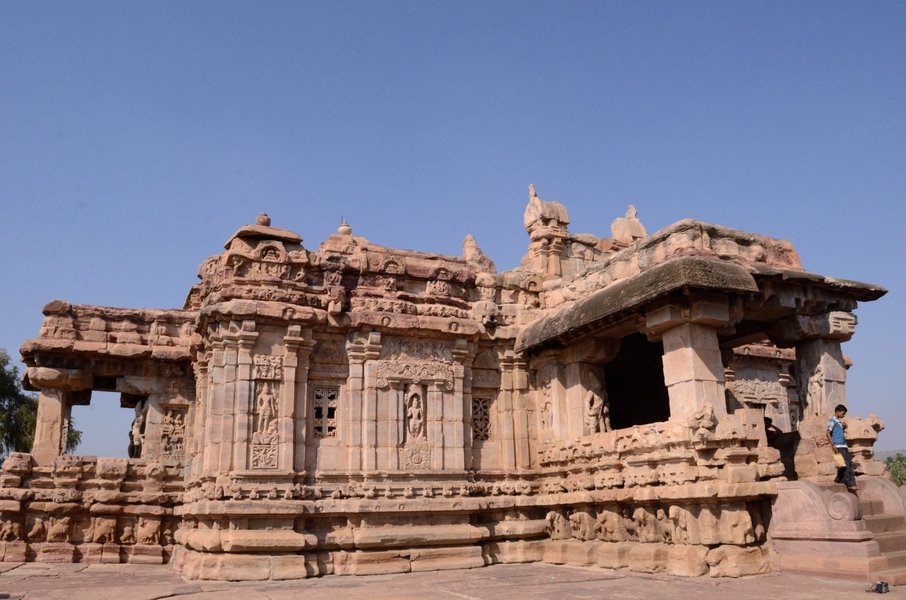
The Virupaksha Temple in Pattadakal, commissioned by Queen Lokamahadevi, showcasing intricate Chalukyan architecture.
Mallikarjuna Temple
Adjacent to the Virupaksha Temple stands the Mallikarjuna Temple, commissioned by Queen Trilokamahadevi, Lokamahadevi's sister and another wife of King Vikramaditya II. Originally named 'Trailokyeshvara' after her, this temple closely mirrors the Virupaksha in design and style, though slightly smaller. It also features a Dravidian vimana and exquisite carvings depicting mythological narratives. The construction of these two grand temples by sister-queens highlights their significant influence and perhaps a degree of rivalry in religious patronage.
Chola Dynasty: Queen Sembian Mahadevi
Queen Sembian Mahadevi, a revered 10th-century Chola queen consort, was a prolific patron of Saivite temples in the Tamil region. Even after being widowed, she wielded considerable influence and dedicated herself to religious construction and renovation for decades. She is credited with building or rebuilding numerous temples, establishing a distinct, elegant architectural style characterized by fine granite carvings and well-proportioned structures.
Uma Maheshwarar Temple, Konerirajapuram
One notable example of her patronage is the Uma Maheshwarar Temple in Konerirajapuram. This temple exemplifies the refined aesthetics associated with Sembian Mahadevi's era. Beyond construction, she ensured detailed inscriptions documenting donations, established Vedic schools within temple precincts, and made significant land grants, fostering these temples as centers of learning and spirituality.
Other Notable Structures Commissioned by Royal Women
While the temples of Hatshepsut and the Indian queens are prime examples, other significant structures were commissioned by influential royal women, even if not strictly temples in the conventional sense.
Rani Ki Vav (Queen's Stepwell), Patan, Gujarat
Built in the 11th century by Queen Udayamati of the Solanki (Chaulukya) dynasty in memory of her husband, King Bhima I, Rani Ki Vav is an exceptional stepwell. Located on the banks of the Saraswati River, this UNESCO World Heritage site is renowned for its massive scale and intricate ornamentation. While primarily a sophisticated water harvesting system, its seven levels are adorned with over 500 major sculptures and thousands of minor ones, depicting avatars of Vishnu, goddesses, and mythological scenes, giving it the feel of an inverted subterranean temple.
Itimad-ud-Daulah's Tomb, Agra
Commissioned by Empress Nur Jahan, the powerful wife of Mughal Emperor Jahangir, this mausoleum was built between 1622 and 1628 for her father, Mirza Ghiyas Beg. Often called the "Baby Taj," it marks a transition in Mughal architecture from red sandstone to white marble. Its intricate pietra dura (inlay work with semi-precious stones) and delicate design prefigure the Taj Mahal (which was commissioned by Nur Jahan's stepson, Shah Jahan). Though a tomb, its exquisite craftsmanship reflects Nur Jahan's significant artistic patronage and influence.
Ganesh Temple, Queens, New York
In a modern context, the Sri Maha Vallabha Ganapati Devasthanam, popularly known as the Ganesh Temple in Flushing, Queens, New York, connects linguistically to the query. Established in 1977, it was the first traditional Hindu temple built in the United States. While located in the borough of Queens, it was founded by the Hindu Temple Society of North America to serve the growing immigrant community, not by a historical ruling queen.
Comparative Analysis of Queen-Built Monuments
The motivations and impacts of these queen-commissioned projects varied. Some were clear political statements, others acts of deep piety, and many combined elements of both, resulting in unique architectural legacies. The radar chart below provides a comparative perspective on selected monuments based on factors like architectural innovation, scale, and cultural impact.
Note: The scores in this chart are interpretive, based on historical significance and architectural features, aiming to provide a relative comparison.
Mapping Royal Female Patronage
This mindmap illustrates the key queens discussed and the remarkable temples or monuments associated with their patronage across different regions and historical periods.
Built by Queens"] id1["Ancient Egypt"] id1a["Queen Hatshepsut
(18th Dynasty)"] id1a1["Mortuary Temple
at Deir el-Bahri"] id2["India"] id2a["Chalukya Dynasty
(Karnataka, 8th Century CE)"] id2a1["Queen Lokamahadevi"] id2a1a["Virupaksha Temple
(Pattadakal)"] id2a2["Queen Trilokamahadevi"] id2a2a["Mallikarjuna Temple
(Pattadakal)"] id2b["Chola Dynasty
(Tamil Nadu, 10th Century CE)"] id2b1["Queen Sembian Mahadevi"] id2b1a["Uma Maheshwarar Temple
(Konerirajapuram)"] id2b1b["Numerous other temples"] id2c["Solanki Dynasty
(Gujarat, 11th Century CE)"] id2c1["Queen Udayamati"] id2c1a["Rani Ki Vav
(Stepwell with temple elements)"] id2d["Mughal Empire
(Agra, 17th Century CE)"] id2d1["Empress Nur Jahan"] id2d1a["Itimad-ud-Daulah's Tomb
(Mausoleum)"]
Summary Table of Key Monuments
This table provides a quick overview of the prominent structures commissioned by queens discussed in this response.
| Monument | Queen/Empress | Dynasty/Civilization | Period | Location | Type/Purpose | Key Features |
|---|---|---|---|---|---|---|
| Mortuary Temple | Hatshepsut | Ancient Egypt (18th Dyn.) | c. 1479–1458 BCE | Deir el-Bahri, Egypt | Mortuary Temple | Terraced design, colonnades, reliefs, dedicated to Amun-Re & funerary cult |
| Virupaksha Temple | Lokamahadevi | Chalukya | c. 740s CE | Pattadakal, India | Hindu Temple (Shiva) | Dravidian style, intricate carvings, built to commemorate victory |
| Mallikarjuna Temple | Trilokamahadevi | Chalukya | c. 740s CE | Pattadakal, India | Hindu Temple (Shiva) | Similar Dravidian style to Virupaksha, ornate pillars |
| Uma Maheshwarar Temple | Sembian Mahadevi | Chola | 10th Century CE | Konerirajapuram, India | Hindu Temple (Shiva) | Refined Chola architecture, granite carvings, patronage inscriptions |
| Rani Ki Vav | Udayamati | Solanki (Chaulukya) | 11th Century CE | Patan, Gujarat, India | Stepwell | Intricate sculptures, water management, temple-like ornamentation |
| Itimad-ud-Daulah's Tomb | Nur Jahan | Mughal | 1622–1628 CE | Agra, India | Mausoleum | White marble, pietra dura inlay, precursor to Taj Mahal |
Frequently Asked Questions
Why did queens build temples?
Queens commissioned temples for various reasons, often mirroring those of male rulers:
- Religious Devotion: Expressing personal piety and ensuring divine favor.
- Political Legitimacy: Demonstrating power, authority, and stability, especially for rulers like Hatshepsut who needed to solidify their position.
- Commemoration: Honoring deities, celebrating military victories (like Queen Lokamahadevi), or memorializing family members (like Queen Udayamati or Empress Nur Jahan).
- Cultural Patronage: Supporting arts, architecture, and religious institutions, contributing to the cultural legacy of their dynasty.
- Public Welfare: Structures like stepwells (Rani Ki Vav) also served vital community functions.
Are there other famous monuments built by women?
Yes, besides the temples and related structures mentioned, women have commissioned various types of monuments. For example:
- Humayun's Tomb (Delhi, India): Commissioned by Empress Bega Begum (Haji Begum) for her husband, the Mughal Emperor Humayun, in the mid-16th century. It's a UNESCO World Heritage site and a precursor to the Taj Mahal.
- Mirjan Fort (Karnataka, India): Attributed by some legends to Queen Chennabhairadevi of Gersoppa (the 'Pepper Queen') in the 16th century, known for its strategic importance in the spice trade.
- Various charitable works like tanks, gardens, and mosques were also commissioned by royal women across different cultures, though temples and tombs are often the most architecturally prominent examples.
What architectural styles are seen in queen-built temples?
The architectural styles varied greatly depending on the region, era, and cultural context:
- Ancient Egyptian: Hatshepsut's temple features unique terraced architecture with colonnades, typical of the New Kingdom period but innovative in its integration with the landscape.
- Chalukyan (India): The temples at Pattadakal (Virupaksha, Mallikarjuna) exhibit a blend of Northern (Nagara) and Southern (Dravida) Indian temple styles, characterized by tiered vimanas (towers) and intricate stone carvings.
- Chola (India): Temples patronized by Sembian Mahadevi represent a refined phase of Chola architecture, known for granite construction, precise carvings, and elegant proportions.
- Solanki (India): Rani Ki Vav showcases the Maru-Gurjara style, known for ornate carving and complex stepwell architecture.
- Mughal (India): While Itimad-ud-Daulah is a tomb, it represents early Mughal marble architecture with Persian influences, featuring pietra dura inlay work.
Did European queens build temples?
While European queens were often significant patrons of the arts, religion, and architecture, their contributions are more commonly associated with palaces, churches, cathedrals, convents, universities, and charitable institutions rather than "temples" in the sense used for ancient Egyptian or Indian contexts. Royal women like Queen Isabella I of Spain, Queen Elizabeth I of England, Catherine the Great of Russia, and Maria Theresa of Austria heavily influenced the cultural and architectural landscape through their patronage of Christian religious buildings, secular structures, and art collections, but the term "temple building" is less applicable in the European Christian tradition compared to polytheistic or Dharmic religions where temple construction was central.
Recommended Further Exploration
- What are the defining features of Chalukya temple architecture?
- How did women like Hatshepsut rule as pharaohs in ancient Egypt?
- Discover the detailed history and symbolism of the Rani Ki Vav stepwell.
- Explore Empress Nur Jahan's influence on Mughal art and building beyond Itimad-ud-Daulah.
References
- The Temple of Hatshepsut - World History Encyclopedia
- Pattadakal Temples Built by Queens, Not Kings - Lakshmi Sharath
- Iconic Historical Monuments Built By Women Rulers In India - The Better India
- Sembian Mahadevi: the Chola queen who built the most exquisite temples - News Bharati
- Hatshepsut - History.com
- 10 famous monuments built by women rulers - Times of India
- The Unrecognized Architects Of India’s Mediaeval Glory : Lokamahadevi and Trailokyamahadevi - Pragyata
Beyond Kings: Discover the Magnificent Temples Commissioned by Powerful Queens
Explore stunning architectural legacies left by female rulers across Egypt and India.
Highlights of Royal Female Patronage
- Architectural Marvels: Queens commissioned some of the most innovative and enduring temples and monuments, from Egypt's terraced wonders to India's intricate stone carvings.
- Expressions of Power & Piety: Temple building allowed queens to assert their authority, demonstrate religious devotion, commemorate victories, and leave a lasting cultural mark.
- Cross-Cultural Impact: Notable examples exist in diverse civilizations, including Ancient Egypt (Hatshepsut) and various dynasties in India (Chalukya, Chola, Solanki, Mughal), showcasing the universal role of royal women in shaping sacred landscapes.
Queens as Master Builders: An Introduction
History often highlights the architectural achievements of male rulers, yet countless queens and influential women have profoundly shaped the world's sacred spaces. Through their vision, resources, and authority, these female figures commissioned temples and monuments that stand today as testaments to their power, piety, and artistic patronage. From the grand mortuary temples of Egyptian pharaohs to the intricately carved shrines of Indian dynasties, the legacy of queen-built temples reveals fascinating stories of leadership, devotion, and cultural exchange.
Ancient Egypt: The Pharaoh Who Built Like a King
The Mortuary Temple of Hatshepsut
One of the most extraordinary examples of temple construction directed by a female ruler comes from Ancient Egypt. Queen Hatshepsut, who reigned as pharaoh during the 18th Dynasty (circa 1479–1458 BCE), was one of Egypt's most prolific builders. Her crowning achievement is the magnificent Mortuary Temple at Deir el-Bahri, located on the west bank of the Nile near Luxor.
Architectural Innovation and Purpose
Known as Djeser-Djeseru ("Holy of Holies"), Hatshepsut's temple is renowned for its unique terraced design, harmoniously integrated into the towering cliffs behind it. Unlike the more traditional pyramid structures of earlier pharaohs, this temple features three expansive colonnaded terraces connected by long ramps. It served multiple functions: as a mortuary temple dedicated to her posthumous cult, and as a sanctuary honoring the gods Amun-Re (her supposed divine father), Hathor, and Anubis.
Symbol of Power and Legitimacy
The temple's walls are adorned with intricate reliefs depicting key events of Hatshepsut's reign, including her divine birth, coronation, and the famous trading expedition to the Land of Punt. These narratives served to legitimize her rule in a predominantly male pharaonic tradition and showcase the prosperity under her leadership. The temple complex originally featured lush gardens, sphinx-lined avenues, and colossal statues of Hatshepsut, presenting her in both male and female forms.
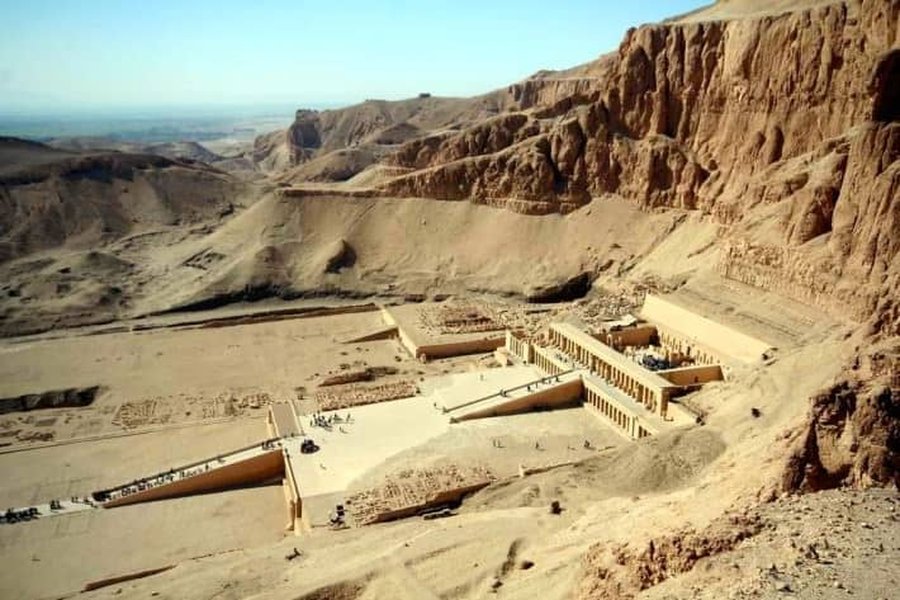
The stunning terraced Mortuary Temple of Queen Hatshepsut, nestled against the cliffs at Deir el-Bahri, Egypt.
Explore Hatshepsut's Temple
The following video provides a deeper look into the architecture and history of Queen Hatshepsut's remarkable temple, showcasing its unique design and enduring legacy:
Hatshepsut's temple remains a masterpiece of ancient architecture and a powerful symbol of female leadership in the ancient world.
India: Royal Women Shaping Sacred Architecture
In India, numerous queens across various dynasties played crucial roles in commissioning, building, and renovating temples, contributing significantly to the region's rich architectural heritage.
Chalukya Queens of Pattadakal
The Pattadakal complex in Karnataka, a UNESCO World Heritage Site, showcases the remarkable contributions of Chalukya queens in the 8th century CE. This site features a harmonious blend of North Indian (Nagara) and South Indian (Dravida) architectural styles.
Virupaksha Temple
Commissioned by Queen Lokamahadevi, the senior wife of King Vikramaditya II, the Virupaksha Temple stands as the largest and most elaborate temple in the complex. Built around 740-745 CE, it commemorates her husband's military victory over the Pallavas of Kanchipuram. Dedicated to Lord Shiva, the temple was originally named 'Lokeshvara' after the queen herself. Inspired by the Kailasanatha Temple in Kanchipuram, Lokamahadevi even brought Pallava artisans to work on its construction. The temple features a towering Dravidian vimana (superstructure), intricate carvings depicting scenes from the Ramayana and Mahabharata, and a large Nandi pavilion.
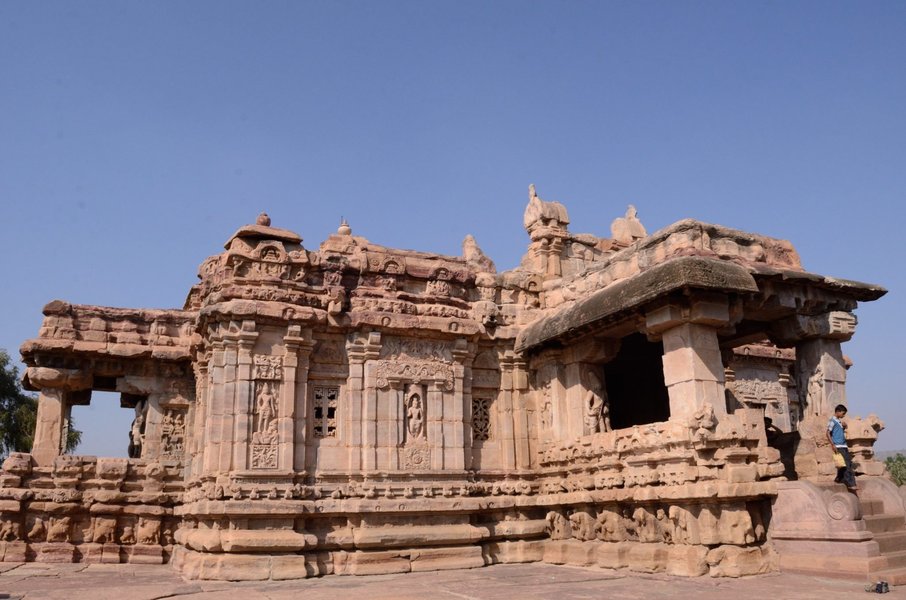
The Virupaksha Temple in Pattadakal, commissioned by Queen Lokamahadevi, showcasing intricate Chalukyan architecture.
Mallikarjuna Temple
Adjacent to the Virupaksha Temple stands the Mallikarjuna Temple, commissioned by Queen Trilokamahadevi, Lokamahadevi's sister and another wife of King Vikramaditya II. Originally named 'Trailokyeshvara' after her, this temple closely mirrors the Virupaksha in design and style, though slightly smaller. It also features a Dravidian vimana and exquisite carvings depicting mythological narratives. The construction of these two grand temples by sister-queens highlights their significant influence and perhaps a degree of rivalry in religious patronage.
Chola Dynasty: Queen Sembian Mahadevi
Queen Sembian Mahadevi, a revered 10th-century Chola queen consort, was a prolific patron of Saivite temples in the Tamil region. Even after being widowed, she wielded considerable influence and dedicated herself to religious construction and renovation for decades. She is credited with building or rebuilding numerous temples, establishing a distinct, elegant architectural style characterized by fine granite carvings and well-proportioned structures.
Uma Maheshwarar Temple, Konerirajapuram
One notable example of her patronage is the Uma Maheshwarar Temple in Konerirajapuram. This temple exemplifies the refined aesthetics associated with Sembian Mahadevi's era. Beyond construction, she ensured detailed inscriptions documenting donations, established Vedic schools within temple precincts, and made significant land grants, fostering these temples as centers of learning and spirituality.
Other Notable Structures Commissioned by Royal Women
While the temples of Hatshepsut and the Indian queens are prime examples, other significant structures were commissioned by influential royal women, even if not strictly temples in the conventional sense.
Rani Ki Vav (Queen's Stepwell), Patan, Gujarat
Built in the 11th century by Queen Udayamati of the Solanki (Chaulukya) dynasty in memory of her husband, King Bhima I, Rani Ki Vav is an exceptional stepwell. Located on the banks of the Saraswati River, this UNESCO World Heritage site is renowned for its massive scale and intricate ornamentation. While primarily a sophisticated water harvesting system, its seven levels are adorned with over 500 major sculptures and thousands of minor ones, depicting avatars of Vishnu, goddesses, and mythological scenes, giving it the feel of an inverted subterranean temple.
Itimad-ud-Daulah's Tomb, Agra
Commissioned by Empress Nur Jahan, the powerful wife of Mughal Emperor Jahangir, this mausoleum was built between 1622 and 1628 for her father, Mirza Ghiyas Beg. Often called the "Baby Taj," it marks a transition in Mughal architecture from red sandstone to white marble. Its intricate pietra dura (inlay work with semi-precious stones) and delicate design prefigure the Taj Mahal (which was commissioned by Nur Jahan's stepson, Shah Jahan). Though a tomb, its exquisite craftsmanship reflects Nur Jahan's significant artistic patronage and influence.
Ganesh Temple, Queens, New York
In a modern context, the Sri Maha Vallabha Ganapati Devasthanam, popularly known as the Ganesh Temple in Flushing, Queens, New York, connects linguistically to the query. Established in 1977, it was the first traditional Hindu temple built in the United States. While located in the borough of Queens, it was founded by the Hindu Temple Society of North America to serve the growing immigrant community, not by a historical ruling queen.
Comparative Analysis of Queen-Built Monuments
The motivations and impacts of these queen-commissioned projects varied. Some were clear political statements, others acts of deep piety, and many combined elements of both, resulting in unique architectural legacies. The radar chart below provides a comparative perspective on selected monuments based on factors like architectural innovation, scale, and cultural impact.
Note: The scores in this chart are interpretive, based on historical significance and architectural features, aiming to provide a relative comparison.
Mapping Royal Female Patronage
This mindmap illustrates the key queens discussed and the remarkable temples or monuments associated with their patronage across different regions and historical periods.
Built by Queens"] id1["Ancient Egypt"] id1a["Queen Hatshepsut
(18th Dynasty)"] id1a1["Mortuary Temple
at Deir el-Bahri"] id2["India"] id2a["Chalukya Dynasty
(Karnataka, 8th Century CE)"] id2a1["Queen Lokamahadevi"] id2a1a["Virupaksha Temple
(Pattadakal)"] id2a2["Queen Trilokamahadevi"] id2a2a["Mallikarjuna Temple
(Pattadakal)"] id2b["Chola Dynasty
(Tamil Nadu, 10th Century CE)"] id2b1["Queen Sembian Mahadevi"] id2b1a["Uma Maheshwarar Temple
(Konerirajapuram)"] id2b1b["Numerous other temples"] id2c["Solanki Dynasty
(Gujarat, 11th Century CE)"] id2c1["Queen Udayamati"] id2c1a["Rani Ki Vav
(Stepwell with temple elements)"] id2d["Mughal Empire
(Agra, 17th Century CE)"] id2d1["Empress Nur Jahan"] id2d1a["Itimad-ud-Daulah's Tomb
(Mausoleum)"]
Summary Table of Key Monuments
This table provides a quick overview of the prominent structures commissioned by queens discussed in this response.
| Monument | Queen/Empress | Dynasty/Civilization | Period | Location | Type/Purpose | Key Features |
|---|---|---|---|---|---|---|
| Mortuary Temple | Hatshepsut | Ancient Egypt (18th Dyn.) | c. 1479–1458 BCE | Deir el-Bahri, Egypt | Mortuary Temple | Terraced design, colonnades, reliefs, dedicated to Amun-Re & funerary cult |
| Virupaksha Temple | Lokamahadevi | Chalukya | c. 740s CE | Pattadakal, India | Hindu Temple (Shiva) | Dravidian style, intricate carvings, built to commemorate victory |
| Mallikarjuna Temple | Trilokamahadevi | Chalukya | c. 740s CE | Pattadakal, India | Hindu Temple (Shiva) | Similar Dravidian style to Virupaksha, ornate pillars |
| Uma Maheshwarar Temple | Sembian Mahadevi | Chola | 10th Century CE | Konerirajapuram, India | Hindu Temple (Shiva) | Refined Chola architecture, granite carvings, patronage inscriptions |
| Rani Ki Vav | Udayamati | Solanki (Chaulukya) | 11th Century CE | Patan, Gujarat, India | Stepwell | Intricate sculptures, water management, temple-like ornamentation |
| Itimad-ud-Daulah's Tomb | Nur Jahan | Mughal | 1622–1628 CE | Agra, India | Mausoleum | White marble, pietra dura inlay, precursor to Taj Mahal |
Frequently Asked Questions
Why did queens build temples?
Queens commissioned temples for various reasons, often mirroring those of male rulers:
- Religious Devotion: Expressing personal piety and ensuring divine favor.
- Political Legitimacy: Demonstrating power, authority, and stability, especially for rulers like Hatshepsut who needed to solidify their position.
- Commemoration: Honoring deities, celebrating military victories (like Queen Lokamahadevi), or memorializing family members (like Queen Udayamati or Empress Nur Jahan).
- Cultural Patronage: Supporting arts, architecture, and religious institutions, contributing to the cultural legacy of their dynasty.
- Public Welfare: Structures like stepwells (Rani Ki Vav) also served vital community functions.
Are there other famous monuments built by women?
Yes, besides the temples and related structures mentioned, women have commissioned various types of monuments. For example:
- Humayun's Tomb (Delhi, India): Commissioned by Empress Bega Begum (Haji Begum) for her husband, the Mughal Emperor Humayun, in the mid-16th century. It's a UNESCO World Heritage site and a precursor to the Taj Mahal.
- Mirjan Fort (Karnataka, India): Attributed by some legends to Queen Chennabhairadevi of Gersoppa (the 'Pepper Queen') in the 16th century, known for its strategic importance in the spice trade.
- Various charitable works like tanks, gardens, and mosques were also commissioned by royal women across different cultures, though temples and tombs are often the most architecturally prominent examples.
What architectural styles are seen in queen-built temples?
The architectural styles varied greatly depending on the region, era, and cultural context:
- Ancient Egyptian: Hatshepsut's temple features unique terraced architecture with colonnades, typical of the New Kingdom period but innovative in its integration with the landscape.
- Chalukyan (India): The temples at Pattadakal (Virupaksha, Mallikarjuna) exhibit a blend of Northern (Nagara) and Southern (Dravida) Indian temple styles, characterized by tiered vimanas (towers) and intricate stone carvings.
- Chola (India): Temples patronized by Sembian Mahadevi represent a refined phase of Chola architecture, known for granite construction, precise carvings, and elegant proportions.
- Solanki (India): Rani Ki Vav showcases the Maru-Gurjara style, known for ornate carving and complex stepwell architecture.
- Mughal (India): While Itimad-ud-Daulah is a tomb, it represents early Mughal marble architecture with Persian influences, featuring pietra dura inlay work.
Did European queens build temples?
While European queens were often significant patrons of the arts, religion, and architecture, their contributions are more commonly associated with palaces, churches, cathedrals, convents, universities, and charitable institutions rather than "temples" in the sense used for ancient Egyptian or Indian contexts. Royal women like Queen Isabella I of Spain, Queen Elizabeth I of England, Catherine the Great of Russia, and Maria Theresa of Austria heavily influenced the cultural and architectural landscape through their patronage of Christian religious buildings, secular structures, and art collections, but the term "temple building" is less applicable in the European Christian tradition compared to polytheistic or Dharmic religions where temple construction was central.
Recommended Further Exploration
- What are the defining features of Chalukya temple architecture?
- How did women like Hatshepsut rule as pharaohs in ancient Egypt?
- Discover the detailed history and symbolism of the Rani Ki Vav stepwell.
- Explore Empress Nur Jahan's influence on Mughal art and building beyond Itimad-ud-Daulah.
References
Last updated May 3, 2025